Artwork
Miami and Ohio Rivers
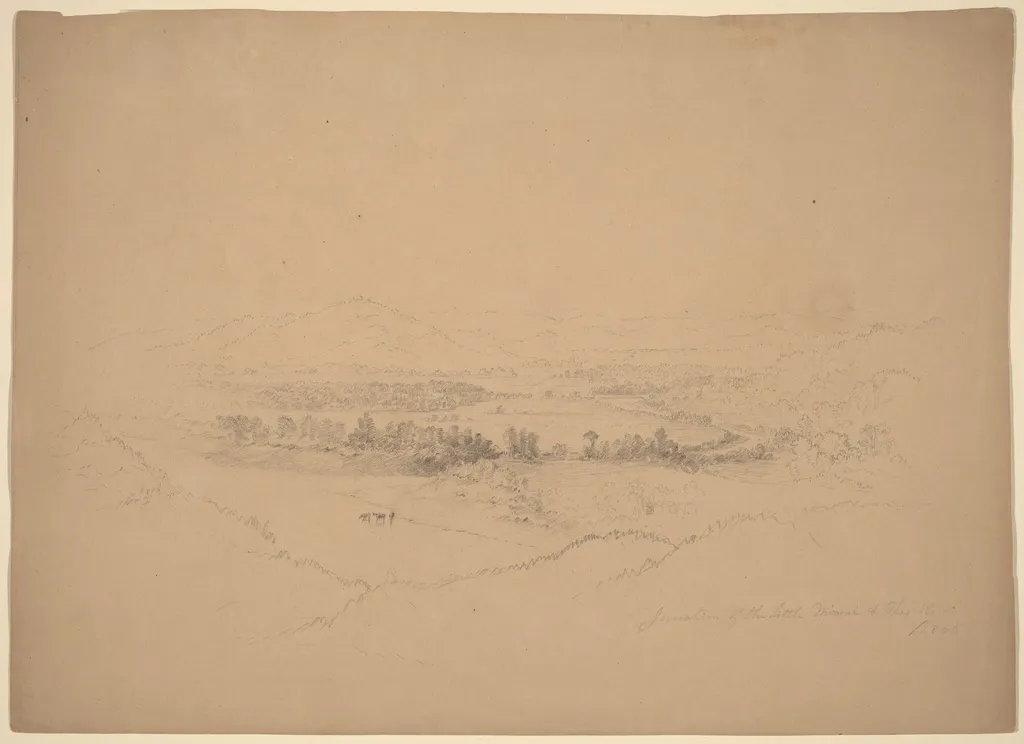
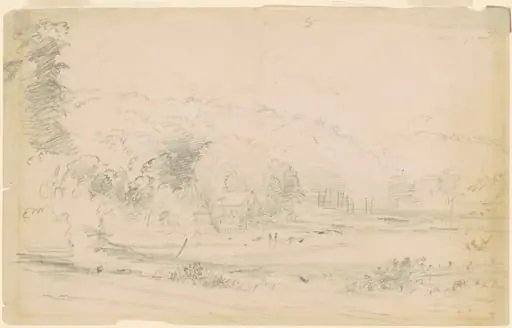
Miami and Ohio Rivers is a graphite drawing by the Impressionist artist Alexander Helwig Wyant. It dates from 1865 and is held in the collection of the National Gallery of Art.
About this work
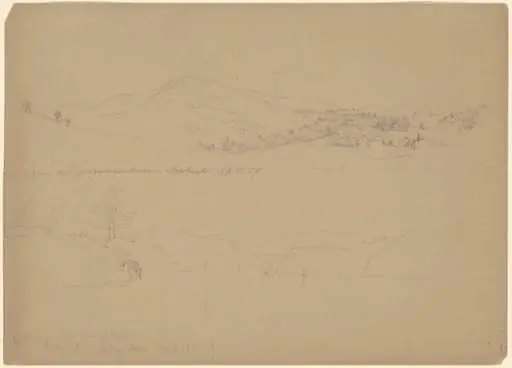
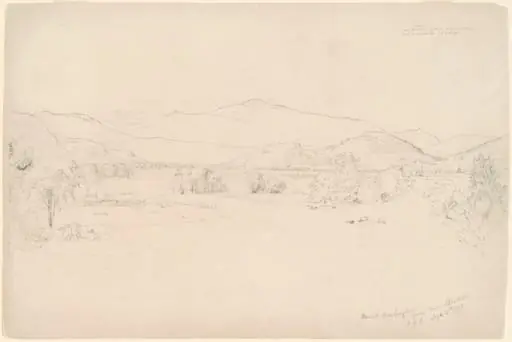
A small group of people and a few animals are near the water’s edge, but the focus stays on the land and sky.
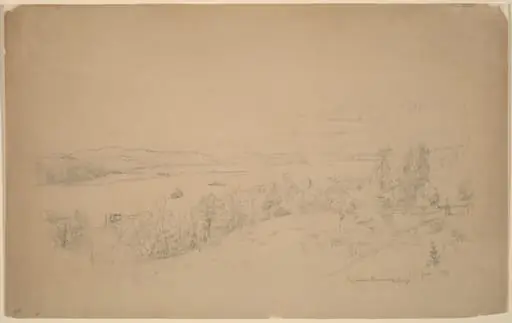
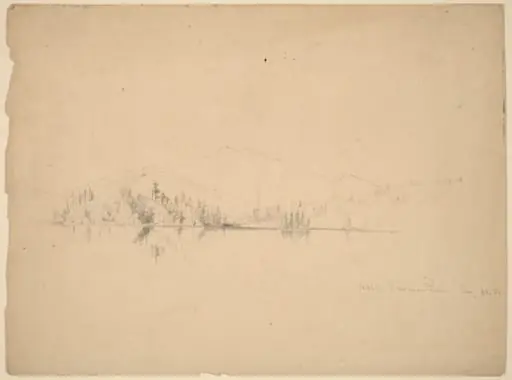
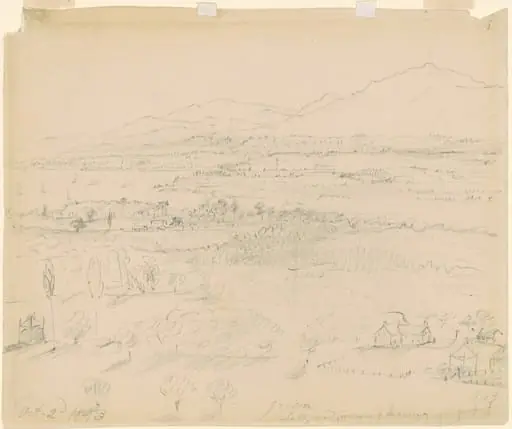
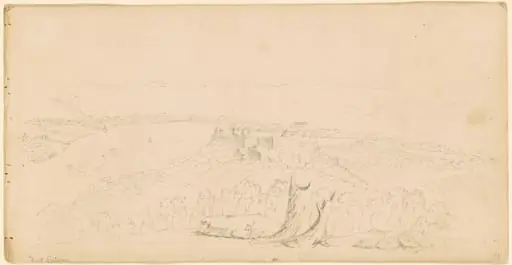
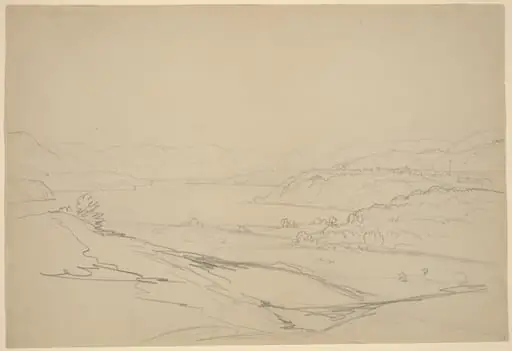
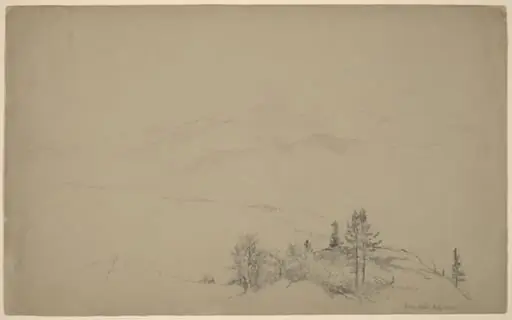
This sketch shows a quiet river valley with rolling hills and scattered trees. The paper is a warm tan, and the lines are light, almost like a quick pencil drawing. A small group of people and a few animals are near the water’s edge, but the focus stays on the land and sky.
The artist used soft shading to show distance, making far hills blur into the background. The title says it’s the Miami and Ohio Rivers, drawn in 1865.
Next, check out Wyant, Alexander Helwig to see more of his work.
Overview
Alexander Helwig Wyant’s drawing titled Miami and Ohio Rivers, executed in 1865, presents a tranquil river landscape rendered in graphite on a warm‑toned tan wove paper. The composition captures a broad valley with gently rolling hills, scattered trees, and a modest gathering of figures and animals along the water’s edge, emphasizing the expansive sky and land over the human presence.
Subject & Meaning
The work depicts the confluence of the Miami and Ohio Rivers, illustrating a serene, rural setting that reflects mid‑nineteenth‑century American attitudes toward untouched nature. By placing a small group of people and livestock at the water’s margin, Wyant underscores the modest scale of human activity within a vast, unspoiled environment, suggesting a harmonious coexistence between people and landscape.
Technique & Style
Wyant employs delicate graphite shading to convey atmospheric perspective, allowing distant hills to recede into a softened haze. Light, fluid lines create a sense of immediacy, reminiscent of a rapid sketch, while the tan paper provides a subtle tonal base that enhances the drawing’s overall warmth and depth.
History & Provenance
Created in 1865, the drawing belongs to the early period of Wyant’s career, when he focused on landscape studies before his later, more mature works. The piece has remained attributed to Wyant and is catalogued among his river and pastoral studies, offering insight into his developing approach to rendering natural scenery.
Artist & collection