Artwork
H Beard Print Collection
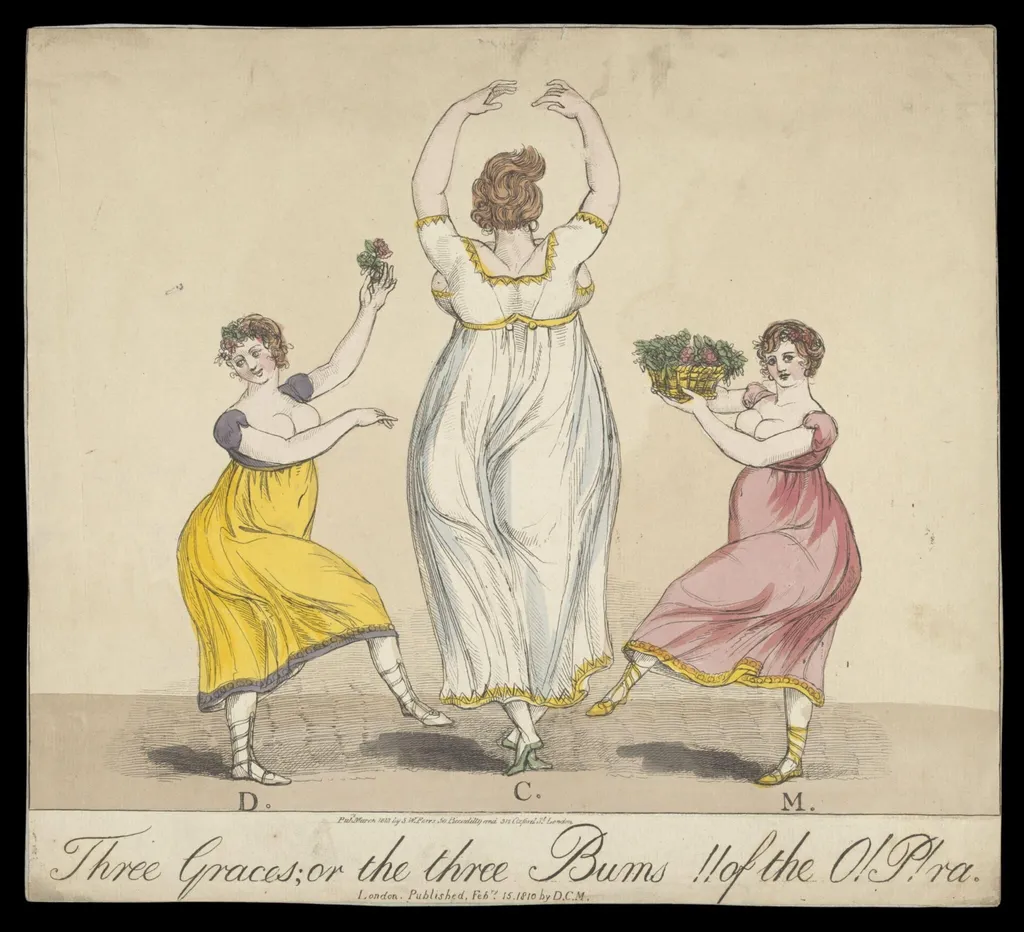
H Beard Print Collection is a print by the Romanticist artist Unknown. It dates from 15 and is held in the collection of the Victoria and Albert Museum.
About this work
Overview
The work reflects a 19th-century British tradition of visual humor, blending high cultural references with lowbrow parody.
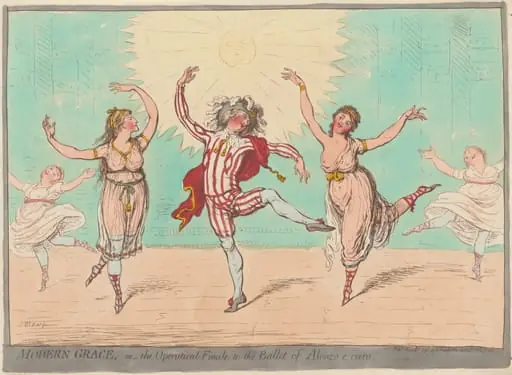
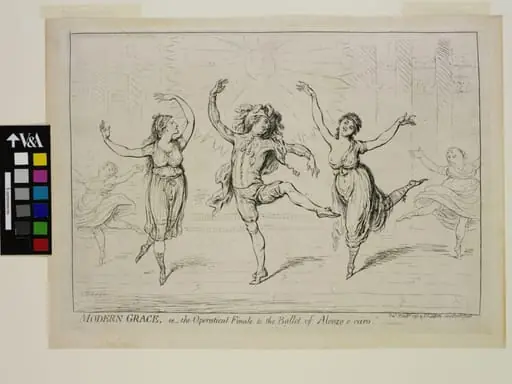
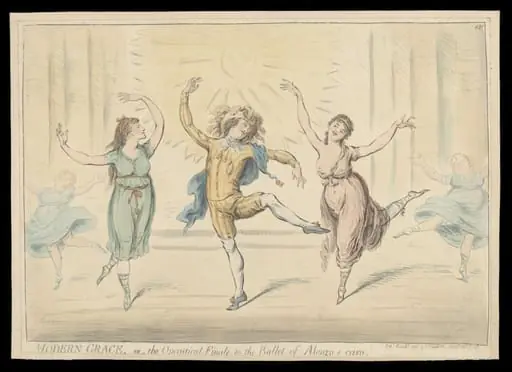
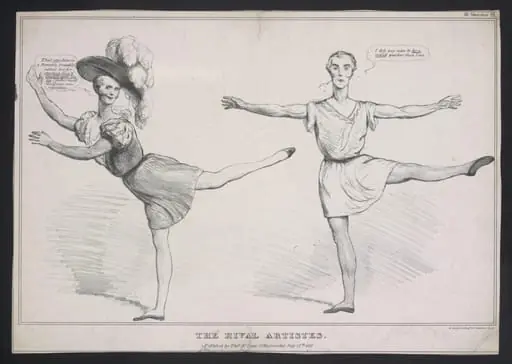
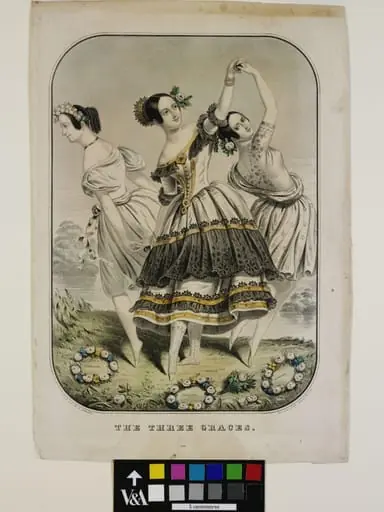
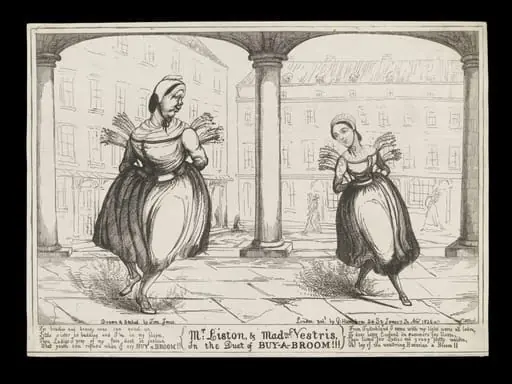
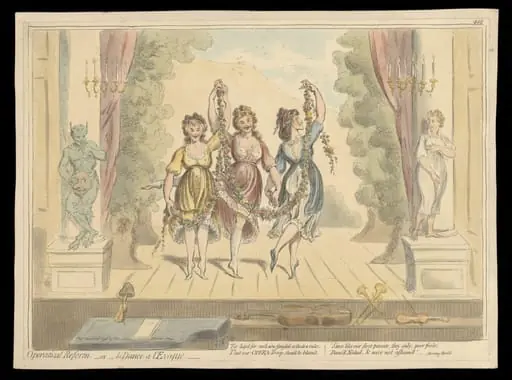
This print, part of the H Beard Print Collection, was published in London by D.C.M. and features a satirical take on classical mythology. Titled 'Three Graces; or the three Bums !!of the O!P!ra,' it reimagines the mythological trio as disheveled, comical figures associated with the opera house. The work reflects a 19th-century British tradition of visual humor, blending high cultural references with lowbrow parody.
Subject & Meaning
The print substitutes the graceful, divine figures of Greek myth with three unkempt men, likely caricatures of opera-goers or performers. The ironic title juxtaposes classical elegance with vulgar slang, mocking pretensions of high art. It suggests a critique of social pretense, using absurdity to highlight the gap between idealized culture and everyday reality in Victorian theatrical life.
Technique & Style
Executed as a hand-colored print, the work employs bold outlines and exaggerated features typical of caricature traditions. The figures are rendered with loose, expressive lines, emphasizing their disheveled postures and facial expressions. Subtle color accents draw attention to clothing and props, enhancing the comedic tone without overwhelming the composition's simplicity.
History & Provenance
Produced in London during the Romantic period, the print was likely distributed as a broadside or sheet for popular consumption. It entered the Victoria and Albert Museum’s collection as part of the H Beard Print Collection, a curated assemblage of theatrical and satirical prints from the early to mid-19th century, reflecting contemporary public tastes and visual culture.
Context
In early 19th-century Britain, satire thrived in print media as a tool for social commentary. Opera houses were popular public spaces, often criticized for their mix of class and spectacle. This print fits within a broader trend of visual humor that mocked cultural pretension, aligning with the era’s fascination with the absurd and the everyday.
Legacy
The print endures as a modest but telling artifact of Victorian visual satire. It illustrates how classical motifs were repurposed for popular amusement, revealing shifting attitudes toward art and class. Its preservation in the V&A underscores its value as a cultural document rather than a work of fine art, offering insight into public humor of the time.
Artist & collection

 Domestic Scene
 Giacomo and Cardinal Marco, investing Andrea, Abbot of San Zeno, with his Benefice
 The Nymph of Fontainebleau
 Portrait of a Woman
 Madonna and Child with Saints in the Enclosed Garden
 Venus and Minerva
 Family Group of Four on Sofa
 Wall painting from Room H of the Villa of P. Fannius Synistor at Boscoreale