Artwork
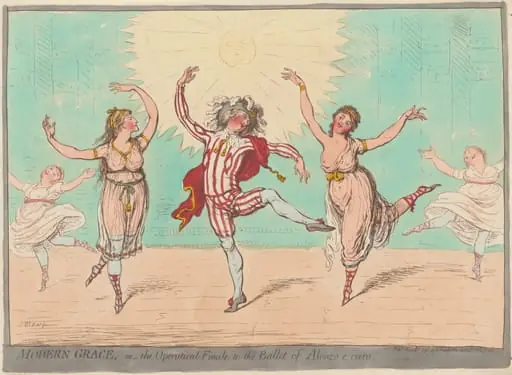
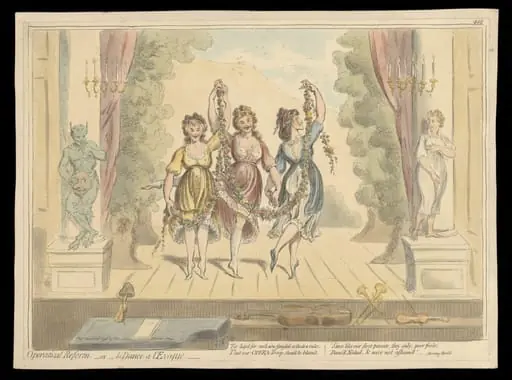
Modern Grace, or the Operatical Finale to the ballet of Alonzo e Caro
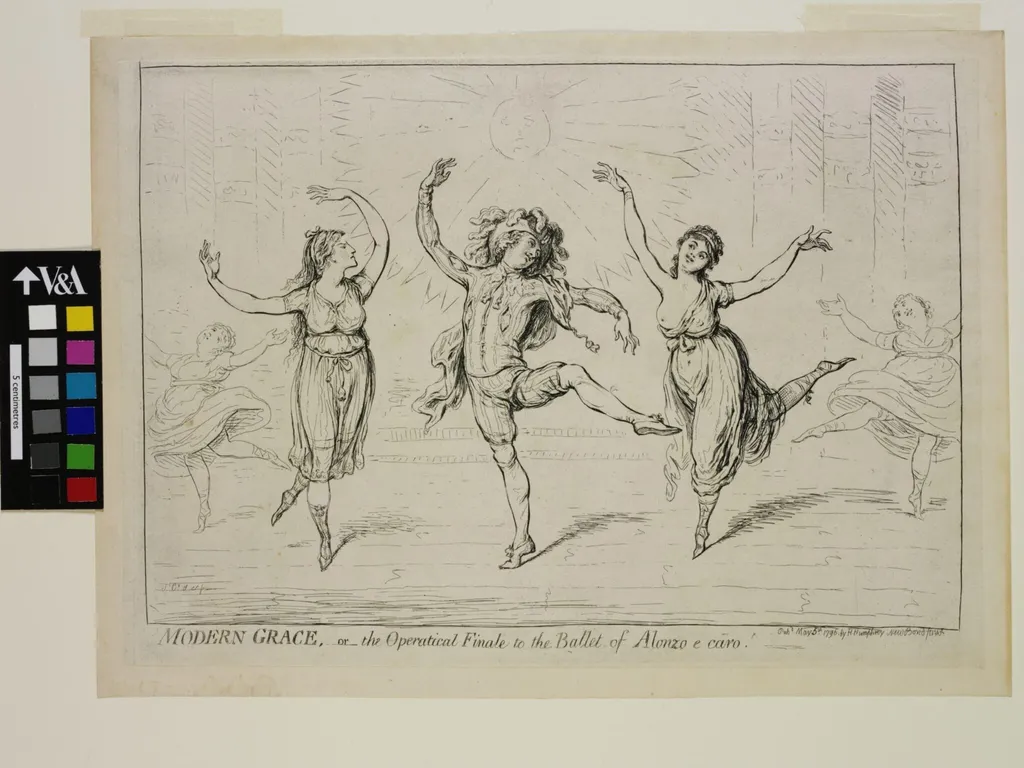
Modern Grace, or the Operatical Finale to the ballet of Alonzo e Caro is a print by the Romanticist artist James Gillray. It dates from 5 and is held in the collection of the Victoria and Albert Museum.
About this work
Overview
The scene reflects their prominence after their 1796 debut, where Rose’s poise and controlled elegance drew particular attention.
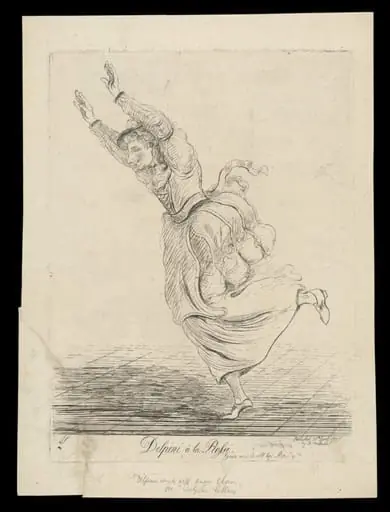
This print captures a moment from a ballet performance featuring Mme Rose and her husband Charles Didelot, who together led a celebrated dance partnership in late 18th-century London. The scene reflects their prominence after their 1796 debut, where Rose’s poise and controlled elegance drew particular attention. The composition centers on their stage presence, contrasting with another dancer, Parisot, whose more provocative attire became a subject of public and artistic commentary.
Subject & Meaning
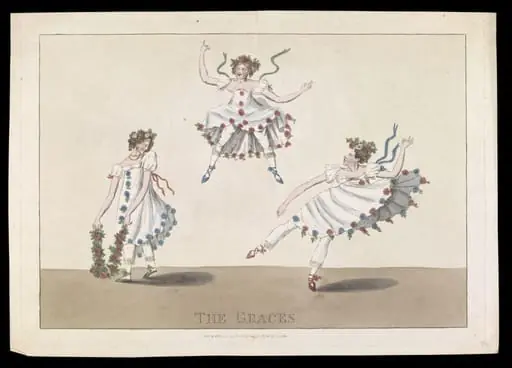
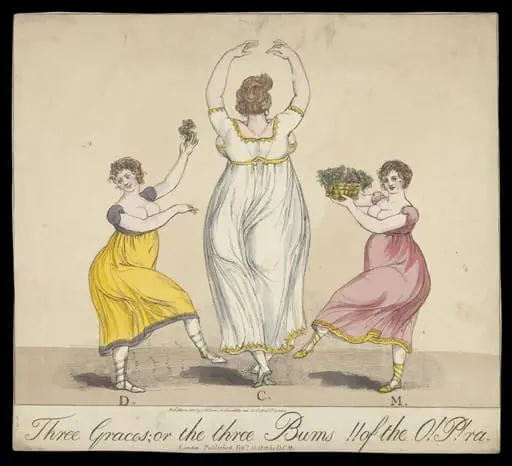
Mme Rose is portrayed as the embodiment of refined theatrical grace, her posture and costume signaling decorum and restraint. Her husband, Didelot, stands beside her as both partner and impresario. In contrast, the figure of Parisot, often depicted with exposed skin, represents a different aesthetic—one emphasizing sensuality over restraint. The visual contrast between the two women reflects broader cultural tensions around femininity, propriety, and performance in the era.
Technique & Style
The print employs linear precision and tonal modulation to define form and movement, characteristic of late 18th-century reproductive engraving. While not using sfumato in the painterly sense, it achieves soft transitions through delicate hatching and shading, particularly in the drapery and facial contours. The figures are arranged with theatrical clarity, emphasizing gesture and spatial hierarchy over atmospheric depth.
History & Provenance
Mme Rose, formerly Rose Pole, was recruited by Didelot from the Paris Opera in 1793 and became a star in London. Their performances were widely documented in prints, which served as both souvenirs and cultural commentary. The image likely originated from a popular print series capturing the era’s dance celebrities, circulating among theatergoers and art collectors in Britain during the 1790s.
Context
In post-revolutionary London, ballet was a space where social norms were both reinforced and challenged. Rose’s restrained elegance aligned with ideals of respectable femininity, while Parisot’s exposed form stirred debate about morality and spectacle. These contrasting portrayals reveal how public taste and censorship shaped the representation of female performers in print culture.
Legacy
The print preserves a moment in the evolution of ballet’s public image, documenting how dancers became cultural icons through visual media. Rose’s image, tied to dignity and control, stood in opposition to the more sensationalized portrayals of contemporaries like Parisot. These depictions influenced later representations of female performers, embedding enduring associations between costume, movement, and moral judgment.
Artist & collection
Artist
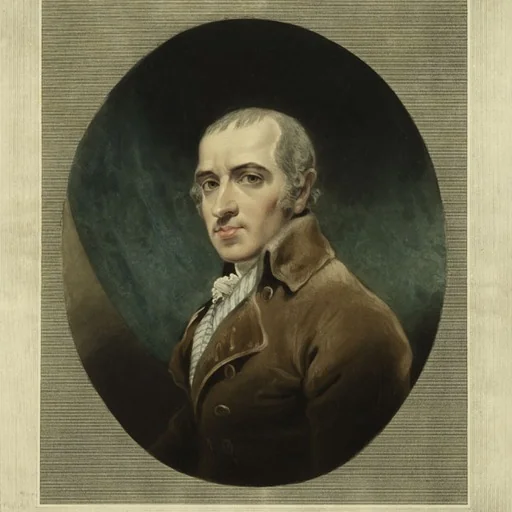
James Gillray (13 August 1756 – 1 June 1815) was an English caricaturist and printmaker famous for his etched political and social satires, mainly published between 1792 and 1810.