Artwork
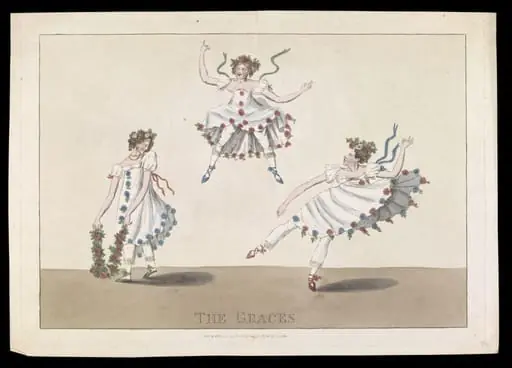
The Three Graces
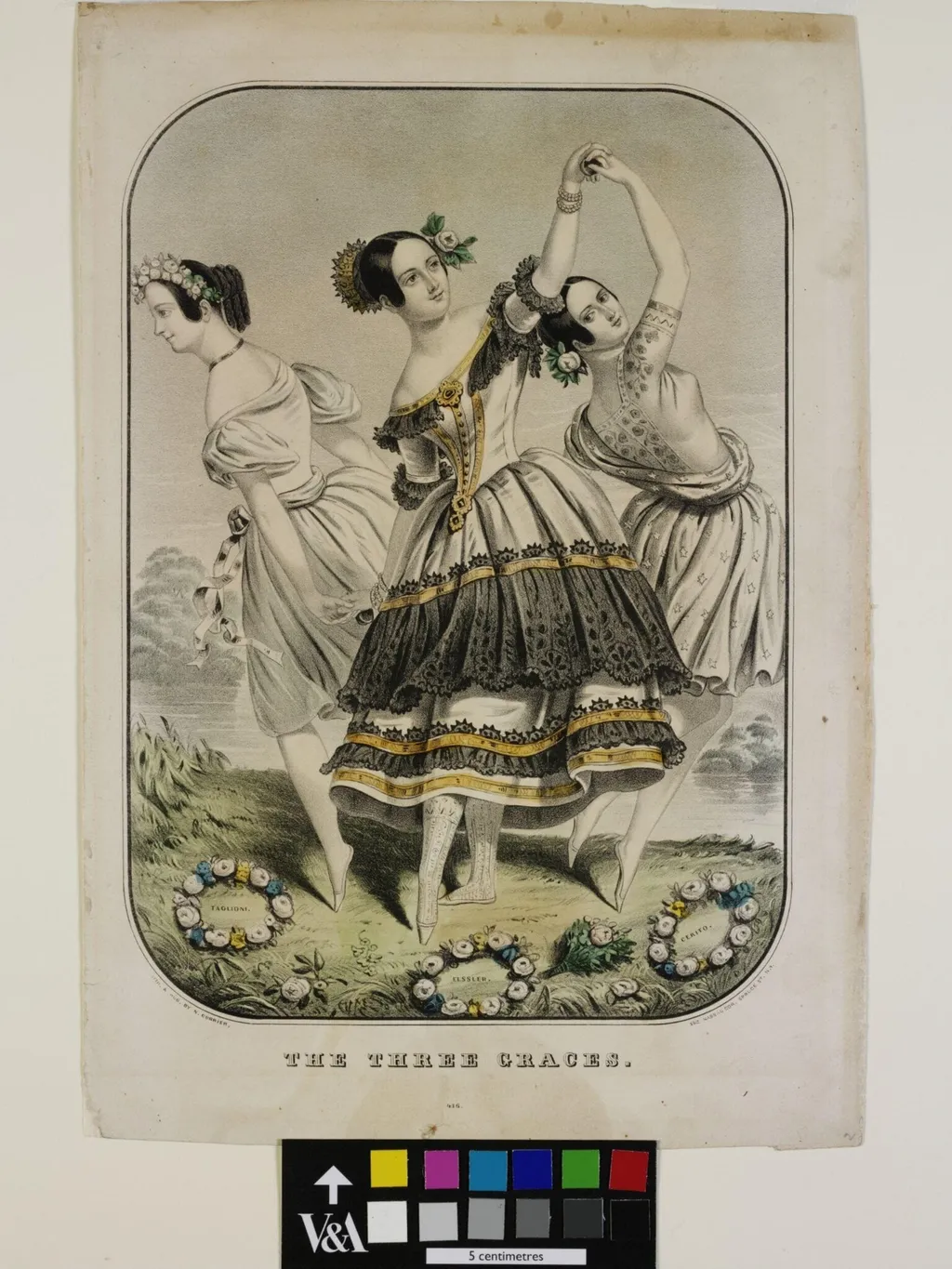
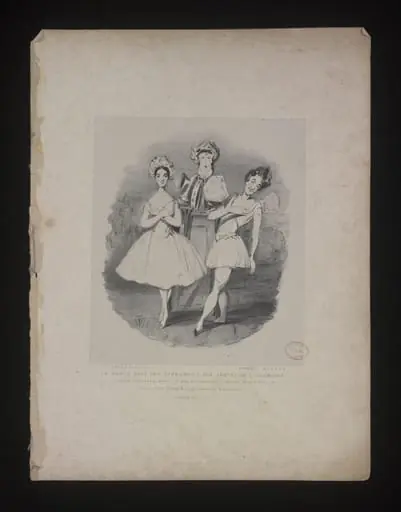
The Three Graces is a print by the Romanticist artist N. Currier. It dates from 1845 and is held in the collection of the Victoria and Albert Museum. This mid-19th century print, produced by N.
About this work
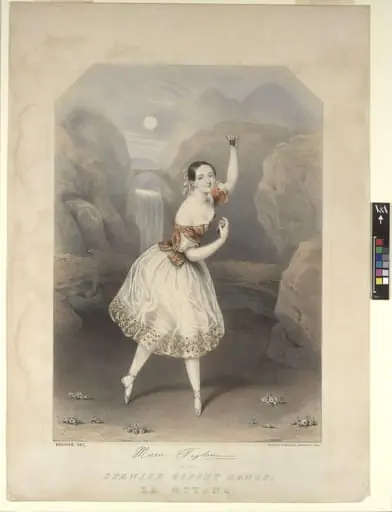
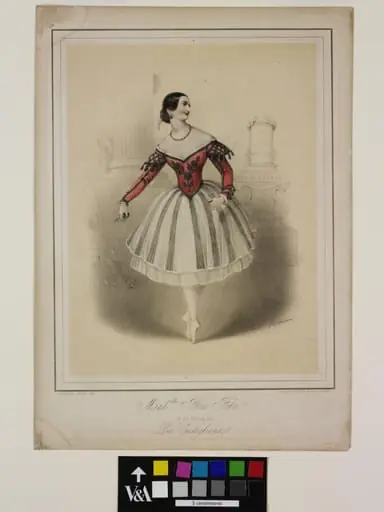
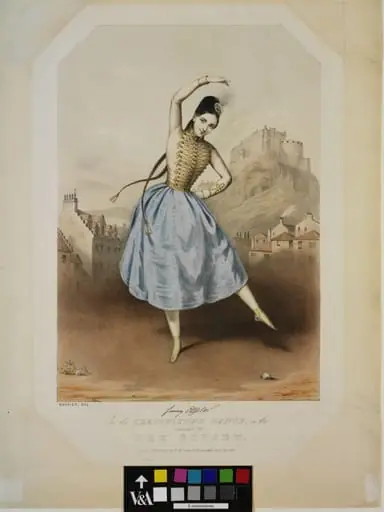
Another shows off Spanish hints in her outfit after a show that stopped Congress in its tracks.
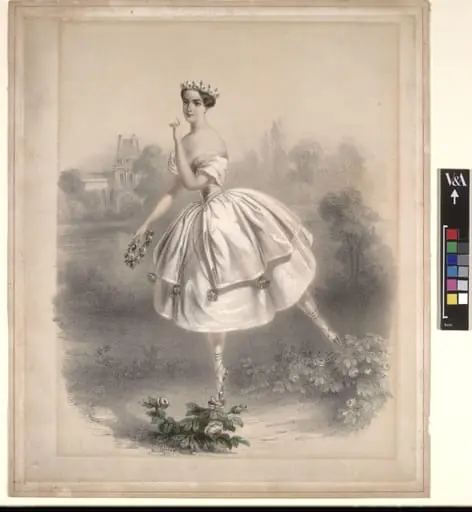
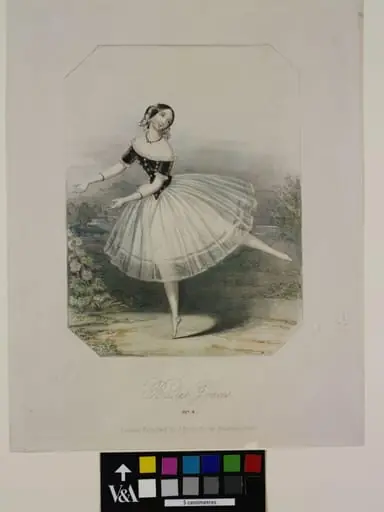
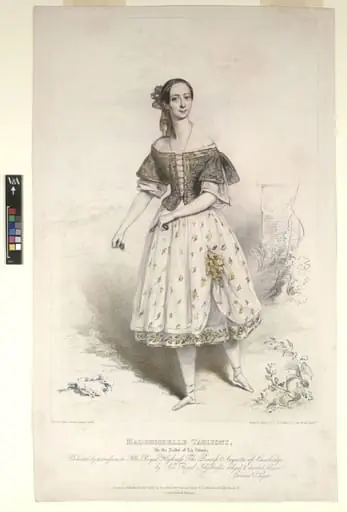
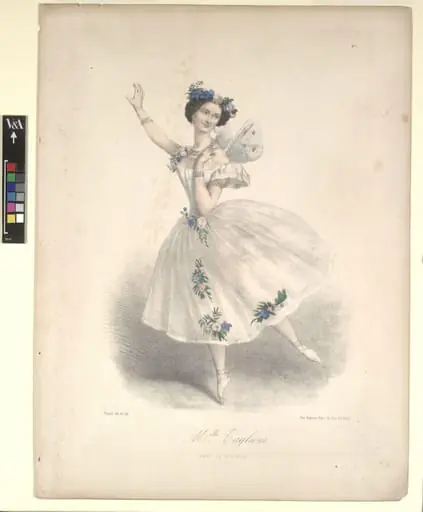
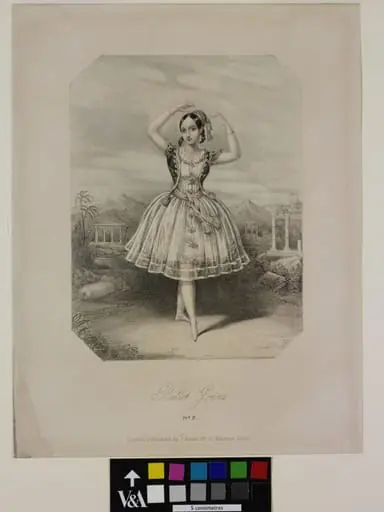
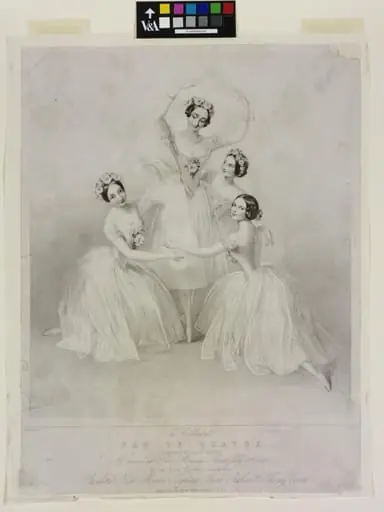
This print shows three famous ballet dancers in their signature roles. It’s a Romantic-era print, not a painting, by N. Currier from around 1845.
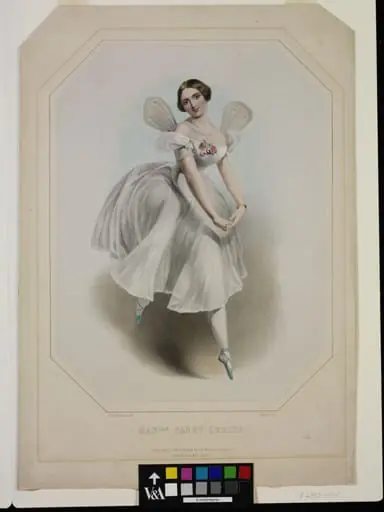
Each dancer’s costume tells her character’s story. One wears a light, airy dress for her role as a spirit. Another shows off Spanish hints in her outfit after a show that stopped Congress in its tracks. The third dances in a short tunic that feels straight out of ancient Greece.
Look up the Victoria and Albert Museum to see more prints like this one.
Overview
This mid-19th century print, produced by N. Currier circa 1845, portrays three renowned ballet dancers of the era in their most celebrated roles.
Subject & Meaning
The print depicts Marie Taglioni as the Sylph from La Sylphide, Fanny Elssler in the Cachucha from The Devil on Two Sticks, and Fanny Cerrito as Diana in the pas de Diane from The Beauty of Ghent. Each dancer’s costume symbolizes their character: Taglioni’s airy dress reflects the Sylph’s ethereal nature, Elssler’s attire hints at Spanish influence, and Cerrito’s Grecian tunic and lunar headdress identify her as the goddess Diana.
Technique & Style
As a product of the Romantic era, the print employs techniques characteristic of its time, though specific artistic choices are not detailed due to the nature of the provided information. The focus on capturing the essence of each dancer’s role through costume and pose is evident.
History & Provenance
Created by N. Currier around 1845, the print’s history beyond its creation is not specified in the provided sources. Notably, Elssler’s performance of the Cachucha was historically impactful, once prompting the U.S. Congress to adjourn during her Washington performance.
Context
This work can be contextualized within the broader collection of similar prints at institutions like the Victoria and Albert Museum, which houses a significant archive of 19th-century ballet and theatrical prints.
Legacy
The print serves as a visual record of the fame and influence of these dancers during the mid-19th century, preserving their legendary roles for posterity.
Artist & collection
Artist
N. Currier made bold prints that put everyday life and pop culture on paper—think colorful posters for theater hits or fairy-tale scenes. Two examples in this set are *The Three Graces* and *Cerito in the Silphide*,…