Artwork
NATURĂ STATICĂ CU CĂRȚI ȘI FLORI
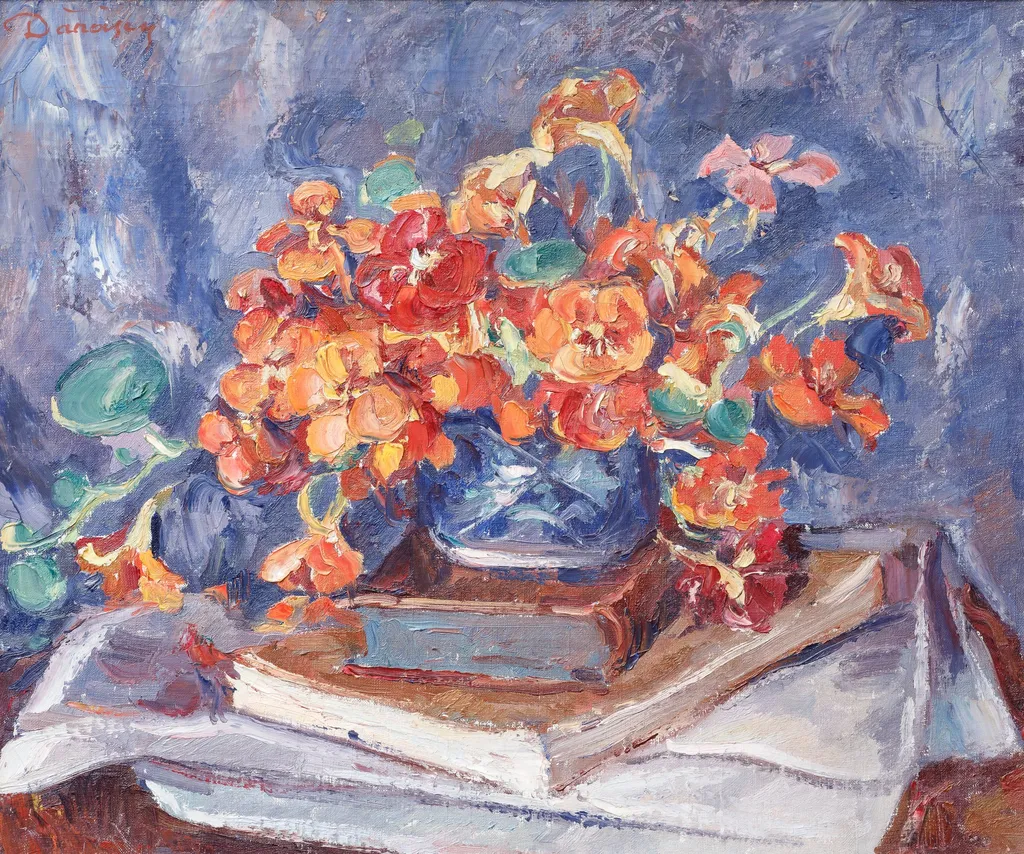
NATURĂ STATICĂ CU CĂRȚI ȘI FLORI is a print by Nicolae Dărăscu. It dates from 1850 and is held in the collection of the National Museum of Art of Romania.
About this work
Overview
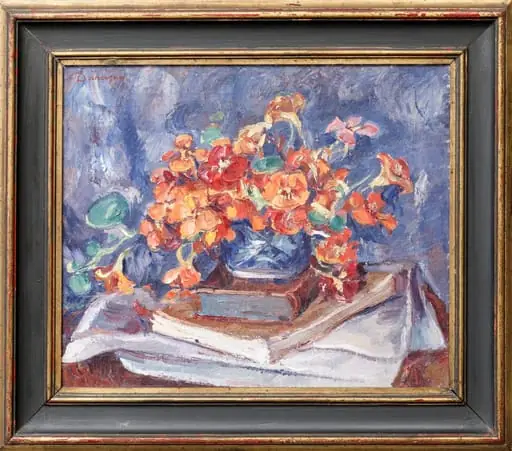
It presents a modest arrangement of flowers in a dark blue vase, positioned on a wooden surface draped with a white cloth.
Natură statică cu cărți și flori is a still life painting by Romanian artist Nicolae Dărăscu, dated around 1850. It presents a modest arrangement of flowers in a dark blue vase, positioned on a wooden surface draped with a white cloth. The composition is restrained yet vivid, emphasizing the interplay of color and texture against a neutral backdrop. The work reflects early tendencies in Romanian painting toward naturalistic observation and expressive brushwork.
Subject & Meaning
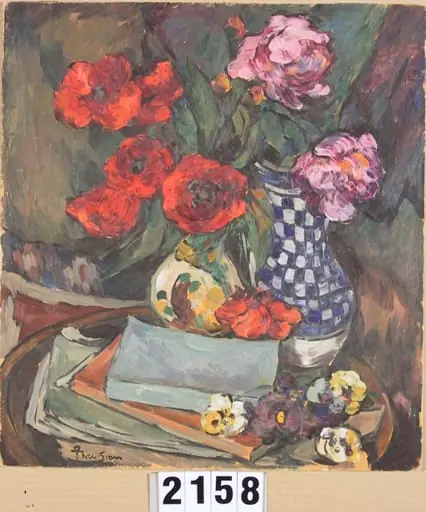
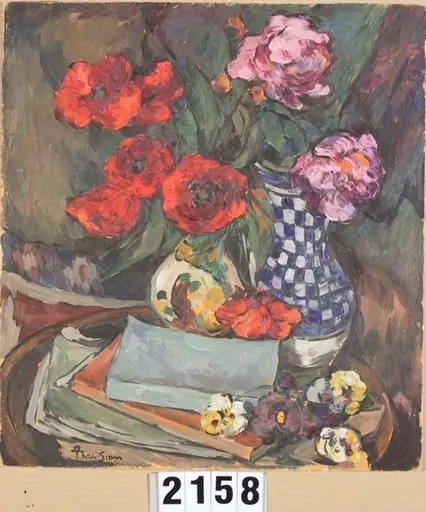
The painting centers on a vibrant bouquet of red and orange blooms, accented by green foliage, arranged simply on a table. No symbolic or narrative elements are overtly present; the focus lies in the quiet presence of everyday objects. The inclusion of books, though not clearly rendered, suggests a contemplative space, perhaps hinting at intellectual or domestic life. The work invites attention to the transient beauty of nature through its unadorned subject matter.
Technique & Style
Dărăscu employed thick, textured brushstrokes to render the flowers, creating a tactile surface that enhances their vitality. The paint is applied with visible energy, particularly in the petals and leaves, contrasting with the smoother, muted tones of the background and table. This approach anticipates later impasto techniques, though it remains grounded in 19th-century realism. The deliberate contrast between the lively foreground and subdued background directs focus to the floral arrangement.
History & Provenance
The painting’s early history is not well documented, but it is associated with Dărăscu’s formative period in the mid-19th century, when Romanian artists were beginning to develop a distinct national style. It likely originated in a private collection in Romania and has since been preserved in institutional holdings. Its survival reflects growing interest in domestic art from this era, though it was not widely exhibited during the artist’s lifetime.
Context
Created during a time when Romanian art was transitioning from academic traditions toward more personal expression, this work aligns with emerging trends in Eastern European still life. While Western European painting was embracing Romanticism and Realism, Romanian artists like Dărăscu turned to intimate, locally observed subjects. The painting’s modest scale and domestic setting reflect a broader cultural shift toward valuing everyday beauty over grand historical themes.
Legacy
Though not widely known outside Romania, this painting is recognized as an early example of expressive still life in Romanian art. Its textured brushwork and emphasis on color over detail influenced later generations of local painters seeking to develop a national visual language. It remains a quiet but significant reference point in the history of Romanian modernism, illustrating how ordinary subjects could carry artistic weight through technique and sensitivity.
Artist & collection

Artist
Nicolae Dărăscu was a Romanian painter. He was influenced by Impressionism and Neo-impressionism.