Artwork
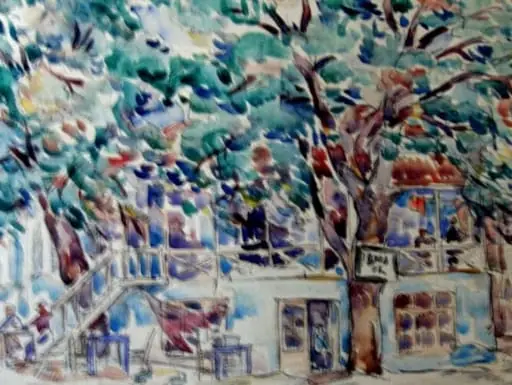
Peisaj din Vâlcov
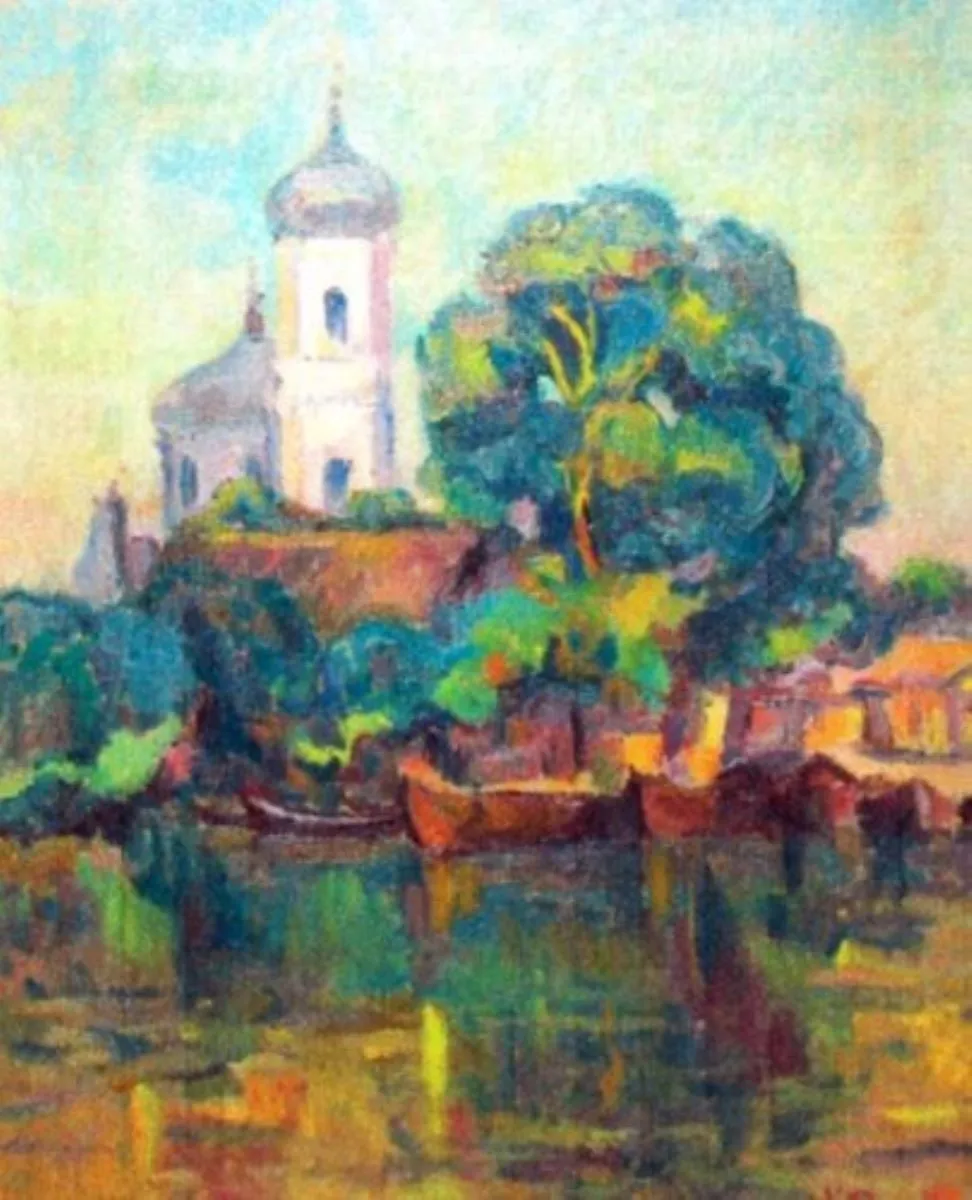
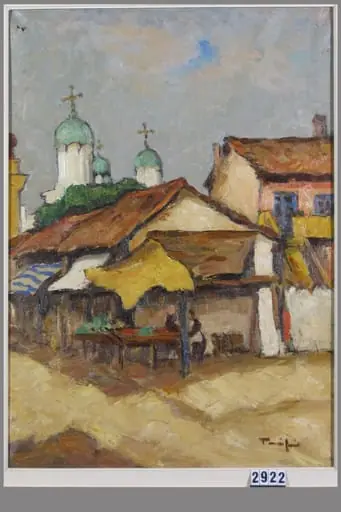
Peisaj din Vâlcov is an unspecified painting by Nicolae Dărăscu. It dates from 1931 and is held in the collection of the Gavrilă Simion Eco-Museum Research Institute Tulcea - Art Museum.
About this work
Overview
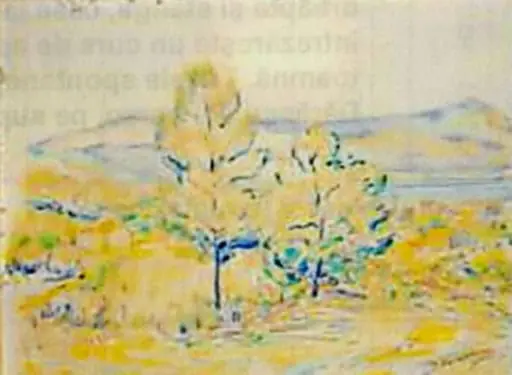
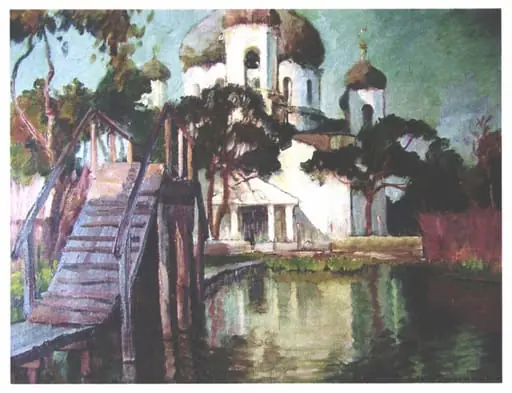
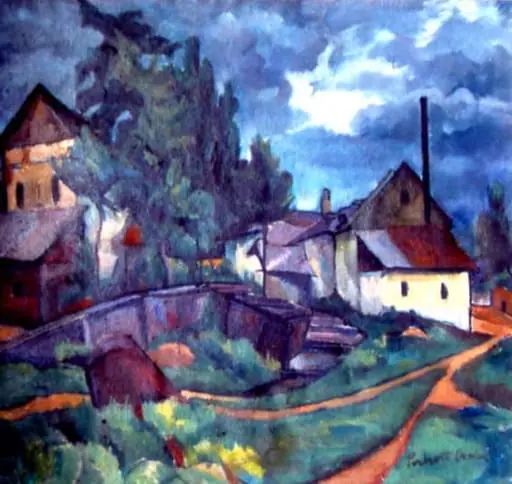
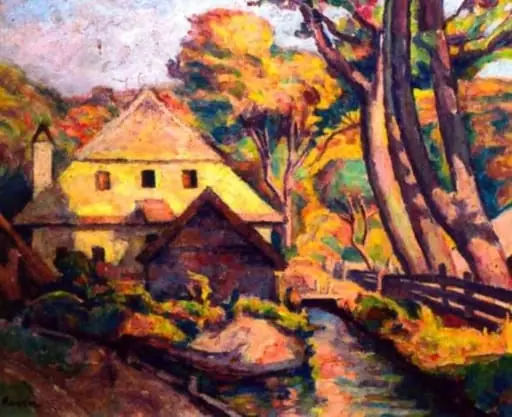
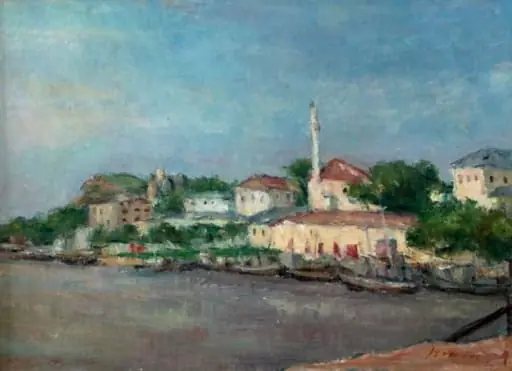
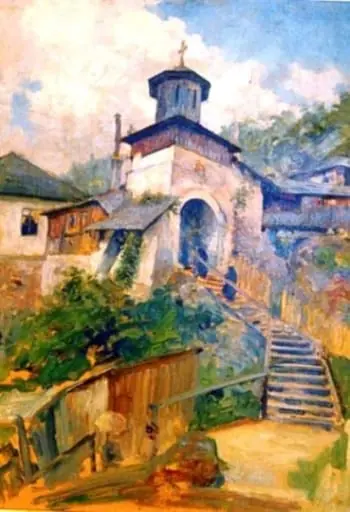
Nicolae Dărăscu’s landscape, titled Peisaj din Vâlcov, dates from around 1931 and is part of the collection of the Museum of Ethnography. The composition centers on a modest white church capped with a dome, positioned behind a large, leafy tree. The scene is rendered in vivid, loosely applied greens, yellows and blues, creating a lively yet informal atmosphere.
Subject & Meaning
The painting captures a rural Romanian setting, juxtaposing the stark, pristine dome of the church against the surrounding foliage and weathered village structures. The solitary church, rendered in a single clean tone, may suggest a focal point of communal identity amid the more chaotic natural environment, emphasizing the coexistence of human settlement and the landscape.
Technique & Style
Dărăscu employs a thick impasto application, laying paint in pronounced, textured strokes that retain visible brush marks. The palette is bright, with colors blended in broad, uneven patches rather than refined transitions. This approach gives the work a tactile quality, allowing the white dome to stand out as a smooth counterpoint to the rough, layered background.
History & Provenance
Created circa 1931, Peisaj din Vâlcov entered the holdings of the Museum of Ethnography, where it remains on display. The work reflects Dărăscu’s interest in Romanian rural scenes during the interwar period, contributing to the museum’s broader representation of national cultural and visual heritage.
Artist & collection

Artist
Nicolae Dărăscu was a Romanian painter. He was influenced by Impressionism and Neo-impressionism.
Museum
Gavrilă Simion Eco-Museum Research Institute Tulcea - Art Museum
Continue through works from the same source collection.