Artwork
Hanul Pașalâcu
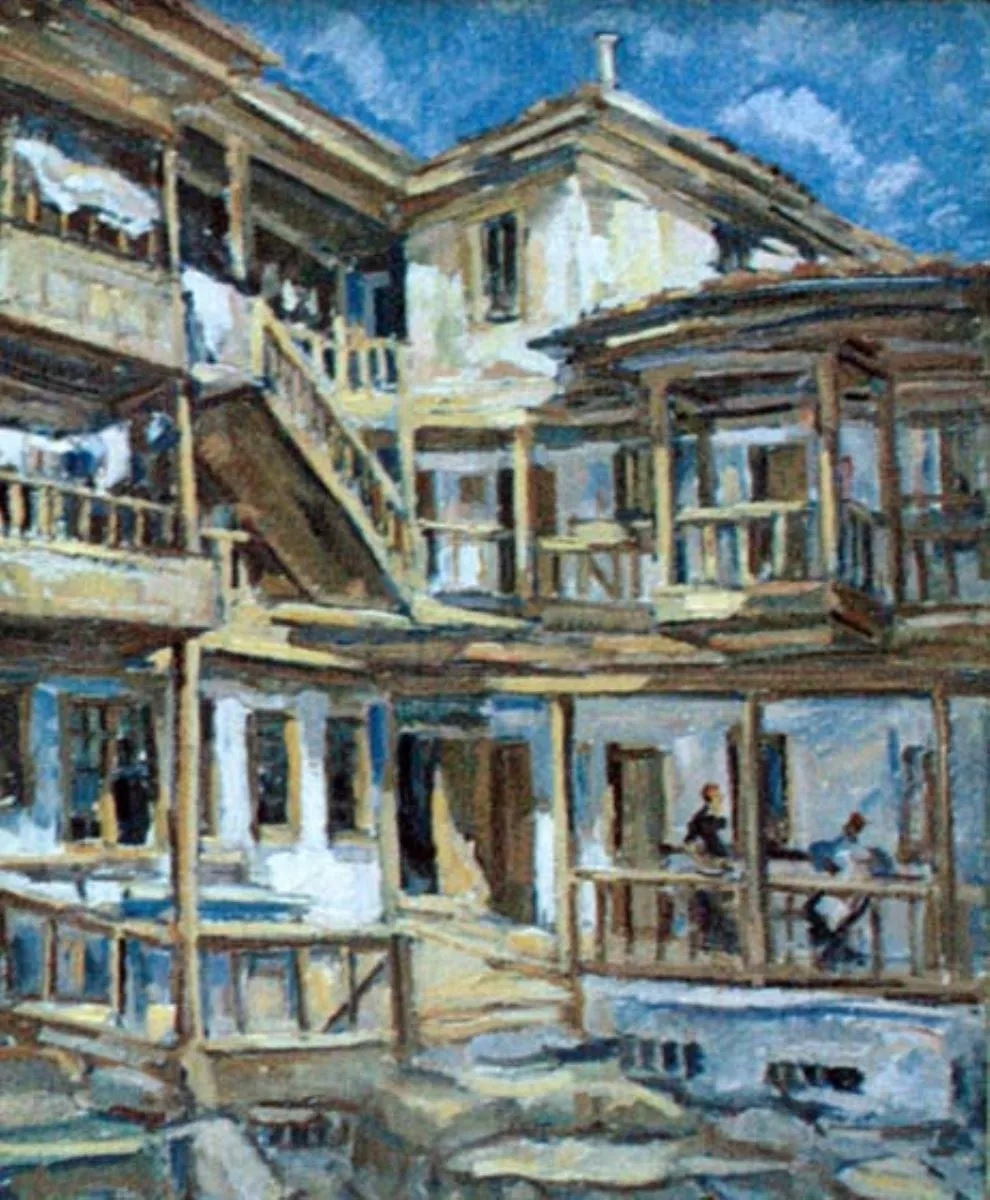
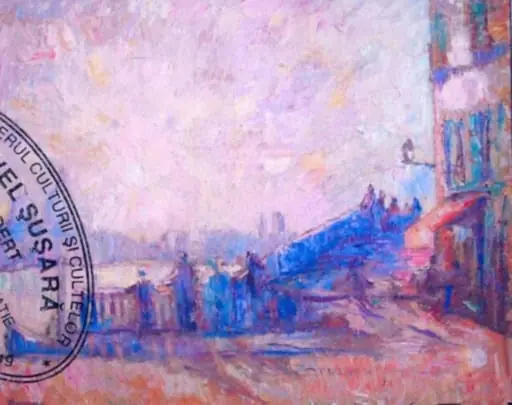
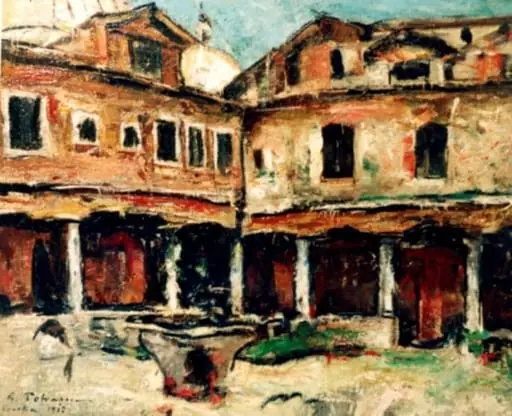
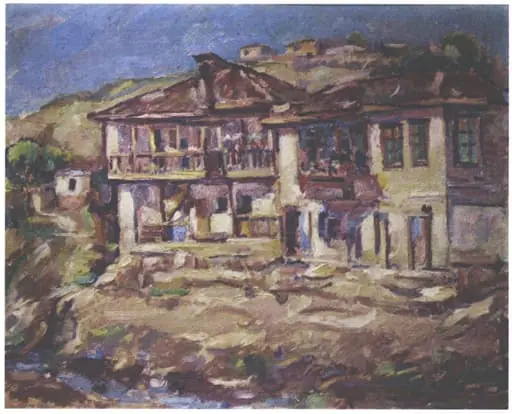
Hanul Pașalâcu is an unspecified painting by the Romanesque artist Nicolae Dărăscu. It dates from 1923 and is held in the collection of the National Museum of Art of Romania.
About this work
Overview
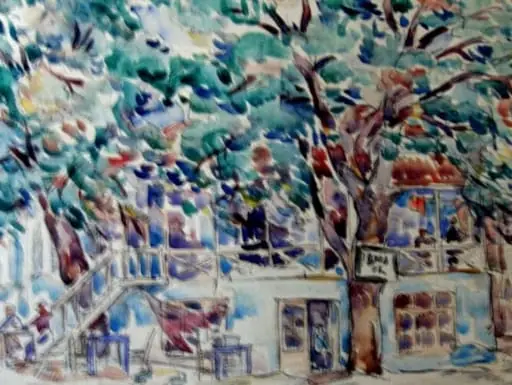
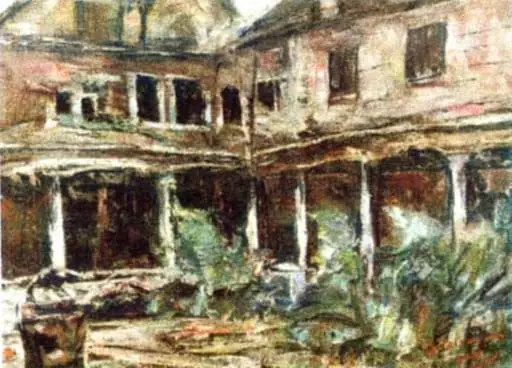
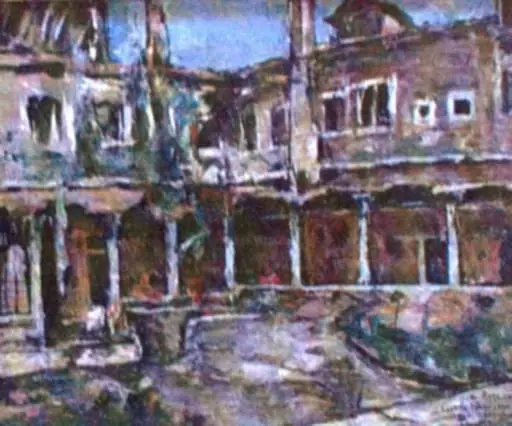
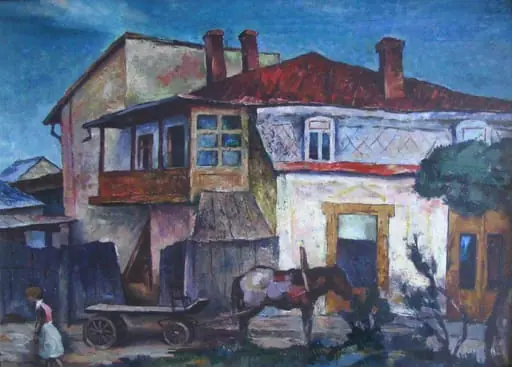
Painted in 1923 by Nicolae Dărăscu, Hanul Pașalâcu depicts a modest, aging wooden structure in rural Romania. The building, with its uneven levels and weathered surfaces, conveys a sense of time-worn endurance. Dărăscu captures not just architecture but the quiet rhythm of daily life within it, emphasizing the physical presence of the space through deliberate, tactile brushwork.
Subject & Meaning
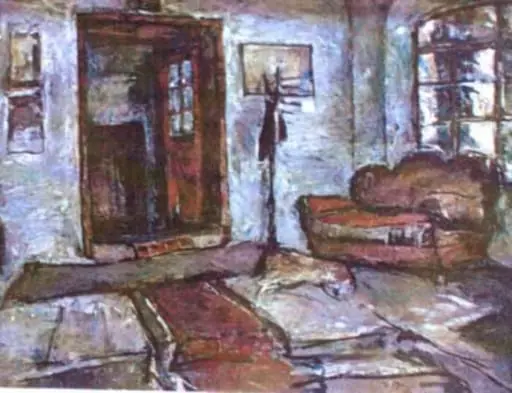
The painting centers on a two-story inn-like dwelling, its interior revealing two figures engaged in quiet activity—one reading or writing by the window.
The painting centers on a two-story inn-like dwelling, its interior revealing two figures engaged in quiet activity—one reading or writing by the window. The scene avoids narrative drama, instead suggesting solitude and routine. The worn interior and fragile structure imply a life shaped by necessity, not luxury, reflecting a broader cultural observation of rural Romanian existence in the early 20th century.
Technique & Style
Dărăscu employs thick, visible impasto strokes to render the wooden beams and cracked walls, giving the surface a tactile, almost sculptural quality. The palette is restrained—dominated by muted blues, grays, and earth tones—with subtle highlights suggesting natural light filtering through the windows. This technique prioritizes material authenticity over idealized form, grounding the scene in physical reality.
History & Provenance
Created during a period of national introspection in interwar Romania, the painting emerged from Dărăscu’s interest in vernacular architecture and everyday life. It was likely painted during one of his travels through the countryside, where he sought to document structures and scenes often overlooked by academic art. The work remained in Romanian collections, contributing to a growing movement of realist regional representation.
Context
In the 1920s, Romanian artists increasingly turned from European academic traditions to local subjects, seeking cultural identity through depictions of rural life. Hanul Pașalâcu aligns with this trend, echoing the work of contemporaries who valued authenticity over ornament. The building itself may have been a common type of rural inn or guesthouse, once vital to regional travel but now fading into obsolescence.
Legacy
The painting stands as a quiet testament to Romania’s architectural heritage and the artistic shift toward social realism. While not widely exhibited internationally, it influenced later generations of Romanian painters who prioritized the dignity of ordinary spaces. Its enduring value lies in its unembellished observation—a record of place and presence, not spectacle.
Artist & collection

Artist
Nicolae Dărăscu was a Romanian painter. He was influenced by Impressionism and Neo-impressionism.