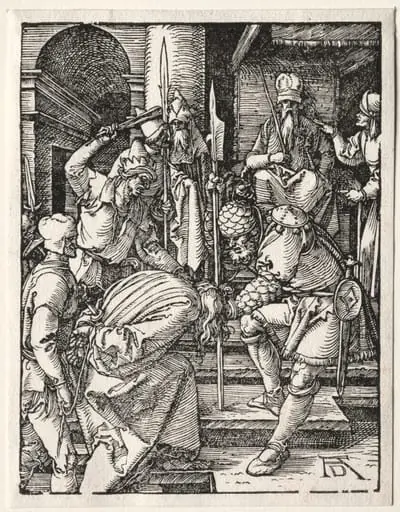
Artwork
Pilate Washing His Hands
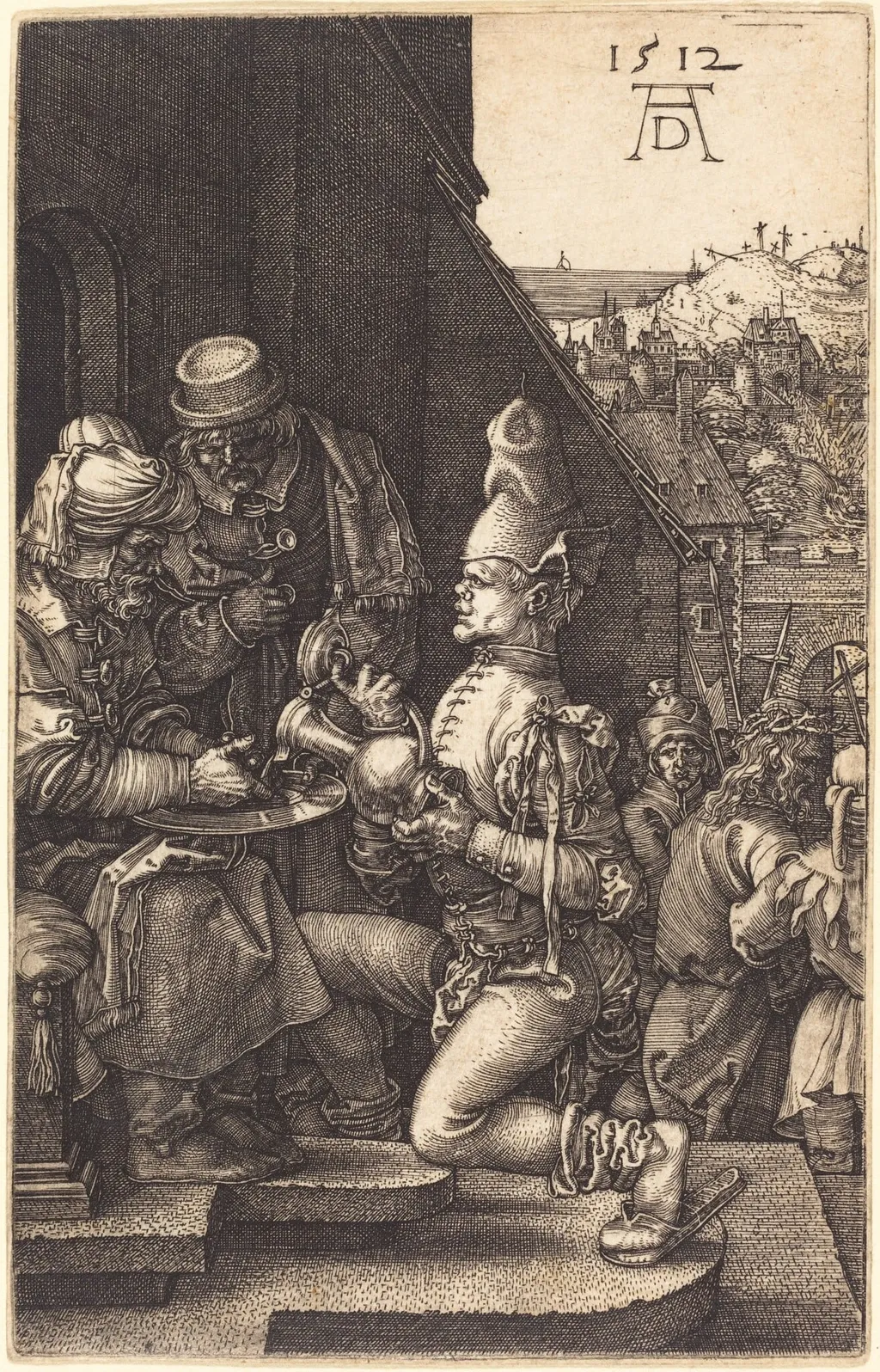
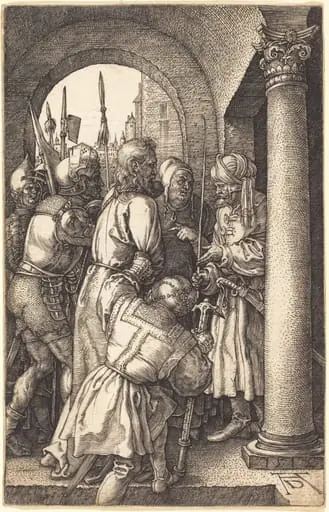
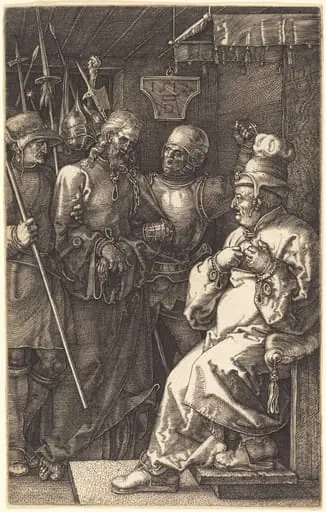
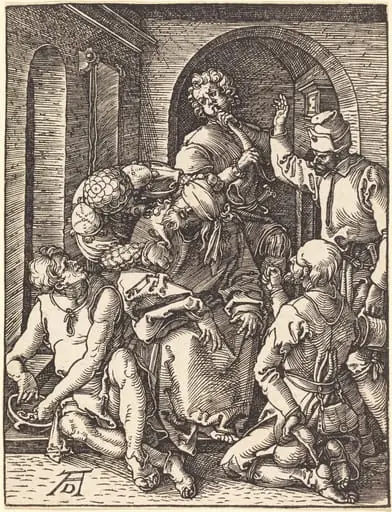
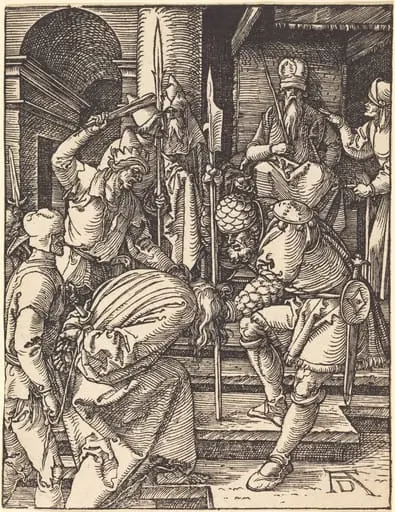
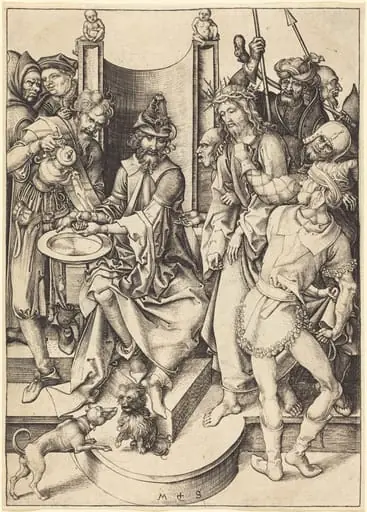
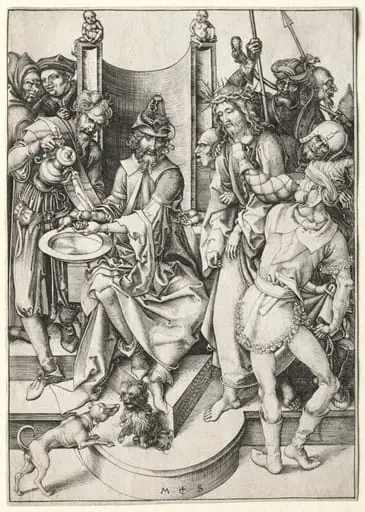
Pilate Washing His Hands is an ink print by the Northern Renaissance artist Albrecht Dürer. It dates from 1512 and is held in the collection of the Museum Boijmans Van Beuningen.
About this work
Overview
The intricate detailing extends to the architectural elements, the textures of clothing, and the expressive faces of the crowd.
Pilate Washing His Hands is an engraving by Albrecht Dürer created in 1512. The work depicts the biblical scene from the Passion of Christ where Pontius Pilate, the Roman governor, washes his hands in a basin to symbolize his innocence regarding the condemnation of Jesus. In the composition, Pilate stands centrally on a raised dais, flanked by soldiers and onlookers, while the figure of Jesus is visible in the background, often shown bound or being led away. Dürer utilizes the engraving medium to achieve exceptional linear precision, employing dense cross-hatching and varied line weights to model form and create atmospheric depth. The intricate detailing extends to the architectural elements, the textures of clothing, and the expressive faces of the crowd. Produced during the height of Dürer's career in Nuremberg, this print reflects his mastery of the Northern Renaissance style, combining Germanic attention to detail with Italianate principles of perspective and anatomy. As part of his series on the Passion, the work serves as a significant example of Dürer's ability to convey complex theological narratives and human emotion through the graphic arts.
Subject & Meaning
The composition captures the moment described in the Gospel of Matthew, when Pilate, seeking to distance himself from the responsibility for Jesus’ crucifixion, washes his hands before the crowd. By placing Christ in the background, Dürer underscores the theological tension between earthly authority and divine destiny, inviting contemplation of guilt and absolution.
Technique & Style
Dürer employed the engraving process, incising fine lines into a copper plate that were then transferred onto laid paper. The work displays his characteristic precision: densely cross‑hatched areas generate subtle tonal variations, while the intricate network of lines delineates clothing, architecture, and facial expressions, achieving a remarkable depth of field within a monochrome medium.
History & Provenance
Created in 1512, the print belongs to Dürer’s mature period, when he was consolidating his reputation across Europe. Original impressions were likely distributed among collectors and patrons interested in devotional imagery. Surviving copies are held in several major institutions, reflecting the print’s continued relevance to scholars of Northern Renaissance art.
Artist & collection
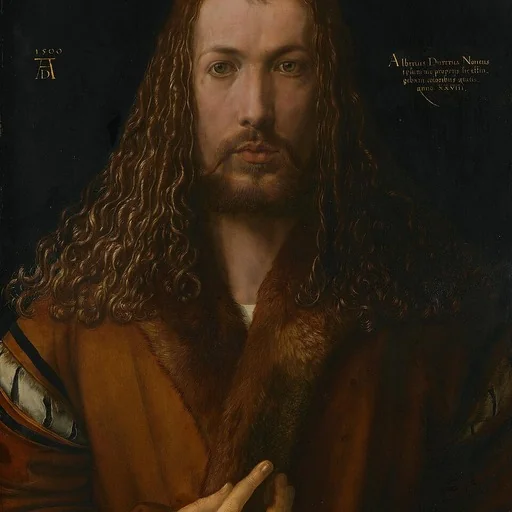
Artist
Albrecht Dürer spent his life in Nuremberg, a busy German city where artists traded prints like currency.

![Madonna and Child [obverse], by Albrecht Dürer](https://artifactworldgallery.com/img/albrecht-durer--madonna-and-child-obverse--d7b8ebf05d22ebe5-w320.webp)
![Lot and His Daughters [reverse], by Albrecht Dürer](https://artifactworldgallery.com/img/albrecht-durer--lot-and-his-daughters-reverse--b4ebf9b282faa17a-w320.webp)