Artwork
Saint Sebastian Bound to the Tree
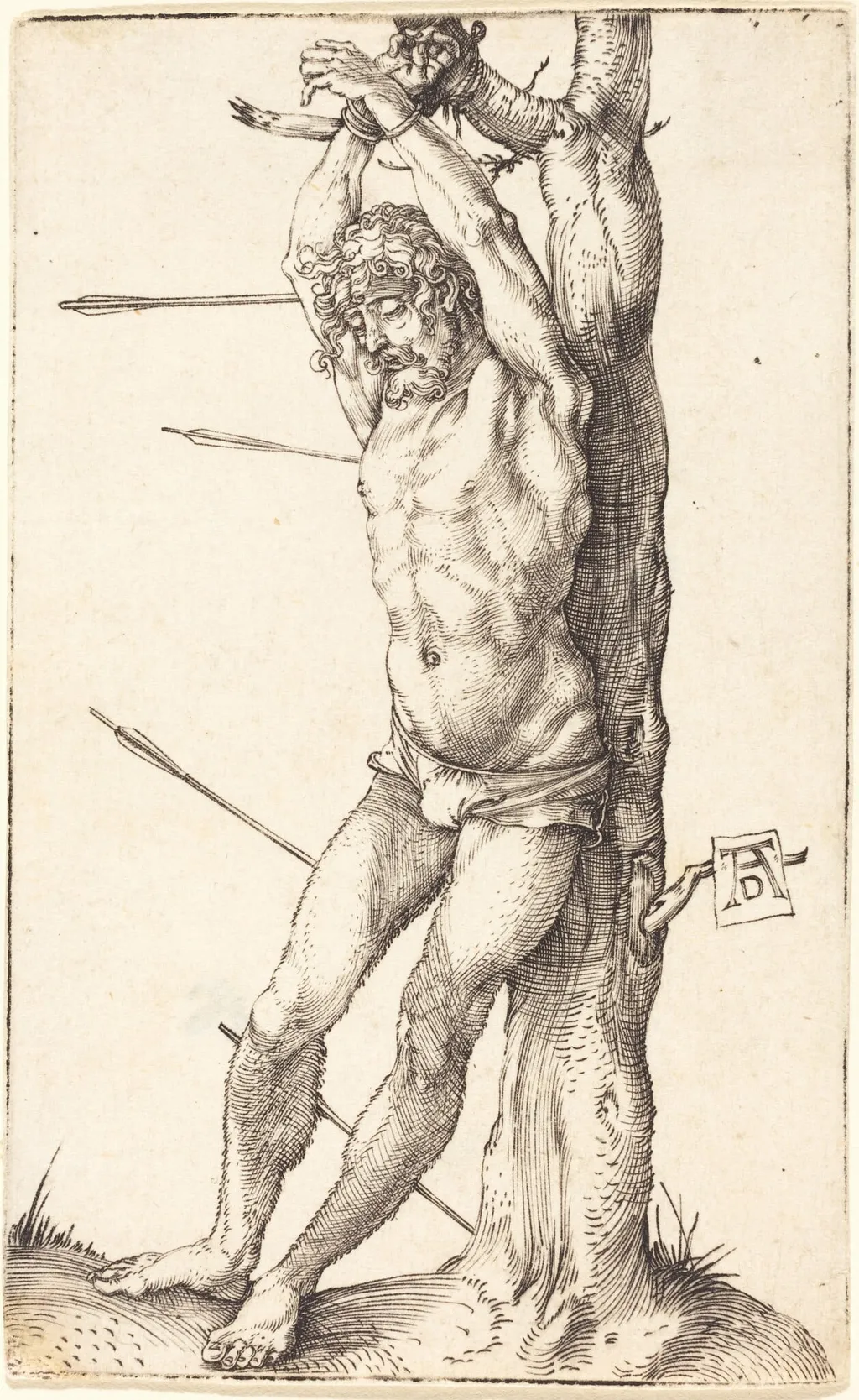
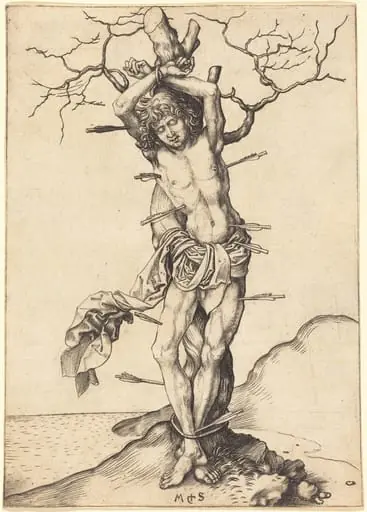
Saint Sebastian Bound to the Tree is an ink print by the Northern Renaissance artist Albrecht Dürer. It dates from 1500 and is held in the collection of the Metropolitan Museum of Art.
About this work
Overview
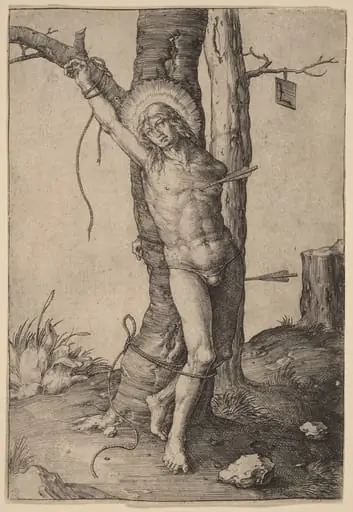
Albrecht Dürer's engraving Saint Sebastian Bound to the Tree, created in 1500, depicts the Christian martyr Sebastian tied to a tree trunk, pierced by arrows.
Albrecht Dürer's engraving Saint Sebastian Bound to the Tree, created in 1500, depicts the Christian martyr Sebastian tied to a tree trunk, pierced by arrows. The composition centers on the saint's anguished yet resigned figure, his gaze cast downward in a moment of spiritual contemplation rather than physical suffering. Dürer employs his masterful engraving technique, utilizing dense, varied hatching and cross-hatching to render the textures of the tree bark, the saint's anatomy, and the surrounding foliage with remarkable precision. This work exemplifies the German Renaissance's fusion of Northern European attention to detail with Italianate ideals of proportion and classical form. The year 1500 marks a period of significant maturity in Dürer's career, following his second journey to Italy, where he absorbed Renaissance principles that influenced his approach to human anatomy and spatial depth. The piece stands as a testament to Dürer's technical virtuosity in printmaking, transforming the medium into a vehicle for complex religious expression and artistic innovation.
Subject & Meaning
The image portrays the Christian saint at the moment of his martyrdom, his gaze directed downward in a gesture of resignation. The surrounding arrows emphasize the physical suffering he endures, while the tree serves as a stark, natural backdrop that underscores the theme of sacrifice and steadfast faith.
Technique & Style
Dürer employs a dense network of incised lines to model form and suggest texture, creating a subtle gradation of tone across the figure and foliage. This linear hatching, a hallmark of engraving, allows the artist to convey depth and volume without the use of colour, reflecting contemporary innovations in print technique.
History & Provenance
Created at the turn of the 16th century, the print belongs to Dürer’s early series of religious works produced for a growing market of devotional images. Surviving impressions are held in several European collections, illustrating the work’s wide distribution and its role in establishing Dürer’s reputation as a master engraver.
Artist & collection
Artist
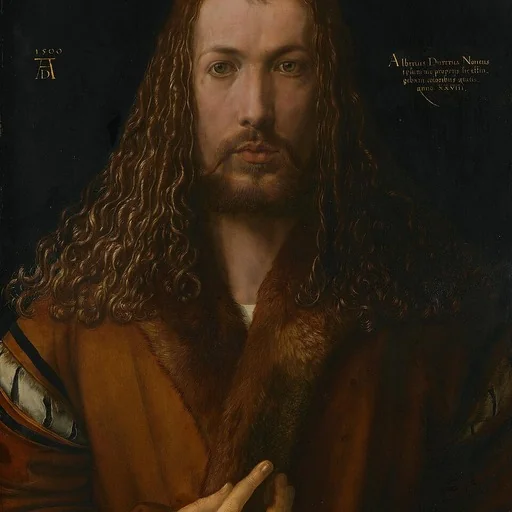
Albrecht Dürer spent his life in Nuremberg, a busy German city where artists traded prints like currency.

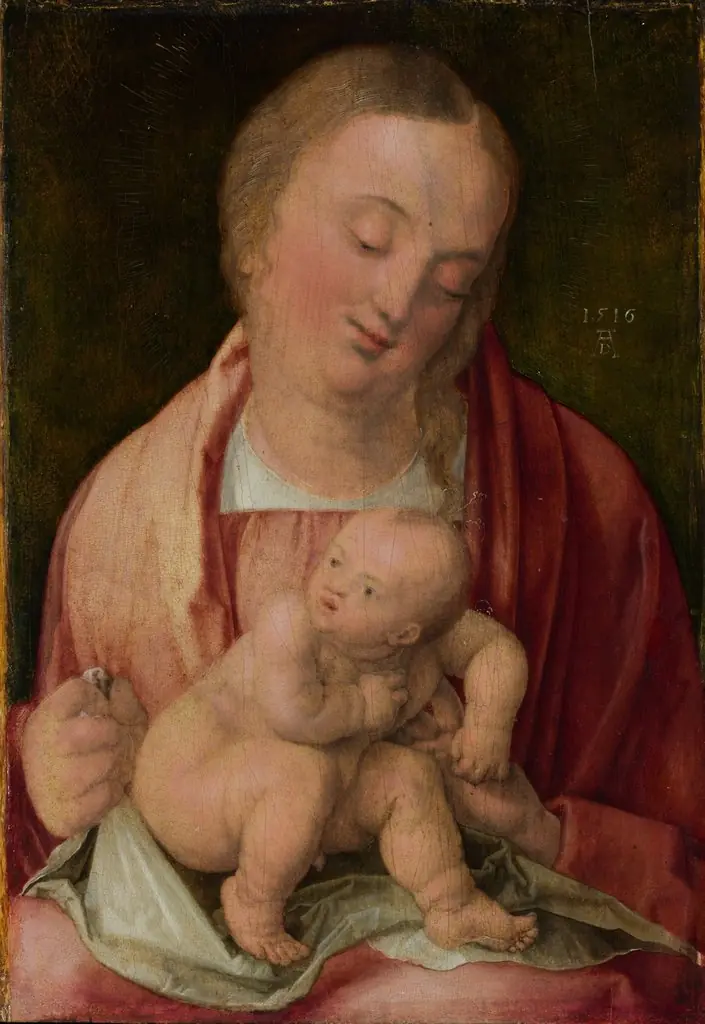
![Madonna and Child [obverse], by Albrecht Dürer](https://artifactworldgallery.com/img/albrecht-durer--madonna-and-child-obverse--d7b8ebf05d22ebe5-w320.webp)
![Lot and His Daughters [reverse], by Albrecht Dürer](https://artifactworldgallery.com/img/albrecht-durer--lot-and-his-daughters-reverse--b4ebf9b282faa17a-w320.webp)