Artwork
Saint Sebastian
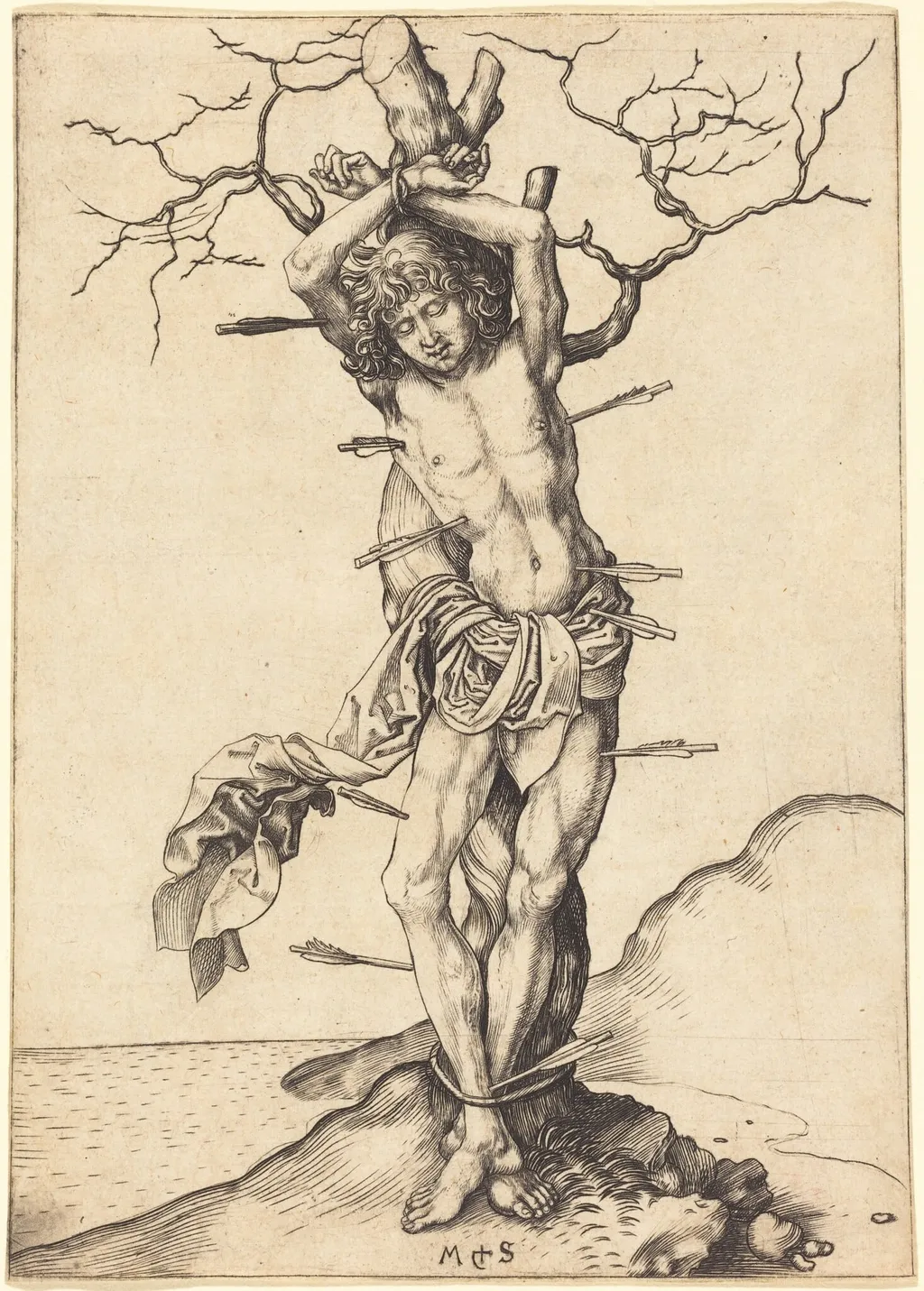
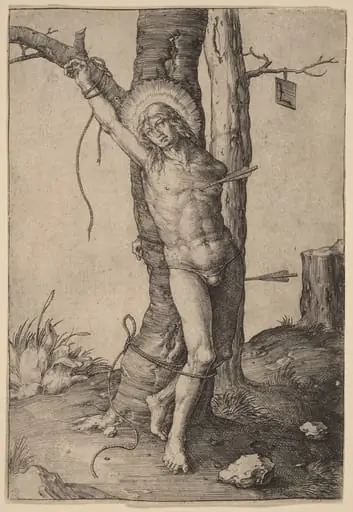
Saint Sebastian is an ink print by the Renaissance artist Martin Schongauer. It dates from 1485 and is held in the collection of the National Gallery of Art.
About this work
Overview
As one of the earliest significant German printmakers, Schongauer elevated engraving as a standalone art form, moving beyond its origins in goldsmithing.
Created around 1485, this engraving on laid paper by Martin Schongauer portrays Saint Sebastian, a Christian martyr traditionally depicted bound and pierced by arrows. As one of the earliest significant German printmakers, Schongauer elevated engraving as a standalone art form, moving beyond its origins in goldsmithing. His technical precision and expressive line work established a new standard for Northern European printmaking in the late 15th century.
Subject & Meaning
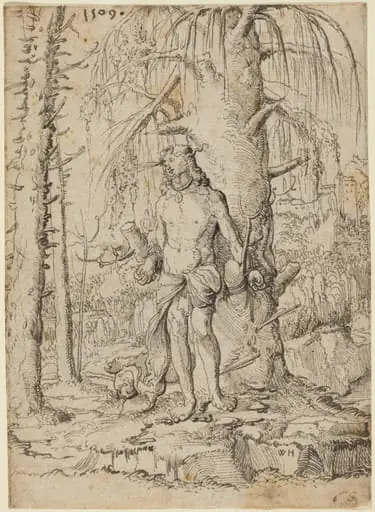
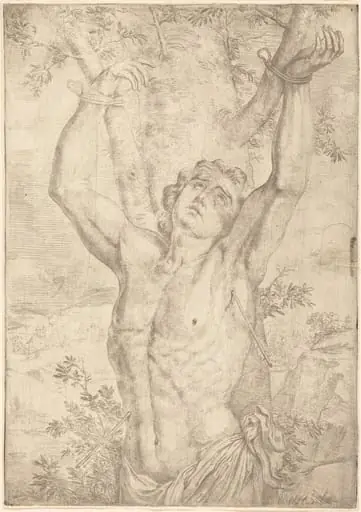
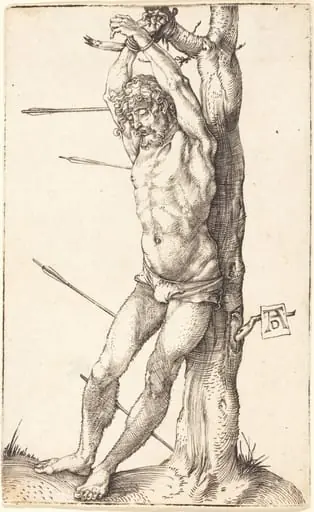
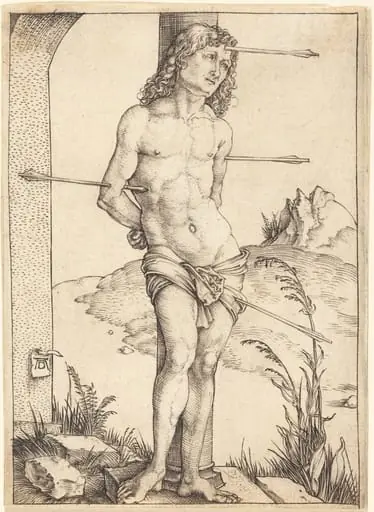
The image captures Saint Sebastian at the moment of his martyrdom, tied to a tree and pierced by multiple arrows. His closed eyes and tensed musculature convey quiet endurance rather than agony, reflecting a devotional ideal of stoic faith. The barren tree and rocky ground emphasize isolation and suffering, aligning with medieval interpretations of Sebastian as a symbol of divine patience amid persecution.
Technique & Style
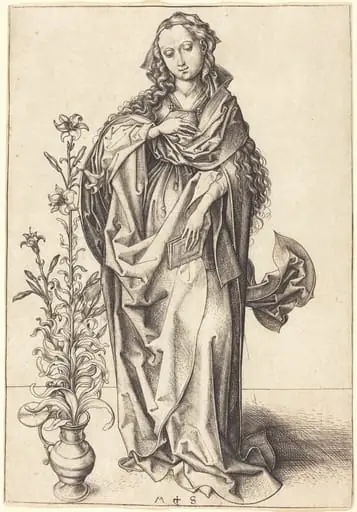
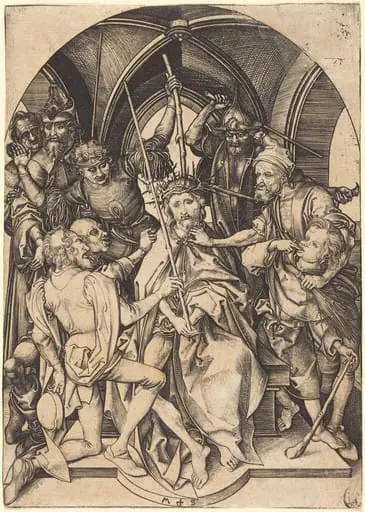
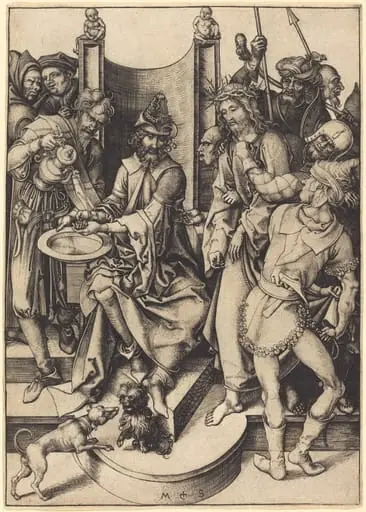
Schongauer employed fine, controlled parallel lines to model form and depth, creating texture in skin, fabric, and the rough terrain. The density of hatching varies to suggest shadow and volume, particularly around the arrows and the figure’s limbs. His method, derived from metalworking, allowed for intricate detail and tonal gradation, giving the print a sculptural quality rare in prints of the period.
History & Provenance
Produced in the mid-1480s, likely in Colmar or nearby, this engraving circulated widely across Europe through printsellers. Schongauer’s reputation as a printmaker ensured broad distribution, influencing later artists including Dürer. Few original impressions survive, but the work’s repeated reprints attest to its popularity and technical authority in late 15th-century print culture.
Context
In the decades before the Reformation, images of saints like Sebastian served both devotional and didactic purposes, reinforcing ideals of endurance and divine protection. Schongauer’s work emerged within a flourishing print market in the Rhineland, where artists began adapting religious iconography for private contemplation. His engravings bridged the gap between manuscript illumination and the emerging printed image.
Legacy
Schongauer’s *Saint Sebastian* set a precedent for the expressive potential of engraving in Northern Europe. His precise line work and emotional restraint influenced generations of printmakers, most notably Albrecht Dürer, who studied and copied his engravings. The work remains a benchmark for technical mastery and spiritual gravity in early printmaking traditions.
Artist & collection

Artist
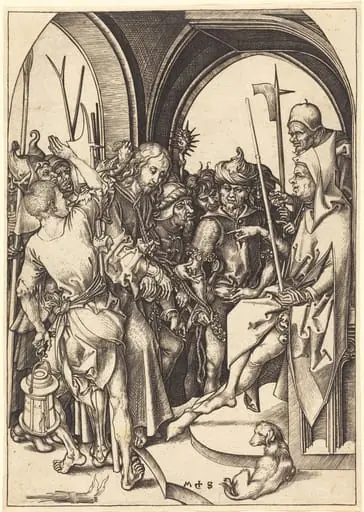
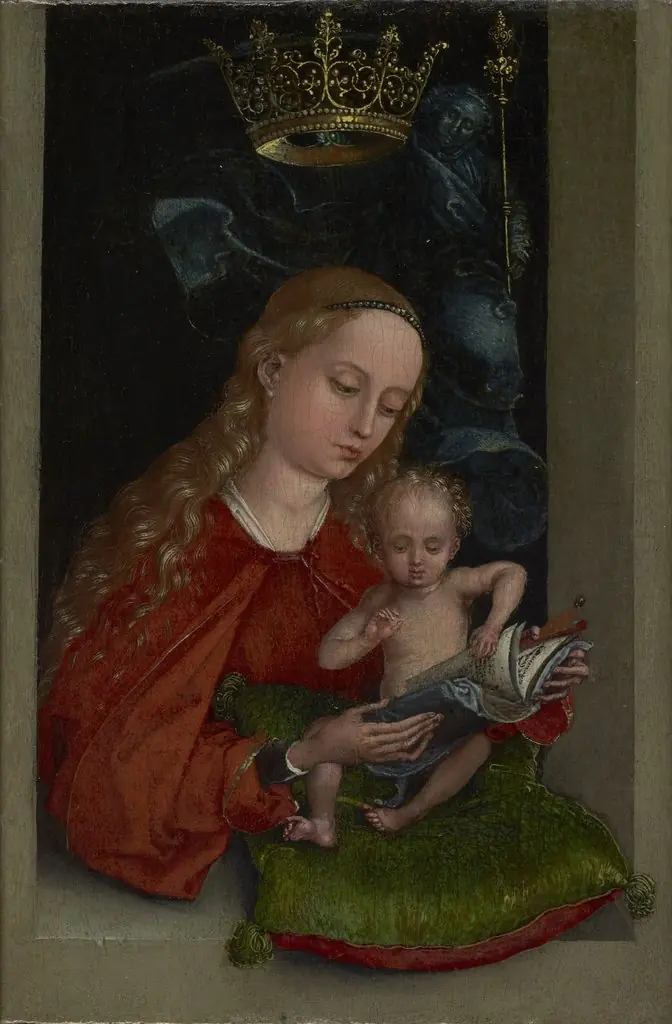
Martin Schongauer, also known as Martin Schön or Hübsch Martin by his contemporaries, was an Alsatian engraver and painter.