Artwork
River and Mountains on a Clear Autumn Day

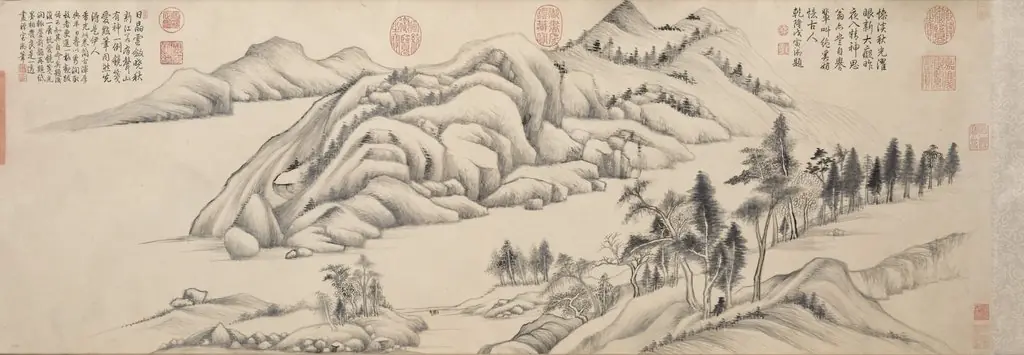
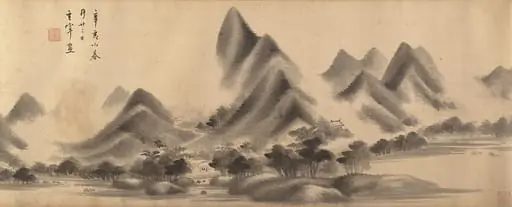
River and Mountains on a Clear Autumn Day is an unspecified painting by the Baroque artist Dong Qichang. It dates from 1626 and is held in the collection of the Cleveland Museum of Art.
About this work
Dong Qichang painted this to look like an older artist’s work—he even wrote that the earlier painter would have liked it.
You see a long scroll of ink on paper: soft gray mountains, a winding river, and tiny trees in autumn red.
Dong Qichang painted this to look like an older artist’s work—he even wrote that the earlier painter would have liked it. The shapes are simple, almost like calligraphy, but they still feel like real hills and water.
If you want to see how Chinese artists borrowed from each other, look up china, ming dynasty (1368–1644).
Overview
River and Mountains on a Clear Autumn Day is a painting by Dong Qichang, a influential artist and writer who shaped the aesthetics of later generations.
Subject & Meaning
The painting depicts a serene autumnal landscape with soft gray mountains, a winding river, and trees in autumn red, evoking a sense of natural beauty and tranquility.
Technique & Style
Dong Qichang's composition is characterized by simple, calligraphic forms that evoke a sense of realism, while also paying homage to earlier masters and expressing his personal style.
History & Provenance
The painting is associated with Dong Qichang's admiration for earlier artists, particularly Huang Gongwang and Dong Yuan, whose works he studied and emulated.
Artist & collection

Artist
Dong Qichang (Chinese: 董其昌; pinyin: Dǒng Qíchāng; Wade–Giles: Tung Ch'i-ch'ang; courtesy name Xuanzai (玄宰); 1555–1636) was a Chinese art theorist, calligrapher, painter, and politician of the later period of the Ming dynasty.

 Bamboo, Rocks and Lonely Orchids
 Poem on the Hall of Wind and Pines
 Rain-coming Pavilion by the Stone Bridge at Mt. Tiantai
 Landscape with Bamboo
 Landscape with Bamboo
 Commentary on Growing a Beard
 Small Self-Portrait Planting a Tree
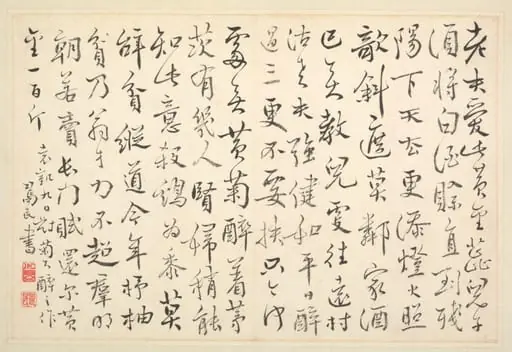 Album of Calligraphy and Paintings
 Barbarian Royalty Worshiping the Buddha