Artwork
Demolition
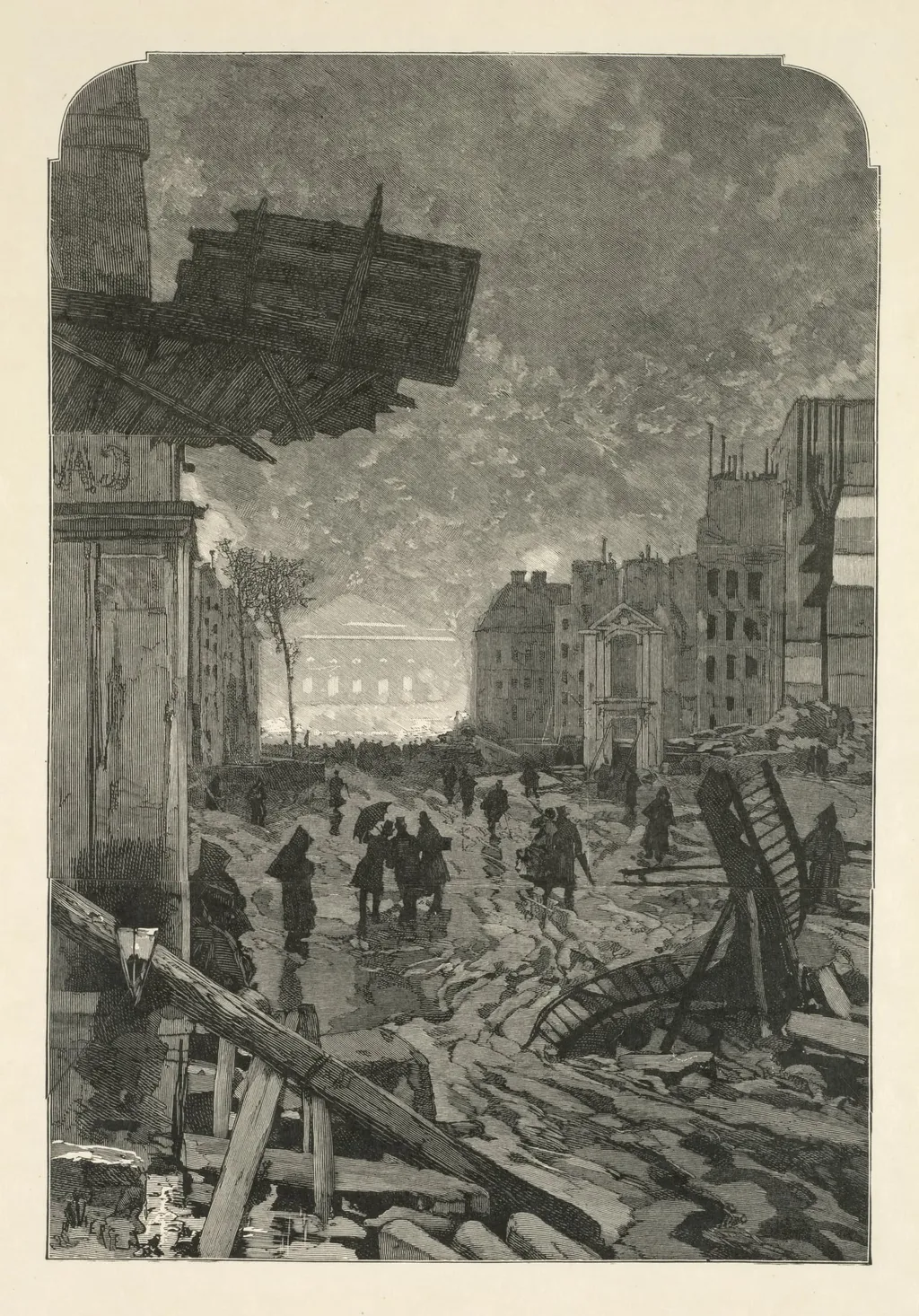
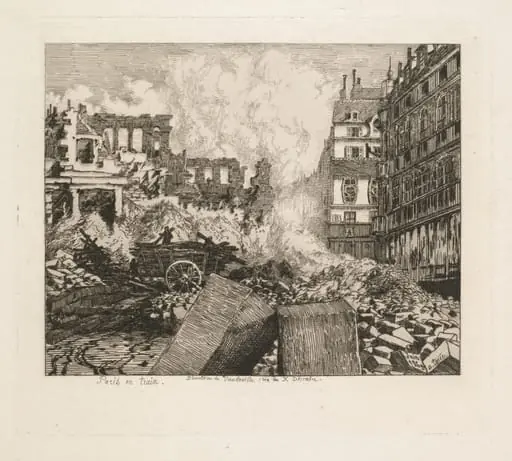
Demolition is a print by the Impressionist artist Daniel Urrabieta Vierge. It dates from 1869 and is held in the collection of the Cleveland Museum of Art.
About this work
Overview
Vierge was known for his contributions to print reproduction technologies, and this work emerged amid the expansion of illustrated media.
Created in 1869 by Daniel Urrabieta Vierge, a Spanish-born illustrator working in France, *Demolition* is a print that reflects the rapid changes in urban environments during the late 19th century. Vierge was known for his contributions to print reproduction technologies, and this work emerged amid the expansion of illustrated media. The piece captures a moment of urban decay, rendered with attention to detail and atmospheric tone.
Subject & Meaning
The scene portrays a street after catastrophic damage, with collapsed buildings, twisted metal, and scattered debris. Figures move cautiously through the ruins, some carrying tools or belongings, suggesting aftermath and survival rather than active violence. The absence of clear cause—fire, explosion, or demolition—leaves the event ambiguous, inviting reflection on the cost of urban renewal and the fragility of built environments.
Technique & Style
Vierge employs fine line work and tonal contrast to convey texture and depth, typical of wood engraving practices of the era. The composition is dominated by vertical ruins and horizontal debris, creating a sense of instability. A sliver of moonlight pierces the darkened scene, providing the only source of illumination—this use of chiaroscuro heightens drama without sentimentality, aligning with Realist principles of observing everyday hardship.
History & Provenance
Produced in 1869, the print likely appeared in a periodical or illustrated journal, common outlets for Vierge’s work during a time of growing demand for visual journalism. Though specific publication records are sparse, its technical precision suggests it was intended for mass reproduction. Vierge’s career spanned France and Spain, and this piece reflects his engagement with contemporary European print culture.
Context
In the decades following the Paris Commune and amid widespread urban redevelopment, images of destruction resonated with public consciousness. Vierge’s depiction aligns with broader Realist interests in documenting ordinary life, including its disruptions. While not overtly political, the image quietly acknowledges the human experience within cities undergoing radical transformation, a theme echoed in literature and visual art of the period.
Legacy
Though not widely exhibited today, *Demolition* exemplifies the role of illustration in shaping public perception of urban change. Vierge’s technical skill helped elevate print media beyond mere documentation, influencing how destruction and recovery were visually narrated. The work remains a quiet testament to the era’s shifting landscapes and the artists who recorded them with precision and restraint.
Artist & collection
Artist
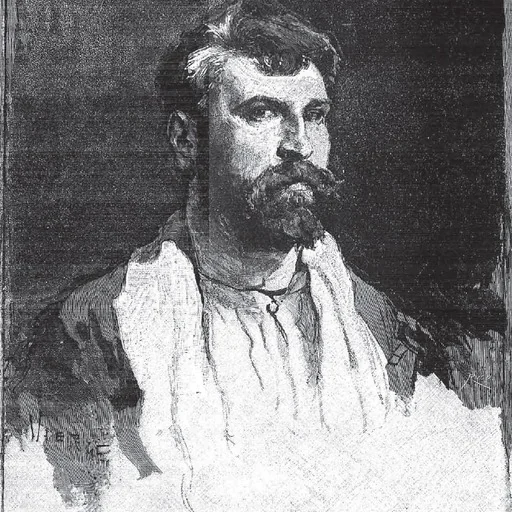
Daniel Urrabieta y Vierge (5 March 1851 – 10 May 1904) was a Spanish-born French illustrator who revolutionized the reproduction of illustrations.

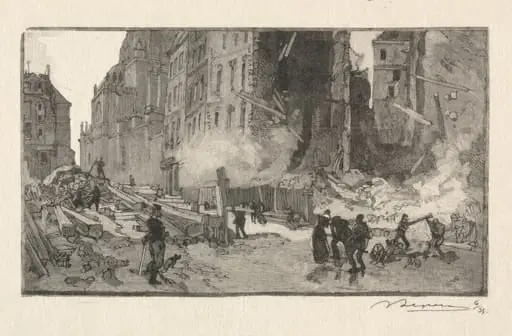
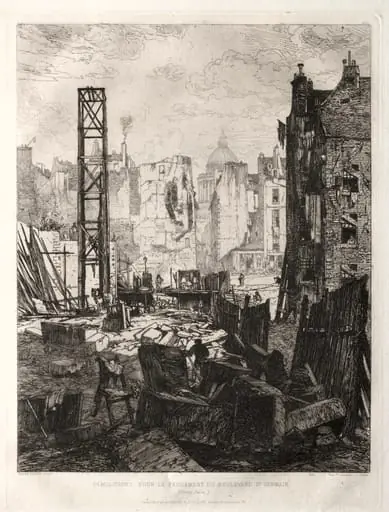 Demolitions pour la Perement du Boulevard St. Germain
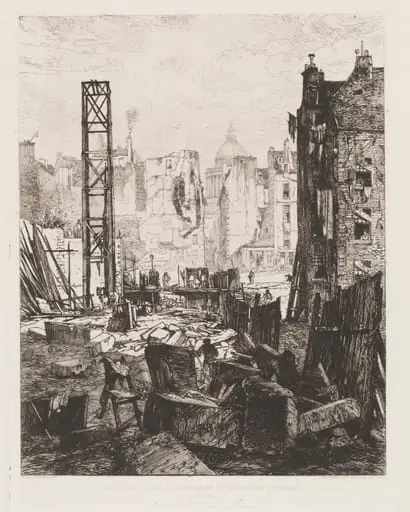 Demolition for the Opening of Boulevard St. Germain
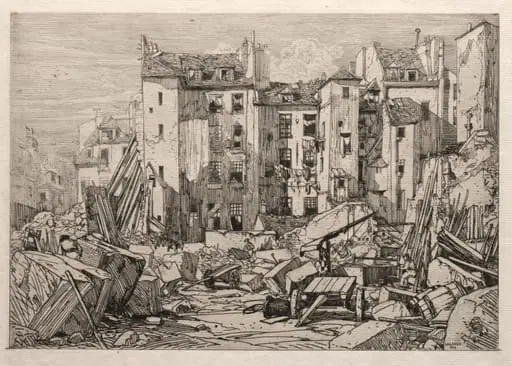 Demolition of Old Houses in Paris
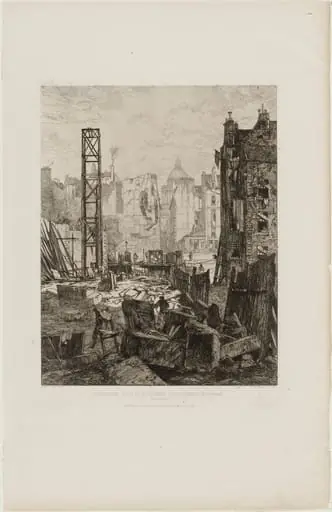 Démolitions pour le percement du Boulevard Saint-Germain (Demolitions for the Construction of the Boulevard St. Germain, Paris)
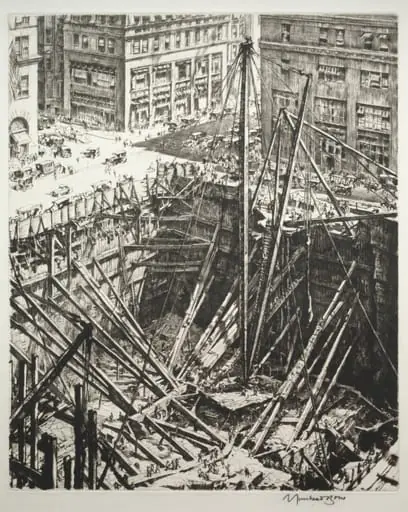
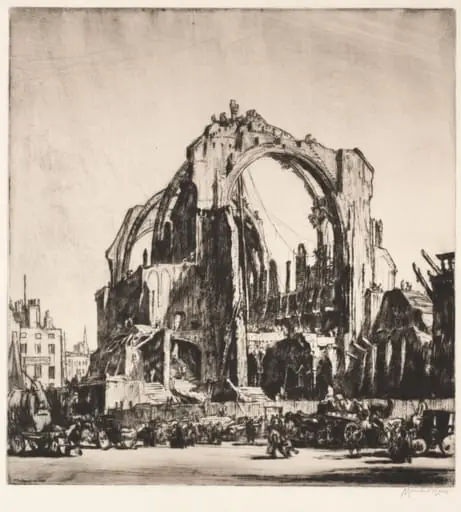 Demolition of St. James Hall, Exterior