Artwork
Place Gerson and Rue Restot
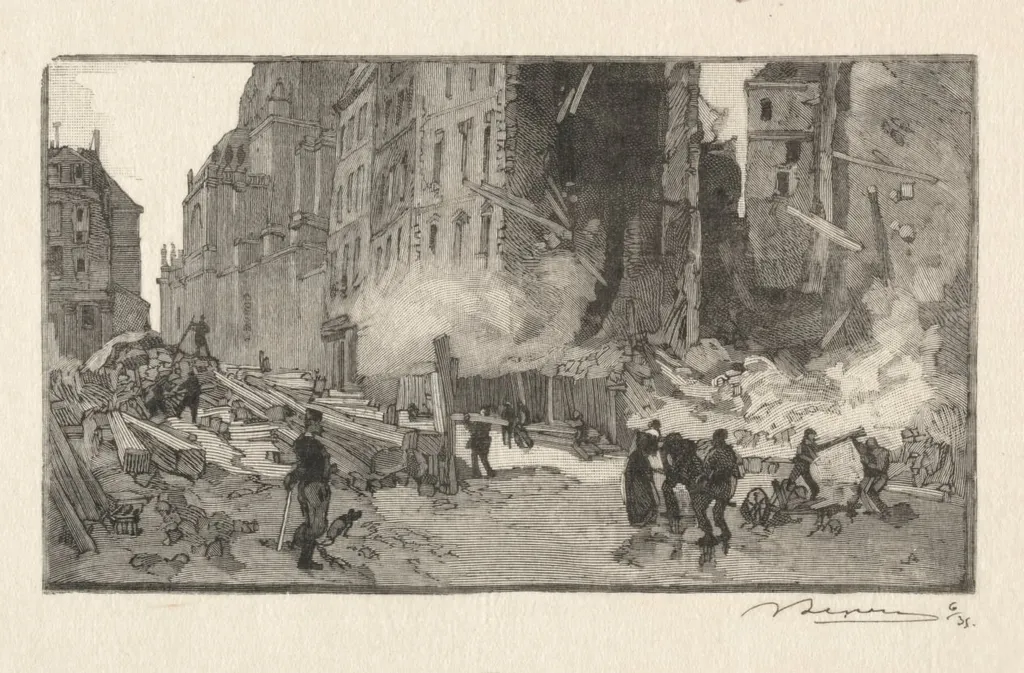
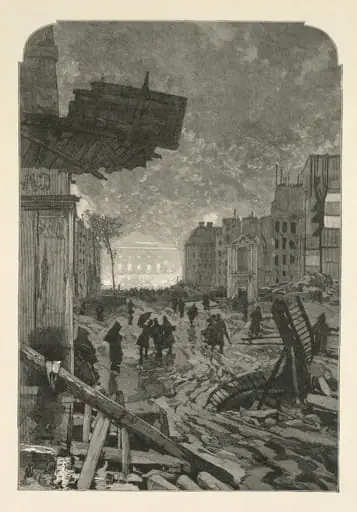
Place Gerson and Rue Restot is a print by the Impressionist artist Auguste Lepère. It dates from 1894 and is held in the collection of the Cleveland Museum of Art.
About this work
Overview
Place Gerson and Rue Restot is an 1894 etching by Auguste Louis Lepère, a key figure in the European wood engraving revival. The work captures a moment of urban disruption, depicting the aftermath of a building collapse in a narrow city street.
Subject & Meaning
The etching shows a scene of controlled chaos following a collapse, with people navigating the rubble-filled street amidst leaning, intact buildings. The focus is on the physical and spatial impact of the wreckage on the urban environment.
Technique & Style
Lepère's etching features sharp, detailed lines, evoking the immediacy of a sketch. This approach conveys the weight and texture of the debris, emphasizing the tangible consequences of the collapse.
History & Provenance
Created in 1894, the etching is part of The Cleveland Museum of Art's collection, reflecting Lepère's contribution to urban-themed artworks during his time.
Context
This work aligns with Lepère's broader exploration of urban scenes, characteristic of his oeuvre. It also touches on Realist themes, using an everyday, albeit extraordinary, scene to narrate a moment of urban life.
Artist & collection
Artist
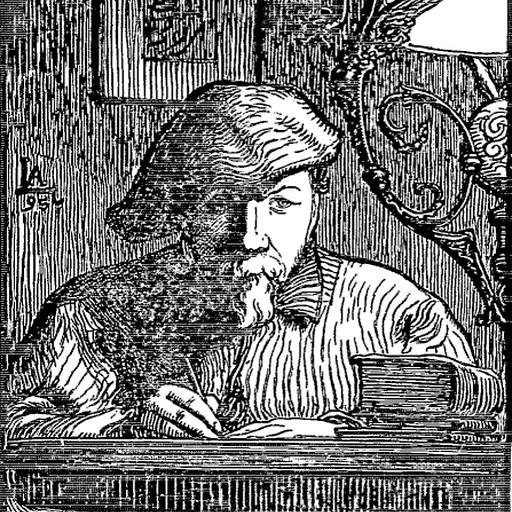
Louis-Auguste Lepère (30 November 1849 – 20 November 1918) was a French painter and etcher. Lepère is also considered a leader in the creative revival of wood engraving in Europe.

 Demolition
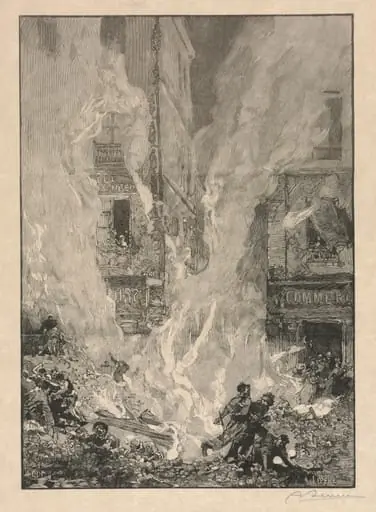 City Fire
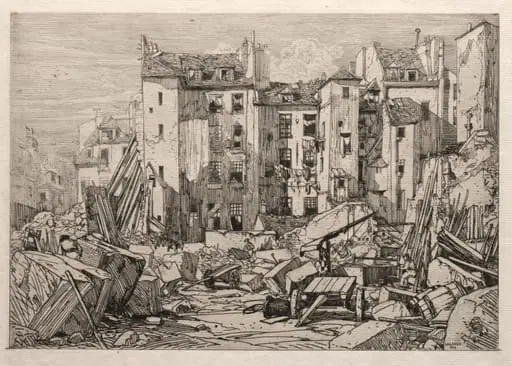 Demolition of Old Houses in Paris
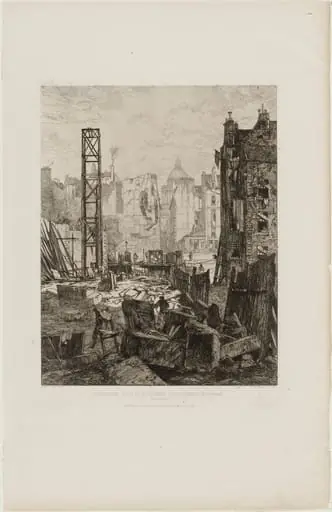 Démolitions pour le percement du Boulevard Saint-Germain (Demolitions for the Construction of the Boulevard St. Germain, Paris)
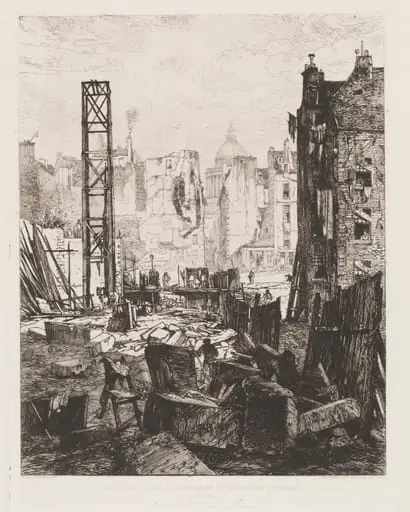 Demolition for the Opening of Boulevard St. Germain
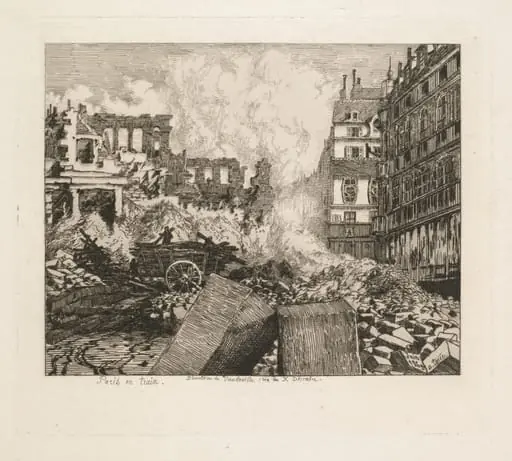 Paris en Train. Démolition du théâtre du Vaudeville: rue du Dix-Decembre
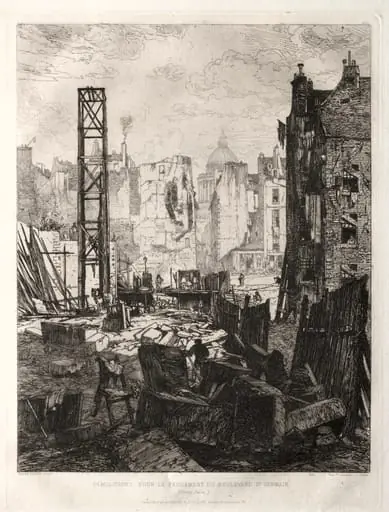 Demolitions pour la Perement du Boulevard St. Germain
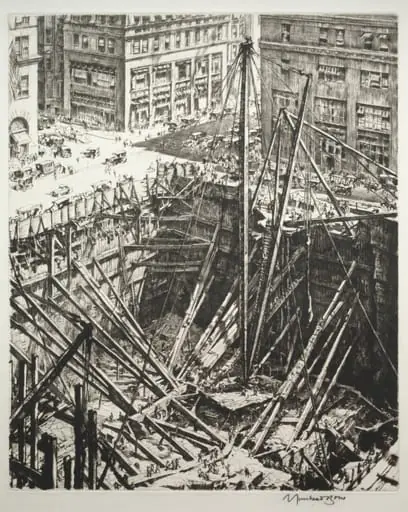 Manhattan Excavation
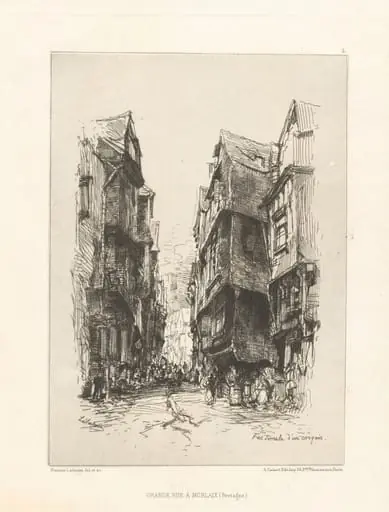 Grande Rue à Morlaix (Bretagne) (Grand Rue, Morlaix, Brittany)
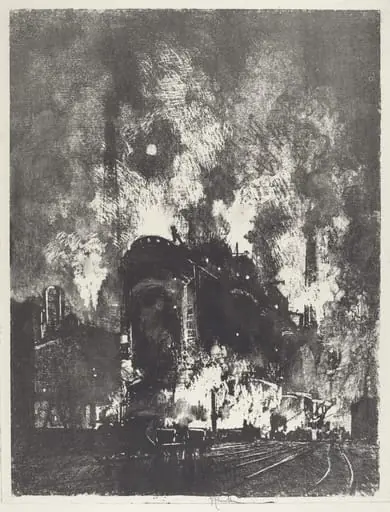 Furnaces at Night