Artwork
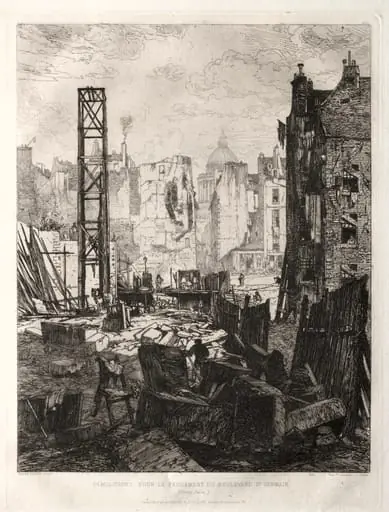
Démolitions pour le percement du Boulevard Saint-Germain (Demolitions for the Construction of the Boulevard St. Germain, Paris)
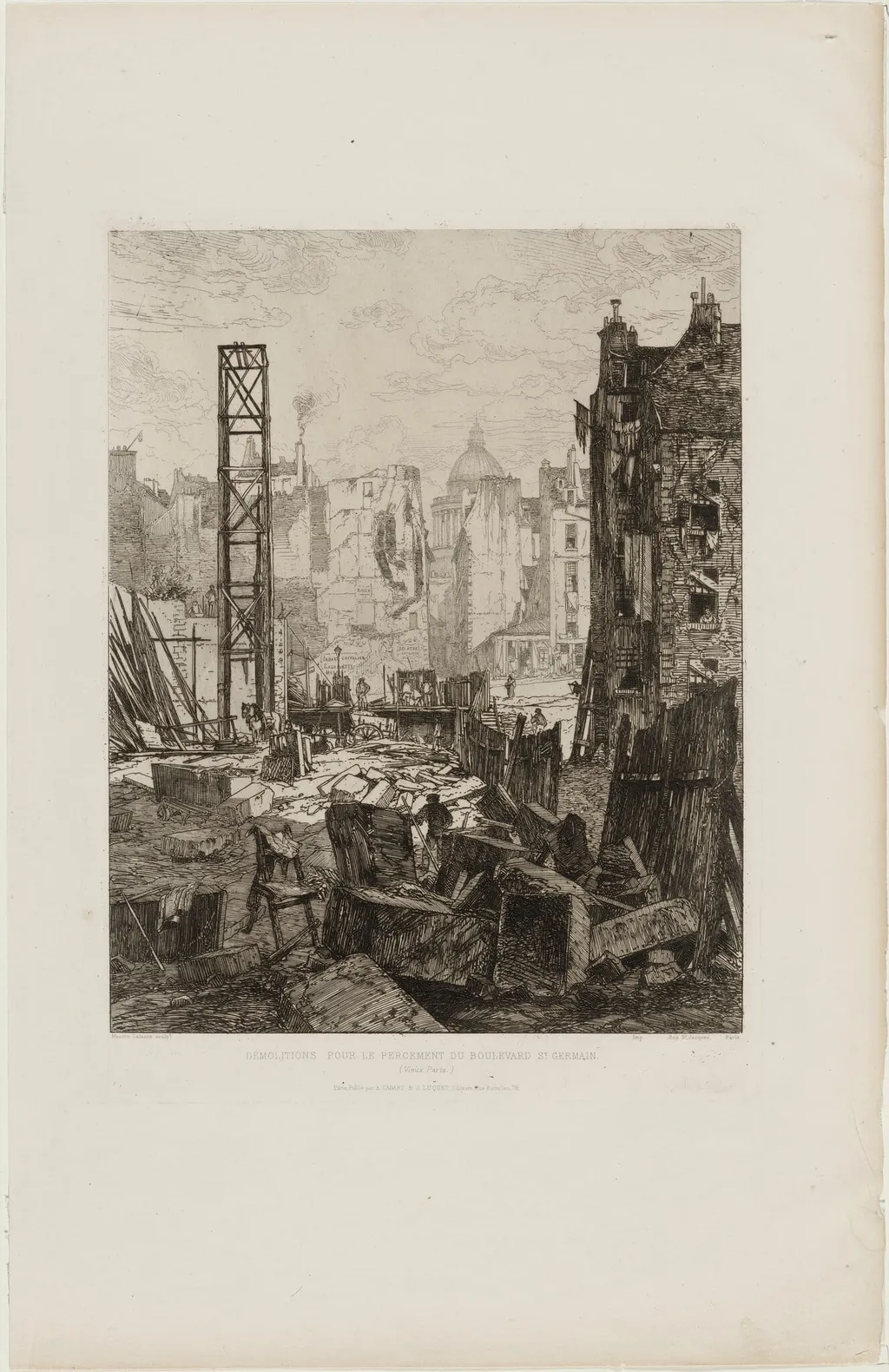
Démolitions pour le percement du Boulevard Saint-Germain (Demolitions for the Construction of the Boulevard St. Germain, Paris) is an ink print by the Impressionist artist Maxime Lalanne. It dates from 1862 and is held in the collection of the National Gallery of Art.
About this work
The title at the bottom confirms this is Paris in 1862, bulldozing old streets for a new boulevard.
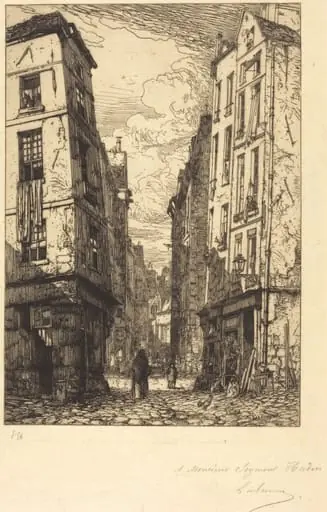
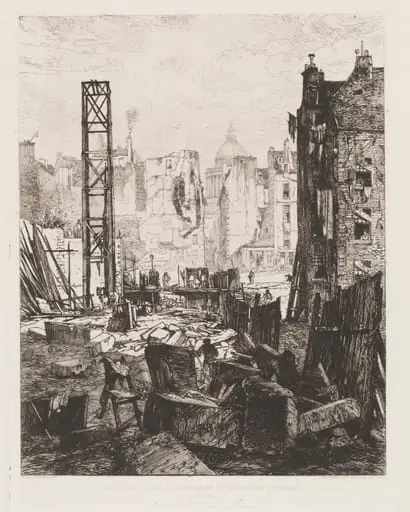
This black-and-white print shows a chaotic city scene where buildings are being torn down. Workers in the foreground struggle with heavy debris, while a towering crane looms over the ruins. In the background, half-demolished structures and distant domes hint at a city in transformation.
The title at the bottom confirms this is Paris in 1862, bulldozing old streets for a new boulevard. The artist used fine lines to capture every splinter of wood and crumbling brick.
Next, check out etching to see how artists like this carved intricate details into metal plates.
Overview
François Antoine Maxime Lalanne’s 1862 print, *Démolitions pour le percement du Boulevard Saint‑Germain*, records a moment of urban renewal in Paris. Executed as an etching on wove paper, the work presents a bustling demolition site where the old fabric of the city is being cleared to make way for the new boulevard.
Subject & Meaning
The composition captures the chaotic energy of mid‑nineteenth‑century construction: laborers wrestle with fallen timber and brick, a towering crane dominates the foreground, and partially collapsed façades recede toward distant domes. By documenting the physical disruption of the cityscape, Lalanne offers a visual commentary on the transformative impact of Haussmann’s modernization program.
Technique & Style
Lalanne employed traditional intaglio methods, incising fine lines into a metal plate before printing onto smooth wove paper. The delicate hatching renders textures of wood splinters and crumbling masonry, while broader strokes convey the mass of the crane and the movement of workers. The monochrome palette emphasizes structural detail over colour, reinforcing the documentary tone of the scene.
History & Provenance
Created in 1862, the print was likely produced shortly after the demolition began, reflecting Lalanne’s contemporaneous interest in urban change. It has since entered public collections, appearing in exhibitions that explore nineteenth‑century Parisian architecture and the role of printmaking in recording city planning.
Artist & collection
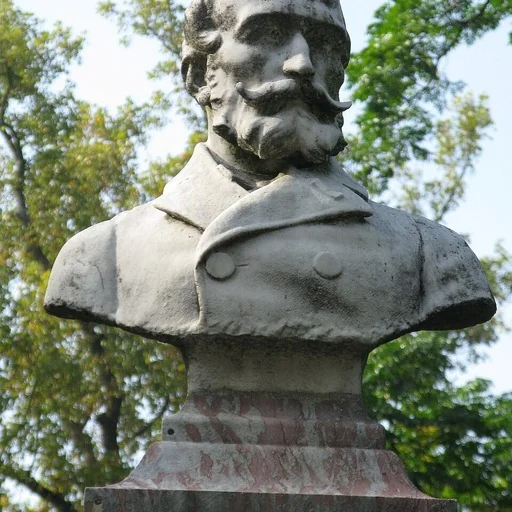
Artist
François Antoine Maxime Lalanne (November 27, 1827 – July 29, 1886) was a French artist known for his etchings and charcoal drawings (fusain).