Artwork
Demolition of St. James Hall, Exterior
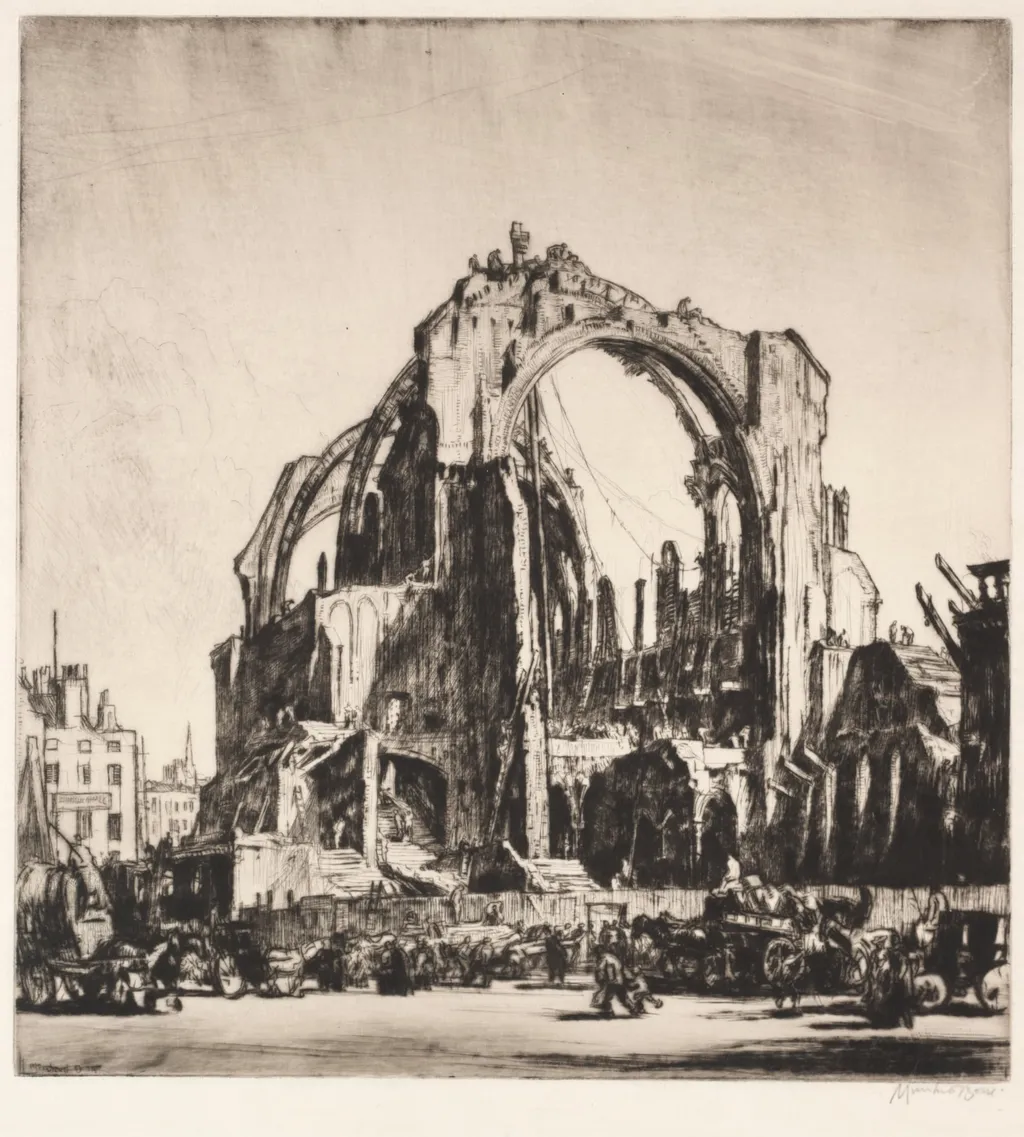
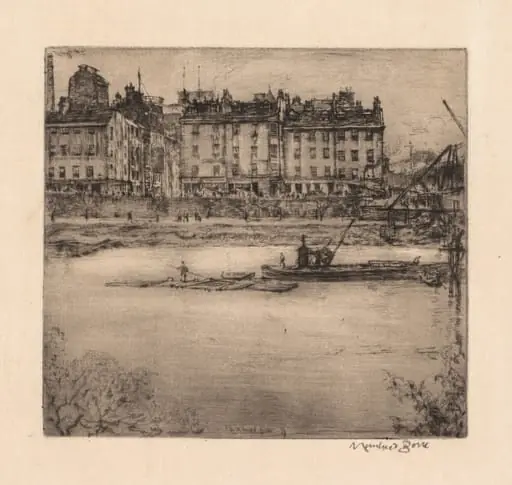
Demolition of St. James Hall, Exterior is a print by Muirhead Bone. It dates from 1924 and is held in the collection of the Cleveland Museum of Art.
About this work
Overview
The work reflects his sustained interest in documenting structures in transition, whether through demolition or wartime destruction.
Created around 1924 by Scottish artist Muirhead Bone, this etching captures the dismantling of St. James Hall, a building undergoing urban renewal. Bone, known for his precise architectural renderings, used the medium of etching to record the physical changes reshaping cities. The work reflects his sustained interest in documenting structures in transition, whether through demolition or wartime destruction.
Subject & Meaning
The scene portrays the dismantling of a once-substantial building, its archway and walls in disrepair, with laborers and carts moving debris. The absence of a roof and fractured masonry suggest irreversible change. Bone’s focus on demolition, rather than the building’s original form, emphasizes the impermanence of urban infrastructure and the quiet violence of progress.
Technique & Style
Bone employed bold, incised lines and deep tonal contrasts to convey the weight and chaos of demolition. Rough textures in the rubble and fragmented walls contrast with the smoother, darker silhouettes of figures and carts. The etching’s chiaroscuro enhances the sense of motion and decay, while the limited palette reinforces the somber, industrial mood of the scene.
History & Provenance
The print was made during a period when Bone was actively recording architectural change in Britain. It entered the collection of The Cleveland Museum of Art, where it remains as part of a broader holding of his works. Though demand for architectural etchings waned after the 1929 financial crisis, Bone’s documentation of urban and wartime scenes ensured his continued relevance.
Context
In the early 20th century, British cities were rapidly modernizing, and older structures like St. James Hall were often cleared for new development. Bone’s work aligned with a broader cultural interest in preserving visual records of disappearing architecture. His role as an official war artist later expanded this documentary impulse to include the destruction of conflict.
Legacy
Bone’s etchings, including this one, are valued for their unembellished observation of structural change. While the Etching Revival faded, his method of combining technical precision with social observation influenced later documentary artists. His work remains a reference for understanding how urban landscapes were visually recorded during a period of intense transformation.
Artist & collection

Artist
Sir Muirhead Bone (23 March 1876 – 21 October 1953) was a Scottish etcher and watercolourist who became known for his depiction of industrial and architectural subjects and his work as a war artist in both the First and Second World Wars.