Artwork
East View of The Forts Jellali & Merani, Muscat
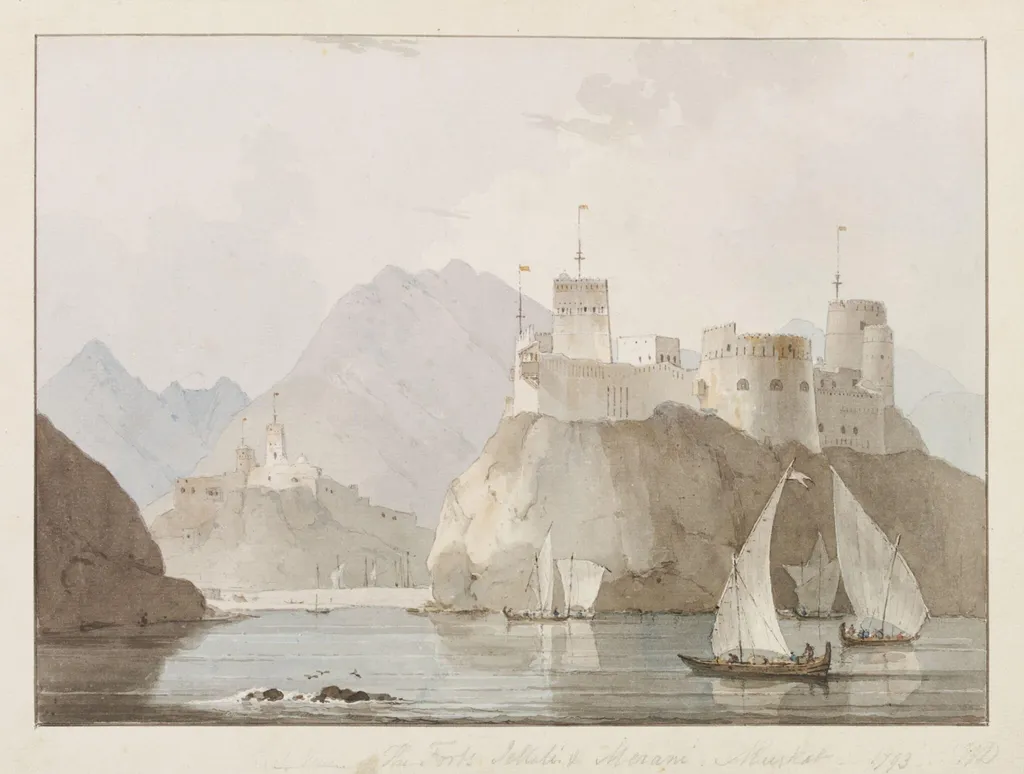
East View of The Forts Jellali & Merani, Muscat is a watercolor work on paper by the Romanticist artist William RA Daniell. It dates from 1793 and is held in the collection of the Victoria and Albert Museum. William Daniell created this watercolour in 1793 during a voyage from Bombay to England with his uncle Thomas Daniell.
About this work
William Daniell painted *East View of The Forts Jellali & Merani, Muscat* in 1793. It’s a watercolour, small but full of details. This was made during a long trip his uncle planned through India.
Few Europeans artists went to Muscat back then. The Daniells almost left by ship but stayed awhile when war news changed their plans.
Look up the Victoria and Albert Museum next.
Overview
Though originally en route home, the pair delayed their departure after learning of the Anglo-French war, allowing time to sketch the harbor.
William Daniell created this watercolour in 1793 during a voyage from Bombay to England with his uncle Thomas Daniell. The work captures the coastal fortifications of Muscat, a rare subject in European art of the period. Though originally en route home, the pair delayed their departure after learning of the Anglo-French war, allowing time to sketch the harbor. The small-scale piece reflects careful observation and a restrained palette typical of their travel sketches.
Subject & Meaning
The painting depicts Fort Jellali and Fort Merani, two Portuguese-built strongholds dominating Muscat’s harbor. These structures symbolize the strategic competition for control over Indian Ocean trade routes in the 16th century. Their presence in the view underscores the region’s geopolitical significance, as European powers sought to disrupt established spice networks. The scene is documentary rather than romantic, emphasizing architecture over human activity.
Technique & Style
Executed in watercolour, the work employs precise linear detail and muted tones to convey the arid landscape and stone fortifications. Daniell’s handling is methodical, with careful rendering of architectural elements and atmospheric perspective to suggest depth. The composition balances the forts’ mass against the open sea and sky, avoiding dramatic flourish in favor of topographical clarity. The medium’s portability suited the Daniells’ itinerant practice.
History & Provenance
The watercolour was made during the Daniells’ 1793 stop in Muscat, a detour prompted by news of war. It was later exhibited at the Royal Academy in 1831, nearly four decades after its creation. Few European artists had documented Muscat at the time, making this view a valuable record. The piece remained within the family’s collection before entering institutional holdings, now preserved at the Victoria and Albert Museum.
Context
The Portuguese constructed the forts in the early 1500s to secure their maritime trade monopoly following the opening of the Cape route to India. Their presence challenged Mamluk and later Ottoman interests in the region. By the late 18th century, Muscat was under Omani control, yet the Portuguese forts still stood as relics of earlier imperial ambitions. The Daniells’ visit occurred during a period of shifting regional power, with British interests increasingly active in the Gulf.
Legacy
As one of the earliest European visual records of Muscat’s harbor, the watercolour contributes to the historical documentation of the Gulf’s architecture and colonial encounters. Its rarity among 18th-century European depictions of the region underscores the Daniells’ role as systematic observers of underrepresented landscapes. The work remains a reference for scholars studying the intersection of travel, cartography, and imperial visual culture in the Indian Ocean world.
Artist & collection
Artist
William Daniell made prints and watercolours of faraway places in the late 1700s.

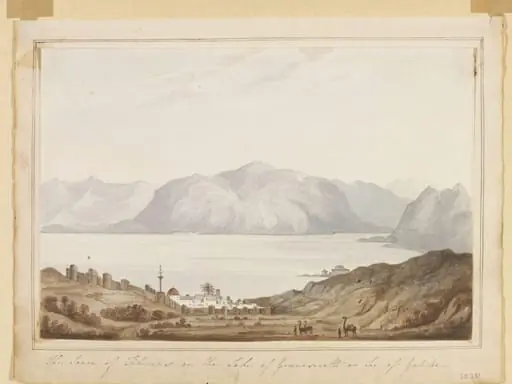 The Town of Tiberias on the Lake of Gennesereth or Sea of Galilee
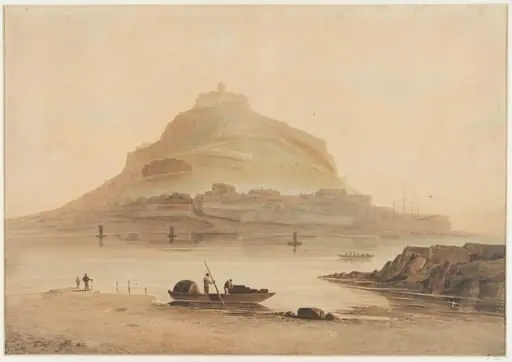 St. Michael's Mount in Cornwall
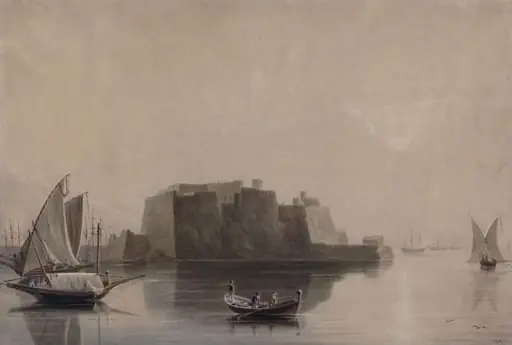 Castello dell'Ovo, Naples
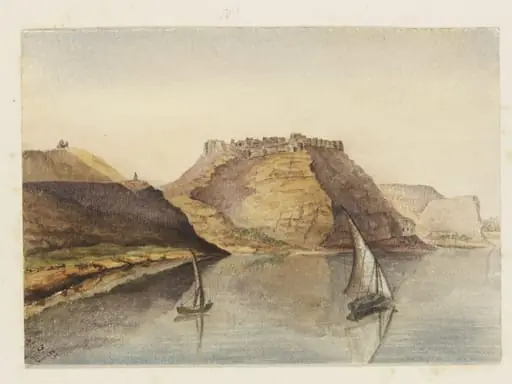 `Castle of Ibreem or Premnis, Nubia. Taken from our Boat'
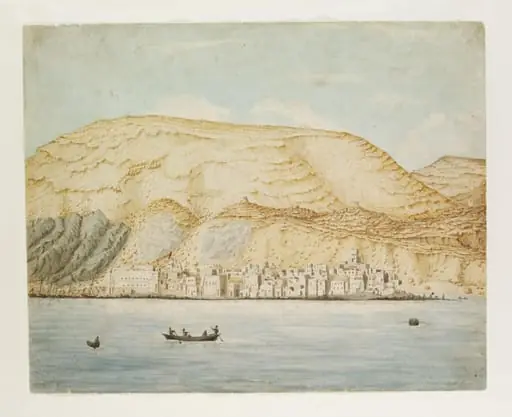 Maculla. Town. Coast of Arabia. Coal Depot
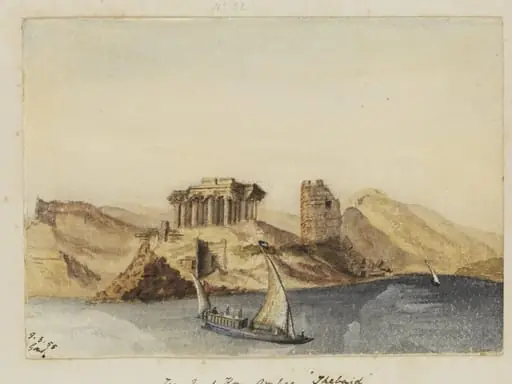 `Temple of Kom-Ombos. "Thebaid" from Stern of Boat "5. knots an hour" "On the Nile"
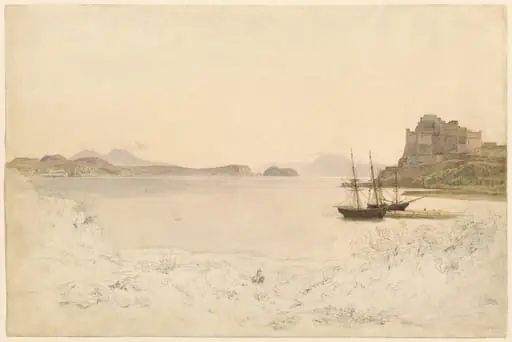 The Gulf of Pozzuoli
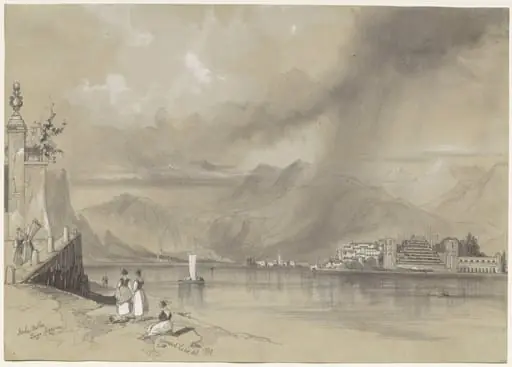 Isola Bella, Lago Maggiore
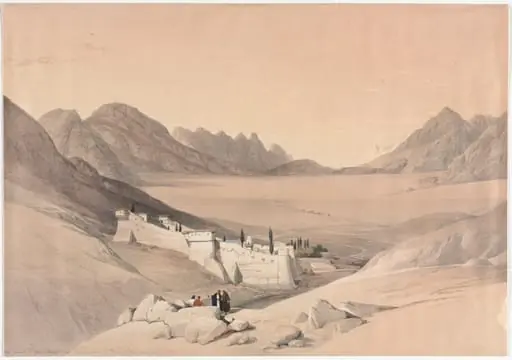 The Convent of St. Catherine, Mount Sinai, Looking towards the Plain of the Encampment
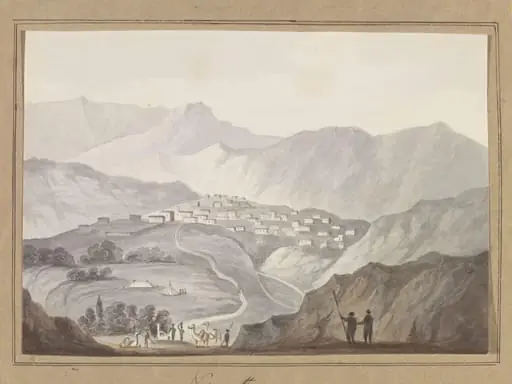 Nazareth
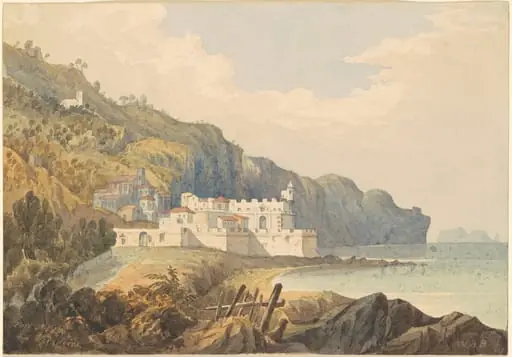 Fort St. lago, Madeira
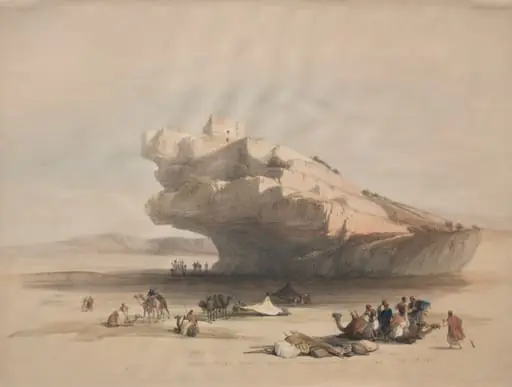 Approach to Petra, an Ancient Watch Tower Commanding the Valley of El Chor