Artwork
Nazareth
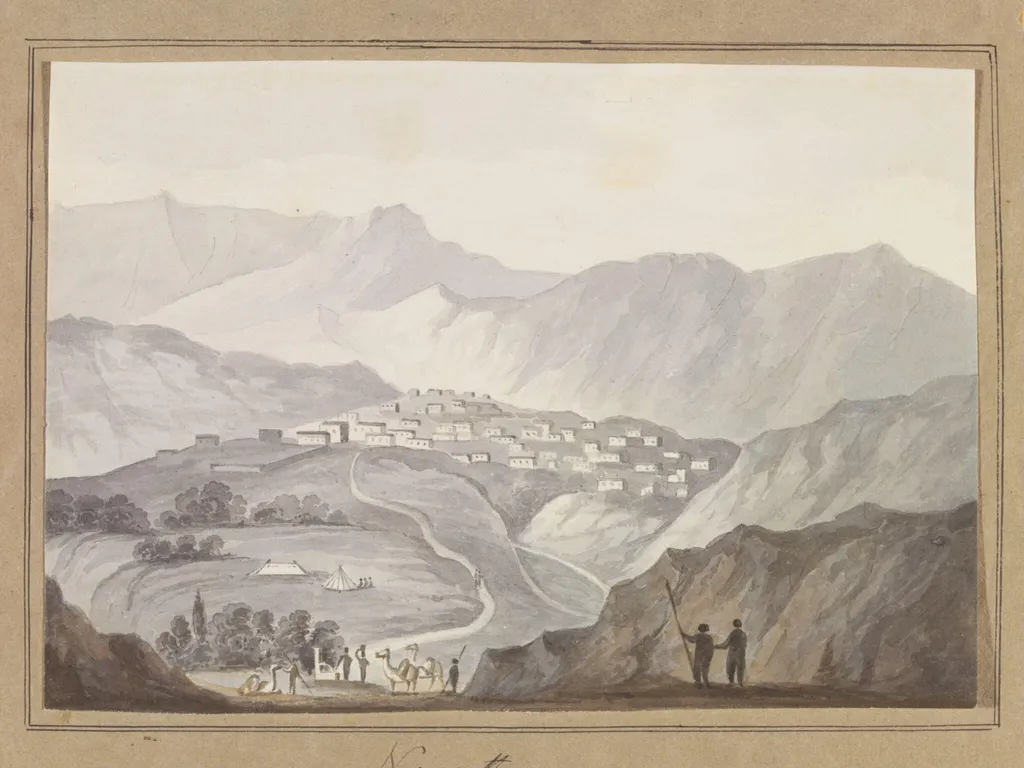
Nazareth is a watercolor work on paper by the British Romanticist artist Edward Daniel Clarke. It dates from 1806 and is held in the collection of the Victoria and Albert Museum.
About this work
Overview
This watercolor depicts Nazareth as seen from the direction of Sephoury, created during Edward Daniel Clarke’s 1801 journey through the Levant.
This watercolor depicts Nazareth as seen from the direction of Sephoury, created during Edward Daniel Clarke’s 1801 journey through the Levant. It was later published in 1812 as a plate in his travelogue, with the image etched by Letitia Byrne. The work is a topographical record, rendered in delicate washes, capturing the village’s placement within the surrounding hills. A paper silhouette of dancers is affixed to the reverse of its mount, suggesting a personal or decorative addition by a later owner.
Subject & Meaning
The scene portrays Nazareth as a modest settlement nestled in a valley, with figures engaged in quiet daily activities. Two men on a ridge observe the village below, their posture implying contemplation or guidance. Groups of people and animals near a tented space suggest communal life, while the absence of monumental architecture emphasizes humility. The image conveys a sense of stillness and remoteness, reflecting 19th-century European perceptions of the Holy Land as both sacred and unspoiled.
Technique & Style
Executed in watercolor, the work employs soft, translucent layers to suggest distance and atmosphere. The hills recede into pale washes, creating depth without sharp definition. Details like trees, camels, and figures are rendered with minimal brushwork, prioritizing mood over precision. The muted palette—earthy browns, pale greens, and washed blues—enhances the tranquil, unembellished character of the landscape, aligning with the observational aims of early topographical drawing.
History & Provenance
The watercolor originated from Edward Daniel Clarke’s 1801 travels, later reproduced as an engraved plate in his 1812 publication. The original drawing was likely made on-site, with the etching adapted for print. The silhouette of dancers on the reverse, though unattributed, indicates the piece was retained and modified after its initial publication, possibly by a private collector. Its survival in this form offers insight into how such images were personally engaged with beyond their scholarly context.
Context
Created during a period of growing European interest in the geography and culture of the Eastern Mediterranean, the image reflects the intersection of travel literature and visual documentation. Clarke’s work was part of a broader trend in which artists and scholars sought to record sacred sites with scientific accuracy. Nazareth, as a biblical location, held particular resonance, though the depiction avoids religious symbolism in favor of a neutral, observational tone.
Legacy
As one of the earliest visual records of Nazareth by a Western traveler, the watercolor contributes to the historical archive of Levantine landscapes. Its inclusion in a widely circulated publication helped shape European visual understanding of the region. Though not widely exhibited today, it remains a quiet example of how travel and art converged in the early 19th century to document places beyond the familiar.
Artist & collection
Artist
Edward Clarke painted watercolours of the Holy Land in the early 1800s. He captured Bethlehem, Nazareth, Tiberias on the Sea of Galilee, and Cedar Forest on Mount Lebanon with delicate brushstrokes. These scenes show a…

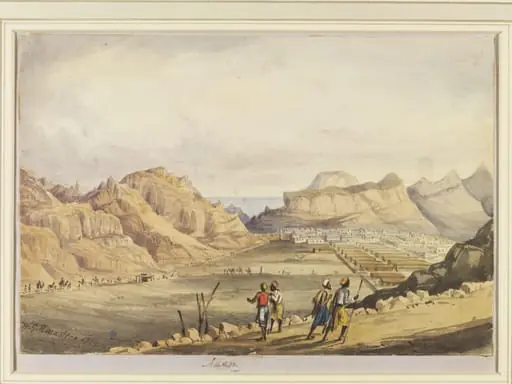 Aden
Aden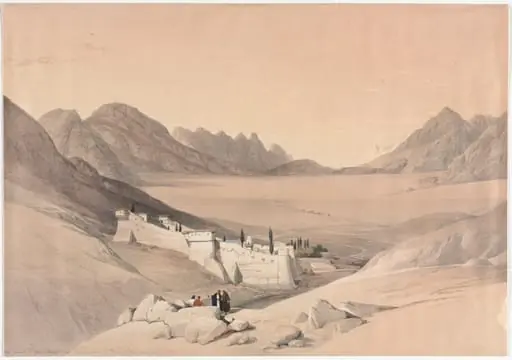 The Convent of St. Catherine, Mount Sinai, Looking towards the Plain of the Encampment
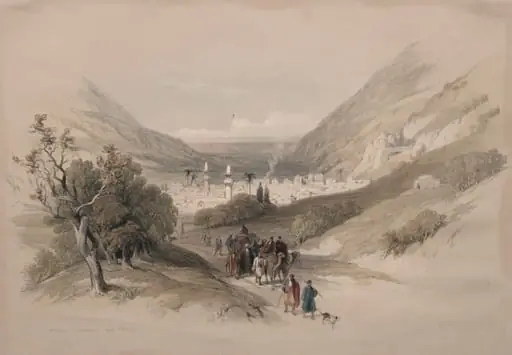 Entrance to Nablus
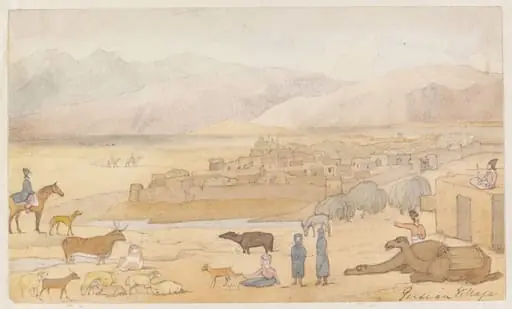 Persian Village
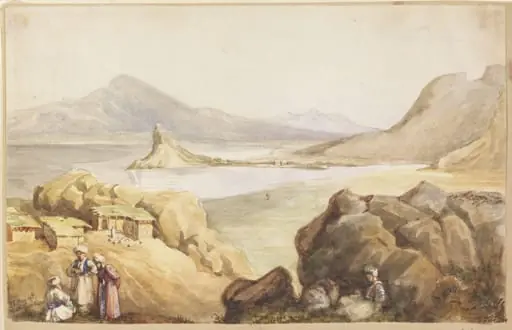 Gule-Hissa Ovassy in the Northern part of Lycia
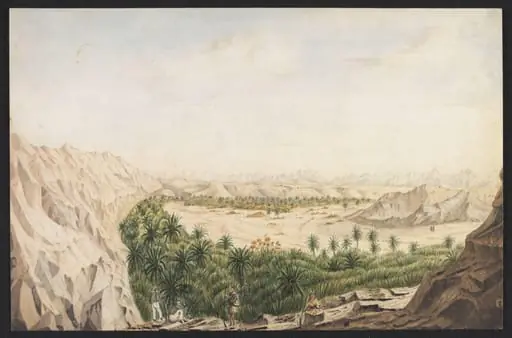 View of the valley of Eynounah. Coast of Arabia in the Red Sea
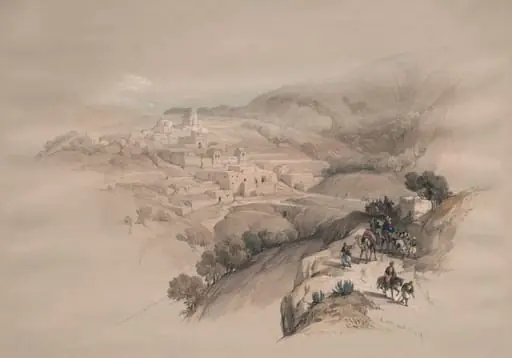 Bethany
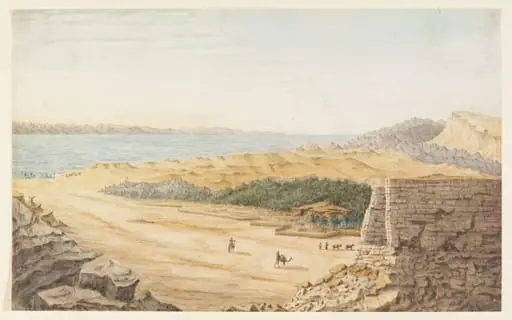 Ancient Ruins in the land of Edom above the bed of a valley and Arab Date gardens
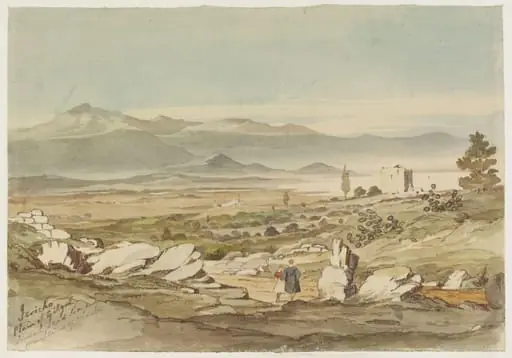 Jericho Plain of Gilgal, Jordan, Dead Sea, and Mountains of Moab
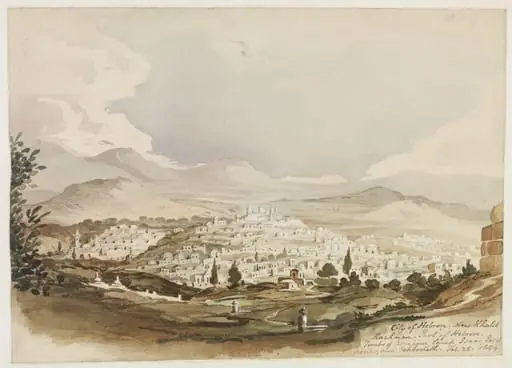 City of Hebron - Now Khalil Rachman - Pool of Hebron. Tombs of Abraham, Sarah, Isaac, Jacob, Abner, and Ishbosheth