Artwork
`Temple of Kom-Ombos. "Thebaid" from Stern of Boat "5. knots an hour" "On the Nile"
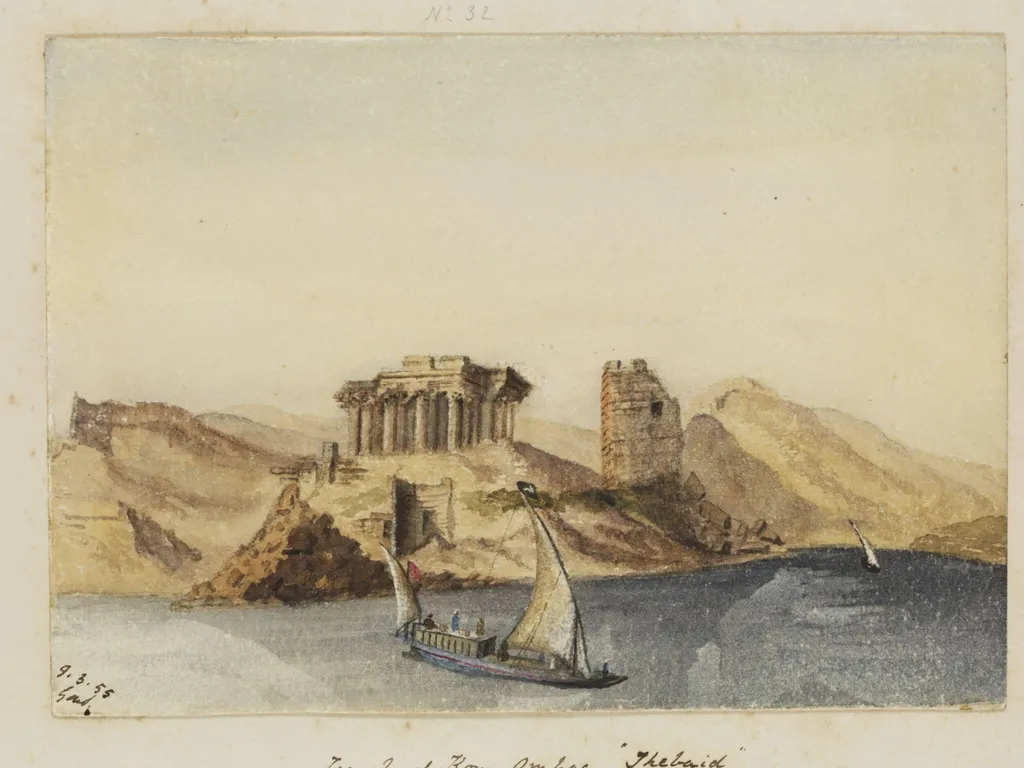
`Temple of Kom-Ombos. "Thebaid" from Stern of Boat "5. knots an hour" "On the Nile" is a watercolor work on paper by the Impressionist artist George de Sausmarez. It dates from 1855 and is held in the collection of the Victoria and Albert Museum.
About this work
Overview
Executed in watercolour on paper, it forms part of a series titled 'Thebaid,' named after the ancient region surrounding Thebes.
This watercolour is one of forty-five works in a bound album capturing landscapes along the Nile, produced by George de Sausmarez following his 1855 journey through Egypt and Nubia. Executed in watercolour on paper, it forms part of a series titled 'Thebaid,' named after the ancient region surrounding Thebes. The album, bound in crimson morocco leather and stamped 'EGYPT,' was assembled as a personal record of the voyage, with each sheet annotated with observational details such as speed and location.
Subject & Meaning
The scene portrays the Temple of Kom-Ombos perched on a rocky outcrop beside the Nile, flanked by a deteriorating tower. The temple’s columns and the tower’s ruinous form suggest layers of history—Ptolemaic religious architecture alongside later, possibly medieval, structures. A sailboat, moving at five knots, drifts toward the shore, anchoring the image in the rhythm of river travel. The annotations imply the artist’s intent to document not just sight, but motion and time as experienced from the deck.
Technique & Style
Rendered in delicate watercolour washes, the work employs loose, fluid brushwork to suggest the texture of stone, the shimmer of water, and the billow of sailcloth. The composition is observational rather than idealized, with attention to topographical accuracy and atmospheric light. Handwritten notes in ink, positioned near the scene, function as both metadata and personal record, blending artistic expression with diary-like immediacy.
History & Provenance
Created during or shortly after Sausmarez’s 1855 Nile voyage, the watercolour was included in a private album compiled by the artist. The album’s binding and storage in a separate music binder indicate careful curation, likely for personal or familial use. No public exhibition history is documented prior to its acquisition by institutional collections, where it now serves as a primary source for 19th-century travel in Upper Egypt.
Context
Sausmarez’s album reflects a broader 19th-century European interest in documenting Egypt’s antiquities and landscapes, often through the lens of leisure travel. Unlike official expeditions, his work captures the pace and intimacy of riverine life—boats, weather, and ruins observed from a moving vessel. The inclusion of speed and location notes aligns with contemporary practices of scientific observation, merging amateur topography with artistic record.
Legacy
As part of a small, non-commercial album, the watercolour offers a quiet counterpoint to grander archaeological illustrations of the era. Its value lies in its unembellished perspective: a traveler’s view of ancient sites as lived-in landscapes, not relics. The work contributes to understanding how 19th-century observers engaged with Egypt’s past—not through excavation, but through passage and perception.
Artist & collection
Artist
George de Sausmarez painted watercolors of Egypt’s Nile in the 1850s, recording river scenes and landmarks with quick, transparent washes.

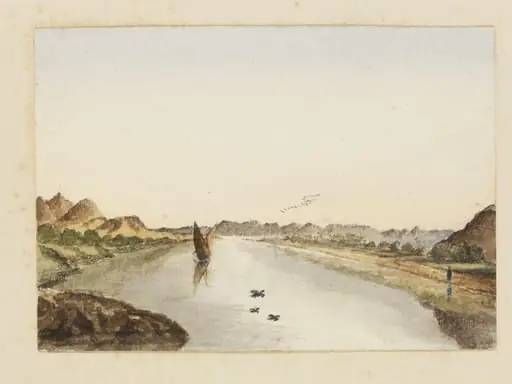 View of the Nile
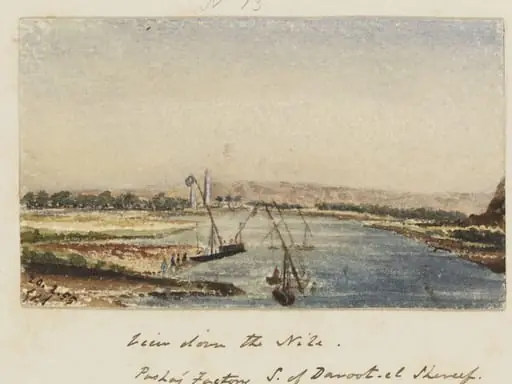 `View down the Nile. Pasha's Factory S.of Daroot-el Shereef. Upper Egypt'
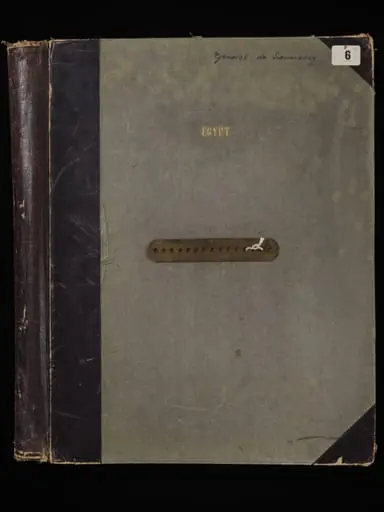 Album
Album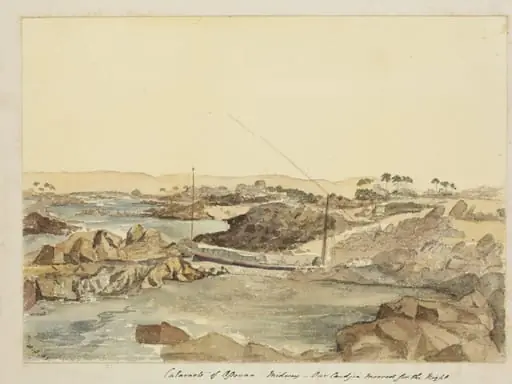 `Cataracts of Assouan. Midway. - Our Candjia Moored for the Night - On the Nile'
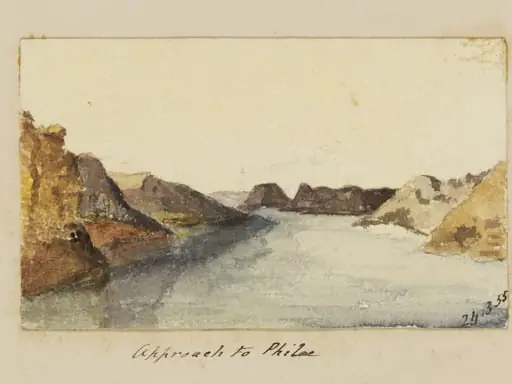 `Approach to Philae'
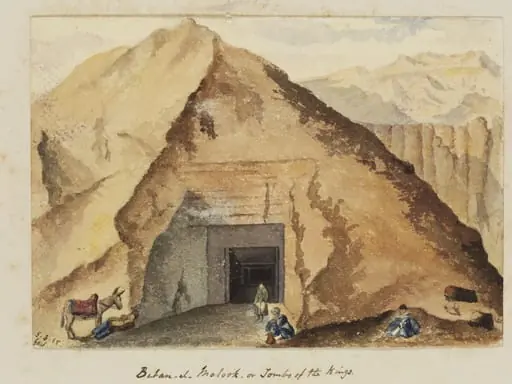 Biban-el-Molook, or Tombs of the Kings. Belzoni's Tomb. Thebes
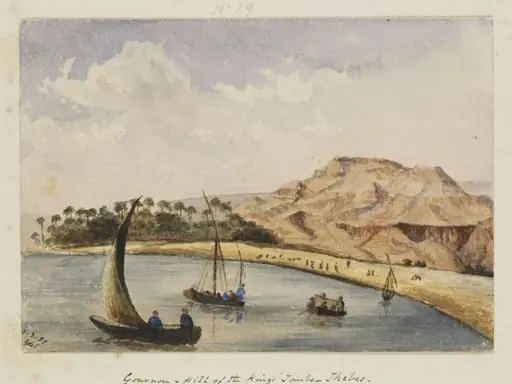 `Gournou & Hill of the Kings' Tombs - Thebes'
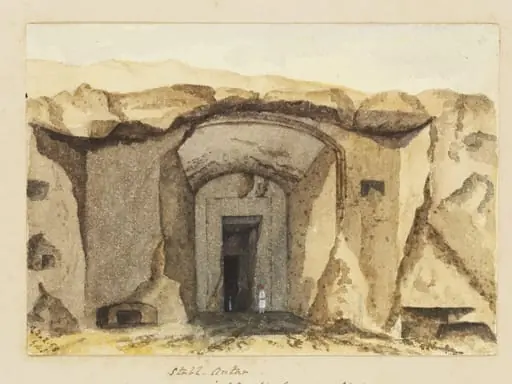 `Stabl-Antar. Ancient Egyptian Cave near Siout. Upper Egypt'
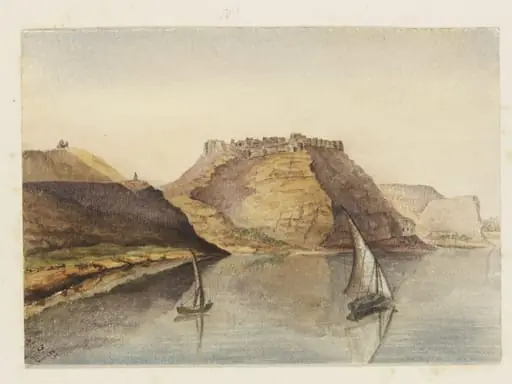 `Castle of Ibreem or Premnis, Nubia. Taken from our Boat'
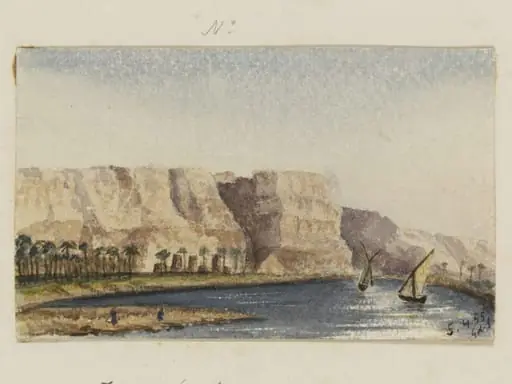 `Kusr-é-Syad. Opposite Choenoboscion. Upper Egypt'
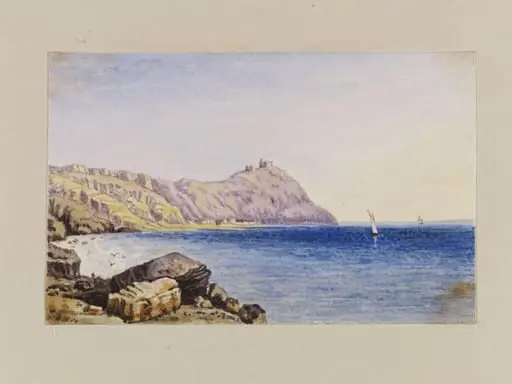 Carmel
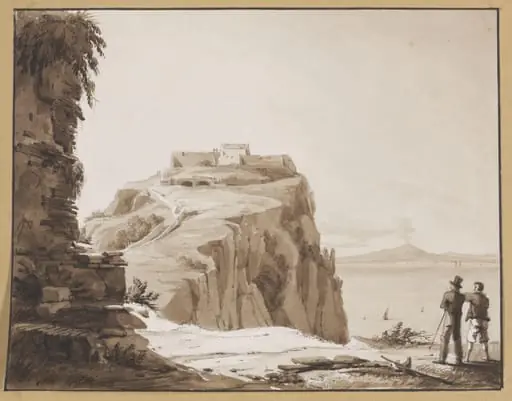 Palais de Tibere a Capri
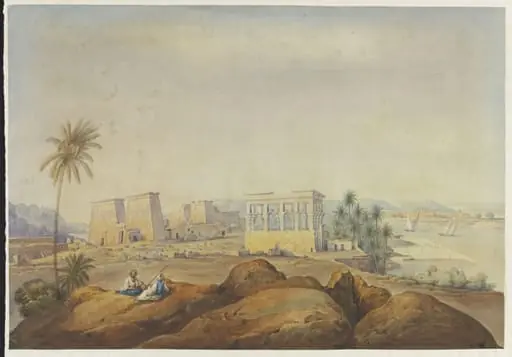 The Temple of Isis and Kiosk of Trajan on the Island of Philae
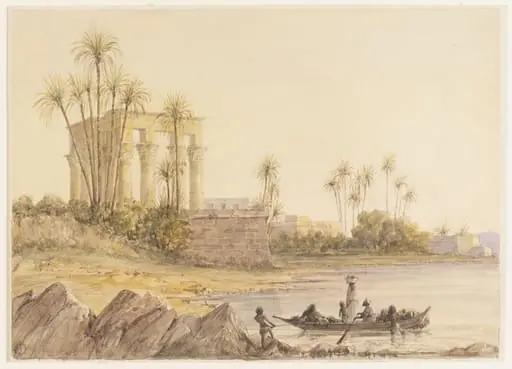 Landing Place. Philoe
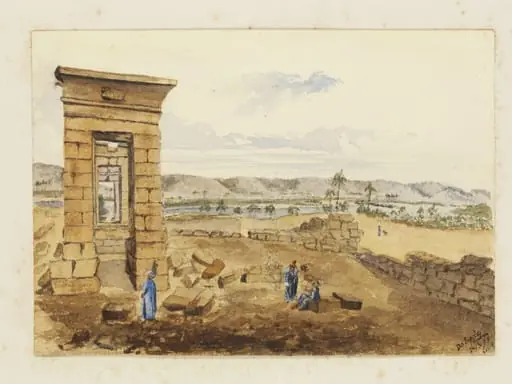 `Dabode Nubia '
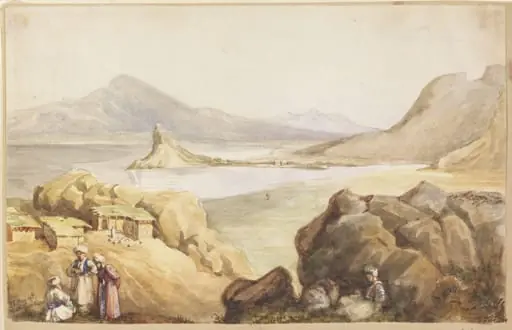 Gule-Hissa Ovassy in the Northern part of Lycia
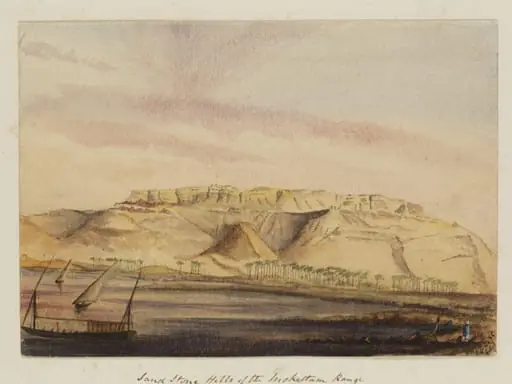 `Sand Stone Hills of the Mokattam Range "Sunset" between Beni-souef & Golosena'