Artwork
Stand of Alders (Le Bouquet d'aunes)
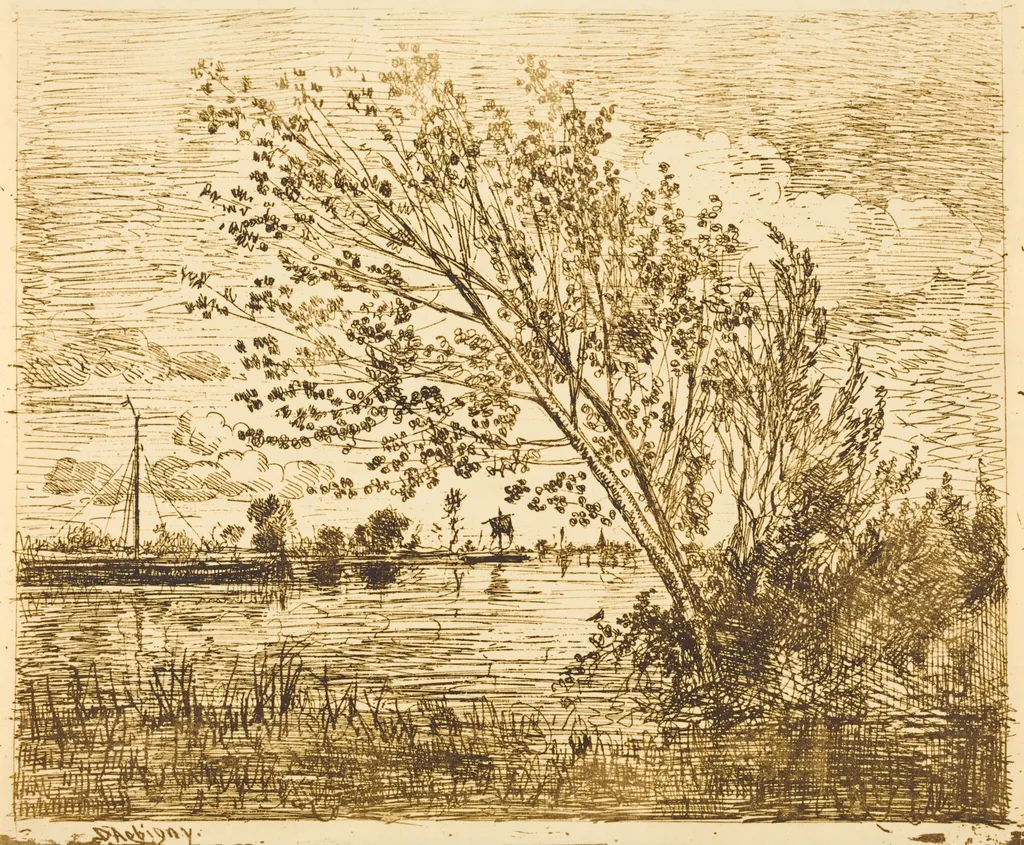
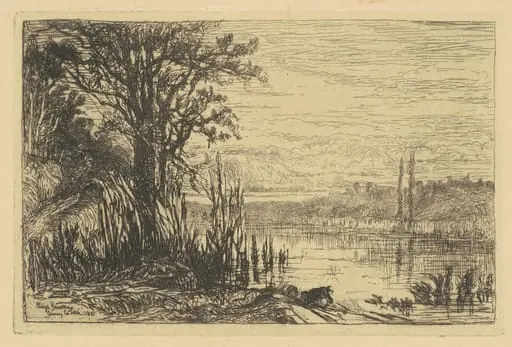
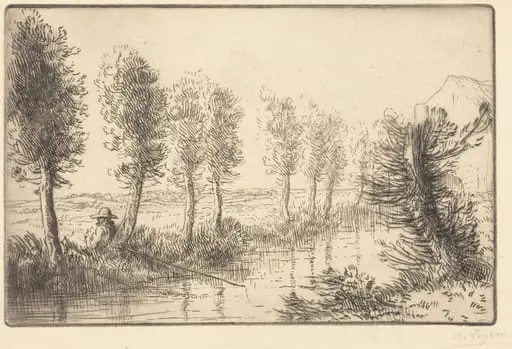
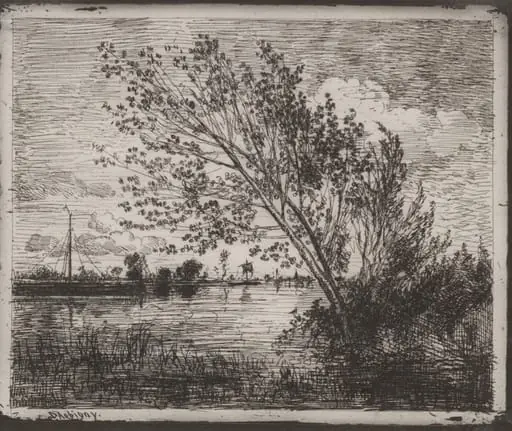
Stand of Alders (Le Bouquet d'aunes) is a print by the Impressionist artist Charles François Daubigny. It dates from 1862 and is held in the collection of the National Gallery of Art. Created in 1862, *Stand of Alders* is a print by Charles-François Daubigny, executed in the cliché-verre technique.
About this work
Overview
Daubigny, a key figure in the Barbizon school, used this process to explore landscape motifs with a quiet, observational focus.
Created in 1862, *Stand of Alders* is a print by Charles-François Daubigny, executed in the cliché-verre technique. This method combined drawing on glass with photographic exposure to produce tonal images. Daubigny, a key figure in the Barbizon school, used this process to explore landscape motifs with a quiet, observational focus. The work reflects his broader interest in printmaking as a means to capture the subtleties of nature beyond oil painting.
Subject & Meaning
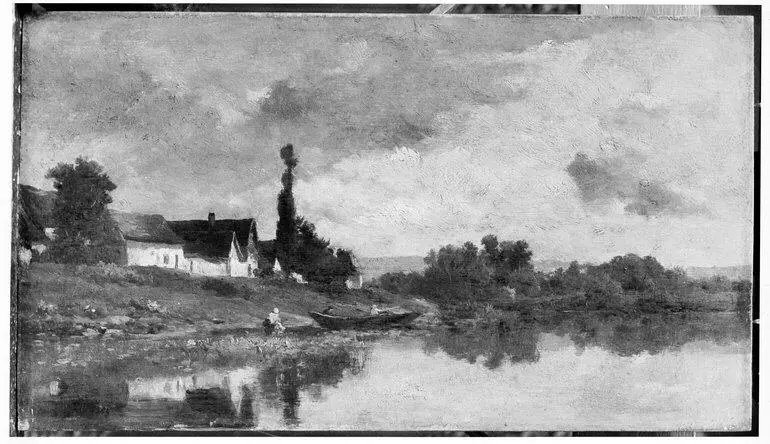
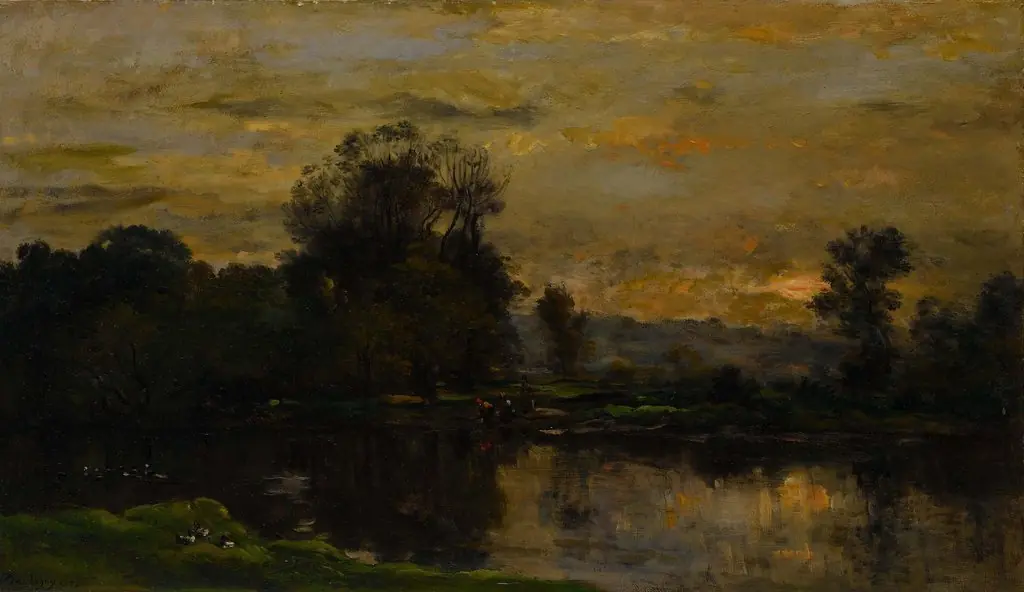
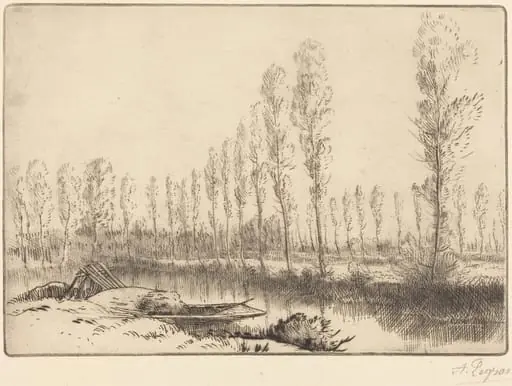
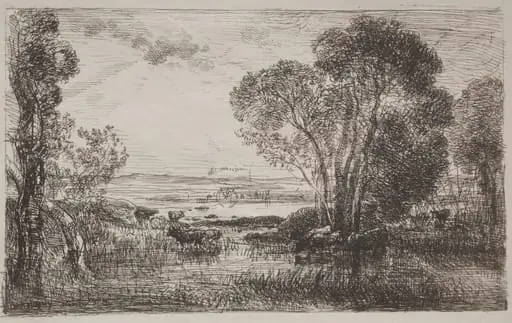
The scene portrays a group of slender, leafless alder trees standing near a still body of water, likely a river or pond. Sparse foliage and bare branches suggest late autumn or early winter, evoking a sense of quiet stillness. Distant boats imply human presence without intrusion, reinforcing the theme of harmony between nature and the quiet rhythms of rural life. The composition invites contemplation rather than narrative, aligning with Daubigny’s preference for unembellished naturalism.
Technique & Style
Daubigny applied the cliché-verre technique by drawing directly onto a glass plate coated with light-sensitive material, then exposing it to create a negative. The resulting print features soft gradations of gray, with delicate contrasts between light and shadow. Lines are fluid and suggestive, avoiding sharp definition. This method allowed him to achieve atmospheric depth and a muted tonal range, enhancing the serene, introspective mood of the landscape.
History & Provenance
Daubigny produced numerous cliché-verre works between the 1850s and 1870s, often as personal experiments or gifts to fellow artists. *Stand of Alders* was made during a period when he was deeply engaged with printmaking, seeking alternatives to traditional etching. The work entered public collections in the late 19th century, preserved as part of the growing recognition of printmaking as a legitimate artistic medium within the French landscape tradition.
Context
In the mid-19th century, French artists increasingly turned to direct observation of nature, rejecting idealized compositions. Daubigny, working alongside the Barbizon painters, emphasized plein air study and everyday rural scenes. His use of cliché-verre aligned with broader technological interests in photography and reproduction, offering a middle ground between drawing and mechanical image-making. This work reflects a shift toward intimate, transient natural moments over grand historical themes.
Legacy
Daubigny’s cliché-verre prints, including *Stand of Alders*, influenced later artists exploring tonal landscapes and experimental print methods. His approach to capturing light and atmosphere prefigured Impressionist concerns, though without their vibrant color or broken brushwork. The work remains a quiet testament to the potential of hybrid techniques in conveying emotional resonance through subtle visual nuance, contributing to the evolving definition of artistic originality in the age of mechanical reproduction.
Own this work as a print
Artist & collection
Artist
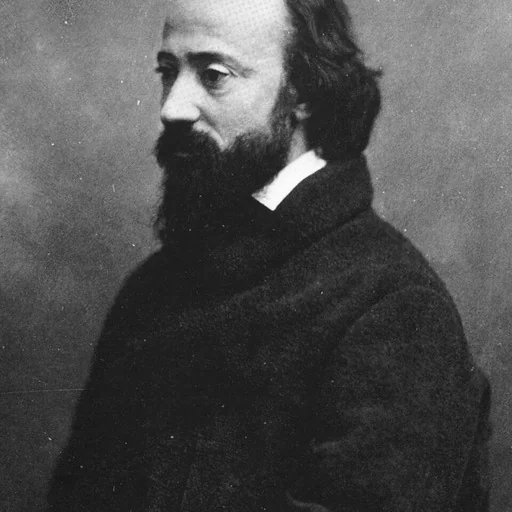
Charles-François Daubigny ( DOH-bin-yee, US: DOH-been-YEE, doh-BEEN-yee, French: ; 15 February 1817 – 19 February 1878) was a French painter, one of the members of the Barbizon school, and is considered an important precursor of…