Artwork
Studio on the Boat (Le Bateau-atelier)
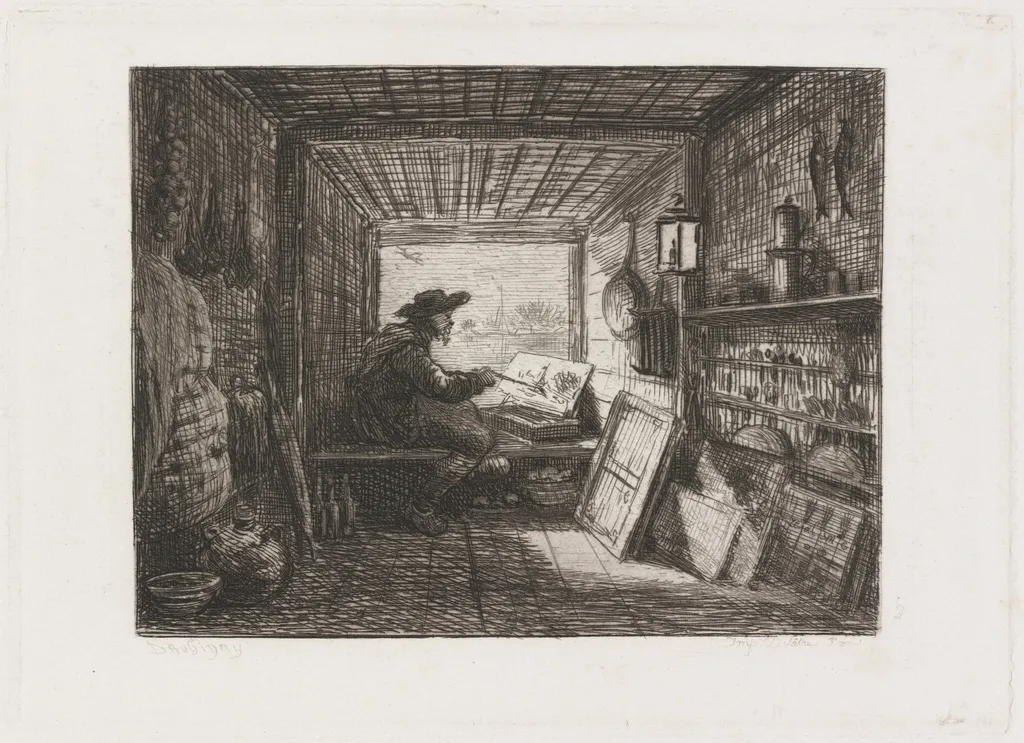
Studio on the Boat (Le Bateau-atelier) is an ink print by the Impressionist artist Charles François Daubigny. It dates from 1862 and is held in the collection of the National Gallery of Art.
About this work
Overview
Charles-François Daubigny produced this 1862 etching on wove paper as part of his exploration of printmaking alongside his landscape painting.
Charles-François Daubigny produced this 1862 etching on wove paper as part of his exploration of printmaking alongside his landscape painting. The work captures a personal and functional space: his converted riverboat, used as a mobile studio. Unlike traditional studio settings, this floating workspace allowed him to paint directly from nature, reflecting his commitment to observing the natural world in real time.
Subject & Meaning
The scene portrays the artist at work within the confined interior of his boat-studio, illuminated by daylight streaming through a large window. The cluttered desk, scattered tools, and quiet solitude suggest a space dedicated to focused observation rather than grand display. The image conveys the intimacy of artistic labor, emphasizing process over spectacle and the quiet rhythm of daily practice in nature’s presence.
Technique & Style
Daubigny employed bold, incised lines and nuanced tonal gradations to model light and texture. The etching’s dense yet controlled mark-making renders the wooden interior, fabric, and glass with tactile precision. Shadows fall naturally across surfaces, enhancing spatial depth without theatrical contrast. His approach to etching was direct and observational, mirroring his plein-air painting methods and rejecting overly polished academic conventions.
History & Provenance
Daubigny acquired a small barge in the early 1860s, modifying it into a studio to navigate the Seine and Oise rivers. This etching documents that vessel during its active use, likely made shortly after its conversion. The work circulated among collectors and fellow artists, reflecting his growing reputation in print circles. Its survival in public collections attests to its significance as a record of his working life.
Context
Emerging from the Barbizon tradition, Daubigny rejected idealized landscapes in favor of direct, unembellished scenes. His floating studio was both practical and symbolic—a rejection of the studio-bound academic system. This etching aligns with broader 19th-century shifts toward artist autonomy and the valorization of everyday creative routines, foreshadowing Impressionist practices of working en plein air.
Legacy
Daubigny’s boat studio and its depiction in this etching influenced later artists, including Monet, who adopted a similar floating studio. The work stands as a quiet testament to the evolving role of the artist as observer and participant in nature. It also elevated etching as a medium for personal expression, demonstrating its capacity to convey atmosphere and intimacy beyond mere reproduction.
Artist & collection
Artist
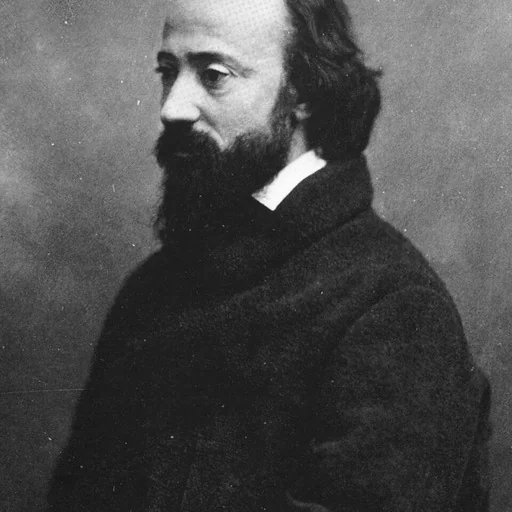
Charles-François Daubigny ( DOH-bin-yee, US: DOH-been-YEE, doh-BEEN-yee, French: ; 15 February 1817 – 19 February 1878) was a French painter, one of the members of the Barbizon school, and is considered an important precursor of…

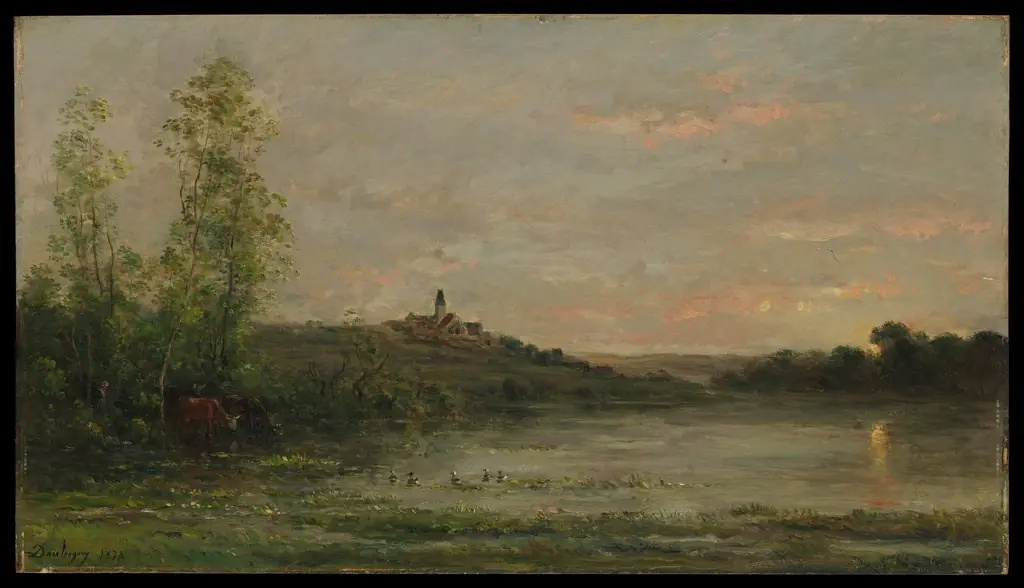
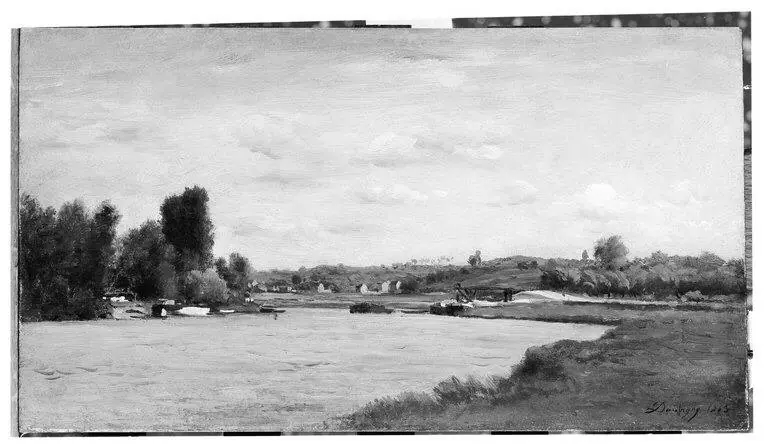
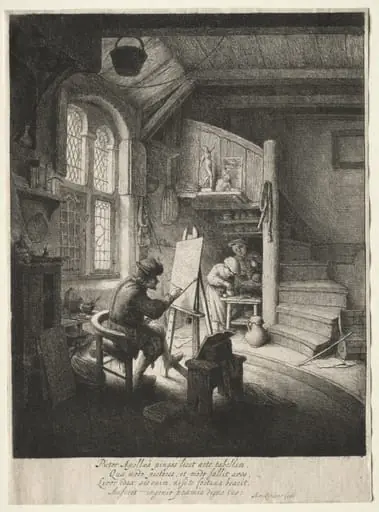 The Painter's Studio
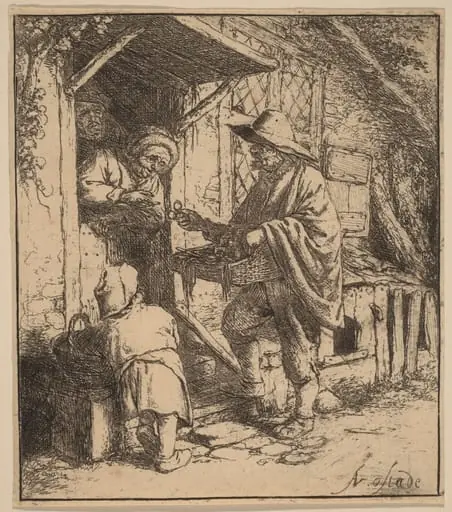 Street Vendor Selling Spectacles at the Door
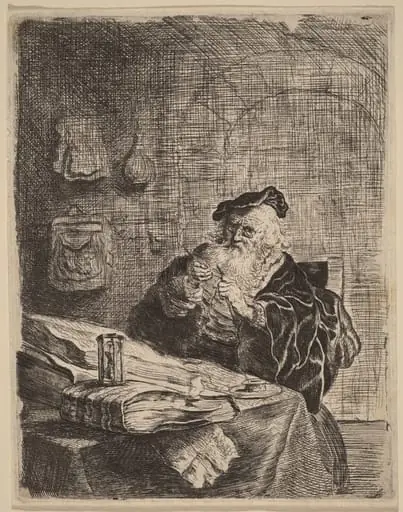 Man with a Penknife
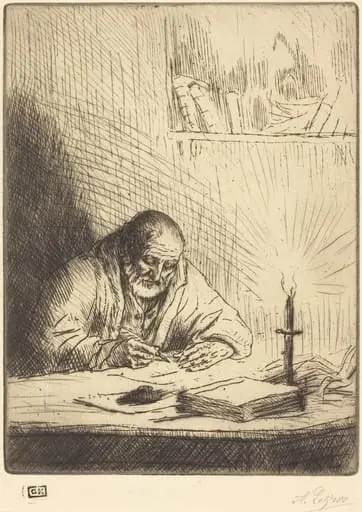 Archeologist (L'archeologue)
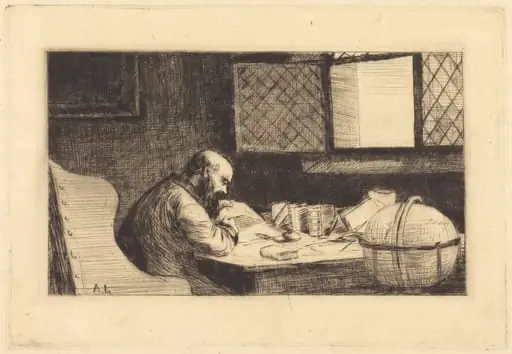 Geographer (Le geographe)
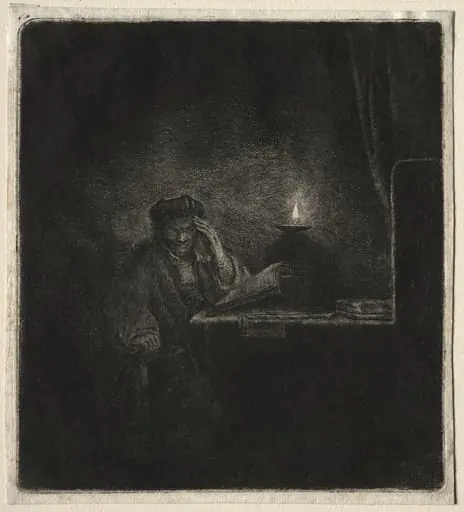 Copy of Student at a Table by Candelight
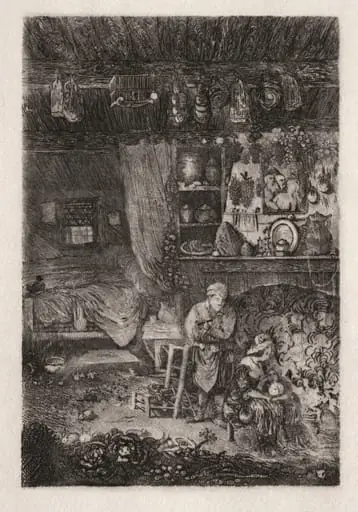 Flemish Interior
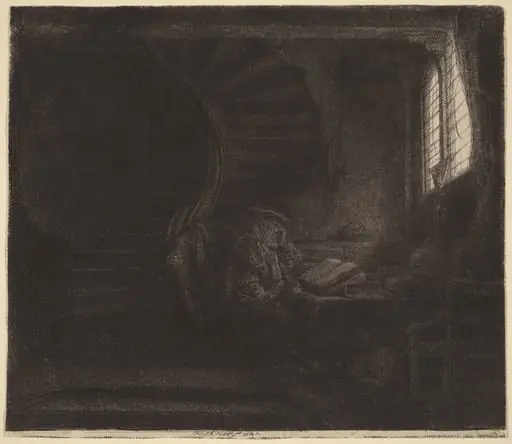 Saint Jerome in a Dark Chamber
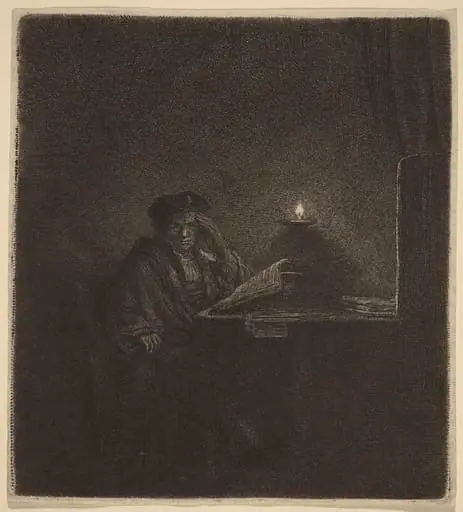 Student at a Table by Candlelight
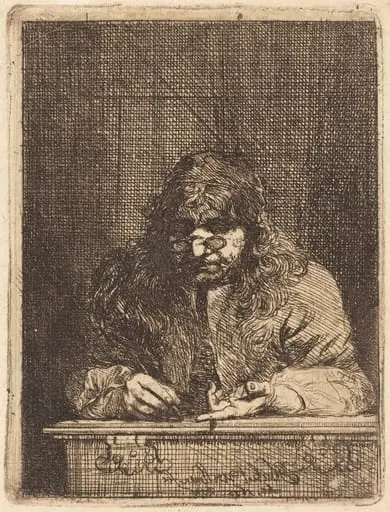 Self-Portrait Drawing
 Peasant Leaning on His Doorway
 The Smith, Passage du Dragon