Artwork
Self-Portrait Drawing
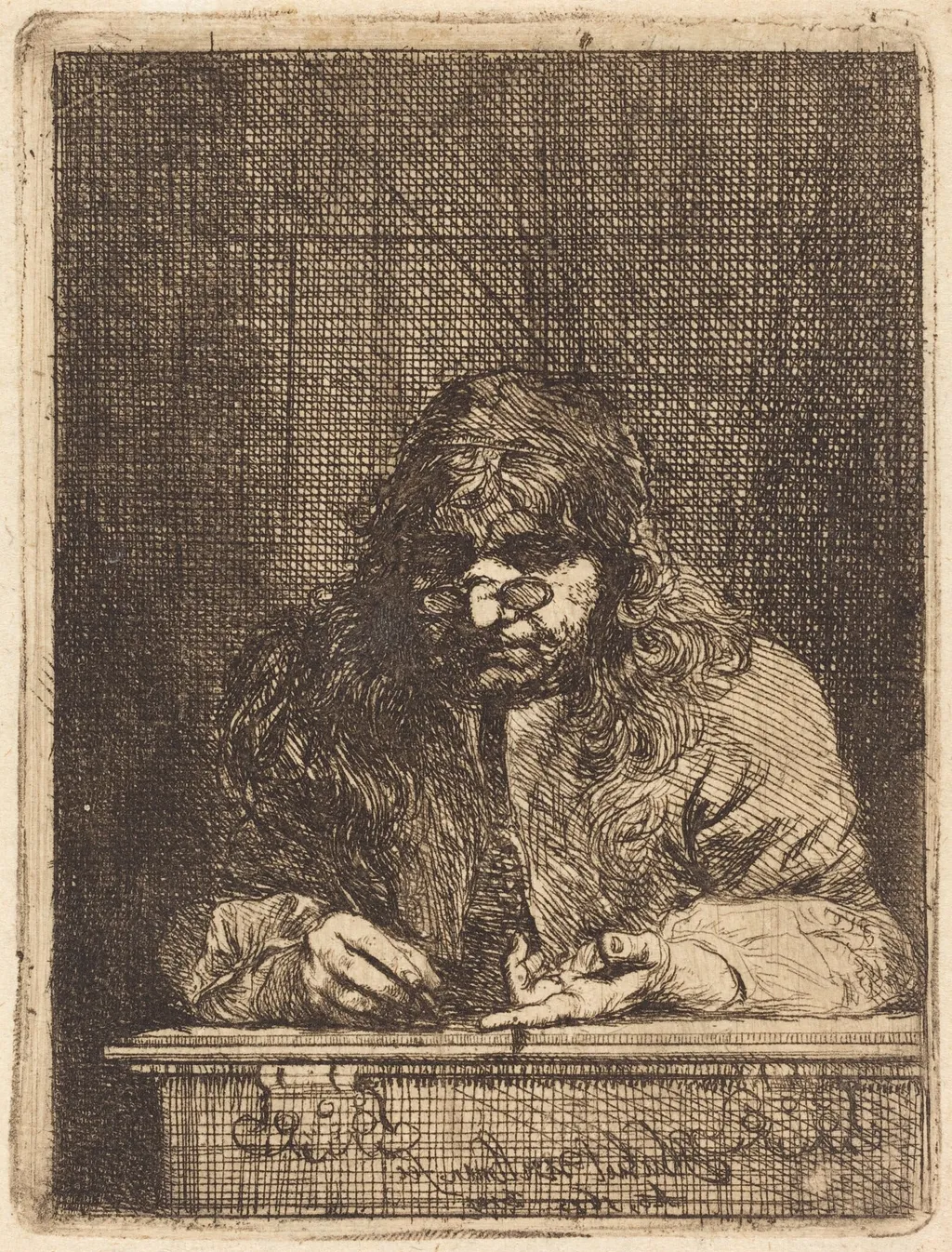
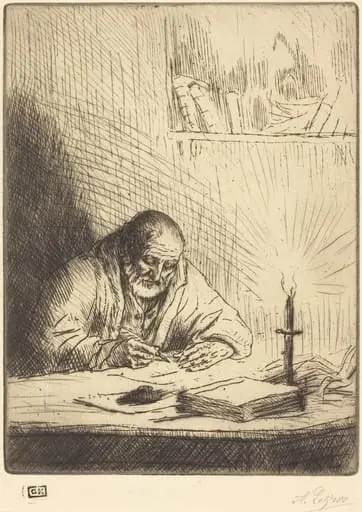
Self-Portrait Drawing is an ink print by the Baroque artist Michael Lukas Leopold Willmann. It dates from 1675 and is held in the collection of the National Gallery of Art.
About this work
Overview
Created in 1675, this etching is a self-portrait by Michael Lukas Leopold Willmann, rendered in black ink on laid paper.
Created in 1675, this etching is a self-portrait by Michael Lukas Leopold Willmann, rendered in black ink on laid paper. The image captures the artist at work, seated at a table, dressed in a loose robe and low-crowned hat. The composition is intimate and unadorned, focusing on the act of creation rather than ceremonial presentation. The texture of the lines and the paper’s subtle grid suggest a direct, unpolished approach to recording the self.
Subject & Meaning
Willmann depicts himself in the midst of labor, hunched over his work surface with hands resting prominently. The posture conveys concentration and physical engagement with his craft. The absence of symbols or elaborate setting shifts emphasis to the artist’s presence as a maker. The low hat and draped robe imply a private moment, not a public persona, reinforcing the introspective nature of the image as a record of identity through labor.
Technique & Style
The image employs drypoint, a printmaking method where lines are scratched directly into the plate, producing rough, burr-rich marks. This technique generates a dense, uneven texture that contrasts with the smoother lines of traditional etching. The paper, with its visible laid pattern, was standard for the period. The scratchy, tactile quality of the lines enhances the sense of immediacy, as if the artist’s hand is still present in the surface.
History & Provenance
The print dates from the height of Willmann’s career in Bohemia, where he was active as a court painter. Few of his personal drawings survive, making this self-portrait a rare glimpse into his private artistic practice. It likely served as a study or personal keepsake rather than a commissioned work. Its survival suggests it was preserved within his circle or collected by contemporaries who valued his direct artistic voice.
Context
In mid-17th-century Central Europe, artists increasingly turned to self-representation as a means of asserting professional identity. While grand portraits were common, this intimate etching reflects a quieter trend: artists documenting their own process. The use of drypoint, a technique associated with personal expression rather than mass production, aligns with this shift toward individualized artistic self-awareness.
Legacy
Willmann’s self-portrait stands as an early example of the artist as observer of his own labor. Its unidealized form and tactile technique influenced later generations who valued authenticity over ornamentation in self-representation. Though not widely reproduced, it remains a significant artifact in the history of printmaking, illustrating how personal expression could emerge through modest, direct means.
Artist & collection


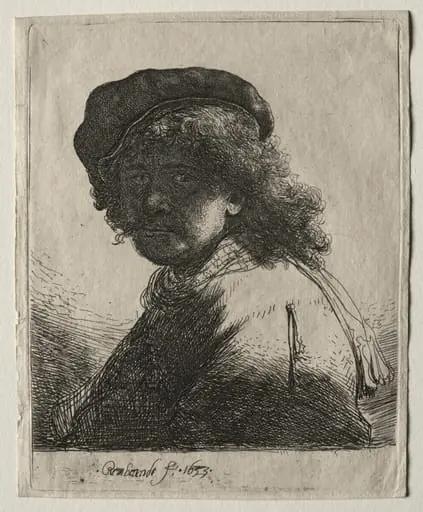 Self-Portrait in a Cap and Scarf with the Face Dark: Bust
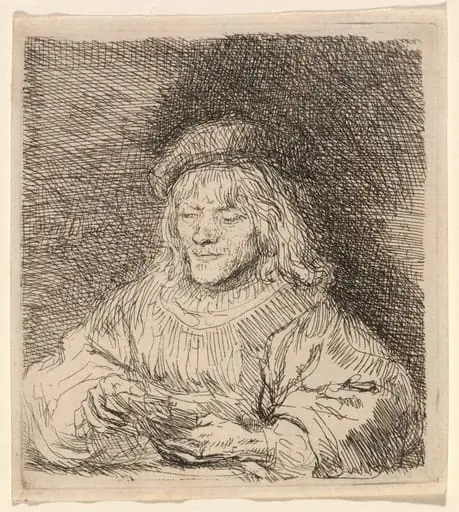 The Card Player
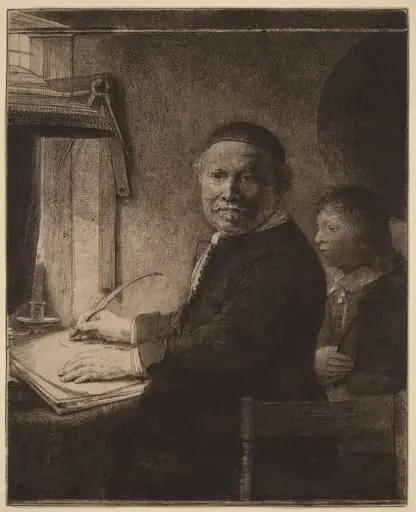 Lieven Willemsz van Coppenol: the Smaller Plate
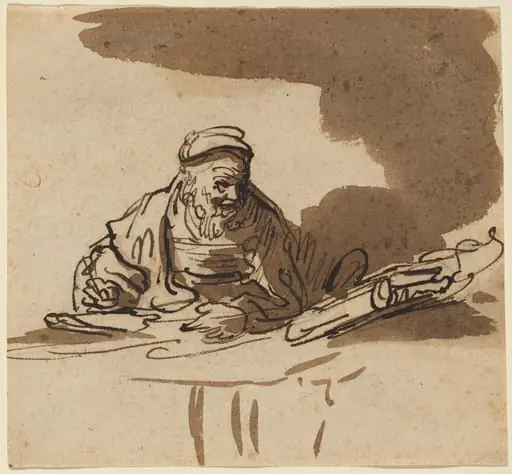 An Old Scholar at His Desk
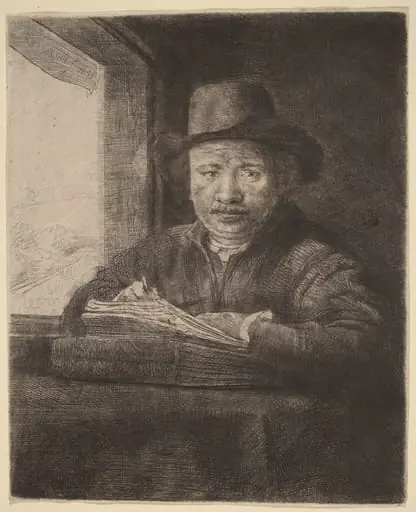 Self-Portrait Etching at a Window
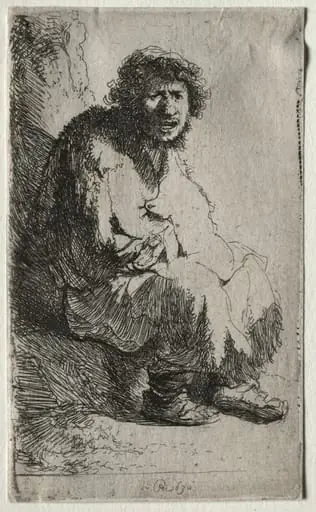 Beggar Seated on a Bank
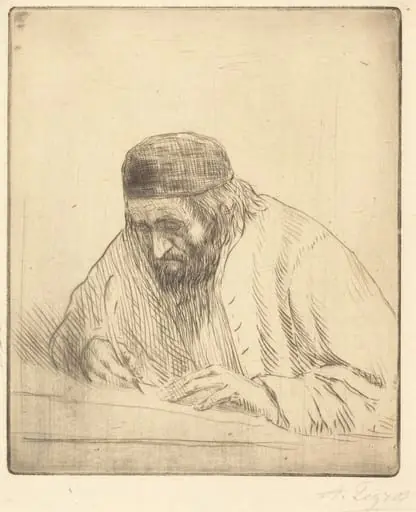 Writer (L'ecrivain)
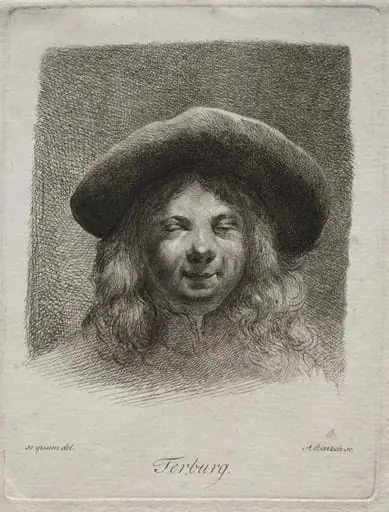 Portrait of Gerard Terborch
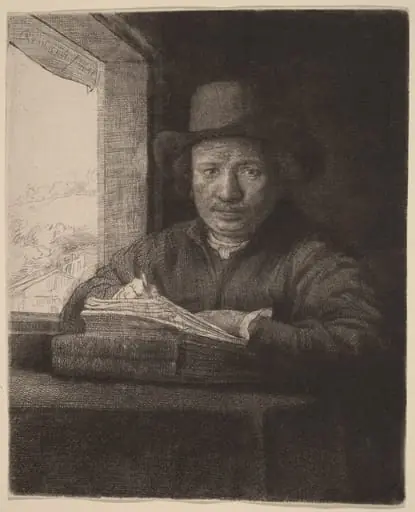 Self-Portrait Etching at a Window
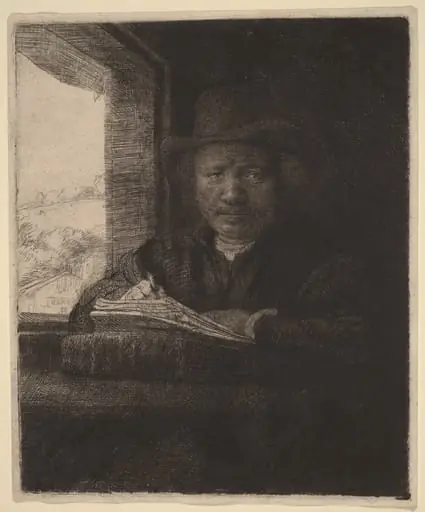 Self-Portrait Etching at a Window
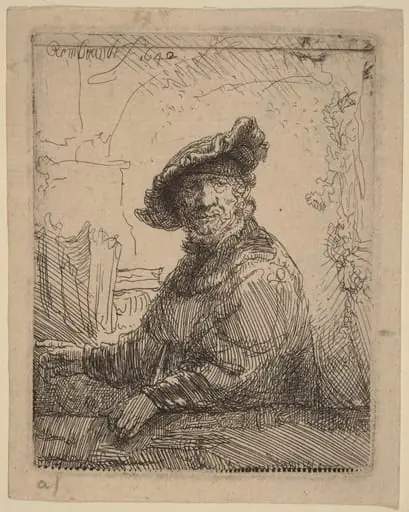 Man in an Arbor
 Archeologist (L'archeologue)