Artwork
The Meadow at Grave, near Villerville (Le Pre des Graves, a Villerville)
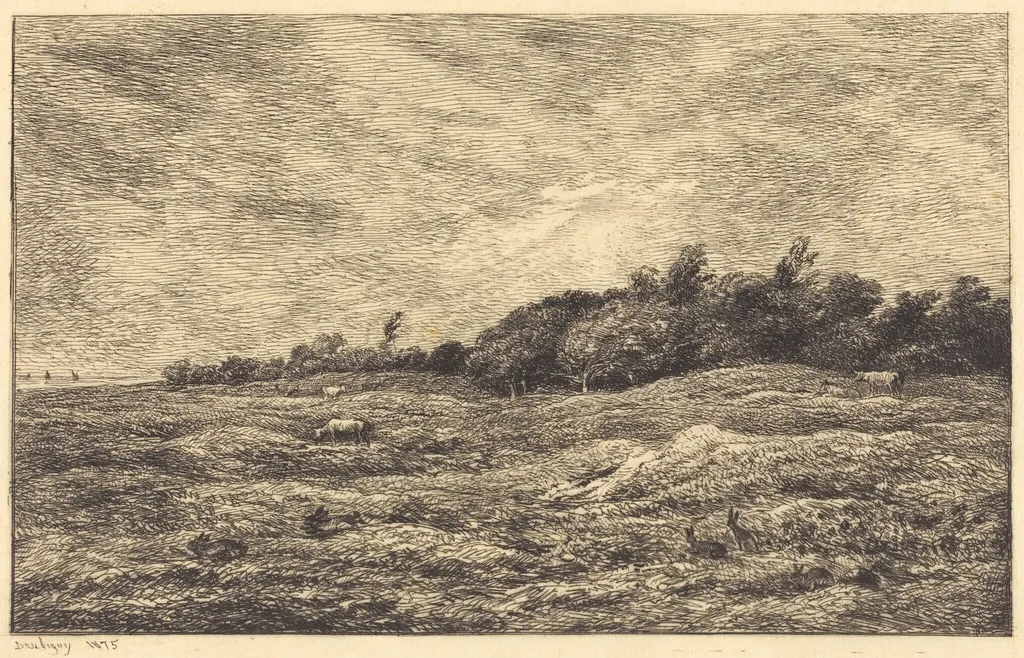
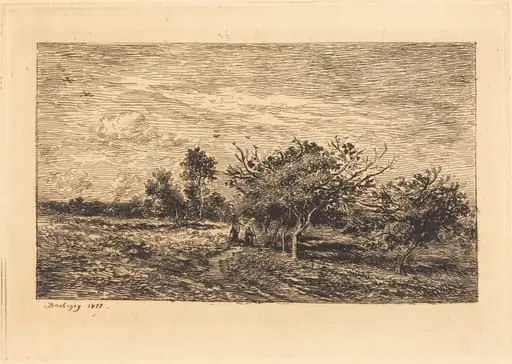
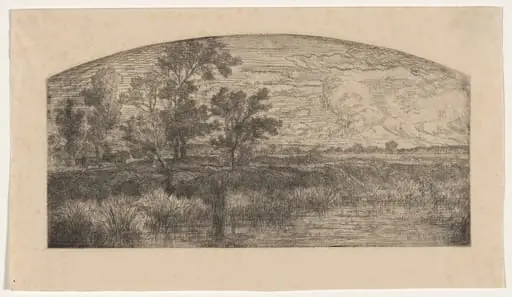
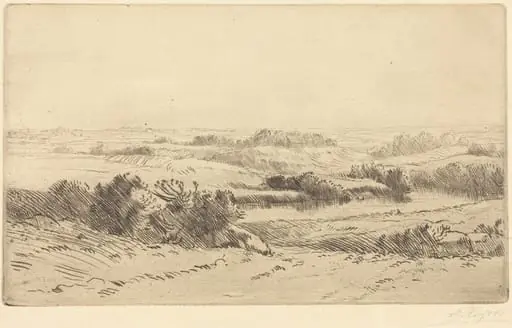
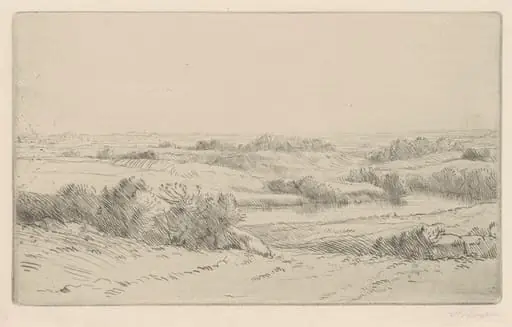
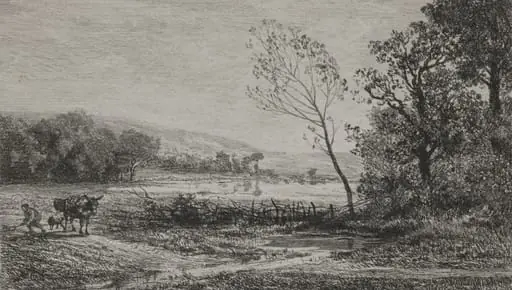
The Meadow at Grave, near Villerville (Le Pre des Graves, a Villerville) is an ink print by the Impressionist artist Charles François Daubigny. It dates from 1875 and is held in the collection of the National Gallery of Art. Created in 1875, this etching by Charles-François Daubigny captures a tranquil riverside meadow near Villerville.
About this work
Daubigny worked it carefully with two tools: an etching needle for lines and a drypoint needle to scratch fuzzy shadows into the plate.
Daubigny’s 1875 etching shows a quiet riverbank near Villerville. Tall grasses lean over still water. A small boat floats empty on the far side.
This print isn’t a quick sketch. Daubigny worked it carefully with two tools: an etching needle for lines and a drypoint needle to scratch fuzzy shadows into the plate.
Look closely at the trees—see how their edges dissolve into soft blur? That’s drypoint at work.
Overview
Created in 1875, this etching by Charles-François Daubigny captures a tranquil riverside meadow near Villerville. As a printmaker deeply engaged with the natural world, Daubigny used etching and drypoint techniques to render subtle shifts in light and texture. Unlike rapid sketches, this work reflects deliberate, layered mark-making, revealing his commitment to translating quiet rural moments into enduring images.
Subject & Meaning
The scene depicts a quiet riverbank where tall grasses bend over still water, and a solitary, unoccupied boat rests on the far shore. There is no human presence, no narrative drama—only the calm rhythm of nature. Daubigny’s choice of subject emphasizes stillness and observation, aligning with his broader interest in the unadorned beauty of the French countryside.
Technique & Style
Daubigny employed both an etching needle and a drypoint needle to build the image. Fine lines define the grasses and tree trunks, while the drypoint’s burr creates soft, fuzzy shadows that blur edges, especially in the foliage. This combination allows for both precision and atmospheric haze, giving the print a sense of depth and ambient light without relying on tone or wash.
History & Provenance
Made during Daubigny’s later years, this print belongs to a series of works produced after he settled near Villerville, where he frequently sketched the surrounding landscape. Though less documented than his paintings, his etchings were circulated among collectors and fellow artists, contributing to his reputation as a printmaker who bridged traditional landscape traditions and emerging naturalist approaches.
Context
Daubigny was part of the Barbizon circle, which rejected idealized landscapes in favor of direct observation. His plein air practice and interest in transient effects of light influenced younger artists, including the Impressionists. This etching reflects a broader shift in 19th-century art toward intimate, unembellished depictions of rural life, grounded in personal experience rather than academic convention.
Legacy
The work exemplifies Daubigny’s role in expanding the expressive potential of printmaking beyond reproductive purposes. His use of drypoint to suggest atmosphere rather than detail inspired later printmakers to treat the plate as a medium for mood, not just line. This etching remains a quiet testament to his dedication to observing nature with patience and precision.
Own this work as a print
Artist & collection
Artist
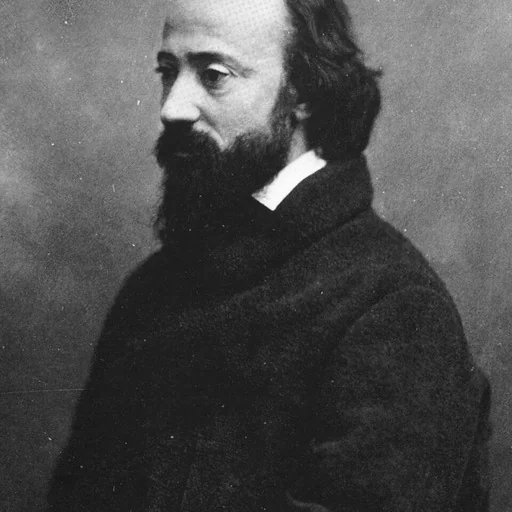
Charles-François Daubigny ( DOH-bin-yee, US: DOH-been-YEE, doh-BEEN-yee, French: ; 15 February 1817 – 19 February 1878) was a French painter, one of the members of the Barbizon school, and is considered an important precursor of…