Artwork
2 heures
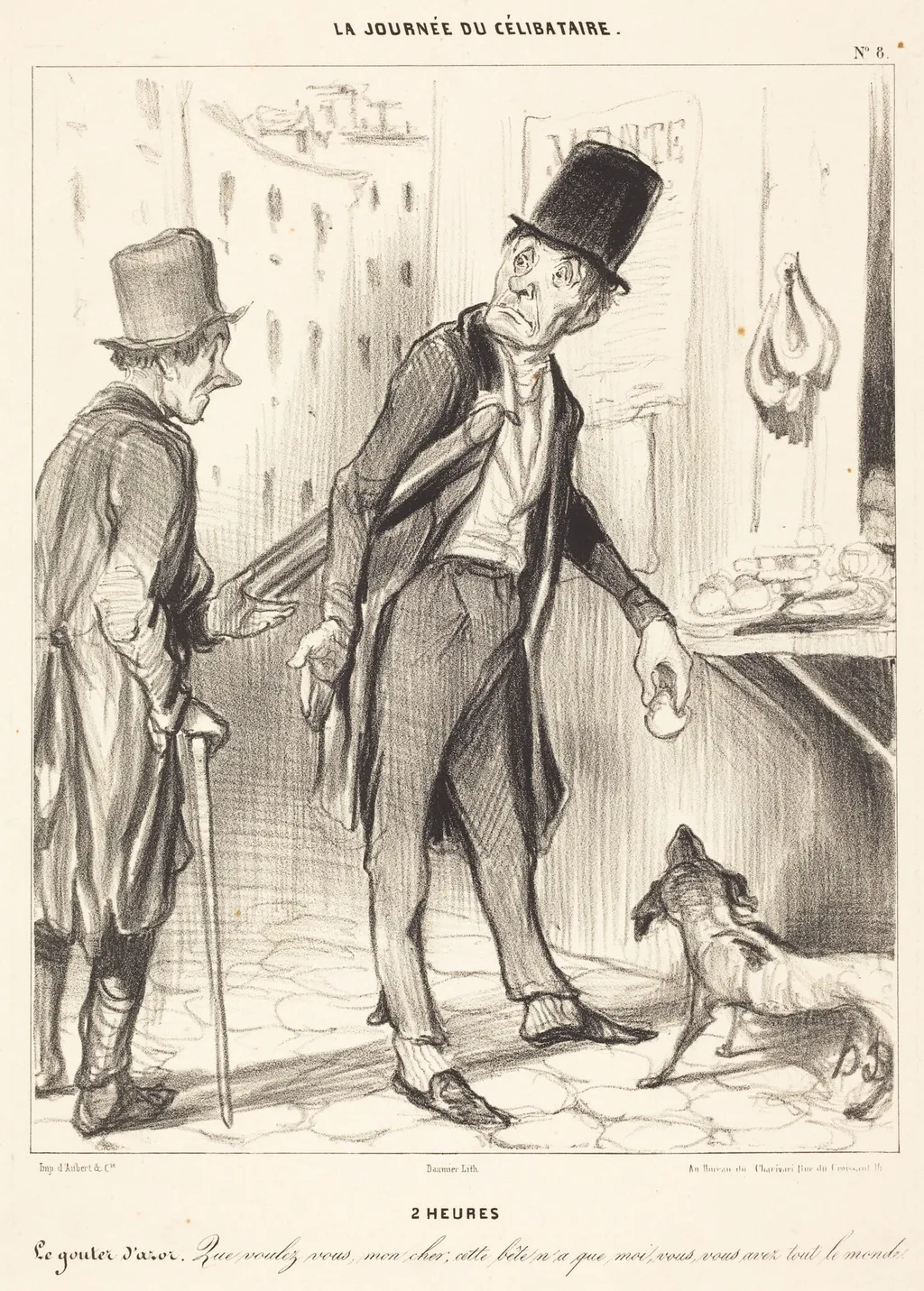
2 heures is a crayon print by the Romanticist artist Honoré Daumier. It dates from 1839 and is held in the collection of the National Gallery of Art.
About this work
Overview
Rendered in black on wove paper, the work captures a quiet, almost absurd moment in a modest interior.
Created in 1839, *2 heures* is a crayon lithograph by Honoré Daumier, produced during his years illustrating satirical journals like *La Caricature* and *Le Charivari*. Rendered in black on wove paper, the work captures a quiet, almost absurd moment in a modest interior. Though brief in composition, it reflects Daumier’s commitment to portraying everyday life with sharp, unflinching observation, using the accessibility of print to reach a broad public audience.
Subject & Meaning
The scene depicts two men in a dimly lit room, one reaching for food while another offers an object—perhaps a meal or a token of companionship. The title, *La Journée du Célibataire*, suggests a solitary man’s routine, subtly underscoring themes of isolation and social marginalization. Daumier avoids overt caricature here, instead using understated gestures to imply the quiet desperation of urban life among the lower middle class in post-revolutionary France.
Technique & Style
Daumier employed crayon lithography to achieve fluid, expressive lines that convey movement and texture with minimal detail. The loose, energetic strokes define the figures and furnishings without precise rendering, emphasizing mood over realism. The contrast between the dark, shadowed interior and the stark white paper heightens the sense of intimacy and solitude, while the exaggerated facial features lend a wry, humanizing humor to the scene.
History & Provenance
The print was made during Daumier’s most active period as a political satirist, when his work regularly appeared in Parisian periodicals. Though not as widely known as his more overtly political images, *2 heures* belongs to a series of domestic scenes that quietly challenged idealized portrayals of bourgeois life. Its survival in public collections reflects its recognition as a representative example of his observational printmaking.
Context
In the late 1830s, France’s July Monarchy suppressed overt political dissent, prompting artists like Daumier to encode critique in everyday scenes. His focus on solitary figures, modest interiors, and unglamorous routines offered a counter-narrative to state-sanctioned imagery. This print aligns with a broader trend in print culture that used humor and subtlety to expose social inequities without direct confrontation.
Legacy
Daumier’s ability to convey complex social truths through simple, intimate moments influenced later realist and modernist artists. *2 heures* exemplifies his enduring contribution: elevating the mundane into a form of quiet resistance. The work remains a touchstone for understanding how printmaking could serve as both art and social documentation, bridging the gap between public discourse and private experience.
Artist & collection
Artist
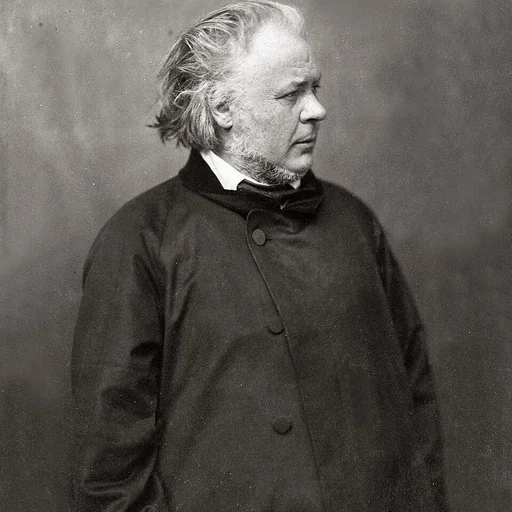
Honoré-Victorin Daumier was a French painter, sculptor, and printmaker, whose many works offer commentary on the social and political life in France, from the Revolution of 1830 to the fall of the Second French Empire in 1870.









 2 heures - Le gouter d'Azor
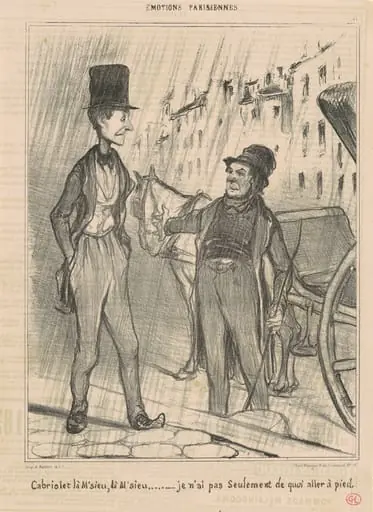 Cabriolet là M'sieu, là M'sieu...
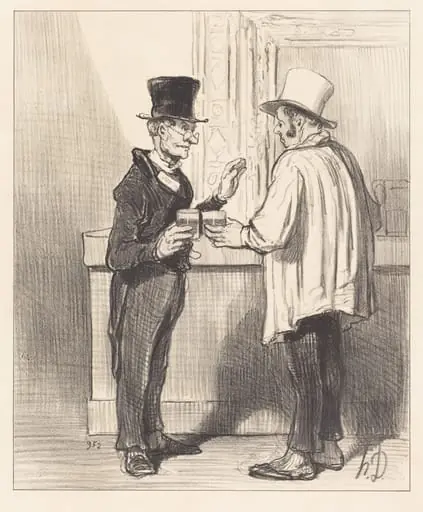 Un Défenseur... causant... dans son cabinet habituel
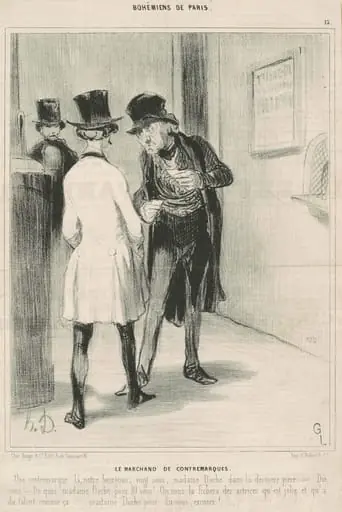 Le marchand de contremarques
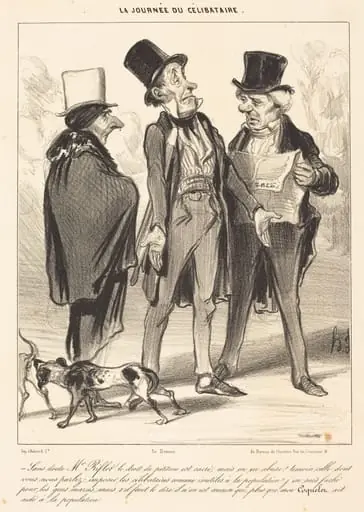 Sans doute M. Riflot le droit...
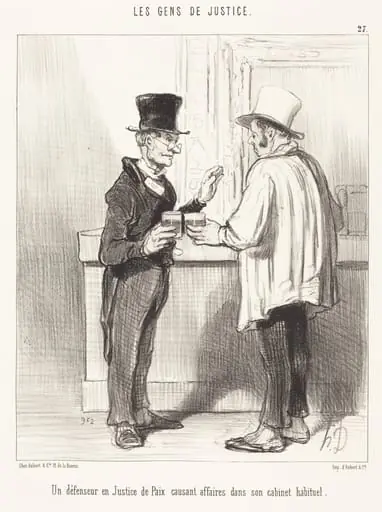 Un Défenseur... causant... dans son cabinet habituel
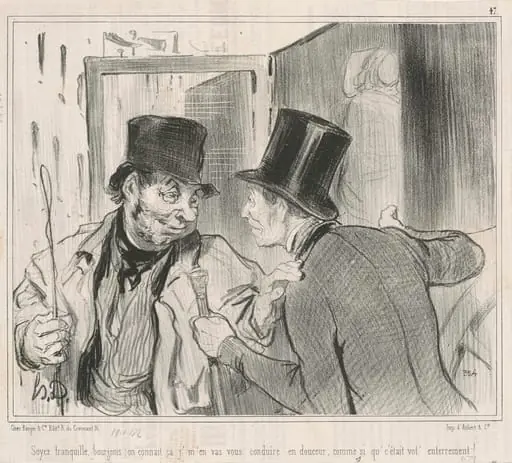 Soyez tranquille bourgeois, on connait
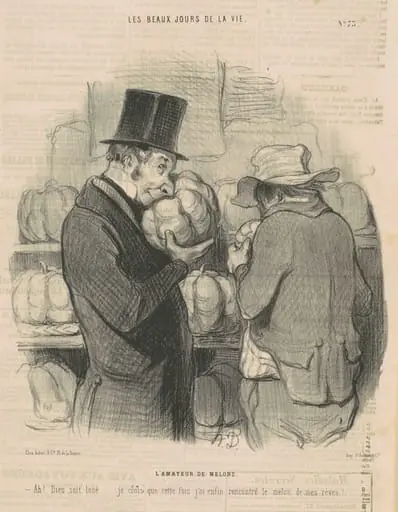 L'amateur de melons
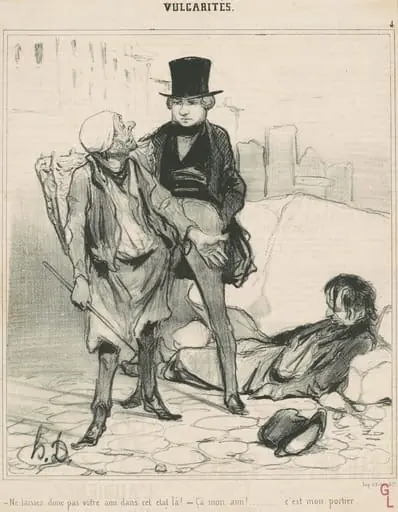 Ne laissez donc pas votre ami dans cet état la!
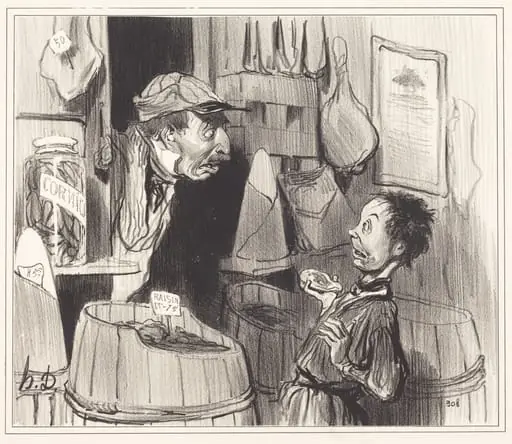 Épicier citoyen, guerrier pur et sans tache...