Artwork
Ça n'empêche que ça vaut encore mieux....
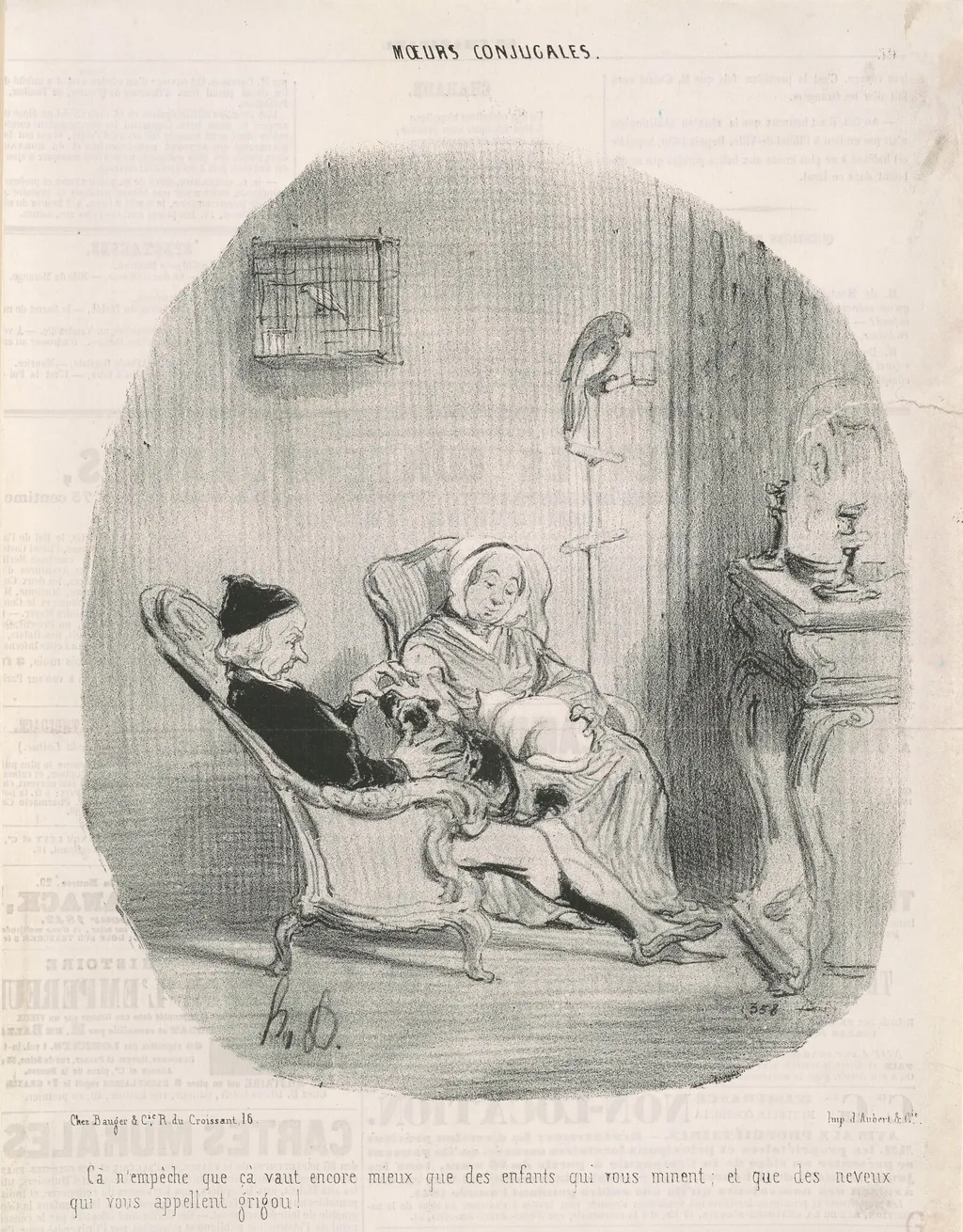
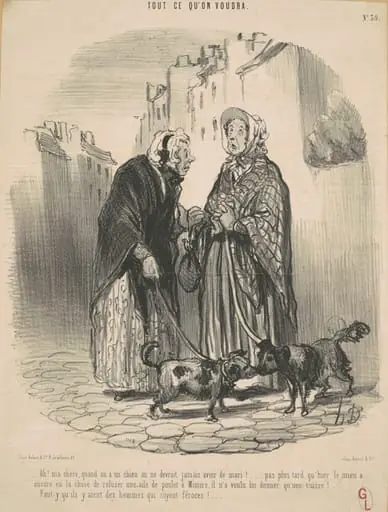
Ça n'empêche que ça vaut encore mieux.... is an ink print by the Romanticist artist Honoré Daumier. It dates from 1842 and is held in the collection of the National Gallery of Art.
About this work
Overview
Honoré Daumier’s lithograph presents a quiet domestic scene in which two elderly figures occupy worn armchairs within a modest interior. Light filters softly across their faces, and a diminutive dog rests at their feet, lending a sense of lived-in comfort. The composition captures a moment of stillness, emphasizing the intimacy of shared space.
Subject & Meaning
The work focuses on the gentle companionship of the two seniors, whose relaxed postures and calm expressions suggest contemplation and mutual support. The surrounding objects—a clutter of small decorative items—evoke the accumulated history of a lived home, while the sleeping dog reinforces the theme of everyday tranquility and the simple pleasures of aging together.
Technique & Style
His handling of tone creates a soft illumination that models the figures and interior details without excessive detail, preserving a sense of immediacy.
Executed in lithography, the print demonstrates Daumier’s facility with a medium that allows rapid, expressive line work. His handling of tone creates a soft illumination that models the figures and interior details without excessive detail, preserving a sense of immediacy. The restrained palette and economical rendering reflect his broader interest in portraying ordinary life with warmth and subtle humor.
Context
Created during Daumier’s mature period, the lithograph aligns with his broader oeuvre of genre scenes that document 19th‑century French domesticity. While known for satirical caricature, here he turns to a more tender observation of age and home, offering a counterpoint to his more overtly political works and underscoring his versatility in capturing the spectrum of human experience.
Artist & collection

Artist
Honoré-Victorin Daumier was a French painter, sculptor, and printmaker, whose many works offer commentary on the social and political life in France, from the Revolution of 1830 to the fall of the Second French Empire in 1870.









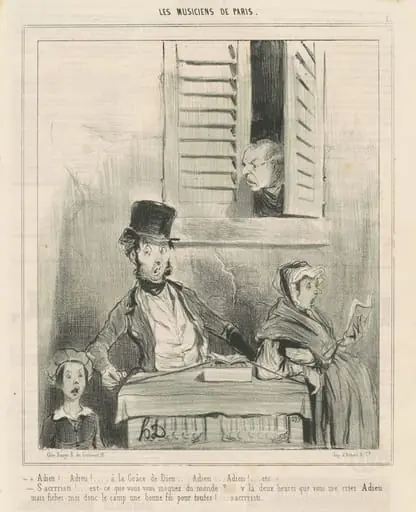 Adieu! ... A la grâce de dieu ...
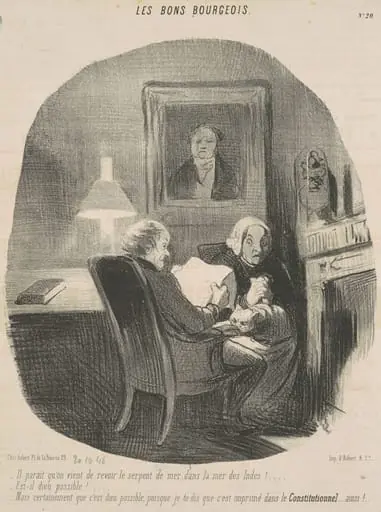 Il parait qu'on vient de revoir le serpent de mer ...
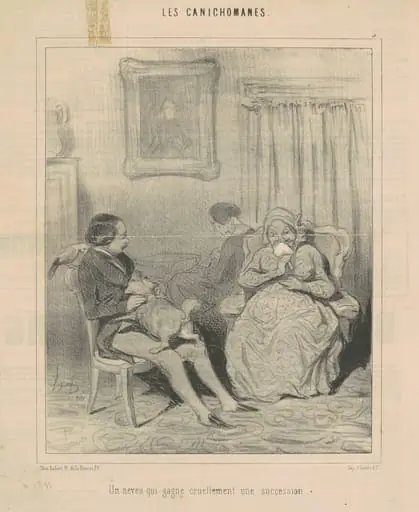 Un neveu qu gagne cruellement une succession
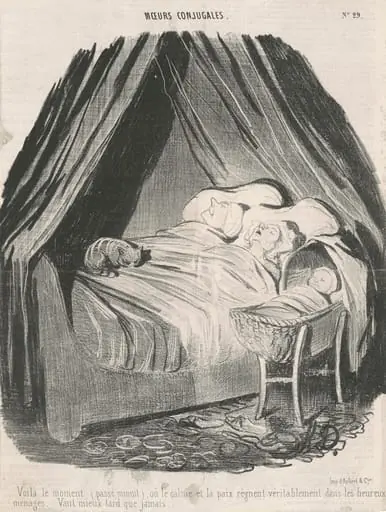 Voilà le moment (passé minuit) o∙ le calme et la paix règnent véritablement dans les heureux ménages. Vaut mieux tard que jamais.
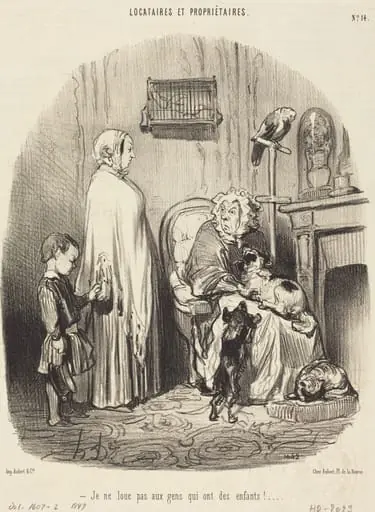 Je ne loue pas aux gens qui ont des enfants!
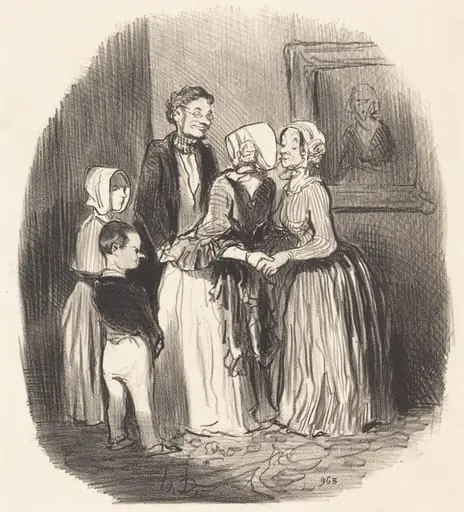 Au novel an, visite... a la tante Rabourdin
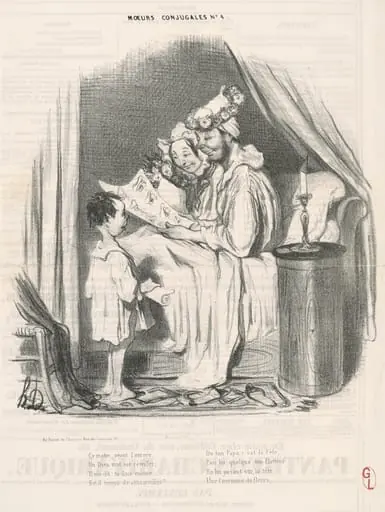 Ce matin avant l'aurore...
 Ah! Ma chère, quand on a un chien ...