Artwork
Un neveu qu gagne cruellement une succession
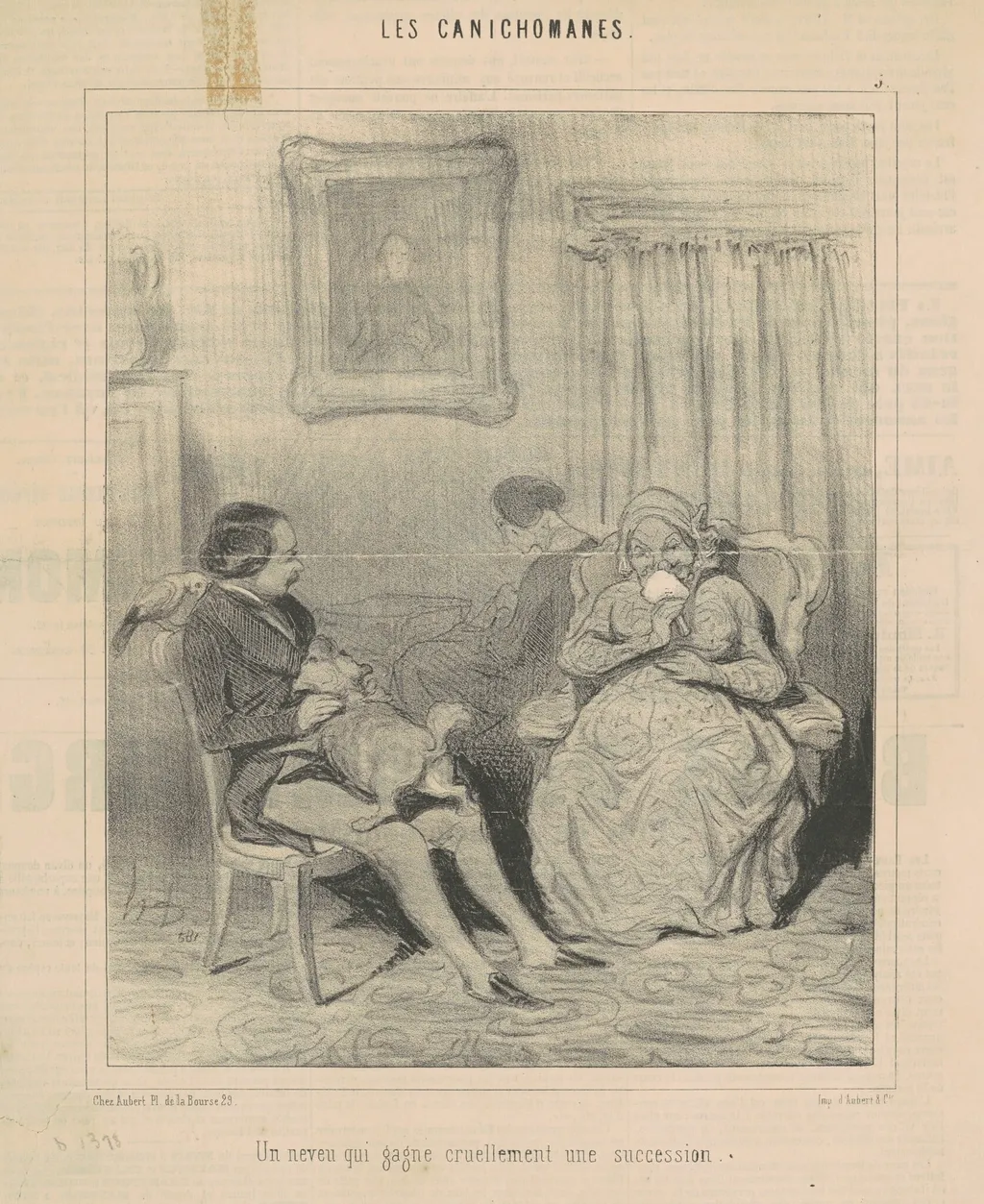
Un neveu qu gagne cruellement une succession is an ink print by the Romanticist artist Honoré Daumier. It dates from 1845 and is held in the collection of the National Gallery of Art.
About this work
Overview
Though the scene appears tranquil, it conveys a sharp social observation: the sudden inheritance of wealth following a relative’s death.
This 1845 lithograph by Honoré Daumier portrays a quiet domestic interior with two seated figures and two small dogs. Though the scene appears tranquil, it conveys a sharp social observation: the sudden inheritance of wealth following a relative’s death. Daumier’s choice of medium—lithography—allowed him to produce widely distributed images that reached beyond elite audiences, grounding his critique in everyday life.
Subject & Meaning
The work depicts the moment a nephew learns he has inherited property, likely from a recently deceased relative. The calm demeanor of the figures belies the moral tension of their situation—grief is absent, replaced by quiet calculation. Daumier highlights the transactional nature of familial bonds when money is involved, using understated expressions to underscore the emotional void beneath the surface of propriety.
Technique & Style
Daumier employed lithography to achieve fluid, expressive lines with minimal detail, focusing on posture and gesture rather than ornamentation. The figures are rendered with slight exaggeration, typical of his caricatural approach, while the sparse interior and muted tones direct attention to their interaction. The dogs, quietly present, serve as silent witnesses, amplifying the scene’s irony through their unobtrusive companionship.
History & Provenance
Created during Daumier’s most prolific period of social satire, the print was likely published in a periodical such as Le Charivari, where his work regularly appeared. It circulated among Parisian middle-class readers, contributing to public discourse on inheritance laws and moral hypocrisy. No specific early ownership records are widely documented, but its inclusion in major collections today reflects its enduring status as a document of 19th-century French social life.
Context
In 1840s France, inheritance disputes were common as property laws favored male heirs and strained family dynamics. Daumier’s work responded to a society increasingly defined by materialism and legal formalism. His prints offered a counter-narrative to official discourse, using humor to expose the gap between public decorum and private greed, particularly among the bourgeoisie who stood to benefit from such legal transitions.
Legacy
The lithograph remains a key example of Daumier’s ability to merge observational realism with biting social critique. It influenced later generations of artists who sought to depict everyday life with moral clarity, from the Realists to 20th-century political illustrators. Its enduring relevance lies in its unflinching portrayal of human behavior under the pressure of financial gain, a theme that continues to resonate across cultures and eras.
Artist & collection

Artist
Honoré-Victorin Daumier was a French painter, sculptor, and printmaker, whose many works offer commentary on the social and political life in France, from the Revolution of 1830 to the fall of the Second French Empire in 1870.









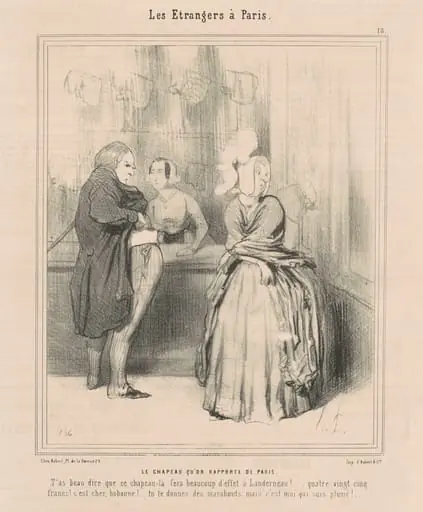 Le chapeau qu'on rapporte de Paris
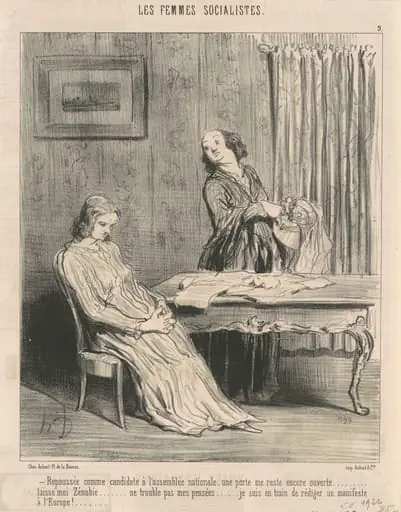 Repoussée ... une porte me reste ouverte ...
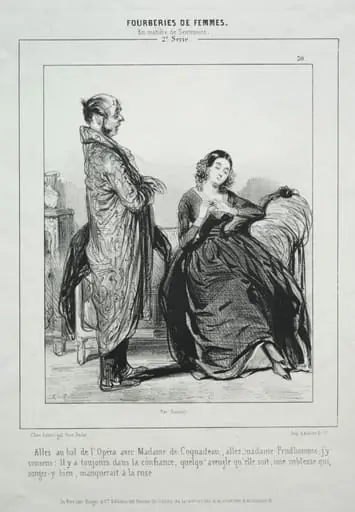 Fourberies de Femmes En Matière de Sentiment
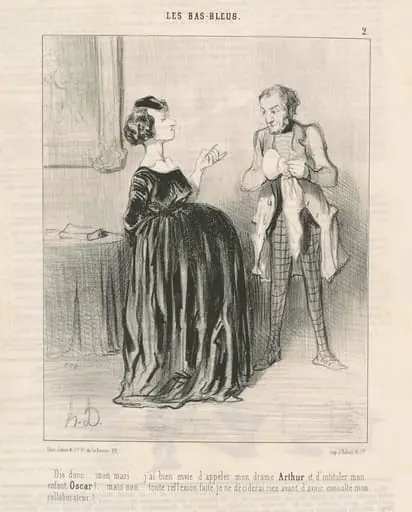 Dis donc ... mon mari ...j'ai bien envie d'appeler mon drama ...
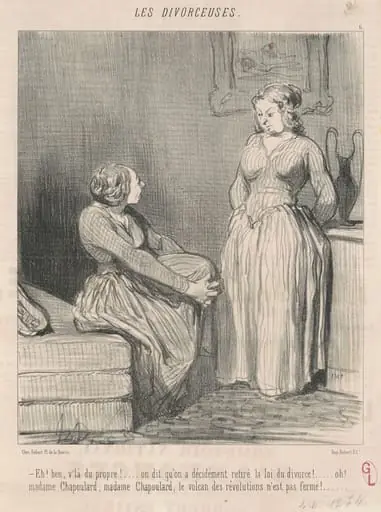 Eh! Ben, v'la du propre! ... on dit ...
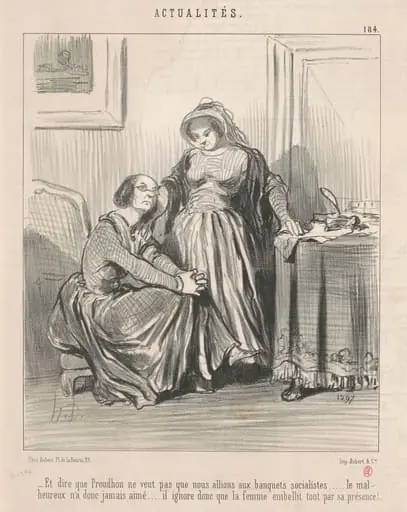 Et dire que Proudhon ne veut pas ...
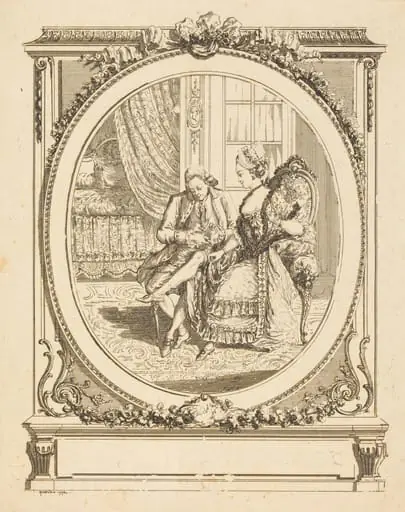 La jarretière
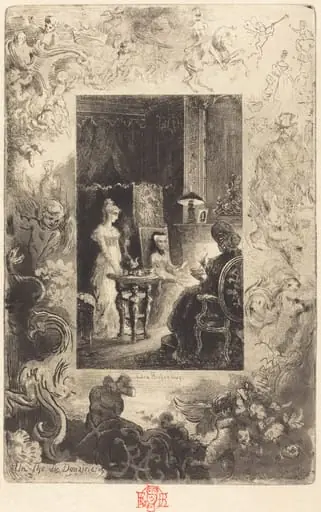 Un Thé de Douairières (The Dowagers' Tea Party)
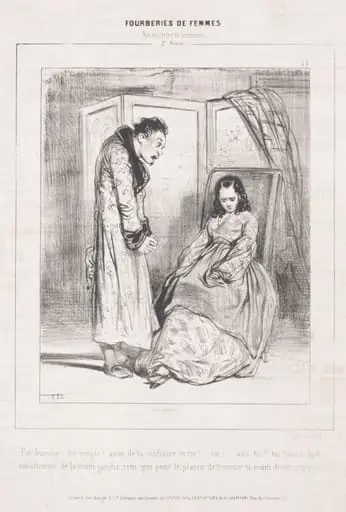 Fourberies de Femmes: En matière de sentiment
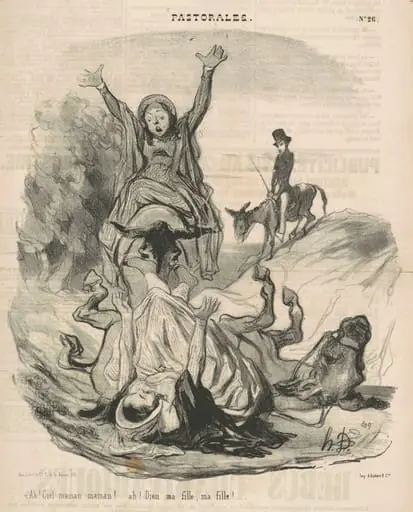 Ah! Ciel maman maman ... Ah! Dieu ma fille ...