Artwork
Au novel an, visite... a la tante Rabourdin
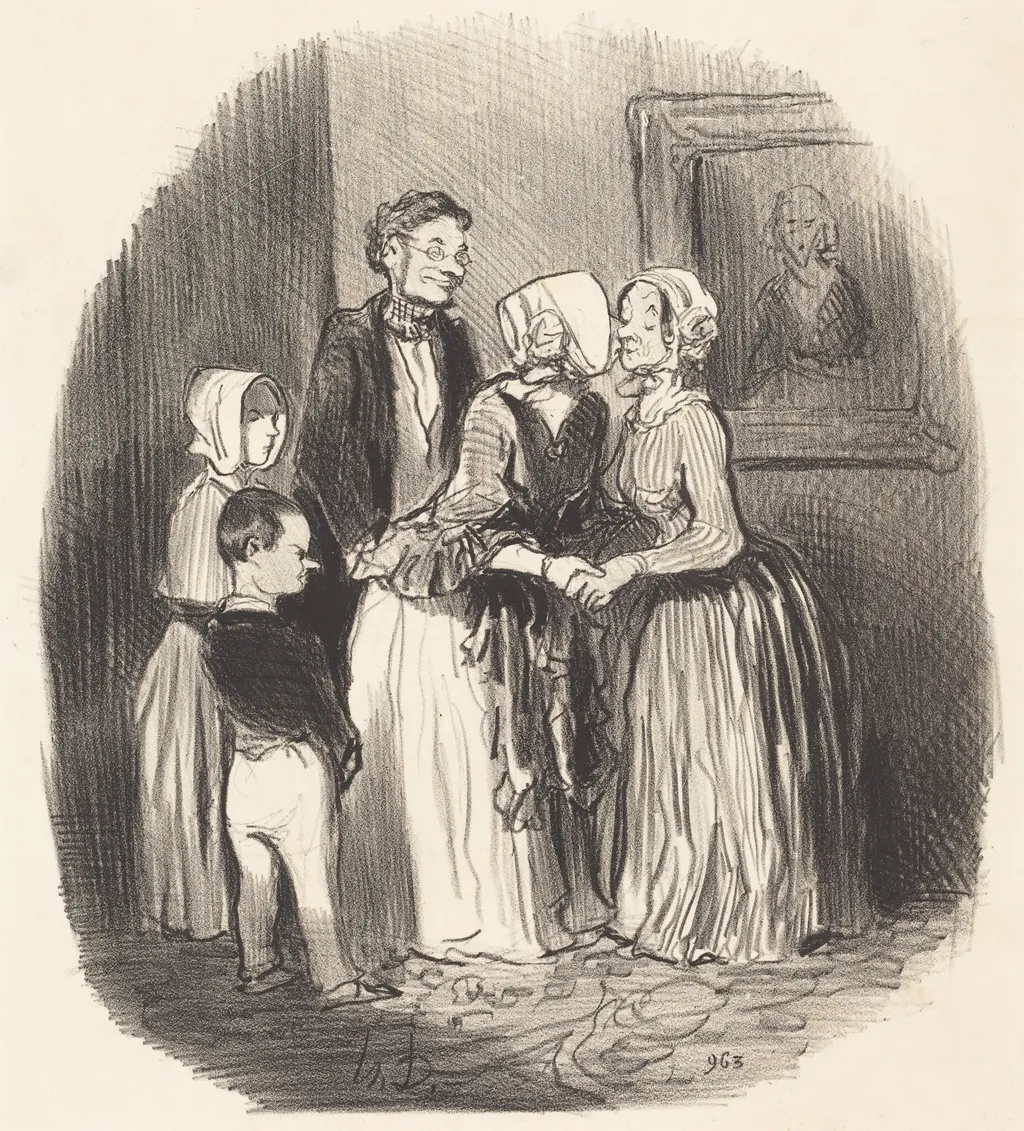
Au novel an, visite... a la tante Rabourdin is an ink print by the Romanticist artist Honoré Daumier. It dates from 1847 and is held in the collection of the National Gallery of Art.
About this work
Overview
Created in 1847, this lithograph by Honoré Daumier captures a domestic New Year’s visit, rendered through the medium of printmaking that defined his career.
Created in 1847, this lithograph by Honoré Daumier captures a domestic New Year’s visit, rendered through the medium of printmaking that defined his career. As a prolific contributor to satirical journals like *Le Charivari*, Daumier used lithography to observe everyday life with sharp social insight. The work belongs to a broader series of images that dissect French middle-class behavior, avoiding overt politics while revealing underlying tensions of status and propriety.
Subject & Meaning
The scene depicts a family gathering during a New Year’s call, centered on a formally dressed man and woman, likely the hosts, with a child and another woman observing. The postures and spatial arrangement suggest ritualized social performance rather than genuine warmth. Daumier subtly critiques the performative nature of bourgeois etiquette, where appearances and hierarchy govern interaction, revealing the quiet pressures of class conformity in post-revolutionary France.
Technique & Style
Daumier employed lithography to achieve expressive tonal contrasts, using ink washes and bold lines to model figures and space with economy. The dark wall and framed picture provide a muted backdrop, drawing attention to the figures’ gestures and clothing. His brushwork is loose yet precise, capturing movement through posture and shadow rather than detail. The composition avoids symmetry, lending the scene a spontaneous, almost candid quality that enhances its observational realism.
History & Provenance
The print was produced during Daumier’s most active period for political satire, following his imprisonment for caricaturing King Louis-Philippe. Though this image lacks direct political targets, it emerged from the same cultural climate of censorship and public scrutiny. It was likely published in *Le Charivari*, where Daumier’s weekly contributions reached a wide readership. Its survival in museum collections reflects its status as a representative example of 19th-century French social printmaking.
Context
In mid-19th century France, the July Monarchy fostered a growing middle class eager to emulate aristocratic manners. Daumier’s prints responded to this social emulation, documenting the rituals of domestic life with irony. Unlike Romantic idealization, his work embraced the mundane and the awkward, aligning with emerging realist sensibilities. His imagery offered a counter-narrative to official histories, grounding art in the lived experience of ordinary citizens.
Legacy
Daumier’s lithographs influenced later realist and modernist artists by demonstrating how everyday scenes could carry critical weight. His ability to convey psychological nuance through simplified forms and expressive line prefigured developments in 20th-century graphic art. Though not widely celebrated in his lifetime, his body of work became foundational to the recognition of printmaking as a serious medium for social commentary beyond mere illustration.
Artist & collection

Artist
Honoré-Victorin Daumier was a French painter, sculptor, and printmaker, whose many works offer commentary on the social and political life in France, from the Revolution of 1830 to the fall of the Second French Empire in 1870.









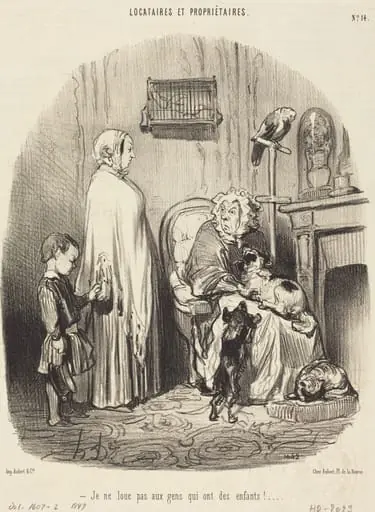 Je ne loue pas aux gens qui ont des enfants!
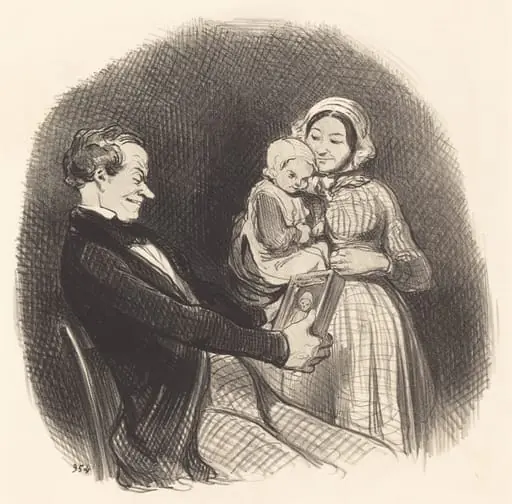 Papa contemplant l'image de son image
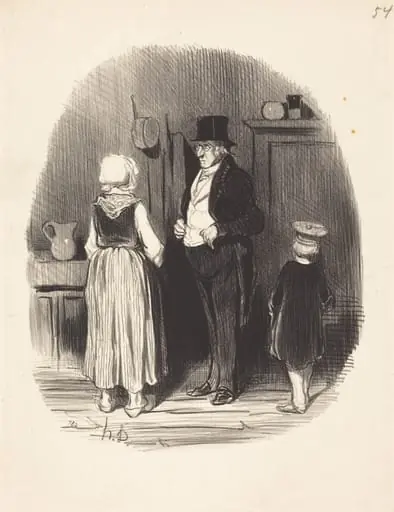 Comment!... tous mes moutons sont morts...
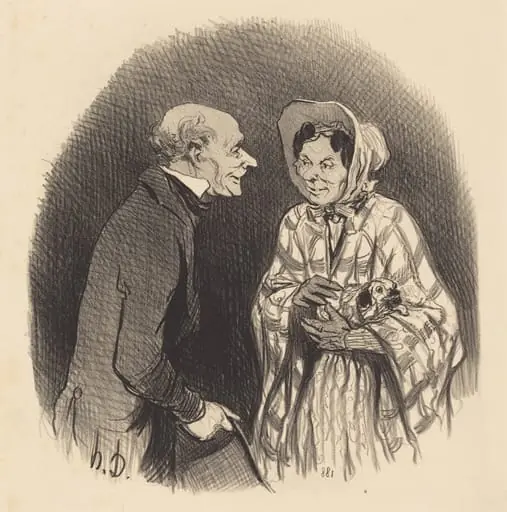 Une Nouvelle connaissance
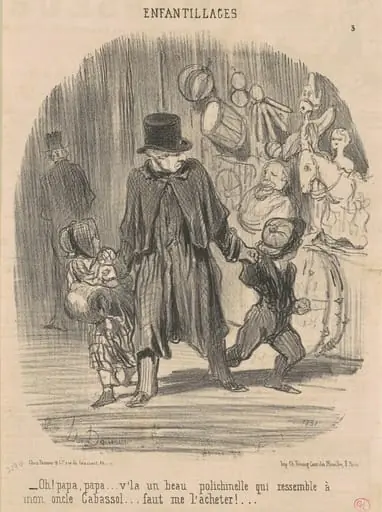 Oh! Papa, papa ...v'la un beau ...
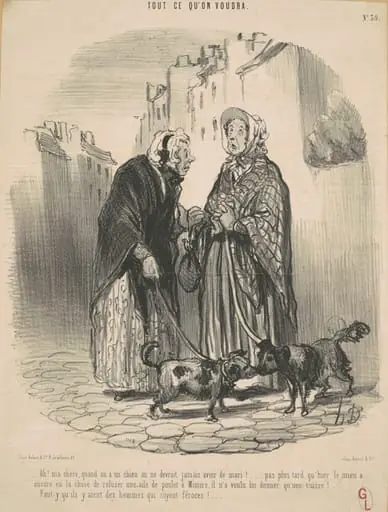 Ah! Ma chère, quand on a un chien ...
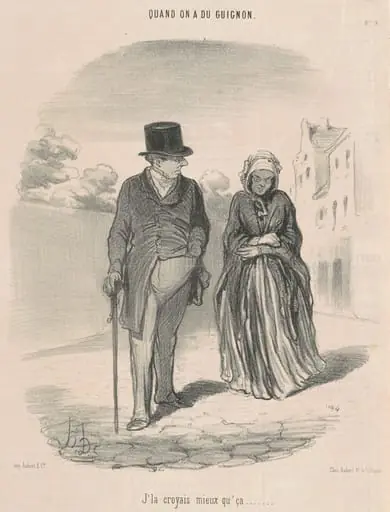 J'la croyais mieux qu'ça ...
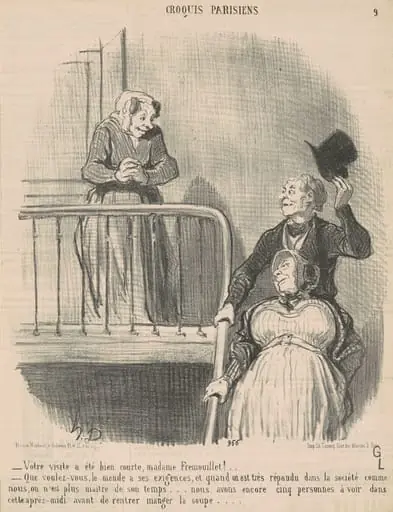 Votre visite a été bien courte ...
 Femme de lettre humanitaire se livrant sur l'homme ...
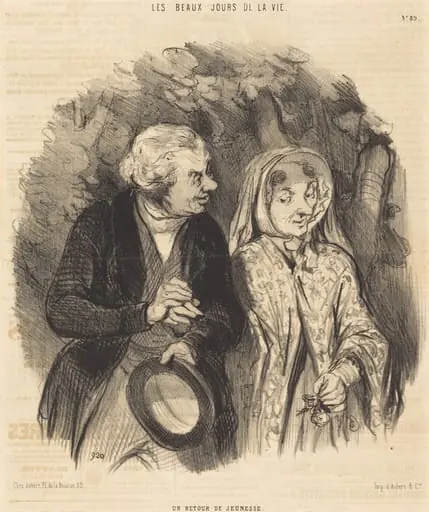 Un Retour de jeunesse
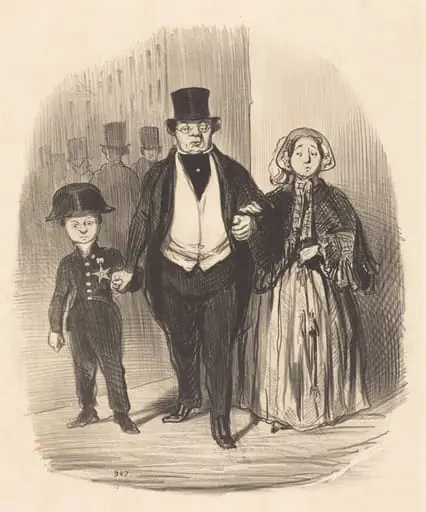 Un Jeune homme qui est l'espoir... de la famille Badinguet
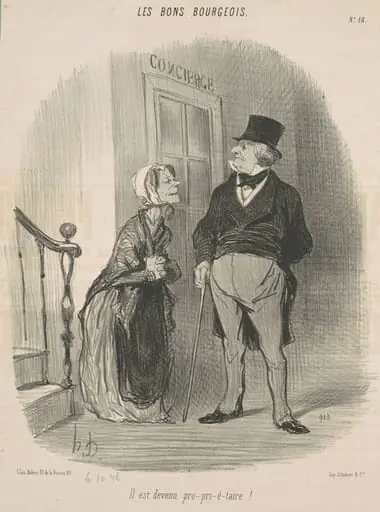 Il est devenu pro-pri-é-taire!