Artwork
A tous les coeurs bien nés que la patrie est chère!!!
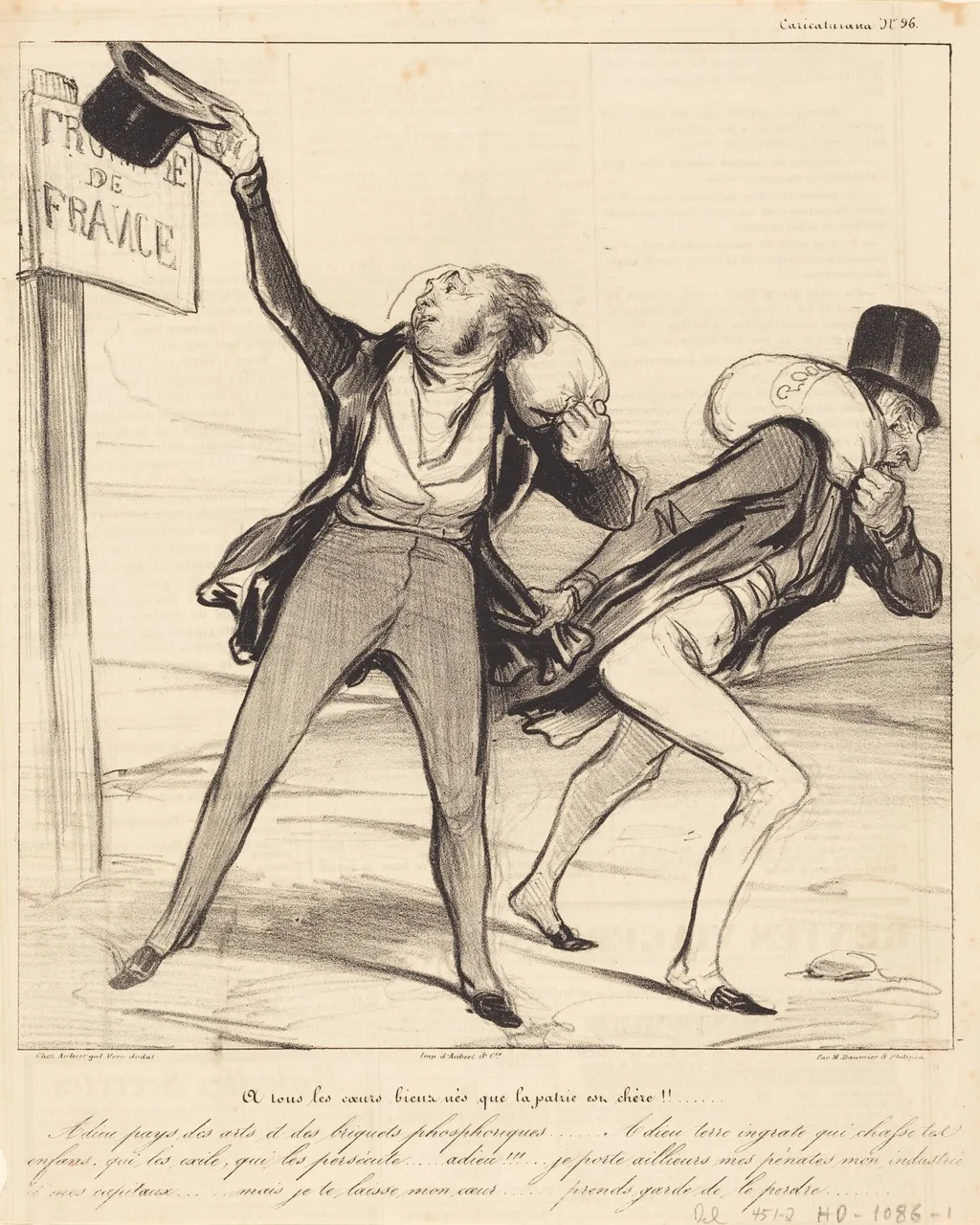
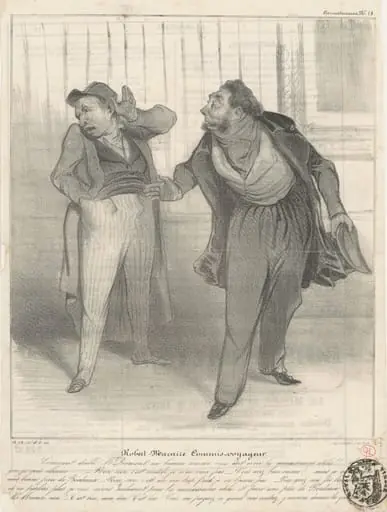
A tous les coeurs bien nés que la patrie est chère!!! is an ink print by the Romanticist artist Honoré Daumier. It dates from 1838 and is held in the collection of the National Gallery of Art.
About this work
Overview
This 1838 lithograph by Honoré Daumier was produced for a satirical French periodical, using inexpensive newsprint to reach a broad audience.
This 1838 lithograph by Honoré Daumier was produced for a satirical French periodical, using inexpensive newsprint to reach a broad audience. It captures a moment of civic tension through two figures: one insistent, the other resistant. The work exemplifies Daumier’s commitment to political commentary, employing the accessibility of lithography to critique authority and mobilize public sentiment during a volatile era in French politics.
Subject & Meaning
The scene depicts a man in formal attire, clutching a banner proclaiming patriotic devotion, attempting to drag a reluctant figure in simpler clothing. The banner’s text invokes nationalist sentiment, while the resistance of the second man suggests skepticism toward forced loyalty. Daumier contrasts performative patriotism with individual reluctance, questioning the coercion of civic duty under a regime still reeling from revolution.
Technique & Style
Daumier used bold, fluid lines and stark contrasts to convey movement and emotional strain. The figures are rendered with exaggerated gestures, their postures amplifying the conflict. The rough texture of newsprint enhances the immediacy of the image, aligning with the urgency of its message. His lithographic technique prioritized expressive power over refinement, making the print feel spontaneous and visceral.
History & Provenance
Created during Daumier’s most active period as a political caricaturist, the print appeared in a publication that regularly challenged the July Monarchy. It was part of a broader campaign of visual satire that led to his imprisonment in 1832. Though few original impressions survive due to the ephemeral nature of newsprint, the work remains documented in archives of French satirical journals from the 1830s.
Context
France in 1838 was under Louis-Philippe’s constitutional monarchy, a regime that suppressed dissent despite its liberal pretensions. Daumier’s prints targeted the hypocrisy of state-sanctioned patriotism, especially as the government sought to unify the public through nationalist rhetoric. His work resonated with urban readers disillusioned by broken revolutionary promises and rising social inequality.
Legacy
Daumier’s lithographs, including this one, helped redefine political illustration as a tool of public critique. His influence extended to later generations of cartoonists and social commentators who adopted his visual language of moral urgency. Though produced for fleeting consumption, these works endure as records of resistance and the tension between state ideology and individual conscience.
Artist & collection

Artist
Honoré-Victorin Daumier was a French painter, sculptor, and printmaker, whose many works offer commentary on the social and political life in France, from the Revolution of 1830 to the fall of the Second French Empire in 1870.









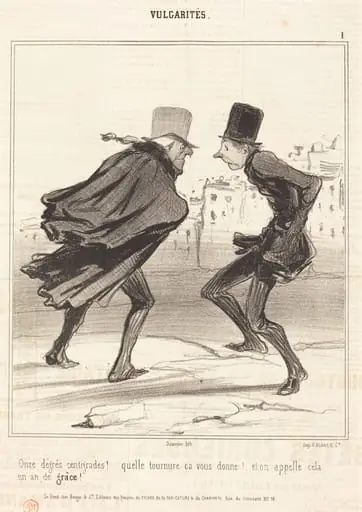 Onze degrés centigrades!
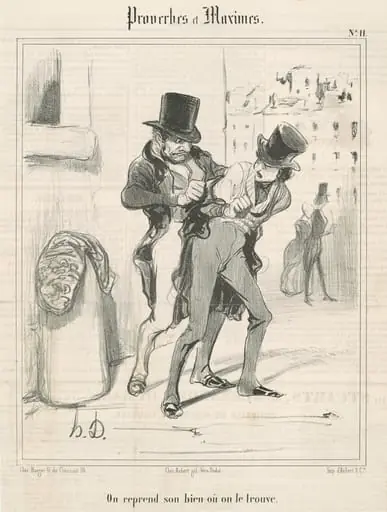 On reprend son bien ou on le trouve
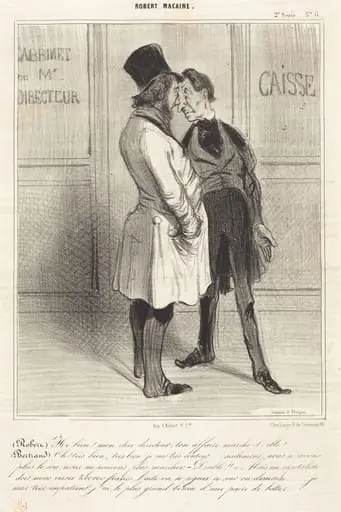 (Robert) Hé bien! mon cher directeur...
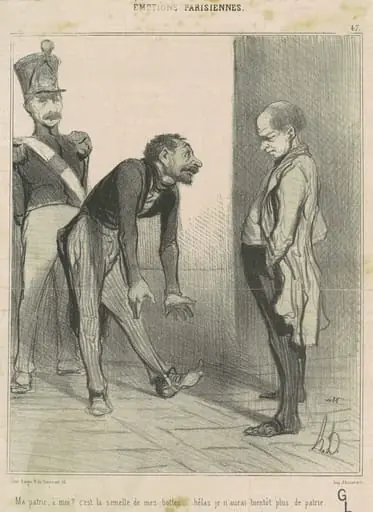 Ma patrie, a moi?...
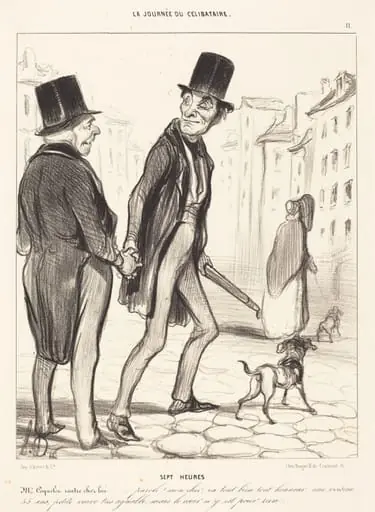 Sept heures
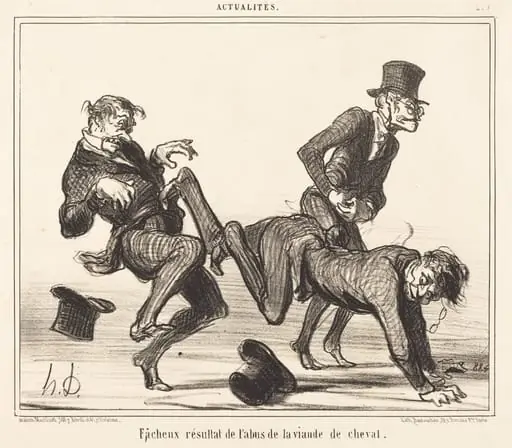 Facheux résultat... de la viande de cheval
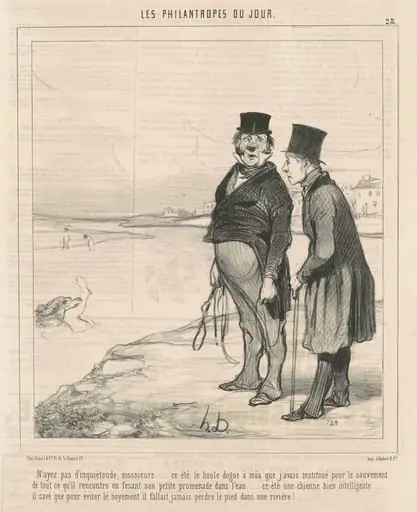 N'ayez pas d'inquiètoude ...
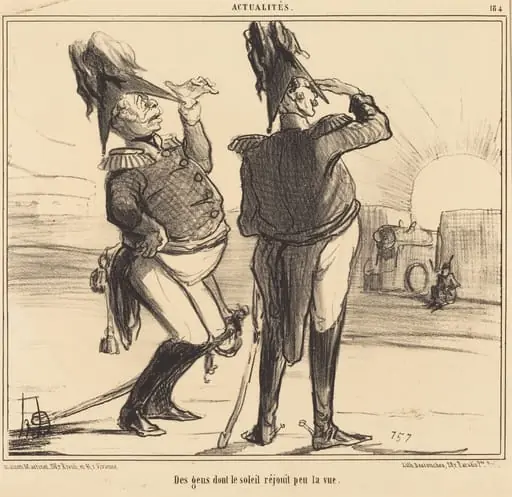 Des gens dont le soleil réjouit peu la vue
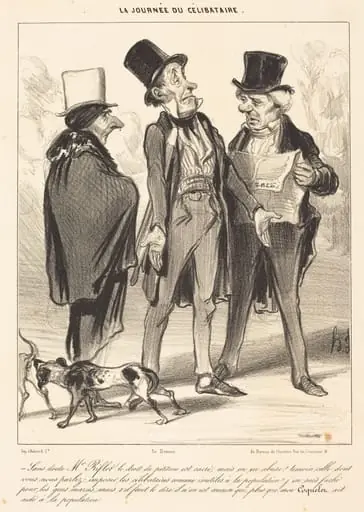 Sans doute M. Riflot le droit...
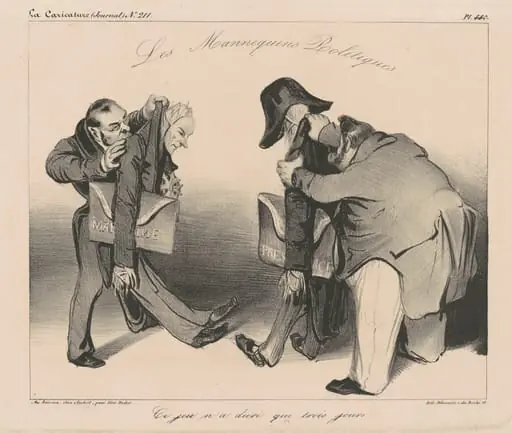 Les Mannequins Politiques
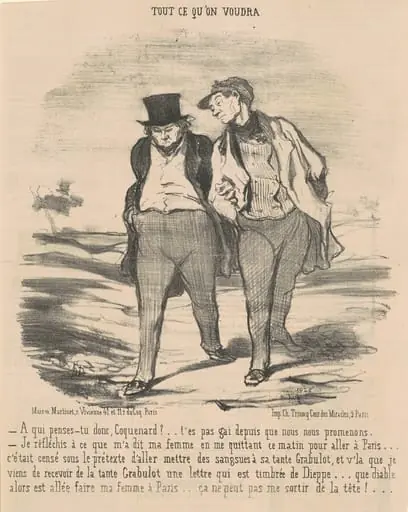 A qui penses-tu donc, coquenard? ...
 Robert Macaire commis-voyageur