Artwork
Robert Macaire commis-voyageur
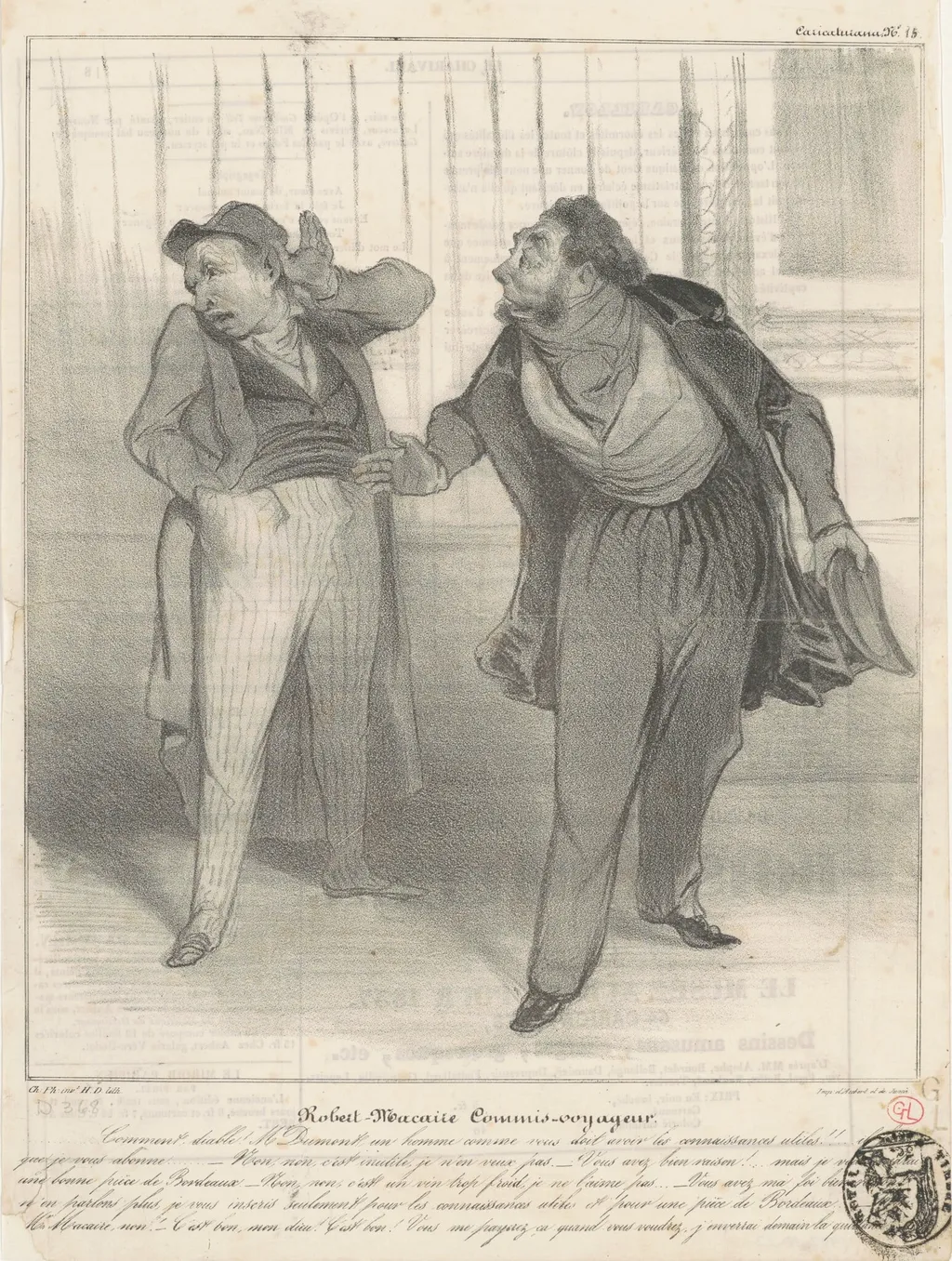
Robert Macaire commis-voyageur is an ink print by the Romanticist artist Honoré Daumier. It dates from 1836 and is held in the collection of the National Gallery of Art.
About this work
Overview
The image captures a moment of tension between a passive figure and an overbearing one, using the medium of lithography to produce bold, expressive lines.
This lithograph by Honoré Daumier depicts a street encounter between two men, rendered in the distinctive style of 19th-century French political and social satire. The image captures a moment of tension between a passive figure and an overbearing one, using the medium of lithography to produce bold, expressive lines. Daumier’s work here reflects his broader critique of urban commerce and the moral ambiguities of everyday life in Paris.
Subject & Meaning
The two figures represent contrasting social types: one a rigid, withdrawn individual, the other an aggressive, garrulous salesman. Their exaggerated facial features and animated posture underscore a commentary on the performative nature of commerce. Daumier uses caricature not for mere humor, but to expose the manipulative energy of itinerant vendors who thrived in the expanding capitalist economy of the time.
Technique & Style
Daumier employed lithography to achieve a rough, immediate quality, with thick, uneven lines that convey urgency and emotional intensity. The inked surface retains the texture of the stone, giving the image a raw, almost sketch-like appearance. This deliberate lack of polish enhances the satirical edge, prioritizing expressive force over aesthetic refinement to amplify the critique embedded in the scene.
History & Provenance
Created in the 1840s, this print was part of Daumier’s prolific output for periodicals like La Caricature and Le Charivari, where his images reached a broad public. It was likely published as a standalone sheet or in a series targeting bourgeois behaviors. Though not signed or dated on the print itself, its style and subject align with his known works from this period of heightened political satire.
Context
During the July Monarchy, Paris experienced rapid commercialization and the rise of the itinerant salesman as a familiar, often distrusted figure. Daumier’s lithographs responded to this cultural shift, portraying the anxieties of urban life and the erosion of social trust. His depictions of figures like Robert Macaire—based on a popular theatrical character—turned stage archetypes into symbols of systemic greed.
Legacy
Daumier’s approach to lithography influenced later generations of satirical artists and cartoonists, establishing a precedent for using graphic immediacy to convey social critique. His unembellished style and focus on ordinary people in moments of moral tension helped redefine printmaking as a vehicle for public discourse, moving beyond decoration toward documentary and dissent.
Artist & collection
Artist
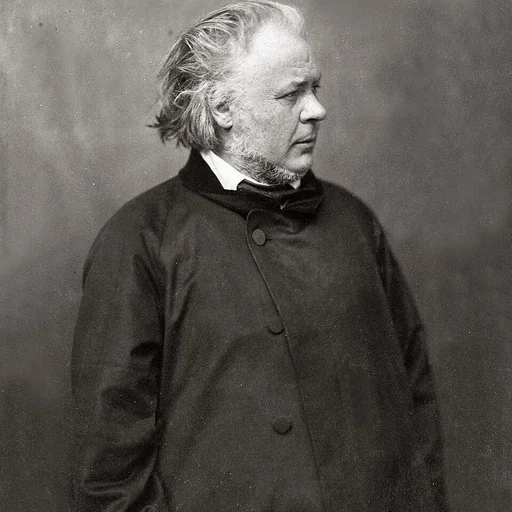
Honoré-Victorin Daumier was a French painter, sculptor, and printmaker, whose many works offer commentary on the social and political life in France, from the Revolution of 1830 to the fall of the Second French Empire in 1870.









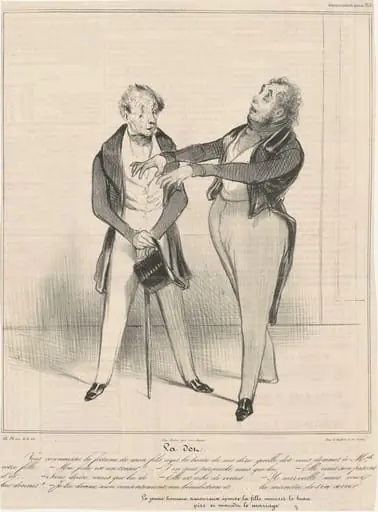 La Dot...vous connaissez la fortune...
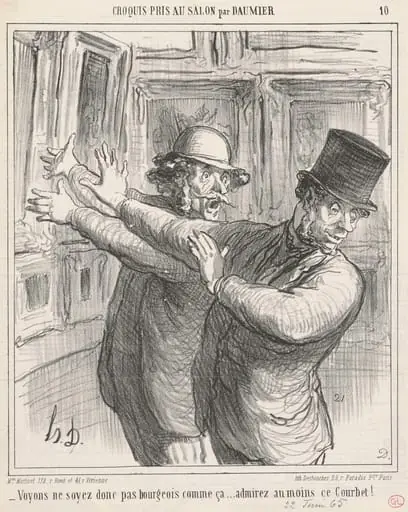 Voyons ... admirez au moins ce Courbet! ...
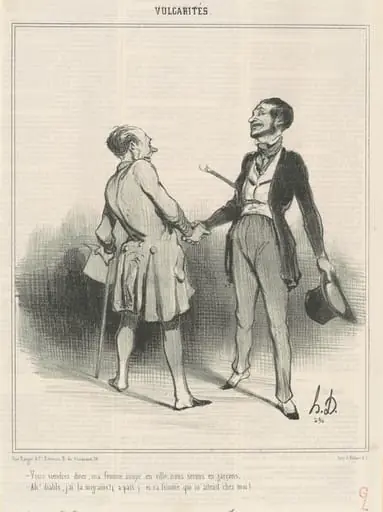 Vous viendrez diner, ma femme soupe en ville ...
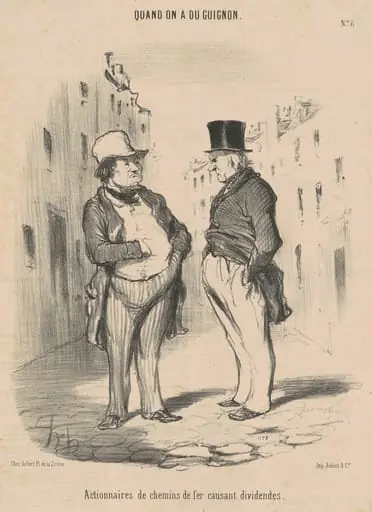 Actionnaires de chemins de fer causant dividendes
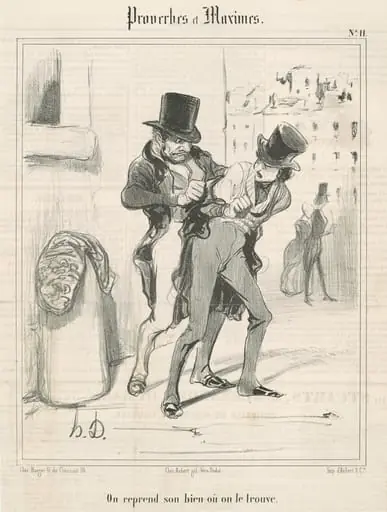 On reprend son bien ou on le trouve
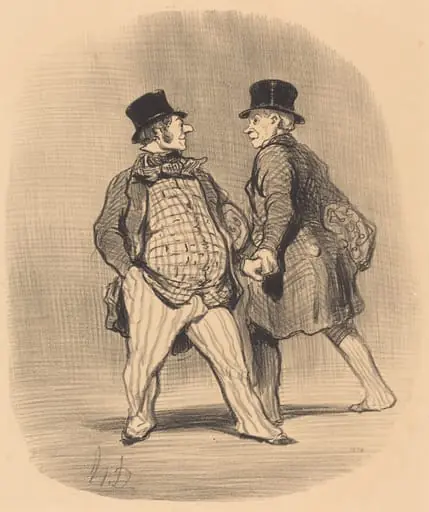 Confrère, méfiez-vous du petit baron...
 Un triomphe d'avocat
 L'ancien négociant
 Ma patrie, a moi?...
 Monsieur vous qui êtes si bon ...