Artwork
Aperçois-tu un lieu civilisé...
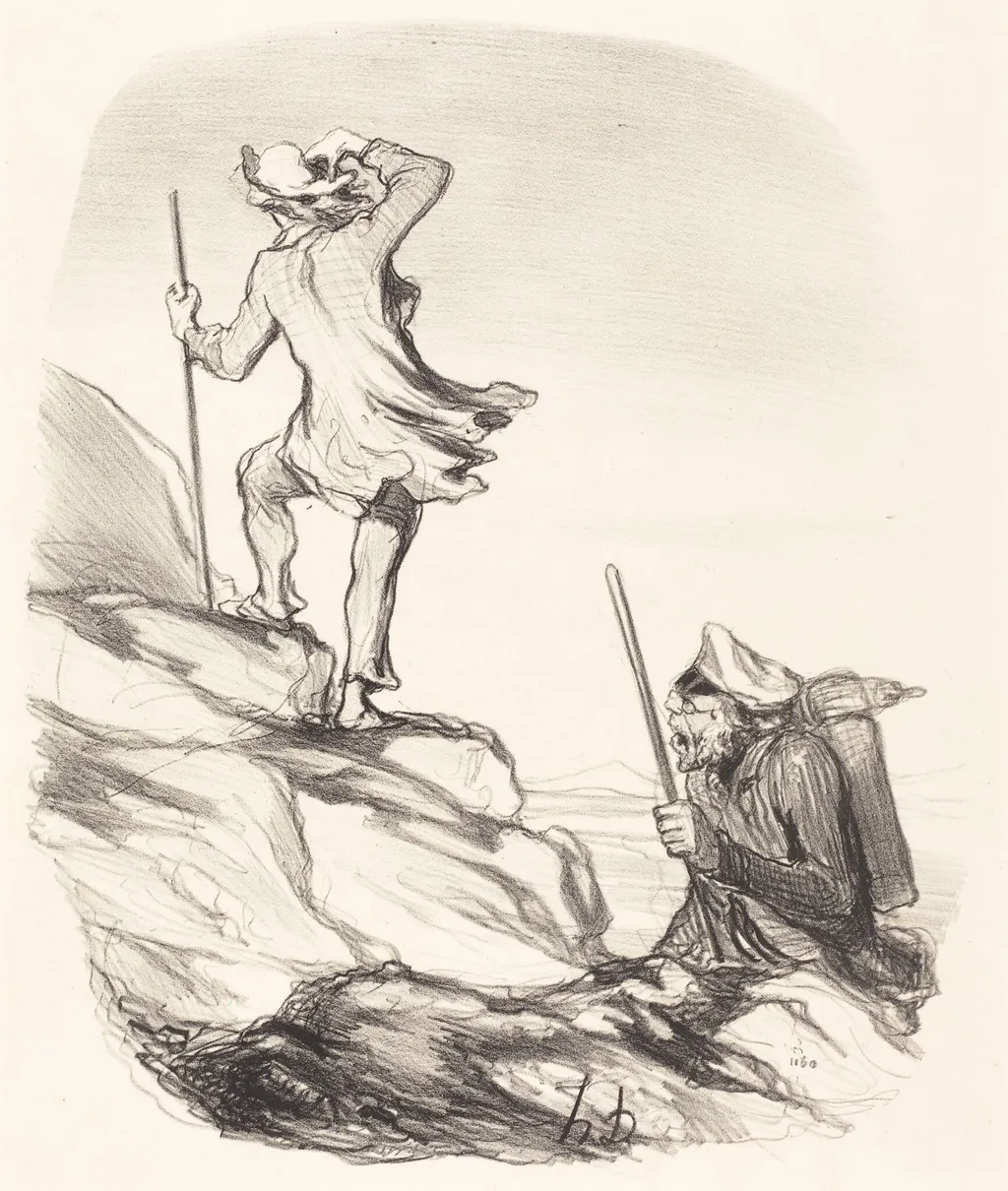
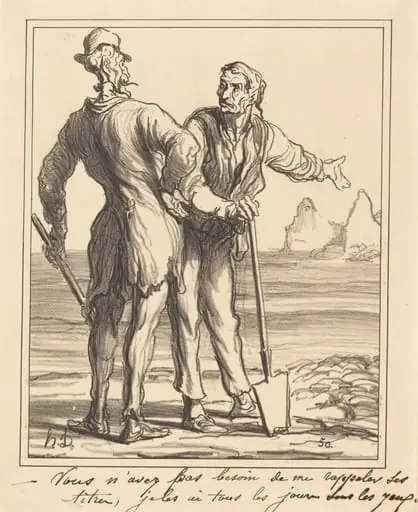
Aperçois-tu un lieu civilisé... is an ink print by the Romanticist artist Honoré Daumier. It dates from 1849 and is held in the collection of the National Gallery of Art.
About this work
Overview
Executed in the medium favored by political satirists of the era, it reflects Daumier’s commitment to visual critique of social and political structures.
Created in 1849, this lithograph by Honoré Daumier captures a moment of raw, unvarnished human interaction against a barren landscape. Executed in the medium favored by political satirists of the era, it reflects Daumier’s commitment to visual critique of social and political structures. Unlike polished academic art, the work embraces spontaneity, using rapid, expressive lines to convey tension and unease.
Subject & Meaning
Two figures, dressed as laborers or outcasts, occupy a desolate rocky terrain. One stands with arms raised, as if in protest or invocation; the other crouches, scanning the ground. Their postures suggest a confrontation between assertion and searching, possibly symbolizing the struggle of the common people against unseen forces. The absence of architecture or context implies a world stripped of institutional order, reinforcing Daumier’s skepticism toward authority.
Technique & Style
Daumier employed lithography’s capacity for swift, tonal variation to render the scene with urgency. His lines are loose and gestural, avoiding detail in favor of movement and emotional resonance. The rough texture of the ground and the simplified forms of the figures reflect a sketch-like immediacy, characteristic of his journalistic approach. The lack of shading or background detail focuses attention entirely on the figures’ physical and psychological presence.
History & Provenance
Produced during the turbulent years following the 1848 Revolution, the print emerged from a climate of political repression and shifting power structures in France. Though not published in a periodical like Daumier’s earlier works, it aligns with his broader body of uncommissioned drawings that challenged the legitimacy of ruling elites. Its survival suggests it was circulated privately or retained as part of his personal archive.
Context
Daumier’s work responded to the collapse of the July Monarchy and the fragile promises of the Second Republic. While public satire had been curtailed by censorship, his private lithographs continued to interrogate class, power, and alienation. This image, devoid of specific figures or institutions, reflects a broader disillusionment — not with individuals, but with the systems that left ordinary people stranded in barren, unyielding landscapes.
Legacy
This print exemplifies Daumier’s enduring influence on modern graphic art. His ability to distill complex social tensions into minimal, emotionally charged compositions paved the way for later realist and expressionist traditions. Though not widely exhibited in his lifetime, such works are now recognized as vital documents of 19th-century French consciousness — quiet, urgent, and unflinching in their observation.
Own this work as a print
Artist & collection
Artist
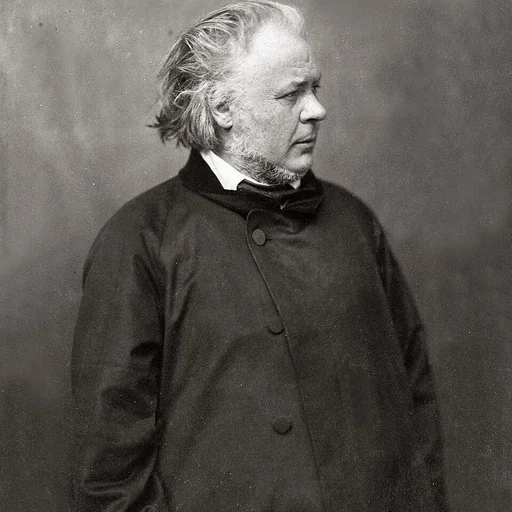
Honoré-Victorin Daumier was a French painter, sculptor, and printmaker, whose many works offer commentary on the social and political life in France, from the Revolution of 1830 to the fall of the Second French Empire in 1870.









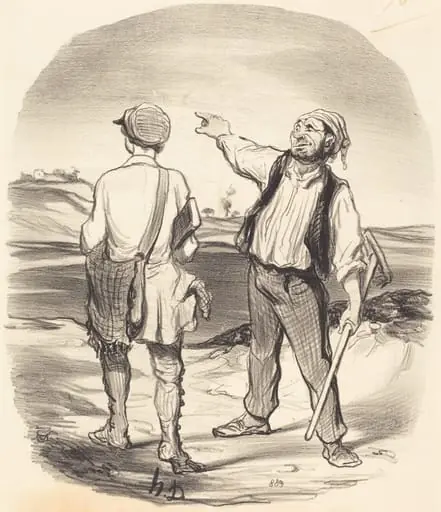 J'ai vu un lièvre... il y a huit jours!
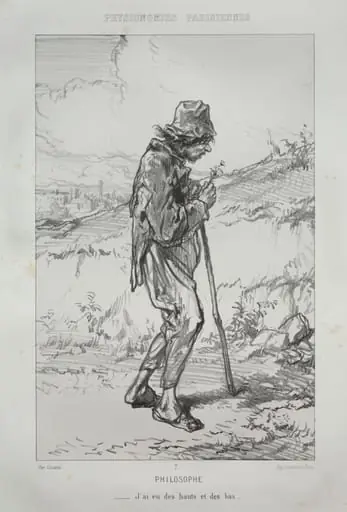 Philosophe
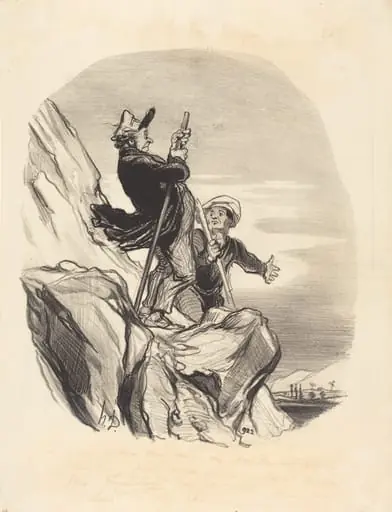 Guide, allons-nous-en... au nom du ciel...
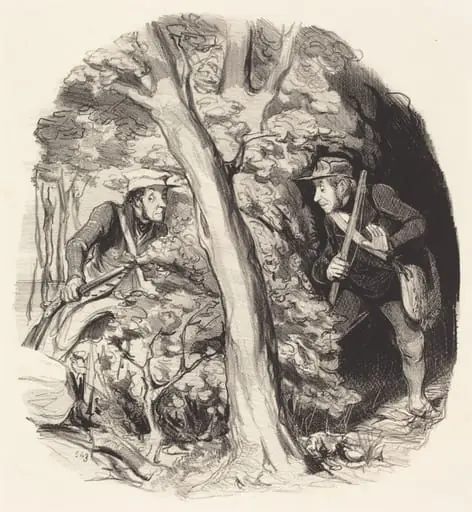 La Rencontre sous bois
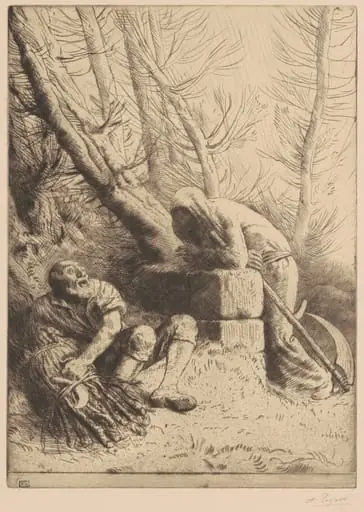 Death and the Woodcutter, 4th plate (La Mort et le bûcheron)
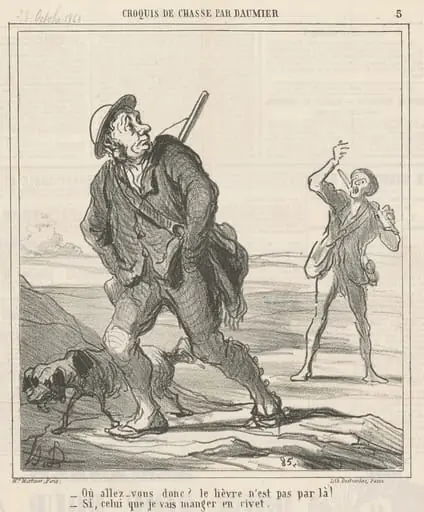 Ou allez-vous donc?
 Vous n'avez pas besoin de me rappeler ses titres...
 Est-ce que votre mari serait jaloux...
 Death and the Woodcutter, 4th plate (La mort et le bucheron)
 Vous n'avez pas besoin de me rappeler ses titres...