Artwork
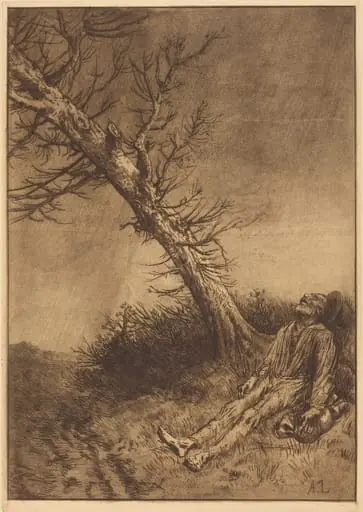
Death and the Woodcutter, 4th plate (La mort et le bucheron)
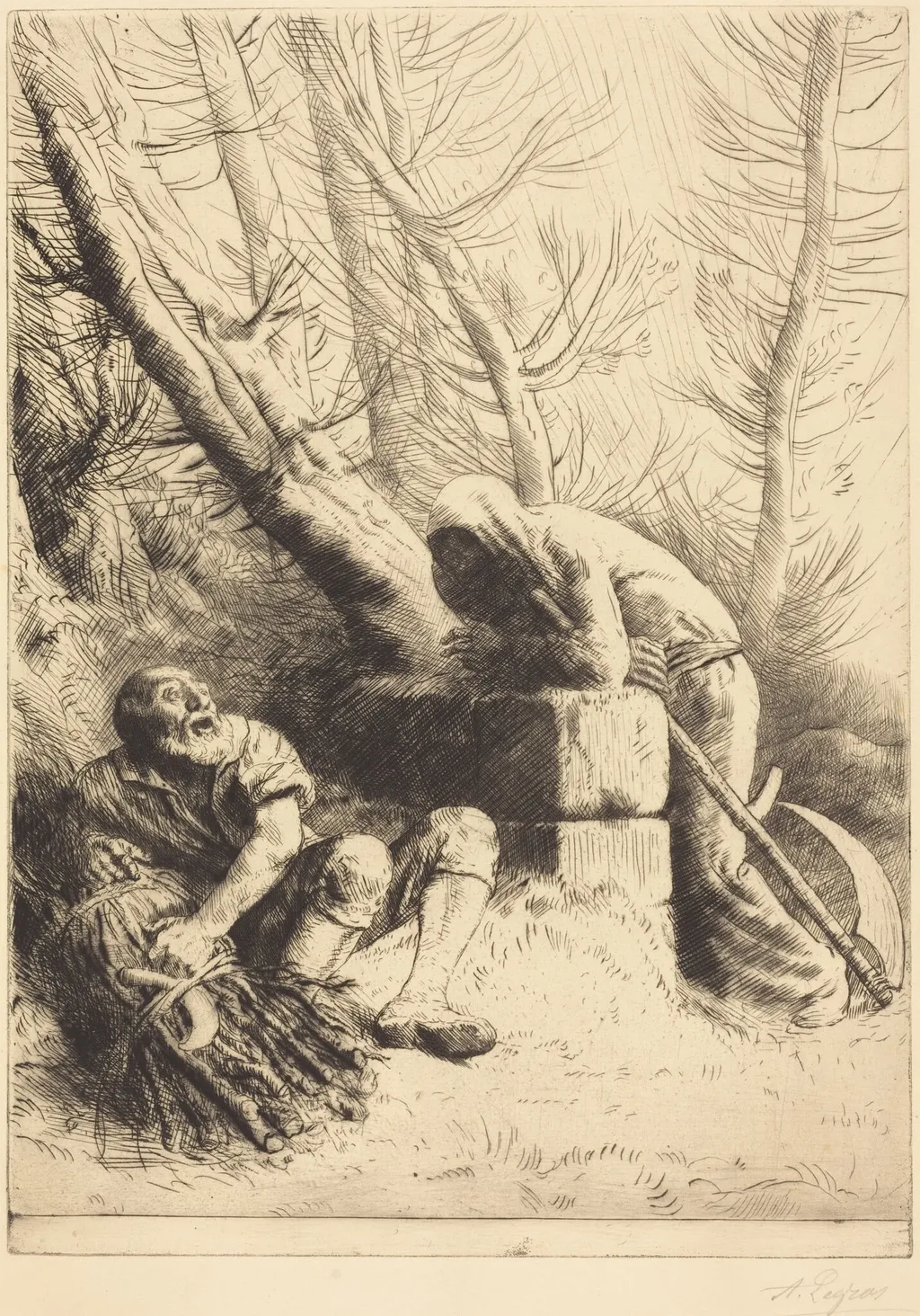
Death and the Woodcutter, 4th plate (La mort et le bucheron) is an ink print by the Impressionist artist Alphonse Legros. It dates from 1888 and is held in the collection of the National Gallery of Art.
About this work
Overview
Created in 1888 by Alphonse Legros, *Death and the Woodcutter, 4th plate* is an etching and drypoint that belongs to a series exploring mortality.
Created in 1888 by Alphonse Legros, *Death and the Woodcutter, 4th plate* is an etching and drypoint that belongs to a series exploring mortality. Legros, a French artist who settled in Britain in 1863 and later became a British citizen, was instrumental in revitalizing printmaking in England through his teaching and practice. This plate reflects his deep engagement with the expressive potential of line and tone in black-and-white imagery.
Subject & Meaning
The image portrays a lone woodcutter, exhausted and prone on the ground, his axe lying beside him. Above him, a gaunt, shadowy figure—Death—rests a hand on his shoulder. There is no violence, only stillness. The woodcutter’s upturned face suggests resignation rather than terror. The scene evokes an inevitable, quiet encounter with mortality, stripped of melodrama and rendered with solemn dignity.
Technique & Style
Legros employed etching and drypoint to create a dense, textured surface. The lines are irregular and urgent, with drypoint’s burr producing rich, fuzzy blacks that deepen the atmosphere. The background is filled with tangled, scratchy branches that press inward, amplifying the sense of entrapment. The contrast between the soft, smudged shadows and sharp, angular forms heightens the emotional weight without overt symbolism.
History & Provenance
The print was made during Legros’s tenure at Slade School of Fine Art in London, where he influenced a generation of British printmakers. It was part of a small, unpublished series on death, likely intended for private circulation rather than public sale. Few impressions survive, and those that do are held in institutional collections, including the British Museum and the Victoria and Albert Museum.
Context
In late 19th-century Britain, etching experienced a revival as artists sought alternatives to mass-produced illustrations. Legros, trained in France and steeped in Realist traditions, brought a quiet, introspective approach to the medium. His work stood apart from the ornamental styles popular at the time, favoring psychological depth and somber themes drawn from rural life and existential reflection.
Legacy
Legros’s *Death and the Woodcutter* exemplifies his role in elevating printmaking as a serious artistic medium in Britain. Its restrained emotion and technical rigor influenced later generations of printmakers who valued narrative subtlety over spectacle. Though not widely exhibited in his lifetime, the plate remains a touchstone for its unadorned meditation on human fragility and the inevitability of death.
Artist & collection

Artist
Alphonse Legros (French pronunciation: ; 8 May 1837 – 8 December 1911) was a French, later British, painter, etcher, sculptor, and medallist.

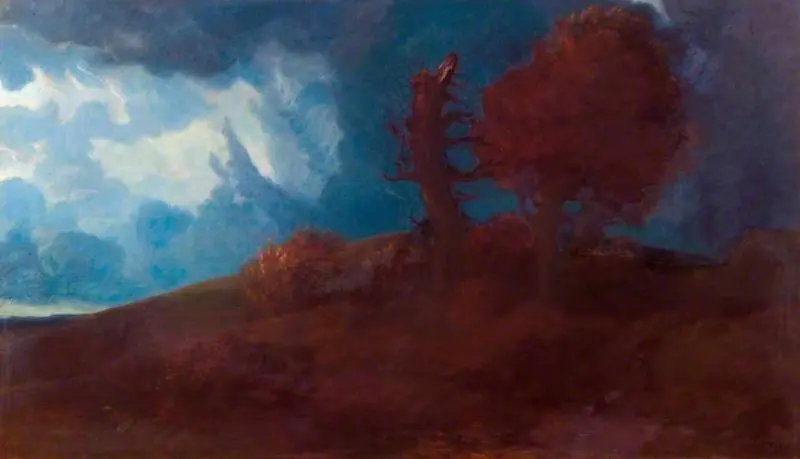
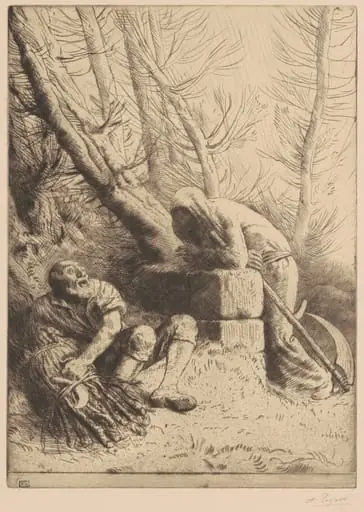 Death and the Woodcutter, 4th plate (La Mort et le bûcheron)
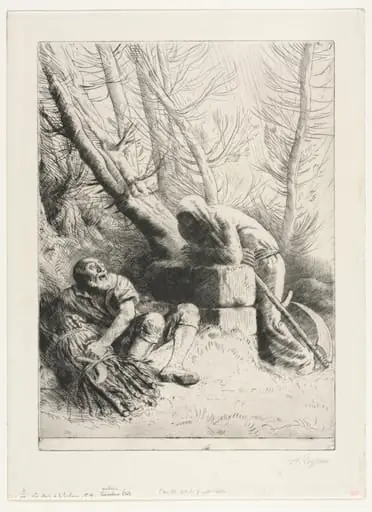 Death and the Woodcutter
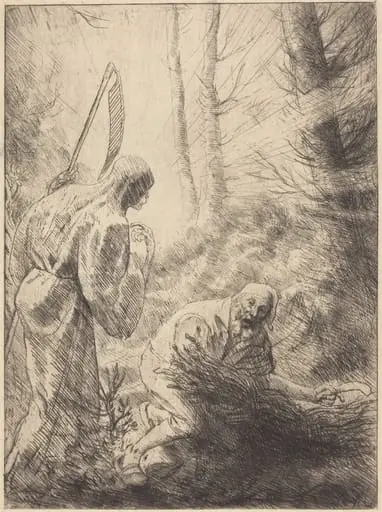 Death and the Woodcutter, 2nd plate (La Mort de le bucheron)
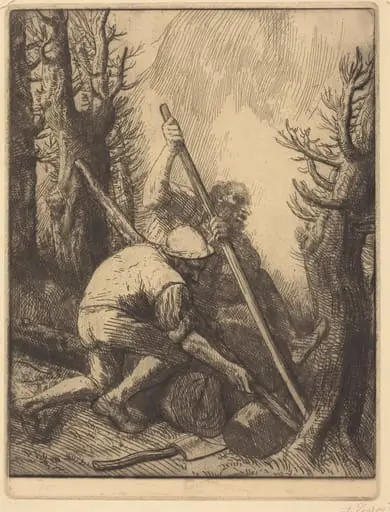 Woodcutters, 3rd plate (Les bucherons)
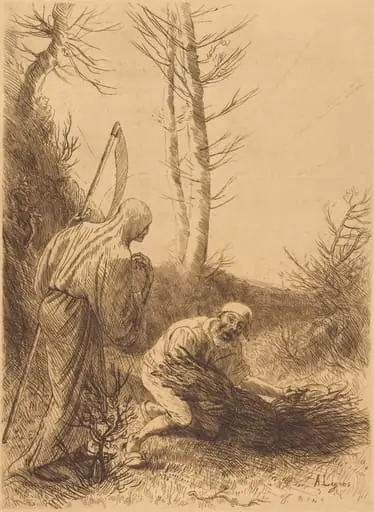 Death and the Woodcutter, 2nd plate (Le mort et le bucheron)
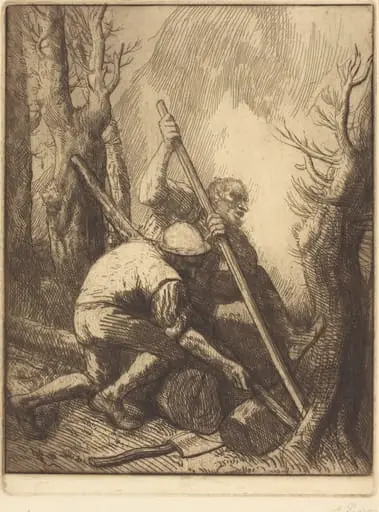 Woodcutters, 3rd plate (Les bucherons)
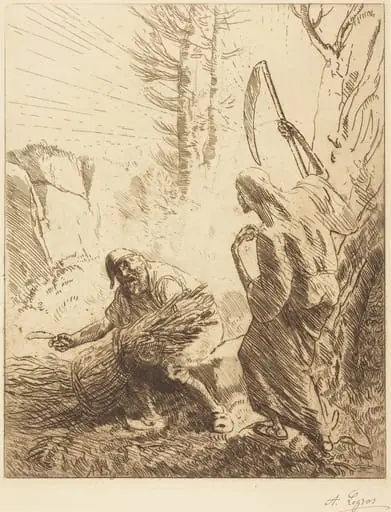 Death and the Woodcutter, 3rd plate (La mort et le bucheron)
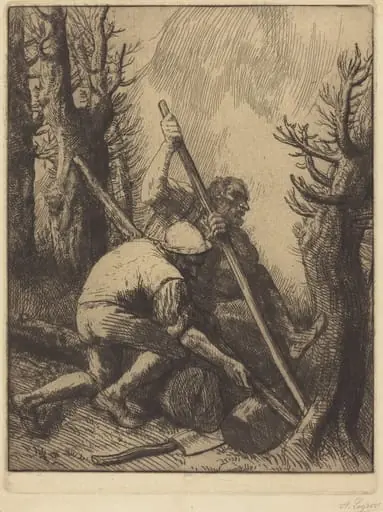 Woodcutters, 3rd plate (Les bucherons)
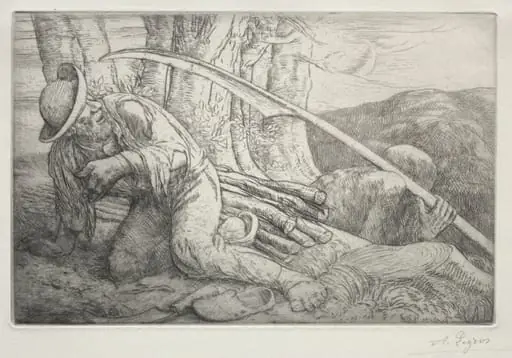 La Mort et le Bûcheron (5th Plate)
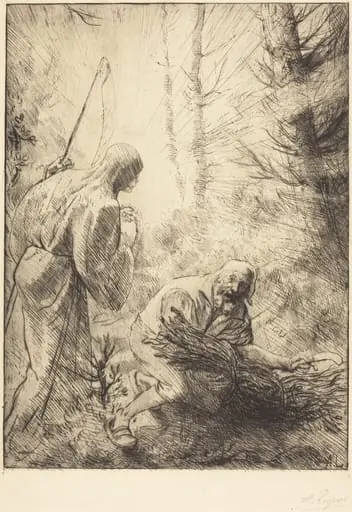 Death and the Woodcutter, 2nd plate (La mort et le bucheron)
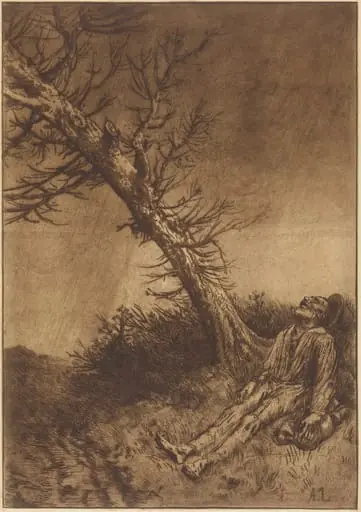 Death of the Vagabond (La mort du vagabond)
 Death of the Vagabond (La mort du vagabond)