Artwork
Ou allez-vous donc?
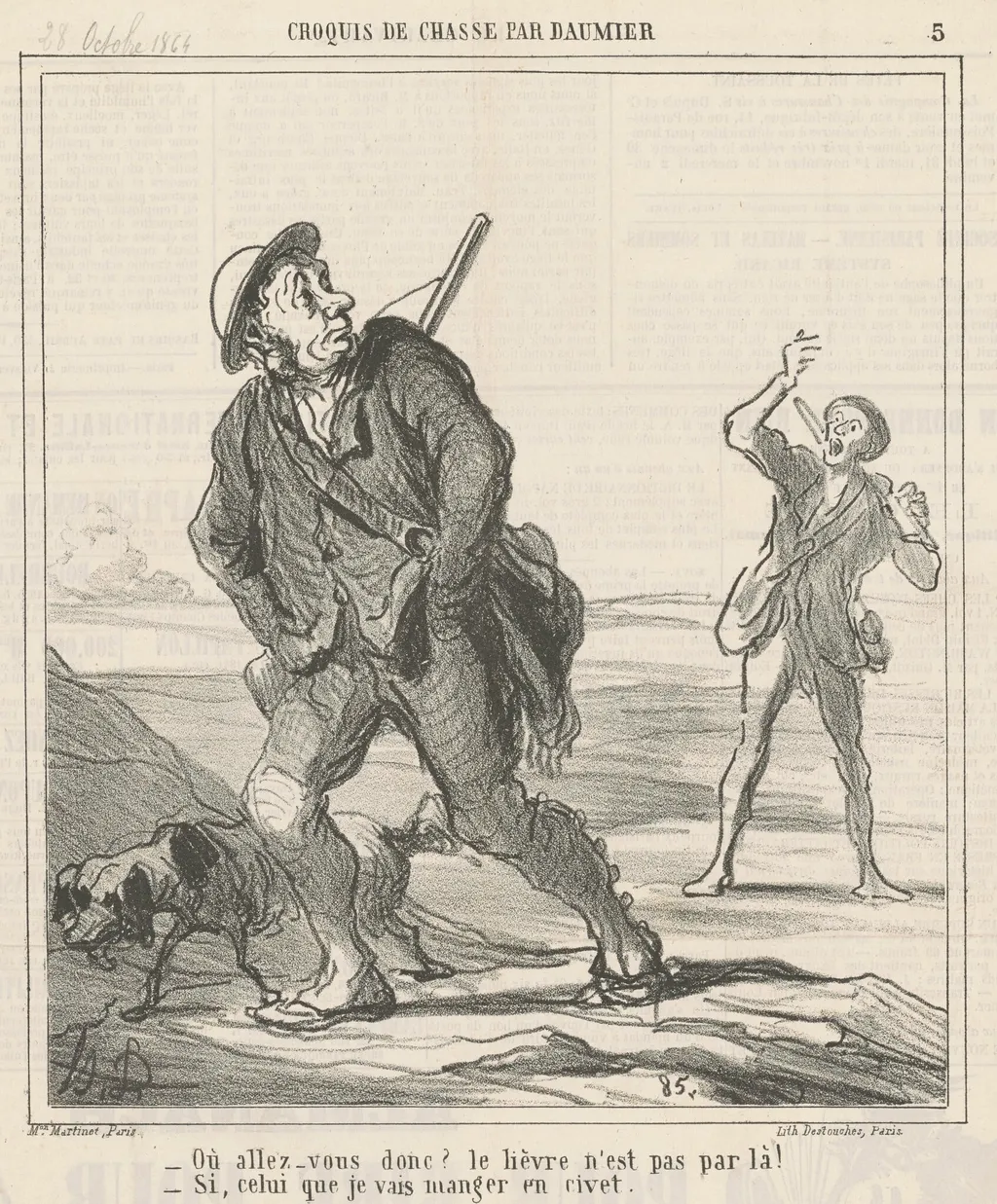
Ou allez-vous donc? is an ink print by the Impressionist artist Honoré Daumier. It dates from 1864 and is held in the collection of the National Gallery of Art.
About this work
Honoré Daumier’s lithograph shows two men and a dog in a rocky field. One man carries a rifle. The other waves his arms wildly. The dog looks calm in the chaos.
Daumier made this in 1864. He used lithography, a printing trick with greasy ink. It let him exaggerate faces and gestures for laughs.
See it up close at the National Gallery of Art, Washington.
Overview
Honoré Daumier’s 1864 lithograph Ou allez‑vous donc? presents a stark, rocky plain populated by two men and a dog. One figure, rendered with exaggerated proportions, bears a rifle and walks beside the animal, while the second man raises his arms in a flamboyant gesture. The composition balances a barren landscape with a lively, comic interaction among the characters.
Subject & Meaning
The work juxtaposes a calm canine with the animated postures of the two men, creating a satirical tableau that mocks exaggerated bravado. Daumier’s caricatural treatment highlights the absurdity of the figures’ gestures, suggesting a critique of pretentiousness or false heroism within a seemingly ordinary setting.
Technique & Style
Executed in lithography, the image relies on greasy ink applied to a stone surface, allowing Daumier to accentuate line and contour with fluid, exaggerated strokes. This medium supports his characteristic use of distortion and dynamic gesture, reinforcing the humorous tone through bold, simplified forms and stark contrasts.
History & Provenance
Created in 1864, the print is part of Daumier’s extensive series of socially charged caricatures. It entered the collection of the National Gallery of Art in Washington, where it remains on view, offering insight into the artist’s engagement with satire and his mastery of the lithographic process.
Artist & collection

Artist
Honoré-Victorin Daumier was a French painter, sculptor, and printmaker, whose many works offer commentary on the social and political life in France, from the Revolution of 1830 to the fall of the Second French Empire in 1870.









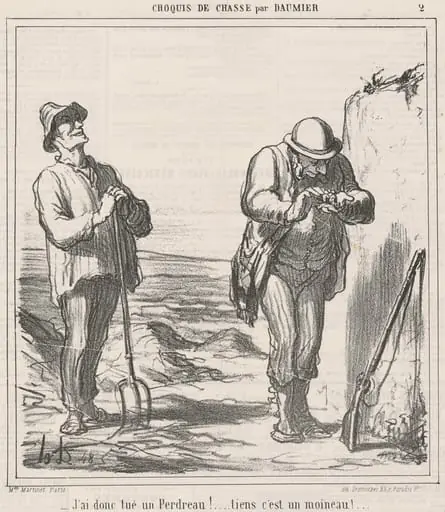 J'ai donc tué un perdreau!
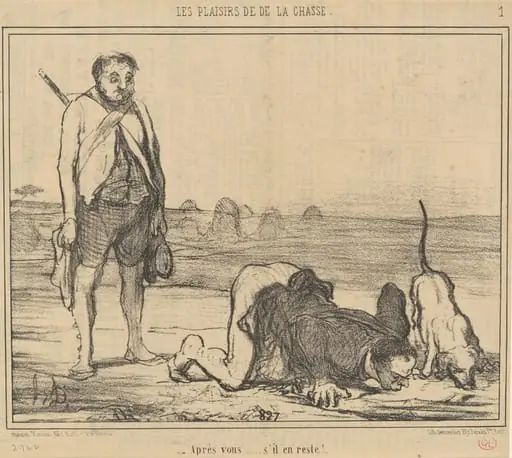 Après vous ... s'il en reste! ...
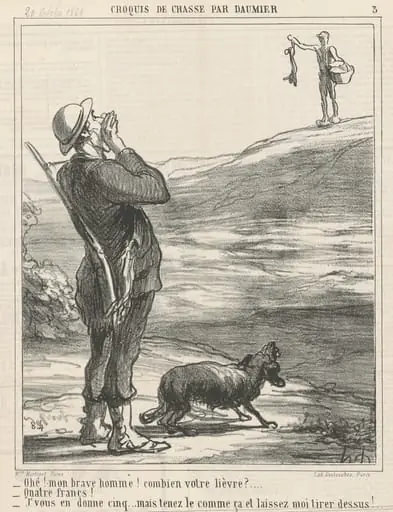 Ohé! ... Combien votre lievre? ...
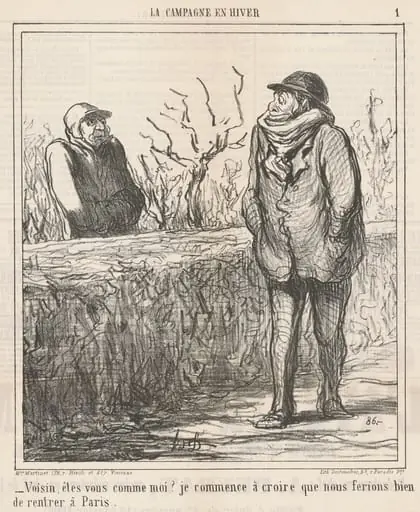 Voisin, êtes-vous comme moi? ...
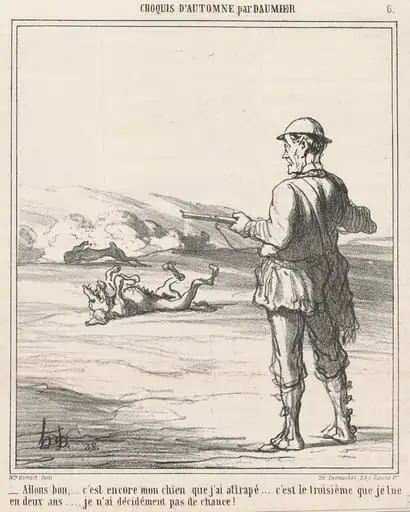 Allons bon ... c'est encore mon chien ...
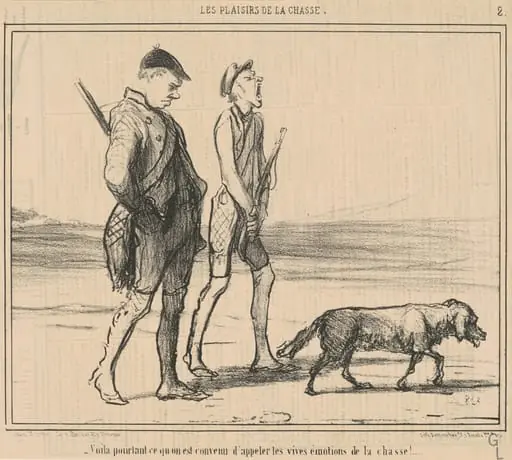 Voila pourtant ce qu'on est convenu d'appeler ...
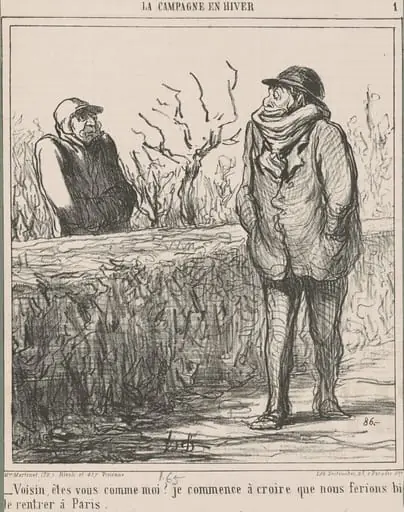 Voisin, êtres-vous comme moi? ...
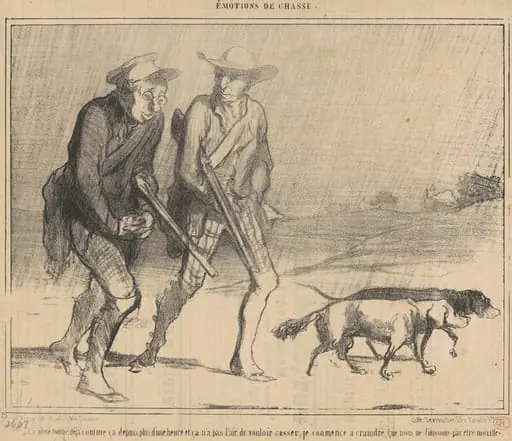 La pluie tombe déja comme ça depuis ...
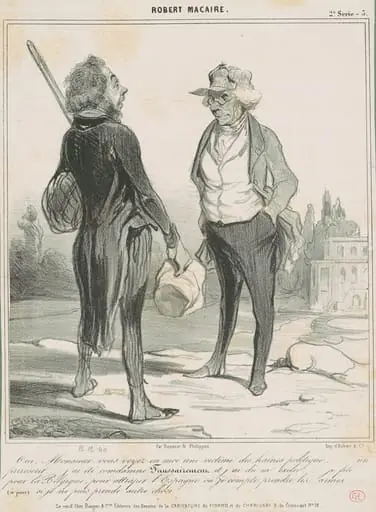 Oui, monsieur, vous voyez en moi une victime
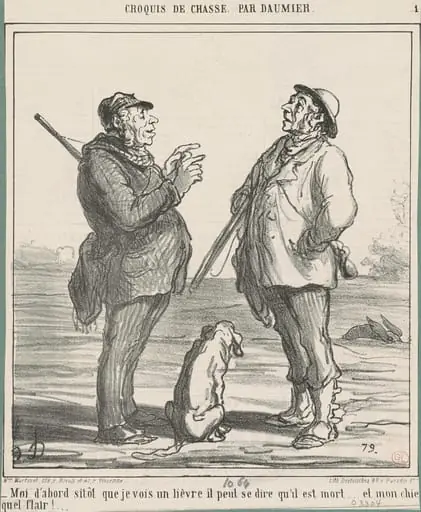 Moi d'abord sitot que je vois un lièvre ...