Artwork
Ariste trouvé Chauvel
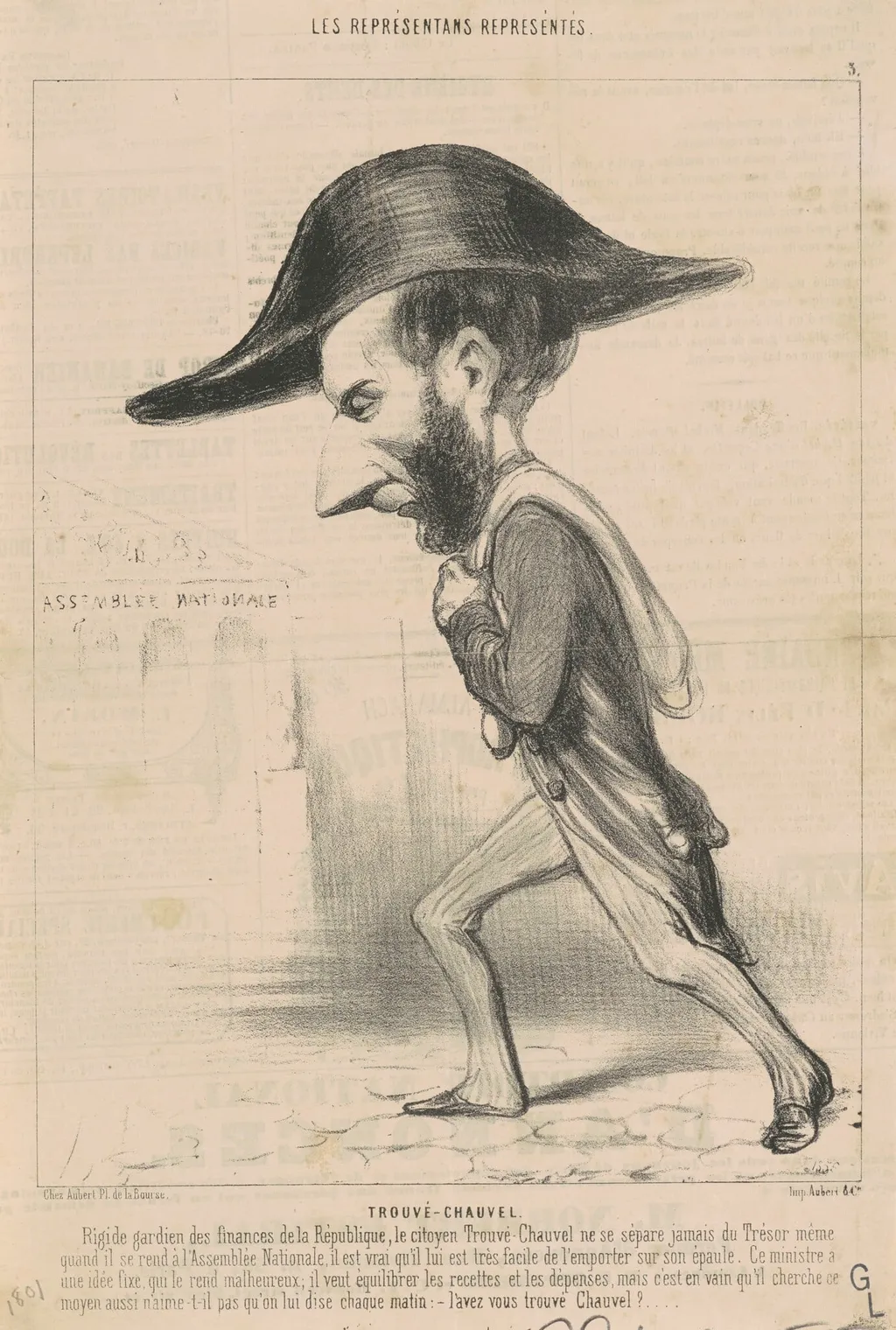
Ariste trouvé Chauvel is an ink print by the Romanticist artist Honoré Daumier. It dates from 1848 and is held in the collection of the National Gallery of Art.
About this work
Overview
Honoré Daumée’s lithograph titled “Ariste trouvé Chauvel” presents a solitary figure burdened with a sizable bundle, his back bent and facial features deliberately distorted. The composition places the character against a backdrop that bears the inscription “ASSEMBLÉE NATIONALE,” linking the scene to the French legislative assembly of the nineteenth century.
Subject & Meaning
The work portrays a man in the act of slipping away, his hunched posture suggesting both physical strain and a sense of furtive intent. By exaggerating the figure’s anatomy, Daumée satirizes the conduct of political actors, implying a clandestine transport of influence or resources within the corridors of power.
Technique & Style
Executed in lithography, the image relies on the medium’s capacity for bold lines and tonal contrasts, allowing Daumée to emphasize the caricatured anatomy and the stark lettering of the background. The print’s fluid brush‑like strokes and stark chiaroscuro are characteristic of Daumée’s approach to social satire through graphic means.
History & Provenance
Created during the mid‑1800s, the lithograph emerged at a time when Daumée was actively contributing to newspapers and pamphlets that critiqued French governance. While specific ownership records are limited, the piece has circulated among collections that focus on political caricature and nineteenth‑century French printmaking.
Context
In the turbulent era of the French Second Republic and the early Second Empire, public debate about the legitimacy of the Assemblée Nationale was intense. Daumée’s image taps into contemporary anxieties about corruption and the manipulation of legislative authority, using humor as a vehicle for political commentary that was daring for its period.
Artist & collection

Artist
Honoré-Victorin Daumier was a French painter, sculptor, and printmaker, whose many works offer commentary on the social and political life in France, from the Revolution of 1830 to the fall of the Second French Empire in 1870.