Artwork
Le Tailleur
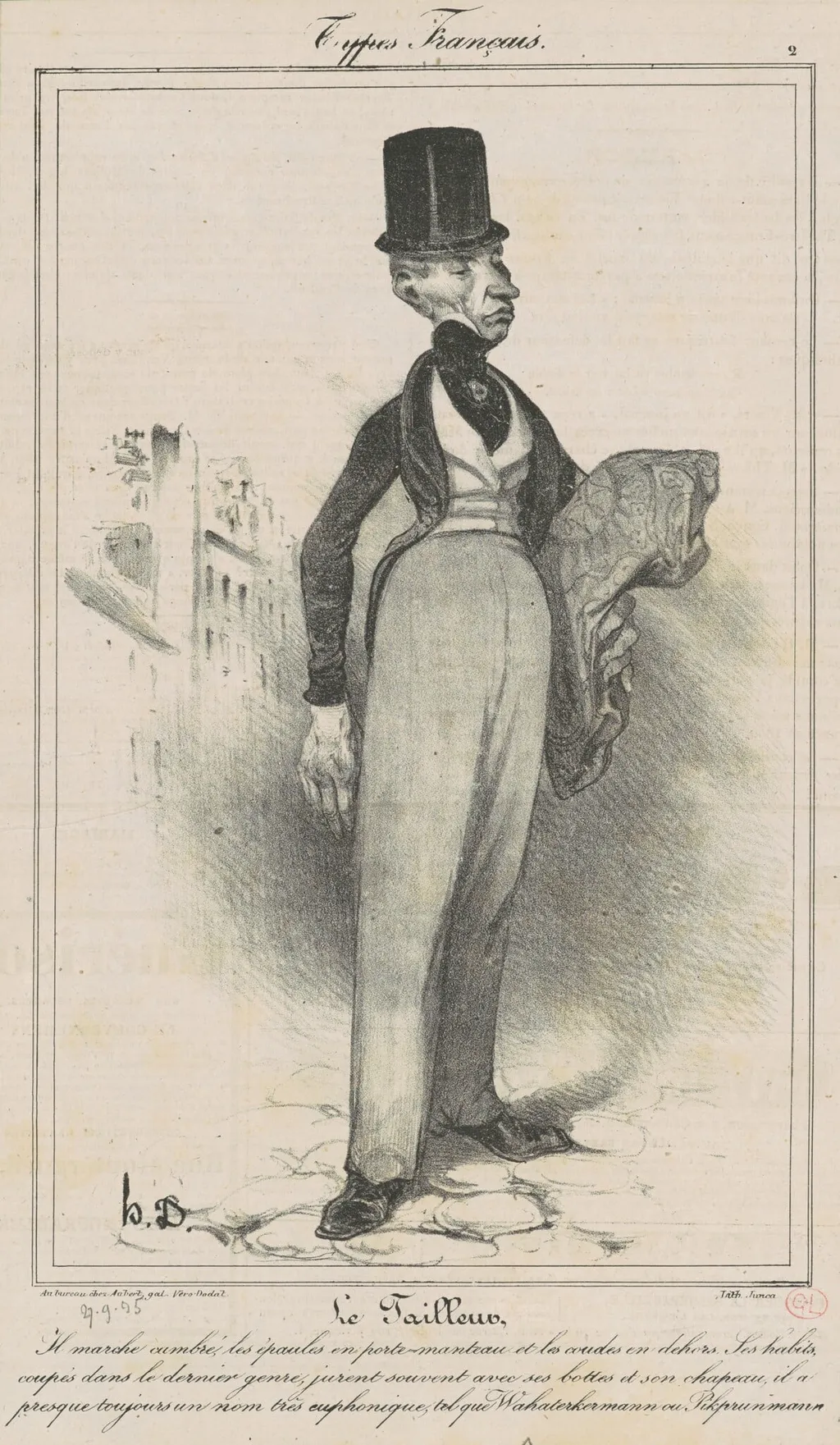
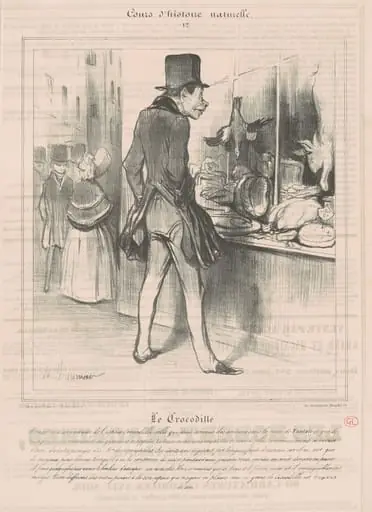
Le Tailleur is an ink print by the Romanticist artist Honoré Daumier. It dates from 1835 and is held in the collection of the National Gallery of Art.
About this work
Overview
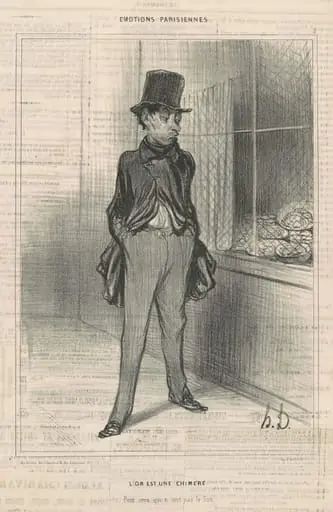
Honoré Daumier’s lithograph titled *Le Tailleur* presents a solitary figure in an urban setting. The man, turned slightly toward the viewer, is dressed in a black top hat and a long coat with tails, emphasizing the fashionable attire of mid‑19th‑century Paris. Behind him, loosely rendered buildings suggest a cityscape, framing the subject without distracting from his confident stance.
Subject & Meaning
The central figure exudes self‑assurance, his posture and clothing signaling personal pride and a keen awareness of contemporary style. By isolating the individual against a sketchy backdrop, Daumier highlights the social importance of dress as a marker of identity, inviting viewers to consider how fashion conveys status and individuality within a bustling metropolis.
Technique & Style
Executed in lithography, the work relies on the artist’s ability to draw directly onto a stone surface, producing bold contrasts and fluid lines. Daumier’s characteristic economy of detail—sharp outlines for the hat and coat, softer washes for the background—creates a dynamic interplay between the sharply defined figure and the loosely suggested architecture.
Context
Created during Daumier’s prolific period of social commentary, the print reflects the mid‑1800s fascination with modern urban life and its sartorial codes. While specific ownership records are limited, the lithograph has circulated among collections of 19th‑century French prints, illustrating the era’s interest in everyday subjects rendered with observational wit.
Artist & collection
Artist
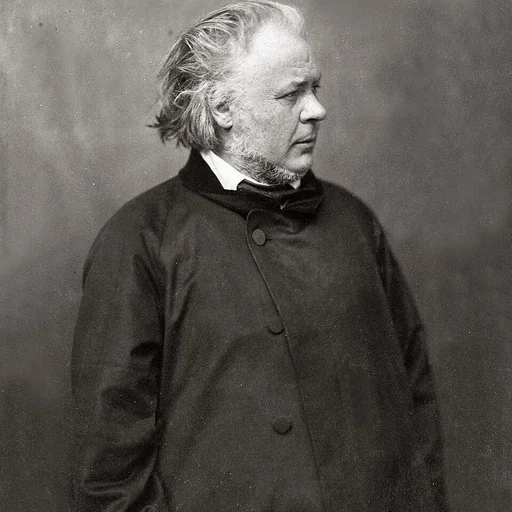
Honoré-Victorin Daumier was a French painter, sculptor, and printmaker, whose many works offer commentary on the social and political life in France, from the Revolution of 1830 to the fall of the Second French Empire in 1870.