Artwork
Baron de Lascours
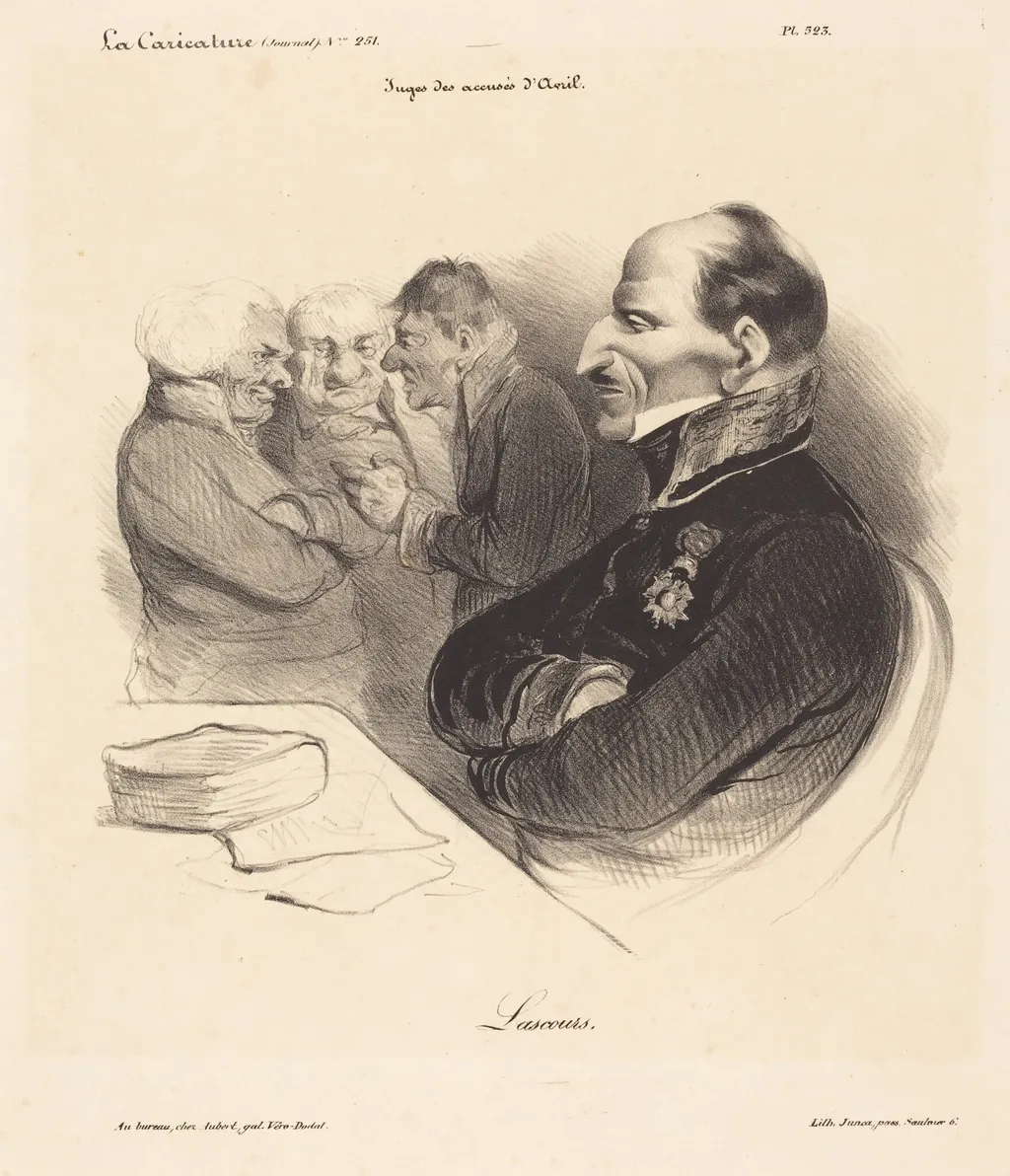
Baron de Lascours is an ink print by the Romanticist artist Honoré Daumier. It dates from 1835 and is held in the collection of the National Gallery of Art.
About this work
If you're interested in learning more about the artist behind this portrait, you might want to explore the work of Daumier, Honoré.
This image is a lithograph portrait of a man, likely Baron de Lascours, created by Honoré Daumier between 1865 and 1868. The man is dressed in formal attire, with a dark jacket and a white shirt. He has a stern expression on his face, looking straight ahead.
The background of the image is a light color, which helps to focus attention on the subject. The overall style of the portrait is characteristic of Romanticism, with bold lines and expressive features.
If you're interested in learning more about the artist behind this portrait, you might want to explore the work of Daumier, Honoré.
Overview
Honoré Daumier’s lithographic portrait titled *Baron de Lascours* presents a formally dressed gentleman rendered in stark black‑and‑white tones. The figure occupies the centre of a light‑filled background, his gaze directed forward and his expression austere. Executed in the mid‑nineteenth century, the print exemplifies Daumier’s focus on individual likenesses within a broader satirical practice.
Subject & Meaning
The sitter, identified as the baronial figure Baron de Lascours, is depicted in full court dress, emphasizing his aristocratic status. Daumier’s rendering, with its severe expression and unembellished setting, hints at a subtle critique of the social elite, aligning the portrait with the artist’s habit of exposing the pretensions of the privileged class.
Technique & Style
Created as a lithograph, the work relies on bold, decisive lines that define the subject’s features and clothing. The contrast between the dark attire and the pale backdrop heightens visual focus, while the simplified, expressive rendering reflects the Romantic tendency toward heightened emotion and individual character, hallmarks of Daumier’s printmaking.
History & Provenance
The print was produced between 1865 and 1868, a period when Daumier was active in the French press and also producing independent works. It circulated among collectors of political caricature and portraiture, later entering museum collections that document the artist’s engagement with contemporary figures.
Context
During the July Monarchy and the subsequent Second Empire, Daumier regularly contributed to satirical journals such as *La Caricature* and *Le Charivari*, targeting both political leaders and members of the aristocracy. *Baron de Lascours* fits within this tradition, offering a visual commentary that blends portraiture with the critical edge characteristic of his republican sympathies.
Artist & collection

Artist
Honoré-Victorin Daumier was a French painter, sculptor, and printmaker, whose many works offer commentary on the social and political life in France, from the Revolution of 1830 to the fall of the Second French Empire in 1870.









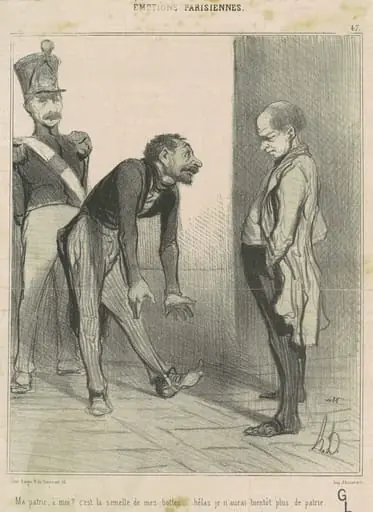 Ma patrie, a moi?...
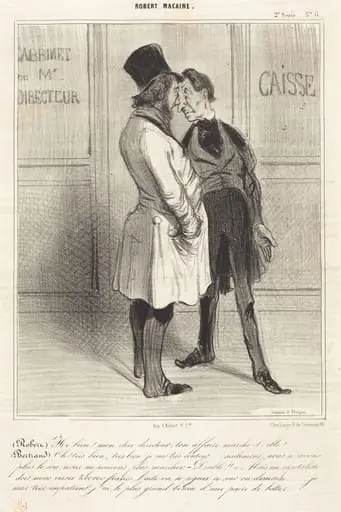 (Robert) Hé bien! mon cher directeur...
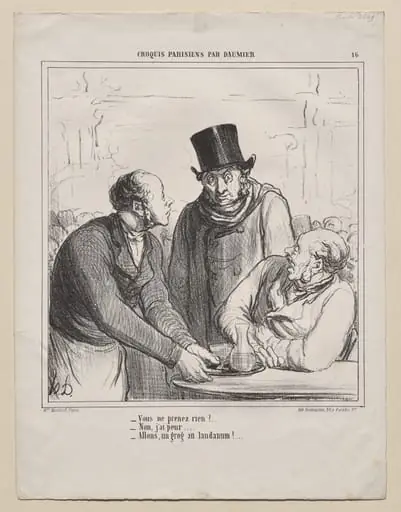 Are you not ordering anything?...
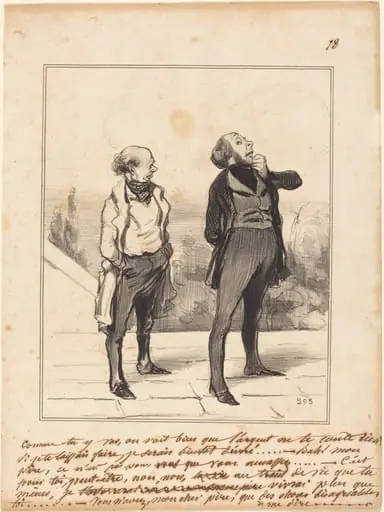 Comme tu y vas...
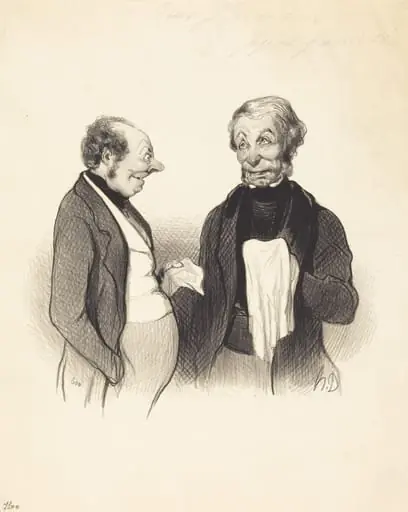 Une Heureuse nouvelle
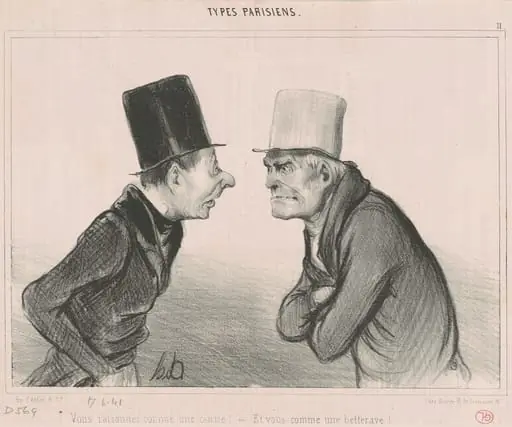 Vous raisonnez comme une canne!
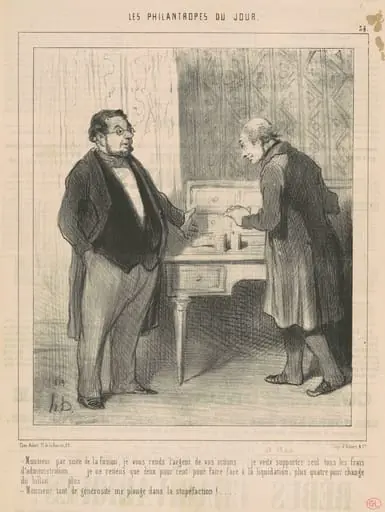 Monsieur par suite de la fusion
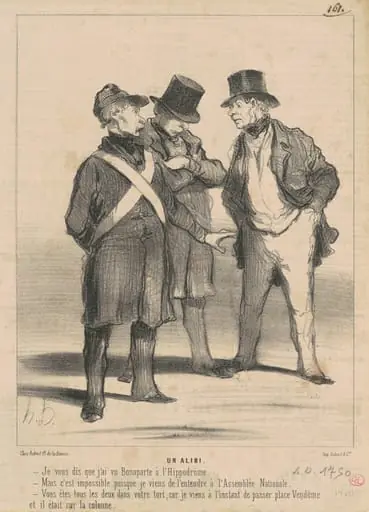 Un alibi
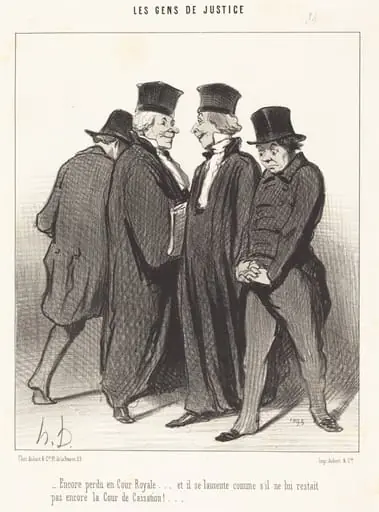 Encore perdu en Cour Royale... et il se lamente...
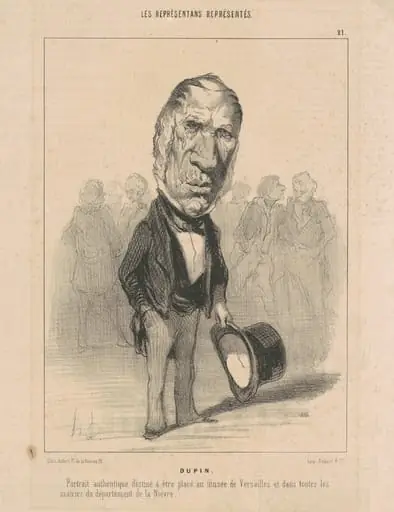 J. Jacques Dupin
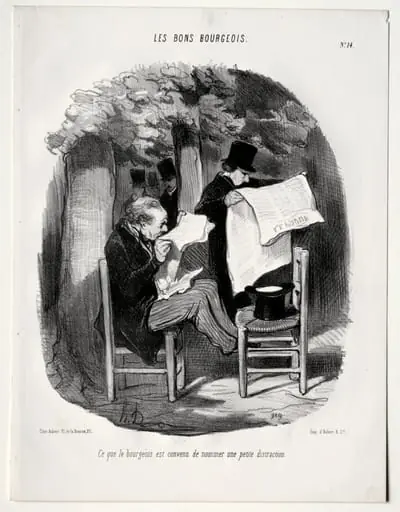 What the bourgeois calls a slight distraction
 Actionnaires de mines...