Artwork
Encore perdu en Cour Royale... et il se lamente...
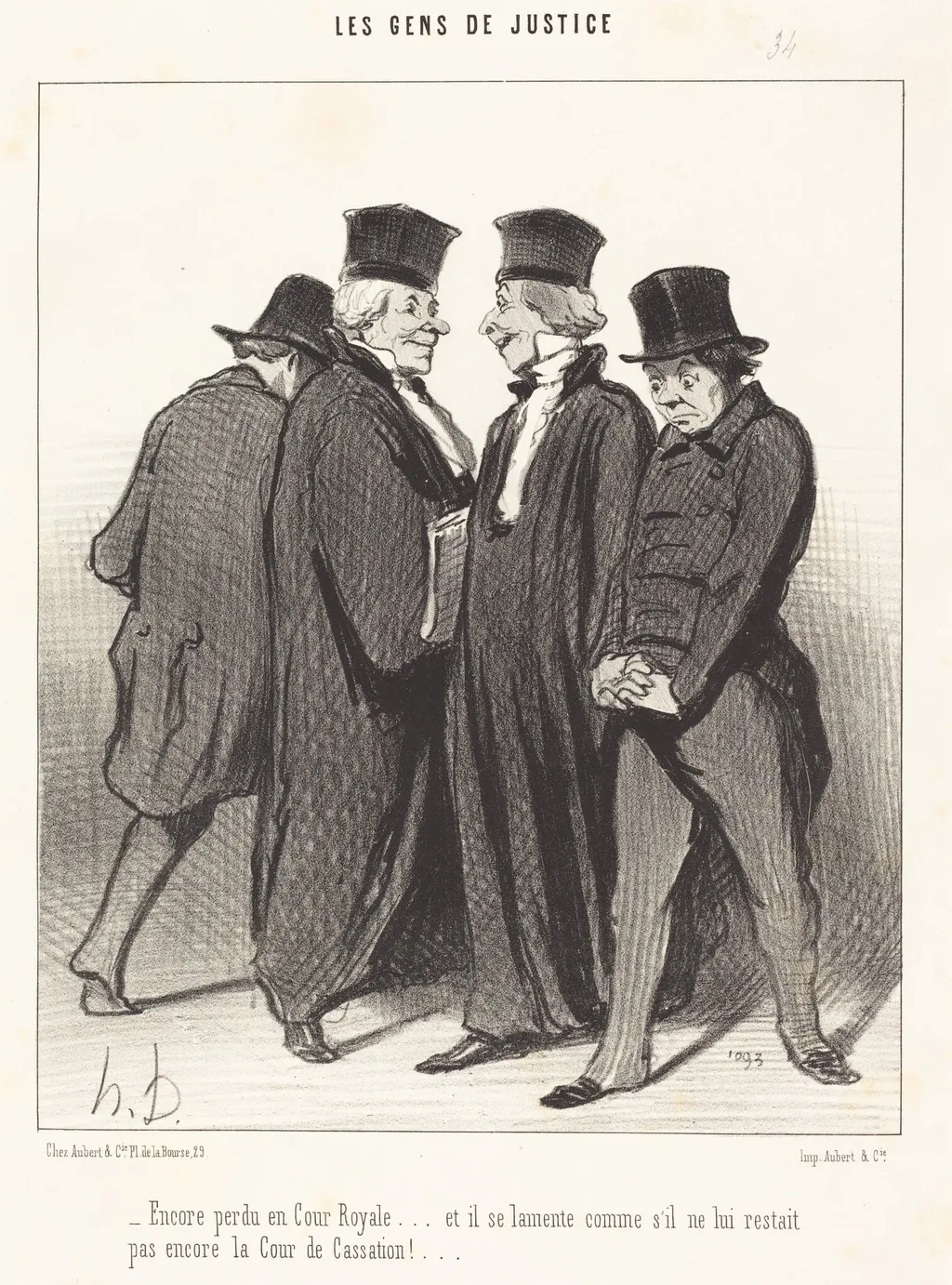
Encore perdu en Cour Royale... et il se lamente... is an ink print by the Romanticist artist Honoré Daumier. It dates from 1848 and is held in the collection of the National Gallery of Art.
About this work
Overview
Executed in bold, rapid lines, the work reflects Daumier’s role as a visual critic of institutional power.
Created in 1848, this lithograph by Honoré Daumier belongs to a series of political satires produced during France’s turbulent transition from monarchy to republic. Executed in bold, rapid lines, the work reflects Daumier’s role as a visual critic of institutional power. Printed in black ink on paper, it was originally published in a weekly journal, intended for a broad urban readership familiar with the day’s legal and political scandals.
Subject & Meaning
The image portrays four men in formal 19th-century attire, their exaggerated expressions suggesting dismay or mutual complaint. The title, *Les Gens de Justice*, identifies them as legal figures, while the phrase in the caption references a lost case in the royal court. Daumier uses irony to expose the futility and self-absorption of the judiciary, aligning with his broader critique of institutions that privileged privilege over justice.
Technique & Style
Daumier employed lithography for its capacity to translate spontaneous drawing into mass reproducible form. The work features loose, energetic linework and high contrast, with no shading or color, emphasizing immediacy. Facial features are caricatured—elongated, distorted—to amplify emotional tone. The composition is tightly grouped, directing attention to the figures’ gestures and expressions, reinforcing the satirical intent without narrative detail.
History & Provenance
Produced during the short-lived Second Republic, the print emerged after the February Revolution of 1848, which overthrew King Louis-Philippe. Daumier had previously been imprisoned for caricaturing the monarch, and this work continues his critique of entrenched power. It was likely published in *Le Charivari*, where his political prints regularly appeared. The print’s survival in museum collections reflects its historical value as a document of press freedom and dissent.
Context
In mid-19th century France, the press faced censorship, yet lithography allowed artists to circumvent strict controls by embedding critique in humor. Daumier’s work responded to public frustration with a judiciary perceived as corrupt and elitist. His images resonated because they mirrored everyday grievances—court delays, favoritism, and the disconnect between legal authority and common citizens.
Legacy
Daumier’s lithographs, including this one, influenced later generations of political cartoonists and social realists. His ability to distill complex institutional failures into single, visceral images set a precedent for visual journalism. Though created for ephemeral publication, these works endure as precise records of democratic struggle and the power of satire to hold authority to account.
Artist & collection
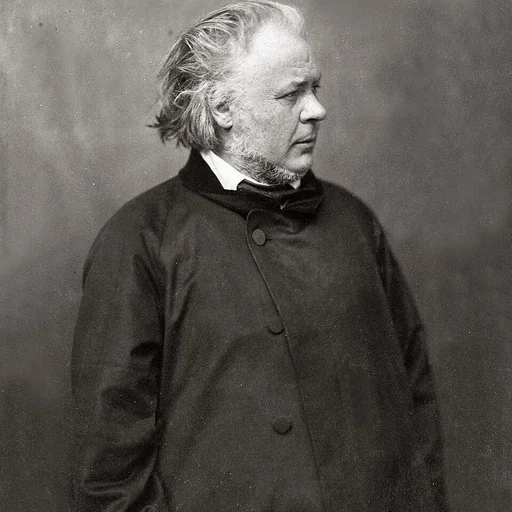
Artist
Honoré-Victorin Daumier was a French painter, sculptor, and printmaker, whose many works offer commentary on the social and political life in France, from the Revolution of 1830 to the fall of the Second French Empire in 1870.









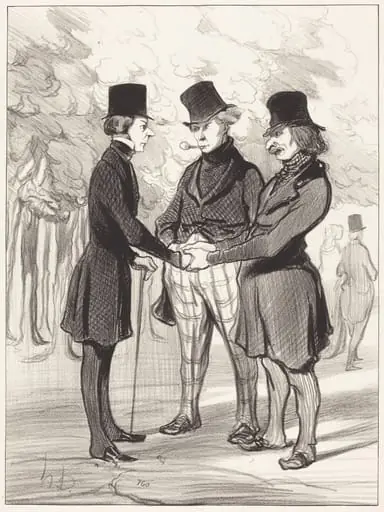 Quelle heureuse rencontre!... C'est...
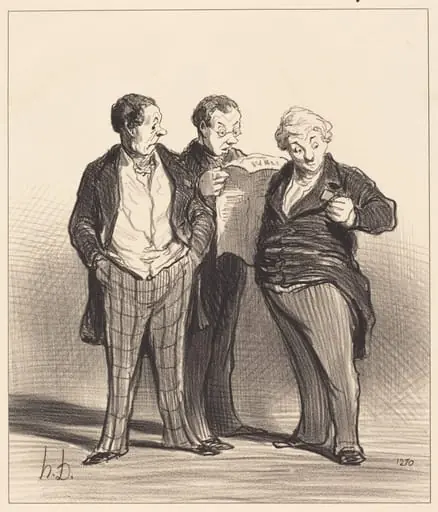 L'Interdiction du port des décorations
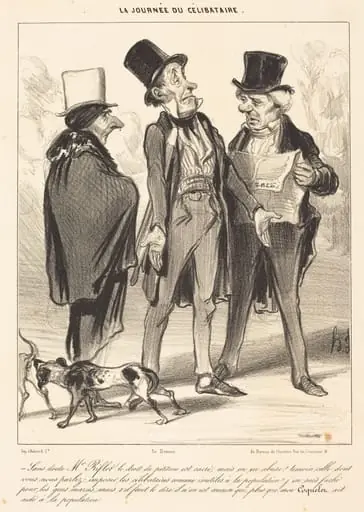 Sans doute M. Riflot le droit...
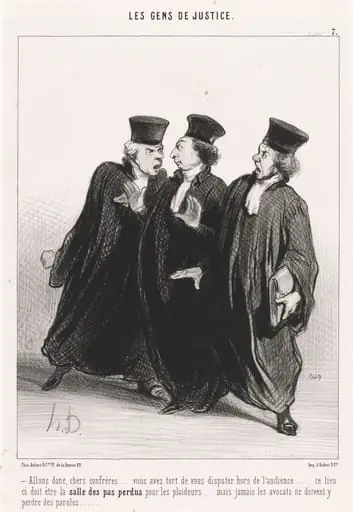 Allons donc, chers confrères...
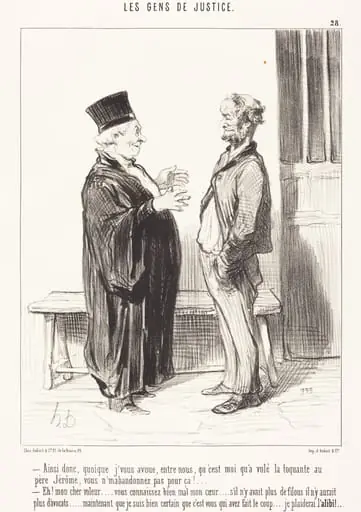 Ainsi donc, quoique j'vous avoue...
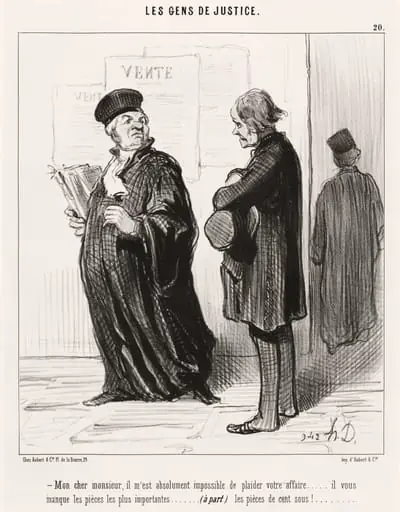 Mon cher monsieur... impossible de plaider votre affaire
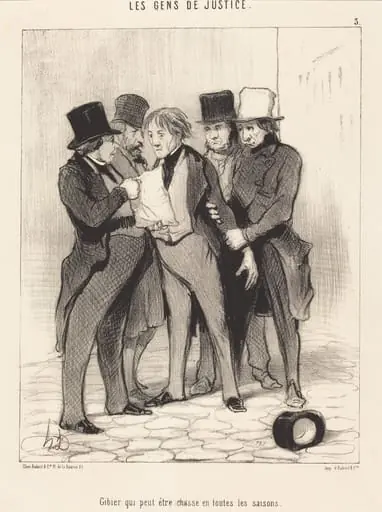 Gibier qui peut être chassé en toutes les saisons
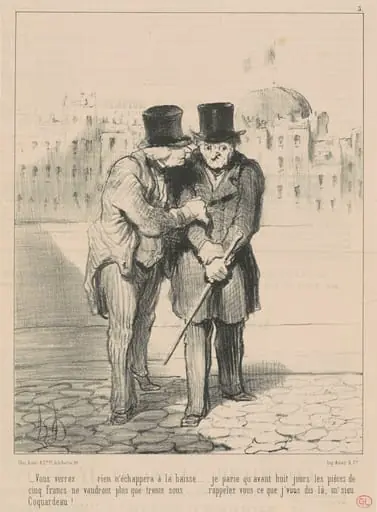 Vous verrez ... rien n'échappera a la baisse ...
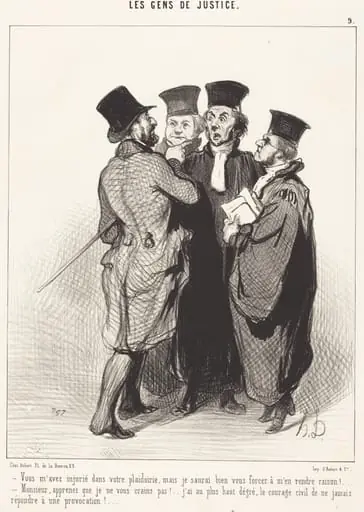 Vous m'avez injurié dans votre plaidoirie...