Artwork
Belle dame voulez-vous ... accepter mon bras?
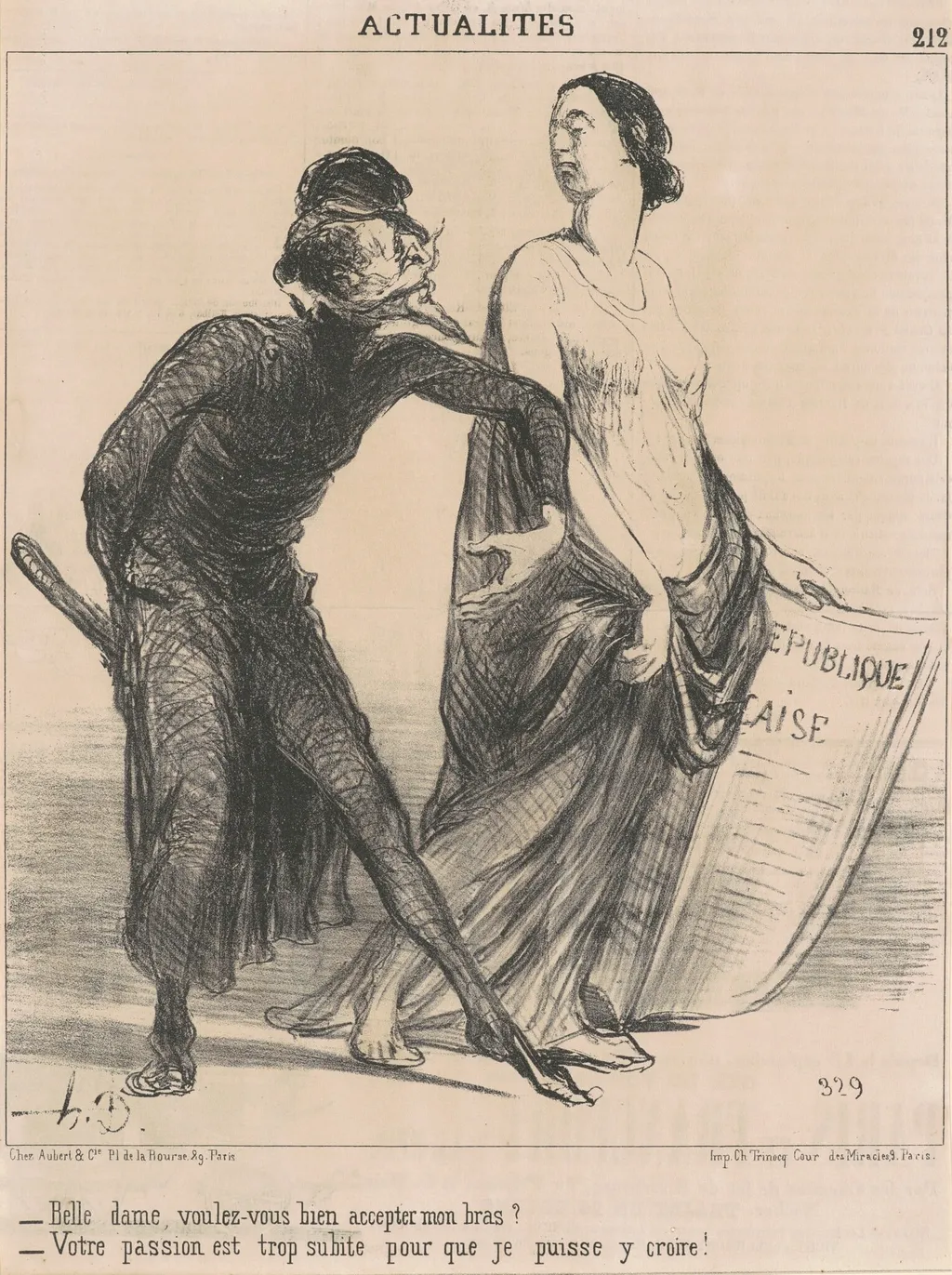
Belle dame voulez-vous ... accepter mon bras? is an ink print by the Impressionist artist Honoré Daumier. It dates from 1851 and is held in the collection of the National Gallery of Art.
About this work
Overview
This lithograph by Honoré Daumier captures a fleeting moment of social encounter between two figures.
This lithograph by Honoré Daumier captures a fleeting moment of social encounter between two figures. The composition centers on a stark contrast in posture and gesture: one figure leans forward with urgent, almost desperate motion, while the other remains rigid, turning their back. The title, phrased as a hesitant question, underscores the tension between invitation and rejection, framing the scene as a quiet commentary on human interaction in urban life.
Subject & Meaning
The image portrays a moment of social solicitation met with indifference. The hunched figure, rendered with exaggerated contours, suggests desperation or social marginalization, while the upright figure’s turned back implies detachment or avoidance. Daumier uses this dynamic to reflect broader societal patterns—how the vulnerable seek connection, often unacknowledged by those in more secure positions—without overt moralizing, leaving interpretation open to the viewer.
Technique & Style
Executed in lithography, the work exploits the medium’s capacity for rapid, expressive line work. Daumier employs bold, fluid strokes to define form and movement, with minimal shading to emphasize contrast between the figures. The rough texture of the stone surface is visible in the background, enhancing the immediacy of the scene. This technique allowed Daumier to produce images quickly for periodicals, aligning his art with contemporary social discourse.
History & Provenance
Created during Daumier’s prolific period of social satire in the mid-19th century, this print likely appeared in a French illustrated journal, though its original publication context remains undocumented. It was not commissioned as a standalone work but emerged from his broader output critiquing Parisian society. The print entered museum collections in the 20th century as interest grew in Daumier’s role as a visual chronicler of everyday life.
Context
Daumier produced this work amid rapid urbanization and shifting class dynamics in Paris. The lithograph reflects the anonymity and alienation increasingly common in city life, where personal overtures were often met with indifference. His work, frequently published in satirical journals, targeted the pretensions and inequalities of the bourgeoisie, using everyday scenes to reveal deeper social fractures.
Legacy
This print exemplifies Daumier’s influence on modern graphic art and social realism. His ability to distill complex human interactions into a single, resonant image inspired later artists, including those in the Expressionist and satirical traditions. Though modest in scale, the work endures as a quiet yet potent observation of human behavior, valued for its emotional clarity and unembellished observation.
Artist & collection

Artist
Honoré-Victorin Daumier was a French painter, sculptor, and printmaker, whose many works offer commentary on the social and political life in France, from the Revolution of 1830 to the fall of the Second French Empire in 1870.









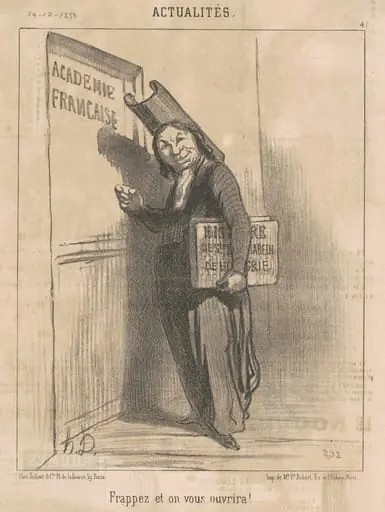 Frappez et on vous ouvrira!
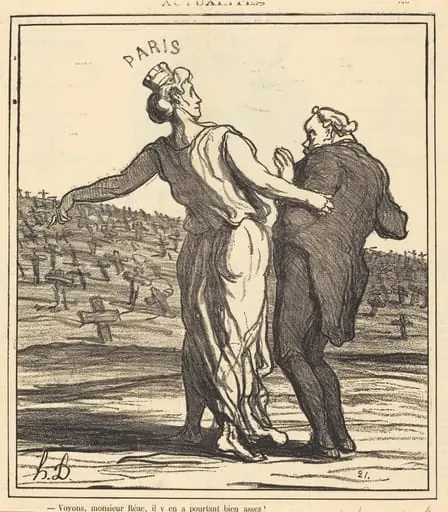 Voyons, monsieur Réac...
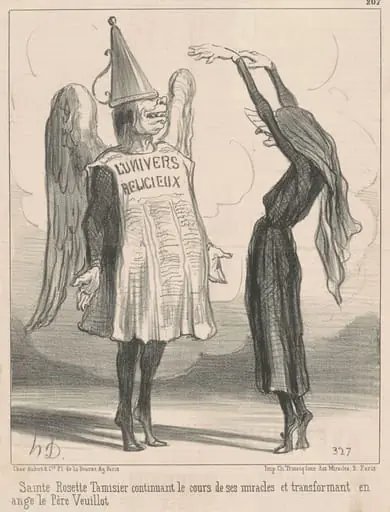 Sainte Rosette Tamisier ...
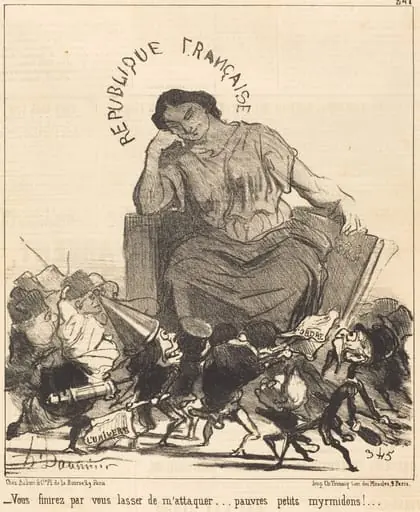 Vous finirez par vous lasser de m'attaquer...
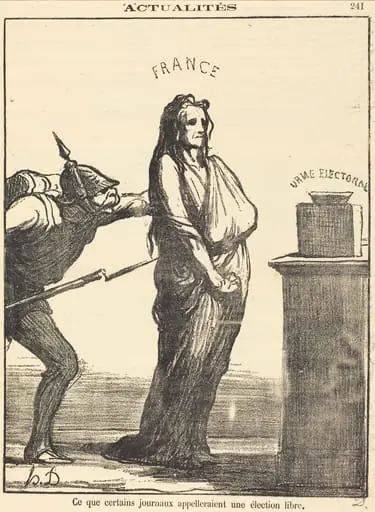 Ce que certains journaux appeleraient...
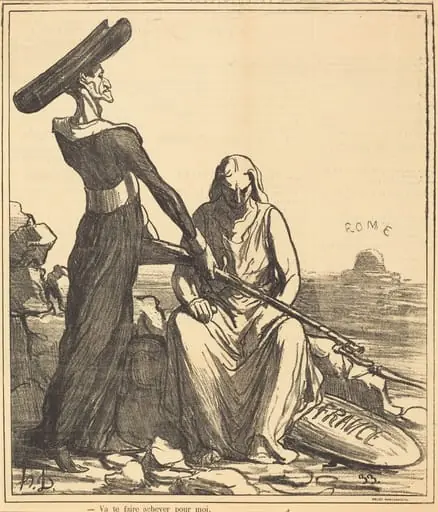 Va te faire achever pour moi
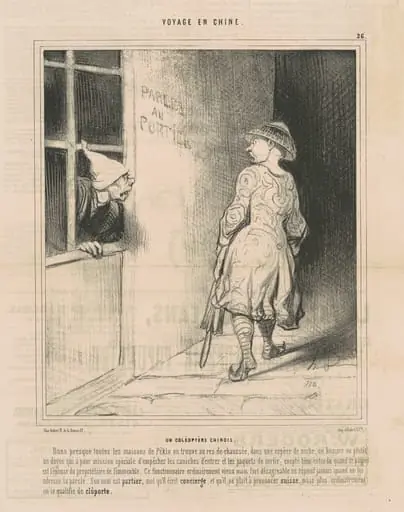 Un coléoptère chinois
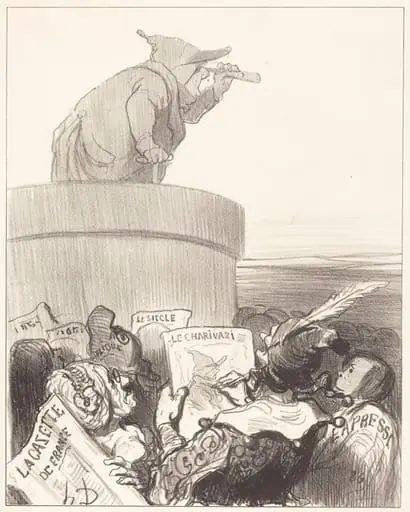 Le Constitutionnel contemplant l'horizon politique
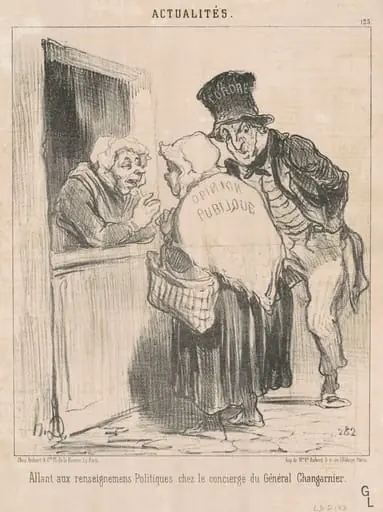 Allant aux renseignements politiques ...