Artwork
C'est l'apollon du nouvel opéra
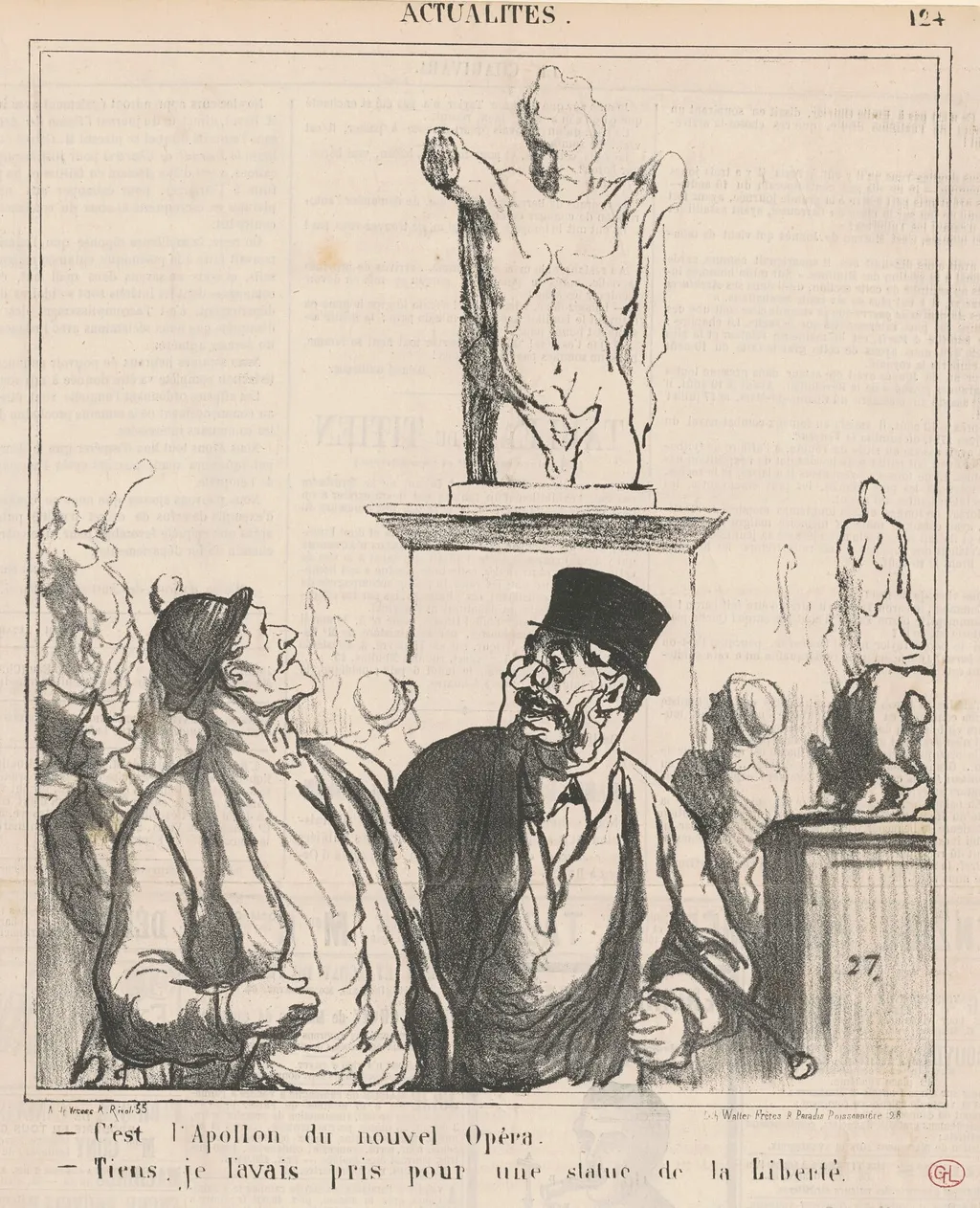
C'est l'apollon du nouvel opéra is an ink print by the Impressionist artist Honoré Daumier. It dates from 1870 and is held in the collection of the National Gallery of Art.
About this work
Overview
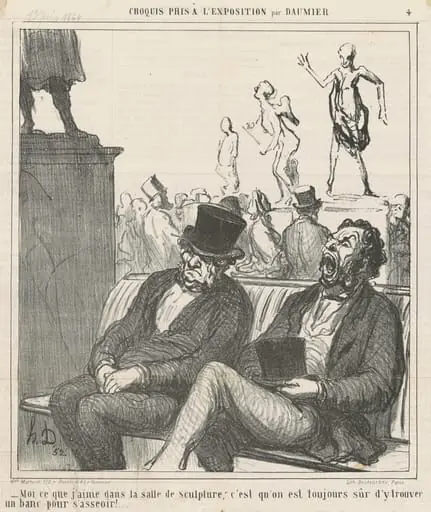
C'est l'apollon du nouvel opéra is a lithograph created by Honoré Daumier in 1870, capturing a scene of artistic contemplation and critique within an indoor gallery setting.
Subject & Meaning
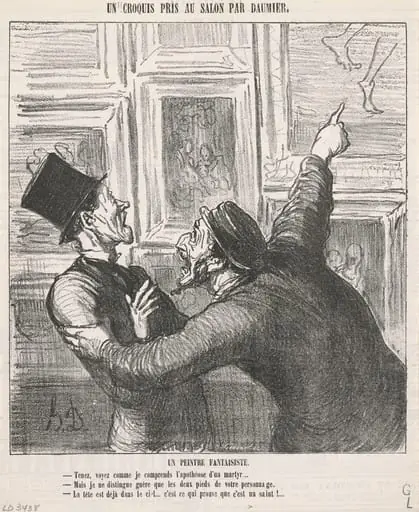
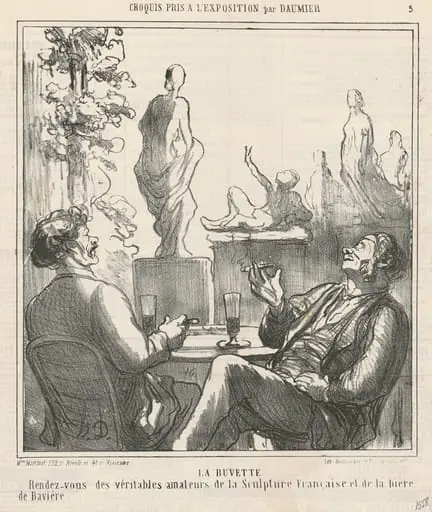
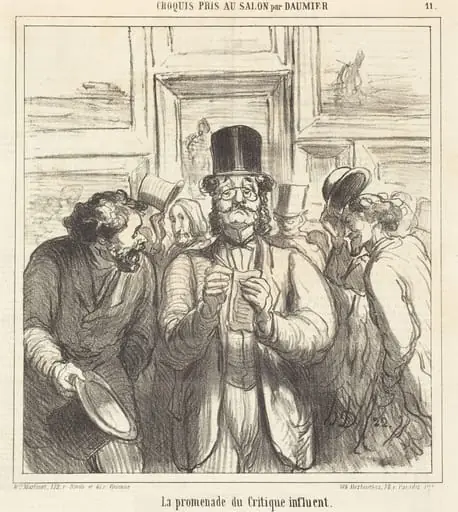
The print depicts two men intensely observing a central sculpture, their exaggerated facial expressions conveying deep engagement and implicit judgment, reflecting Daumier's characteristic social commentary on the art world.
Technique & Style
Executed in lithograph, a technique allowing for expressive line work and tonal depth, the piece showcases Daumier's mastery in leveraging the medium to enhance the emotional and satirical nuances of the scene.
History & Provenance
Created in 1870, the work is a product of Daumier's later period, yet specific details on its exhibition history, ownership, and reception are not provided in the available information.
Context
The piece contextualizes the vibrant and opinionated 19th-century French art scene, where sculptures in public or gallery spaces provoked strong reactions and discussions among the viewing public.
Legacy
While not individually renowned, 'C'est l'apollon du nouvel opéra' contributes to Daumier's broader legacy as a satirical commentator on French society, encouraging viewers to reflect on the dynamics between art, audience, and criticism.
Artist & collection

Artist
Honoré-Victorin Daumier was a French painter, sculptor, and printmaker, whose many works offer commentary on the social and political life in France, from the Revolution of 1830 to the fall of the Second French Empire in 1870.