Artwork
La promenade du Critique influent
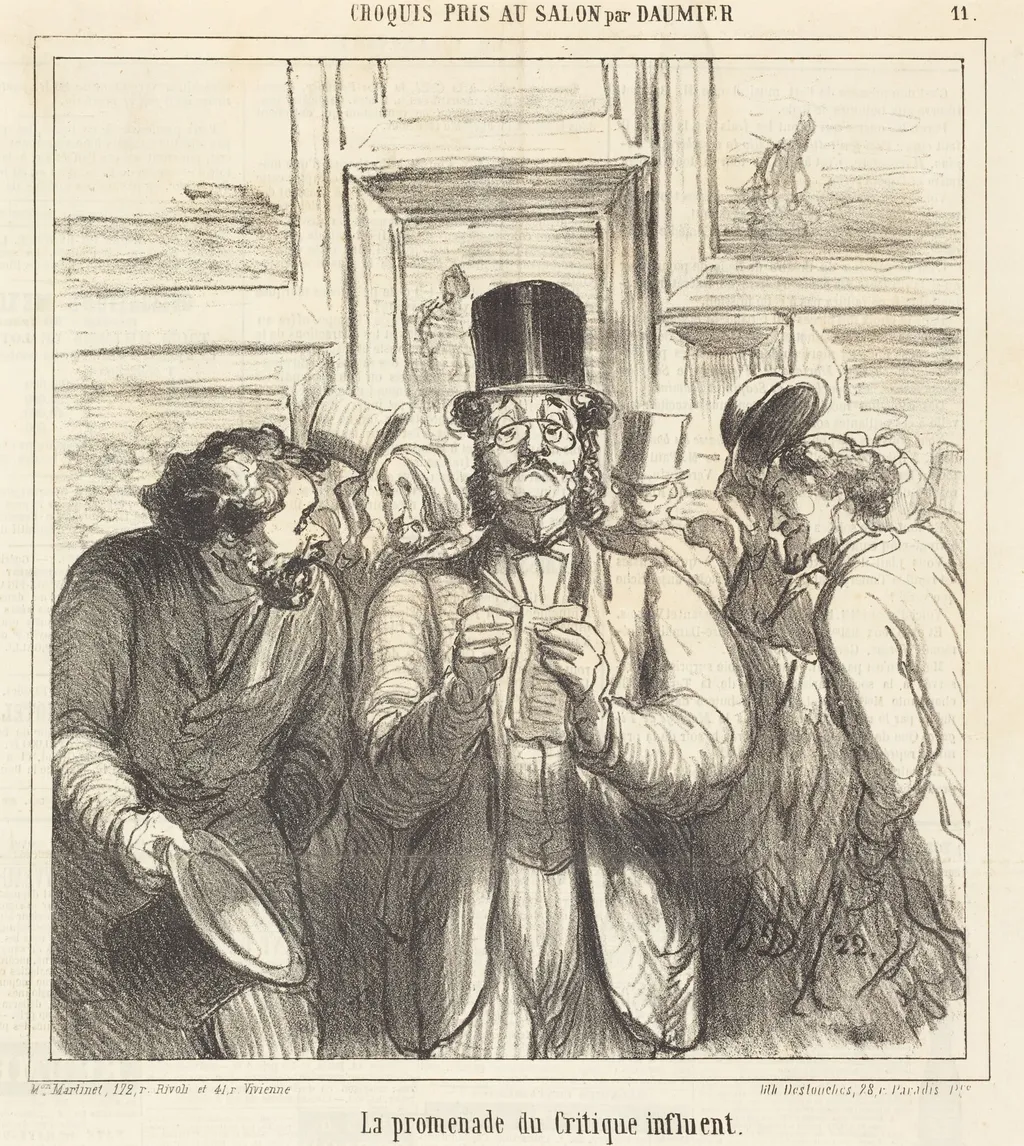
La promenade du Critique influent is an ink print by the Impressionist artist Honoré Daumier. It dates from 1865 and is held in the collection of the National Gallery of Art.
About this work
Overview
Unlike painted canvases, lithography allowed him rapid, reproducible expression, making his critiques accessible to a wide public.
Created in 1865, this lithograph by Honoré Daumier captures a moment in Parisian cultural life through the lens of satire. Executed on wove paper, the work belongs to a broader body of prints Daumier produced for periodicals like *Le Charivari*, where he used ink and stone to expose societal pretensions. Unlike painted canvases, lithography allowed him rapid, reproducible expression, making his critiques accessible to a wide public.
Subject & Meaning
The print portrays a self-assured art critic, distinguished by his top hat and rigid posture, navigating a crowded gallery. He holds a sheet of paper—perhaps a review—as if bearing authority, while surrounding figures appear indifferent or absorbed in their own concerns. The scene mocks the inflated status of cultural gatekeepers, suggesting their influence is performative rather than substantive, a commentary on the art world’s hierarchy.
Technique & Style
Daumier employed lithography to achieve rapid, expressive lines with tonal variation. His figures are rendered with economical, almost sketchlike strokes, emphasizing gesture over detail. The dim lighting and crowded composition create a sense of claustrophobia, while the framed artworks on the walls are barely defined, reducing them to background props. This stylistic restraint directs focus to the critic’s isolation amid the chaos.
History & Provenance
The print was produced during the Second Empire under Napoleon III, a period when press censorship was tightening but satire persisted in disguised forms. Daumier had already spent time in prison for earlier caricatures, yet continued producing work for illustrated journals. This piece likely appeared in *Le Charivari*, where his images reached middle-class readers who recognized the targets of his wit.
Context
In mid-19th century Paris, art criticism gained institutional weight, with critics shaping public taste and artist reputations. Daumier, himself an artist marginalized by the Academy, observed how these figures wielded power without artistic merit. His depiction reflects broader anxieties about cultural authority, aligning with a growing public skepticism toward elite gatekeepers in an era of expanding media and public exhibitions.
Legacy
Daumier’s lithographs, including this one, influenced later generations of satirical illustrators and social realists. His ability to distill complex social dynamics into single, incisive images set a precedent for visual journalism. Though not widely exhibited in his lifetime, his prints gained recognition in the 20th century as foundational works in the critique of power through everyday observation.
Artist & collection
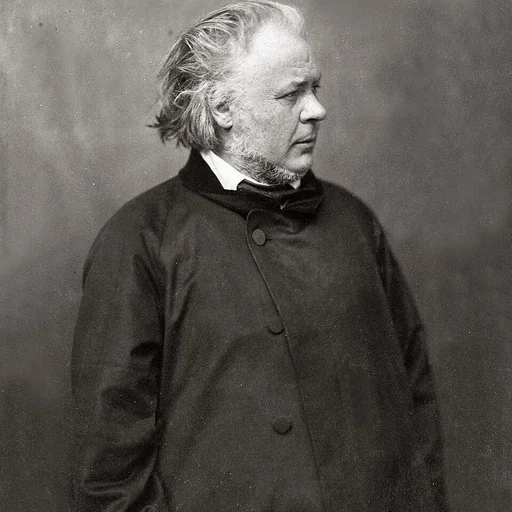
Artist
Honoré-Victorin Daumier was a French painter, sculptor, and printmaker, whose many works offer commentary on the social and political life in France, from the Revolution of 1830 to the fall of the Second French Empire in 1870.

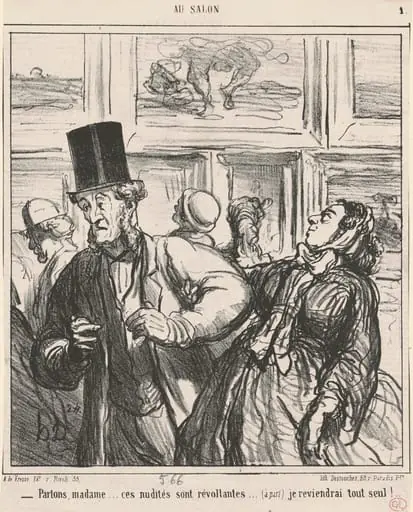 Parlons, Madame...ces nudités sont révoltantes...
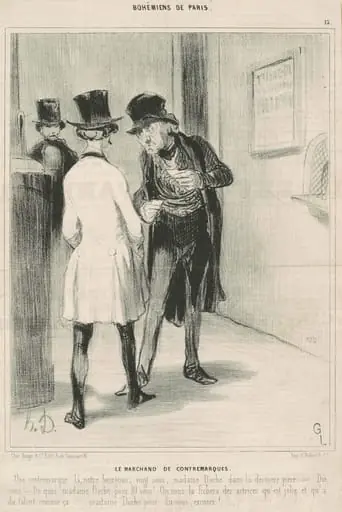 Le marchand de contremarques
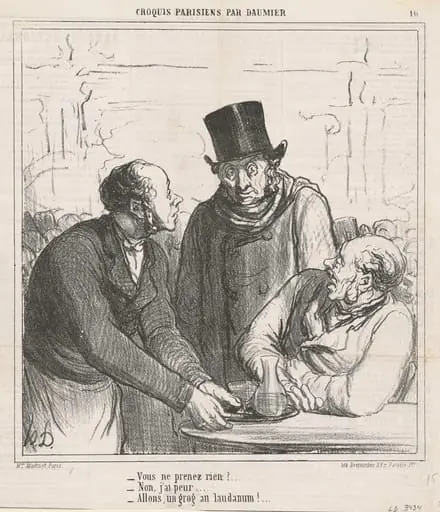 Vous ne prenez rien?
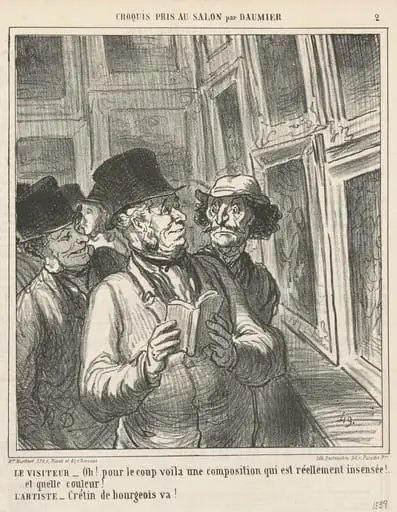 Le visiteur ...
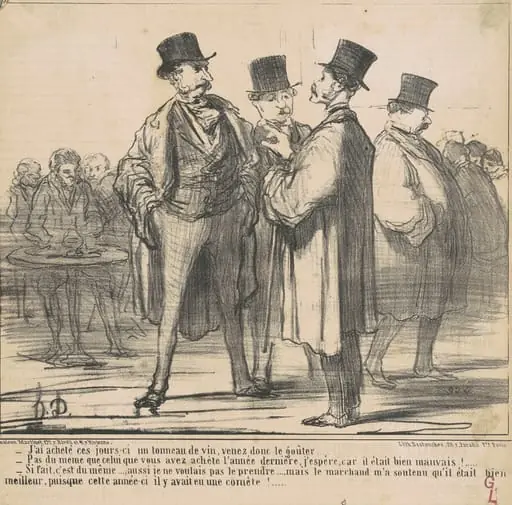 J'ai acheté ... un tonneau de vin ...
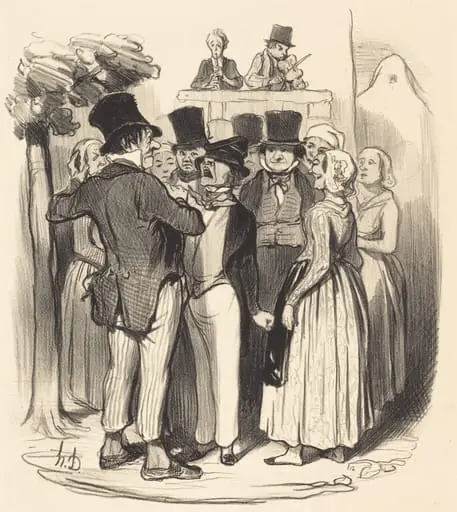 Ah! Gringalet d'Paris... tu viendras faire danser...
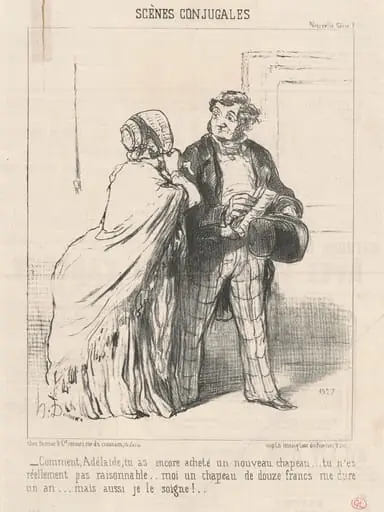 Comment ... tu as encore acheté un ... chapeau ...
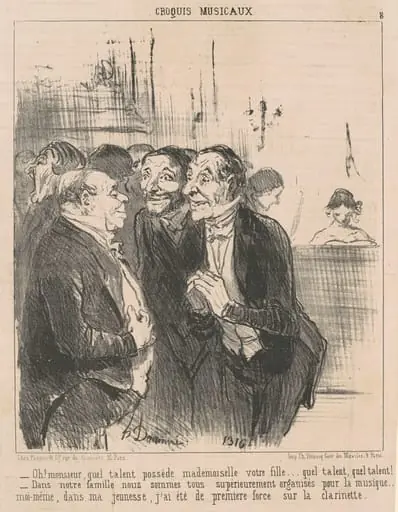 Oh! Monsieur, quel talent possède ...
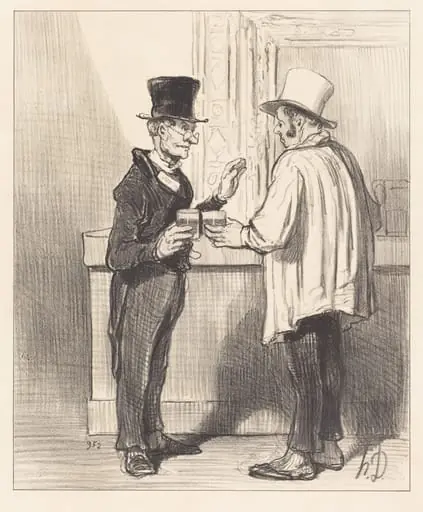 Un Défenseur... causant... dans son cabinet habituel
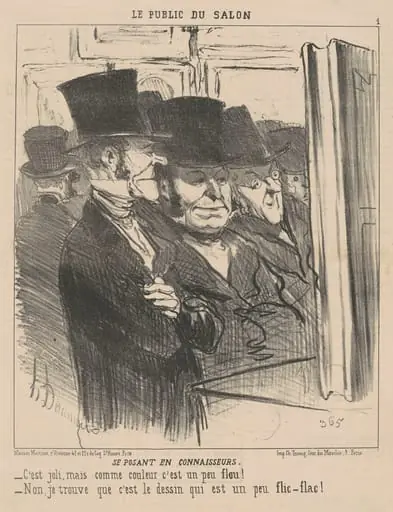 Se posant en connaisseurs
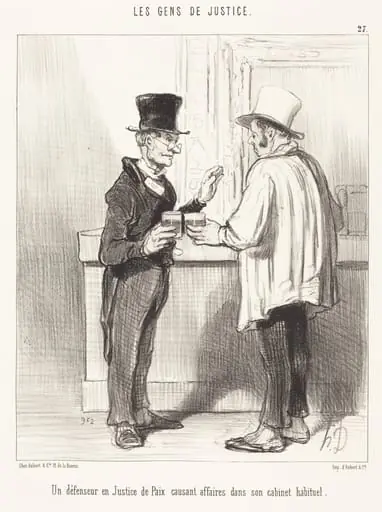 Un Défenseur... causant... dans son cabinet habituel
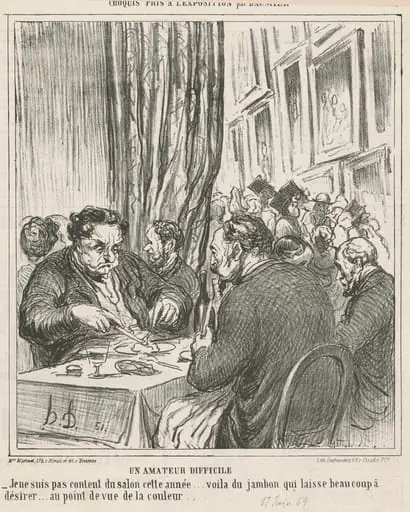 Un amateur difficile