Artwork
C'est peut-être bon ...
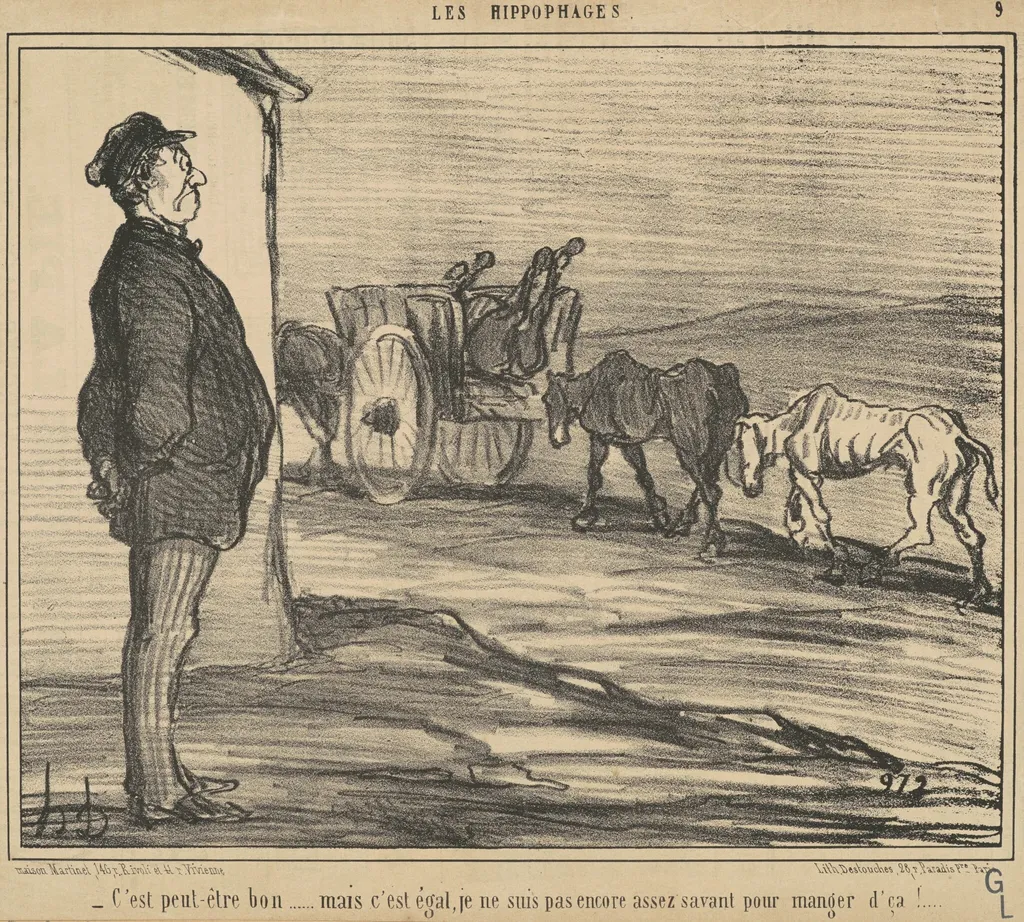
C'est peut-être bon ... is an ink print by the Impressionist artist Honoré Daumier. It dates from 1856 and is held in the collection of the National Gallery of Art.
About this work
Overview
C'est peut-être bon, a lithograph by Honoré Daumier (1856), presents a poignant scene of hardship: a gaunt man stands by as two emaciated horses strain to pull an empty cart, conveying a sense of desolation.
Subject & Meaning
The work highlights the struggles of the underprivileged during its time, with the empty cart and malnourished horses symbolizing economic hardship and potentially critiquing social inequities.
Technique & Style
Daumier utilized lithography, characterized by its simplicity and starkness in this piece, achieved through quick, expressive greasy crayon marks on stone. This method allowed for widespread, sharp reproduction, facilitating broad dissemination, likely through newspapers.
History & Provenance
Created in 1856, the lithograph's original context suggests circulation in contemporary publications, though specific provenance details are not provided here.
Context
Emerging in 1856, the work reflects the socio-economic challenges of mid-19th century France, aligning with Daumier's penchant for socially conscious commentary through art.
Legacy
While specific lasting impacts of 'C'est peut-être bon' are not detailed, it contributes to Daumier's broader legacy as a critic of social injustices through lithography, a medium well-suited to reaching a wide audience.
Artist & collection
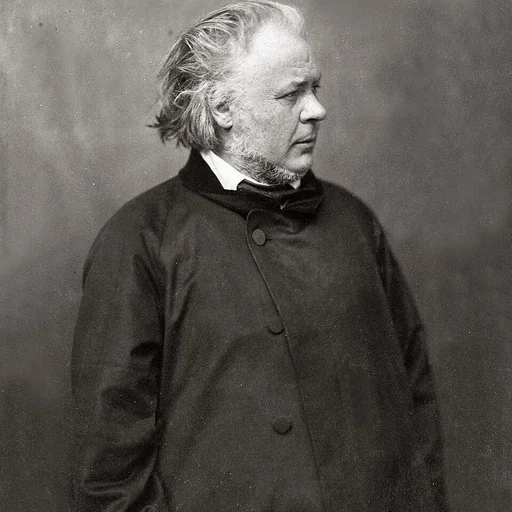
Artist
Honoré-Victorin Daumier was a French painter, sculptor, and printmaker, whose many works offer commentary on the social and political life in France, from the Revolution of 1830 to the fall of the Second French Empire in 1870.