Artwork
Tiens! Moi, croyais avoir tué un lapin! ...
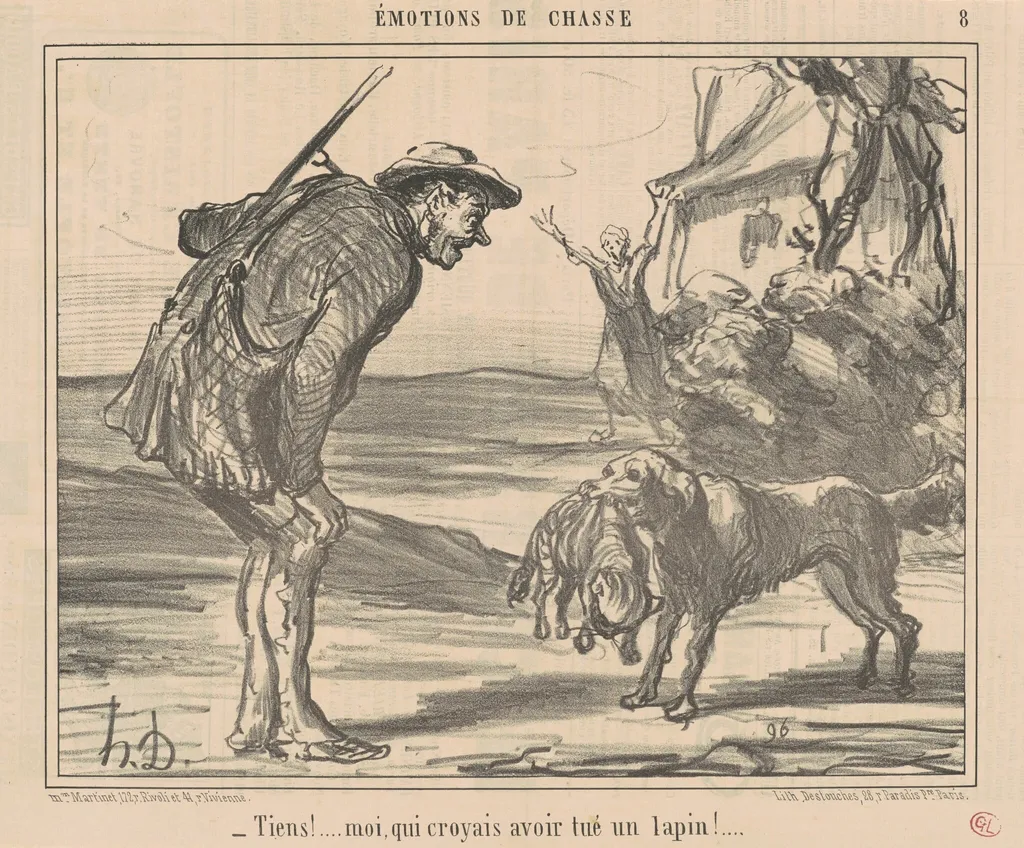
Tiens! Moi, croyais avoir tué un lapin! ... is an ink print by the Impressionist artist Honoré Daumier. It dates from 1857 and is held in the collection of the National Gallery of Art. Tiens!
About this work
Overview
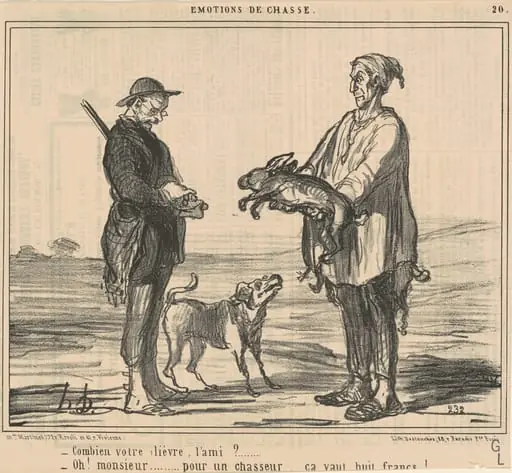
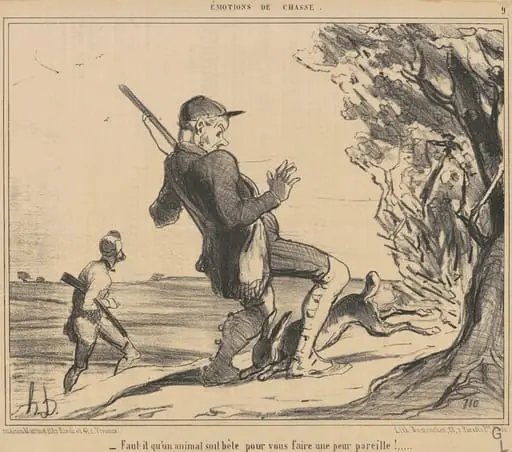
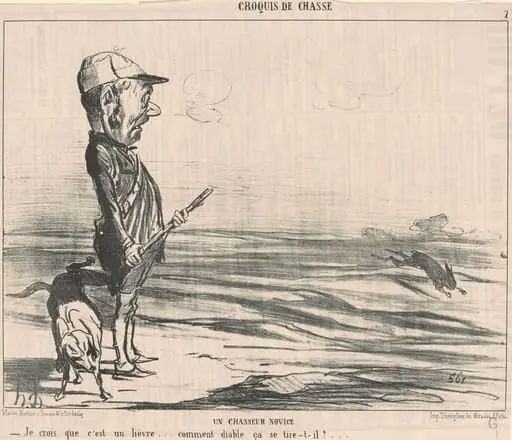
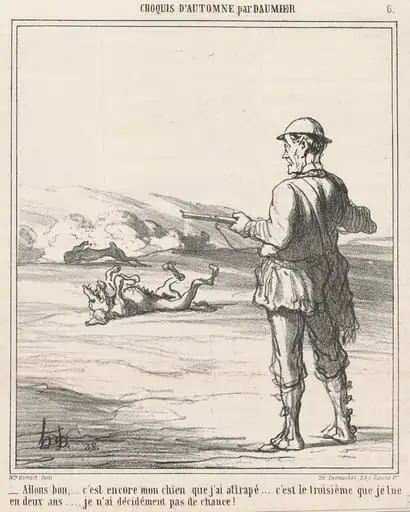
Tiens! Moi, croyais avoir tué un lapin! is a lithograph print by Honoré Daumier, presenting a comedic hunting scenario where the disparity between expectation and reality drives the humor.
Subject & Meaning
The print depicts a hunter, clad in worn, rustic attire, interacting with his dog, which has retrieved a minuscule mouse. The hunter's posture and expression contrast with the dog's calm demeanor, highlighting the hunter's misplaced pride and the absurdity of the situation, poking fun at urban individuals pretending to be adept outdoorsmen.
Technique & Style
Executed as a lithograph, the piece showcases Daumier's mastery of the medium, using expressive lines and possibly muted tones (common in lithography of the time) to convey the humorous narrative. The cluttered, rural backdrop with bushes and a fence adds to the comedic setting.
History & Provenance
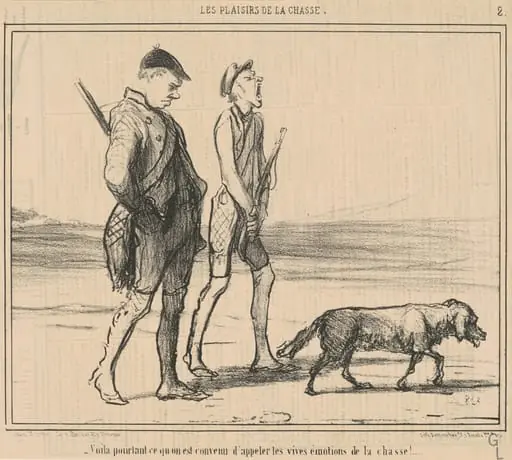
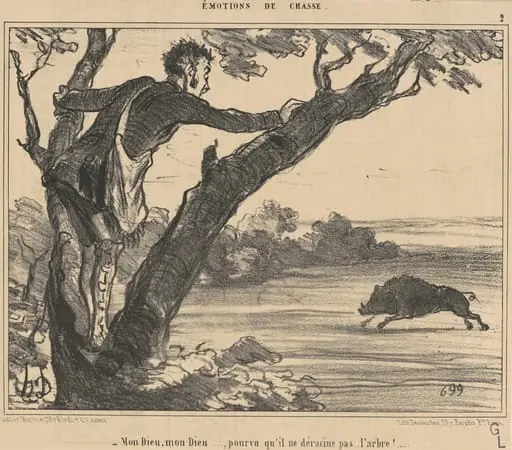
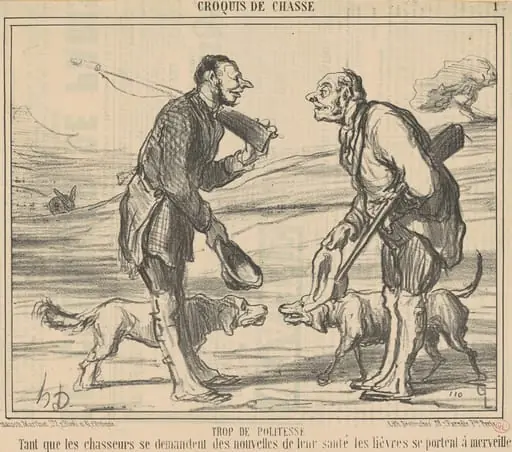
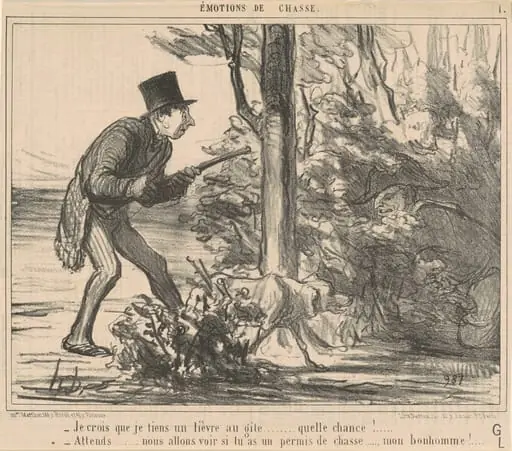
Part of a series by Daumier that satirizes modern hunting excursions, the exact date and original exhibition context are not specified in the provided information. The series is characteristic of Daumier's 19th-century social commentary through art.
Context
Created in a time when urbanization was on the rise, the piece reflects Daumier's penchant for critiquing the bourgeoisie's attempts to engage in rural pursuits, often with comical incompetence.
Legacy
This work contributes to Daumier's legacy as a satirical artist, influencing future generations of caricaturists and social commentators. Its dry wit and simple yet effective composition make it a notable example of 19th-century French lithographic satire.
Artist & collection
Artist
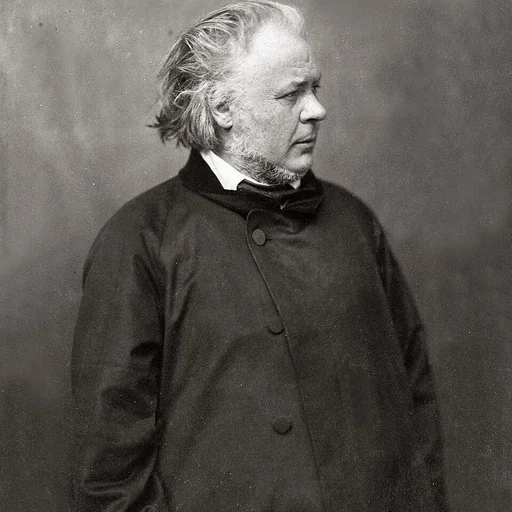
Honoré-Victorin Daumier was a French painter, sculptor, and printmaker, whose many works offer commentary on the social and political life in France, from the Revolution of 1830 to the fall of the Second French Empire in 1870.