Artwork
Cocher, Cocher! ...
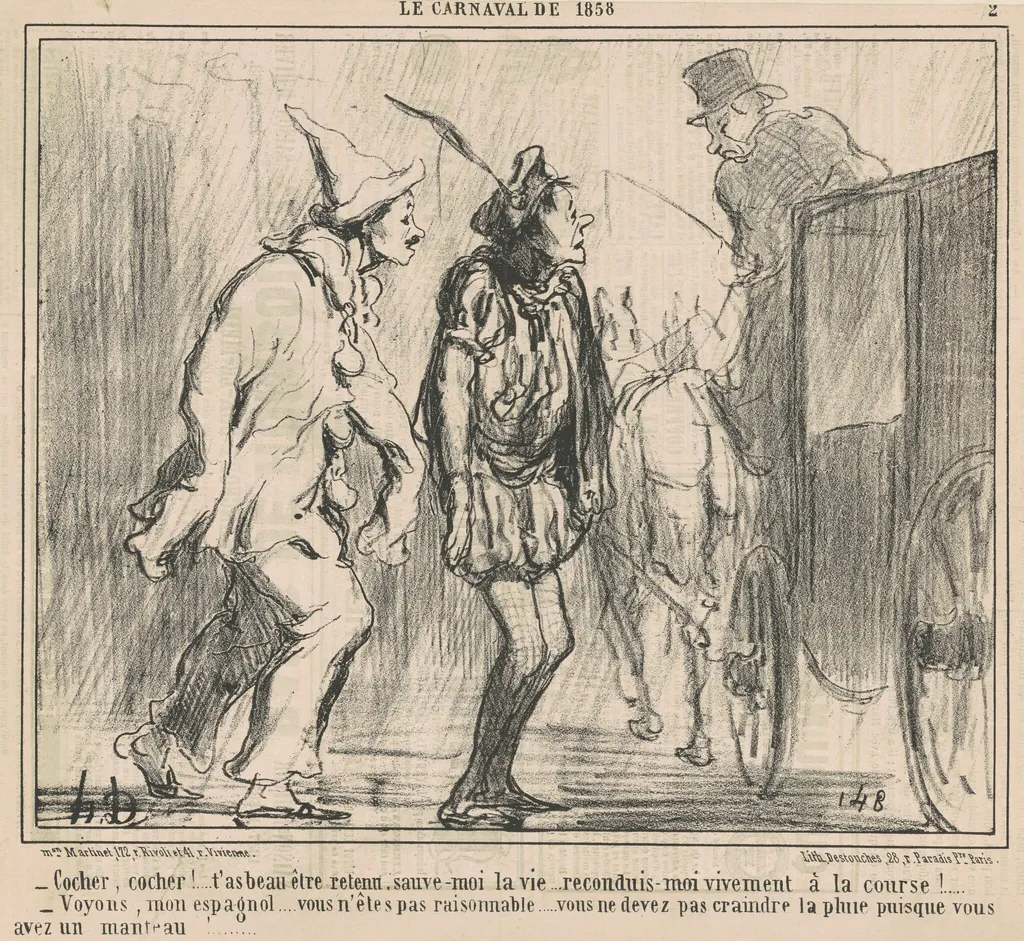
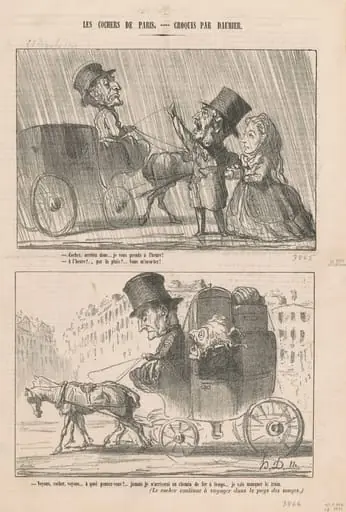
Cocher, Cocher! ... is an ink print by the Impressionist artist Honoré Daumier. It dates from 1858 and is held in the collection of the National Gallery of Art.
About this work
Overview
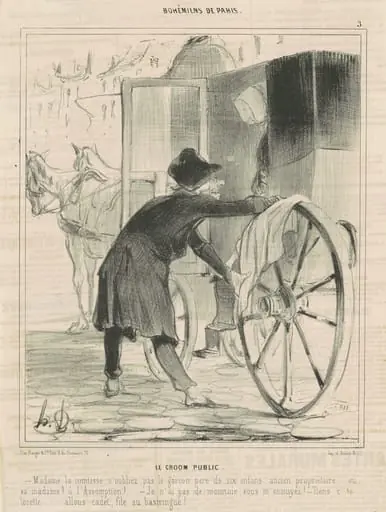
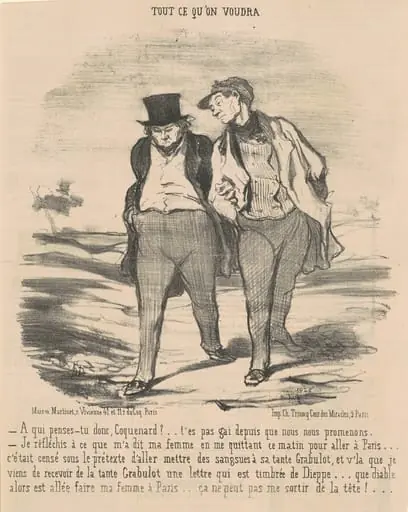
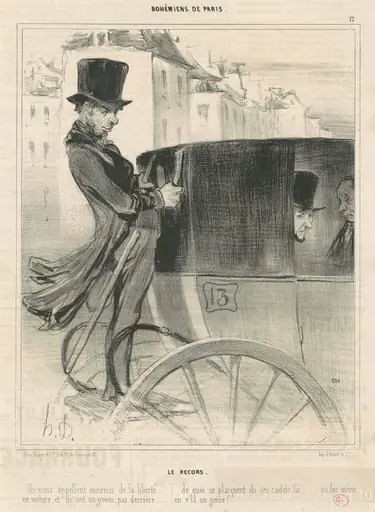
This lithograph by Honoré Daumier captures a moment of chaotic energy on a horse-drawn carriage, featuring two jesters and a coachman in animated motion.
This lithograph by Honoré Daumier captures a moment of chaotic energy on a horse-drawn carriage, featuring two jesters and a coachman in animated motion. Rendered in stark black ink, the composition relies on rapid, expressive lines that suggest movement rather than define form. The scene, drawn with the spontaneity of a sketch, reflects Daumier’s frequent engagement with urban life through print media.
Subject & Meaning
The figures—a coachman gesturing wildly and two jesters leaning in with exaggerated expressions—suggest a moment of heated exchange, possibly a dispute or a jest gone too far. Daumier uses theatricality to hint at deeper social tensions, transforming a mundane street scene into a commentary on class, performance, and authority in 19th-century Paris.
Technique & Style
Daumier employs loose, scratchy ink lines to convey motion and emotion, avoiding detail in favor of rhythmic suggestion. The forms are simplified, faces distorted for comic effect, and the carriage reduced to a few swift strokes. This economy of line, typical of his newspaper illustrations, prioritizes immediacy and emotional resonance over precision.
History & Provenance
Created during Daumier’s prolific period contributing to satirical journals like La Caricature and Le Charivari, this print was likely published in the 1830s or 1840s. Such works were mass-produced and widely circulated, reaching a broad public audience. Their ephemeral nature means few original impressions survive in pristine condition.
Context
Daumier’s prints responded to the political and social climate of post-revolutionary France, where censorship was frequent but satire thrived in coded forms. By depicting common figures—coachmen, jesters, bourgeois patrons—he exposed the absurdities of daily life under the July Monarchy, using humor as a subtle tool of critique.
Legacy
Daumier’s approach to lithography influenced generations of illustrators and cartoonists by demonstrating how minimal line work could convey complex narratives. His ability to merge social observation with expressive form helped bridge fine art and popular media, laying groundwork for modern editorial illustration and graphic storytelling.
Artist & collection

Artist
Honoré-Victorin Daumier was a French painter, sculptor, and printmaker, whose many works offer commentary on the social and political life in France, from the Revolution of 1830 to the fall of the Second French Empire in 1870.