Artwork
Comme quoi l'emprisonnement cellulaire...
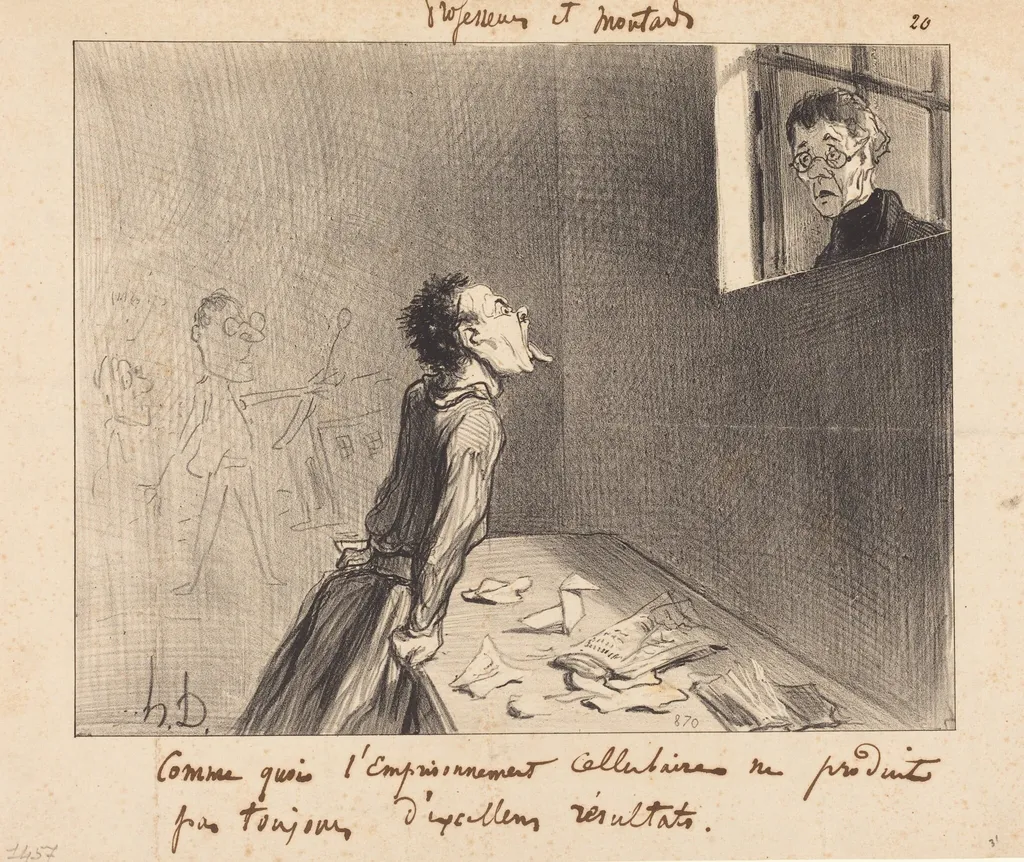
Comme quoi l'emprisonnement cellulaire... is an ink print by the Romanticist artist Honoré Daumier. It dates from 1846 and is held in the collection of the National Gallery of Art. Created in 1846, the lithograph *Comme quoi l'emprisonnement cellulaire.
About this work
Overview
A crooked portrait and a heap of crumpled paper complete the scene, conveying a sense of confinement and fatigue.
Created in 1846, the lithograph *Comme quoi l'emprisonnement cellulaire...* is a work by French printmaker Honoré Daumier. Executed as a single‑sheet print, it presents a dimly lit interior populated by two figures, one slumped in a chair and another partially rendered in light strokes. A crooked portrait and a heap of crumpled paper complete the scene, conveying a sense of confinement and fatigue.
Subject & Meaning
The composition juxtaposes a seated, weary man with a standing figure whose outline remains unfinished, suggesting a tension between resignation and unresolved action. The accompanying French caption adopts a sarcastic tone, mocking the conditions of incarceration. Through this visual and textual irony, Daumier critiques the oppressive structures of his time, hinting at broader social frustration.
Technique & Style
Daumier employed the lithographic process, drawing directly onto a limestone plate with greasy ink. The resulting print displays loose, expressive lines and stark contrasts between shadowed areas and illuminated strokes. The unfinished rendering of the standing figure exemplifies Daumier’s willingness to leave portions of the image deliberately vague, heightening the emotional immediacy of the scene.
History & Provenance
The print emerged during a period of intense political turbulence in France, between the 1830 Revolution and the eventual collapse of the Second Empire in 1870. Daumier, active in satirical journals such as *La Caricature* and *Le Charivari*, produced the work as part of his broader campaign against monarchical and clerical authority. Its early ownership records trace back to private collections of 19th‑century French art patrons.
Context
Daumier’s republican sympathies informed much of his output, and this lithograph reflects his engagement with contemporary debates over liberty and justice. By focusing on a cramped, shadowy interior, he alludes to the literal and figurative prisons imposed by authoritarian regimes, resonating with the broader public discourse on civil rights during the mid‑19th century.
Artist & collection

Artist
Honoré-Victorin Daumier was a French painter, sculptor, and printmaker, whose many works offer commentary on the social and political life in France, from the Revolution of 1830 to the fall of the Second French Empire in 1870.









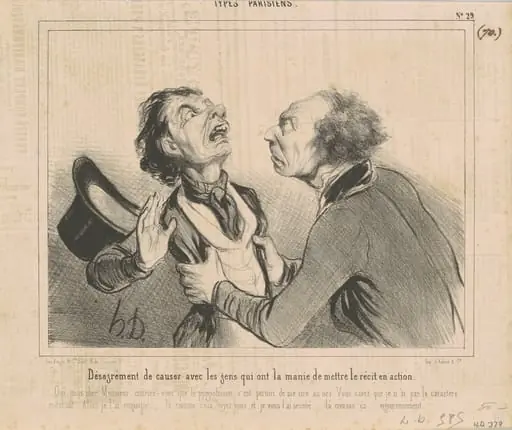 Désagrément de causer avec les gens...
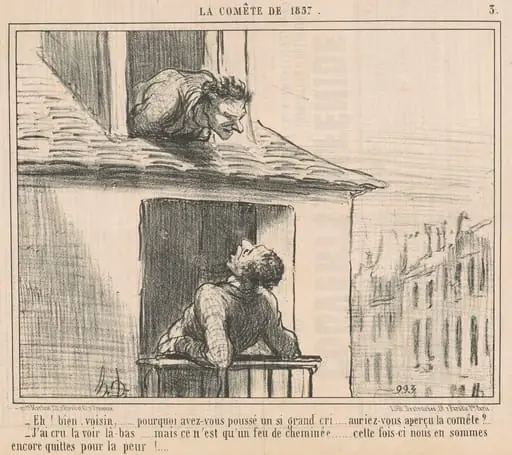 Eh! Bien, voisin ... pourquoi avez-vous poussé ...
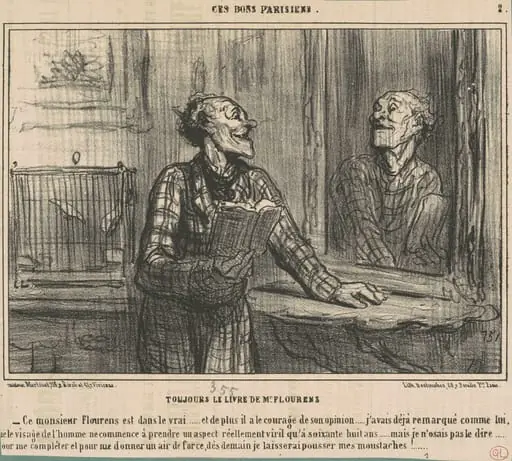 Toujours le livre de M. Flourens
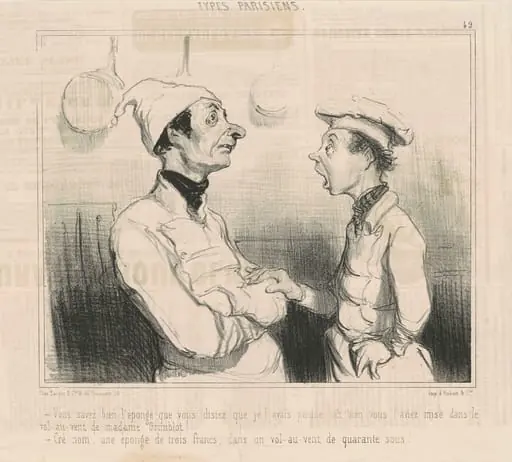 Vous savez bien l'éponge que vous disiez...
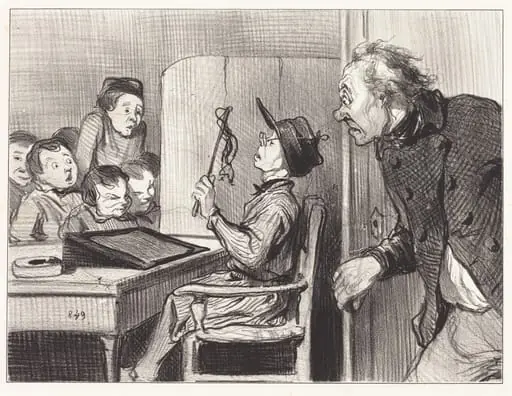 Attends... j'te vas en donner... du maitre d'école
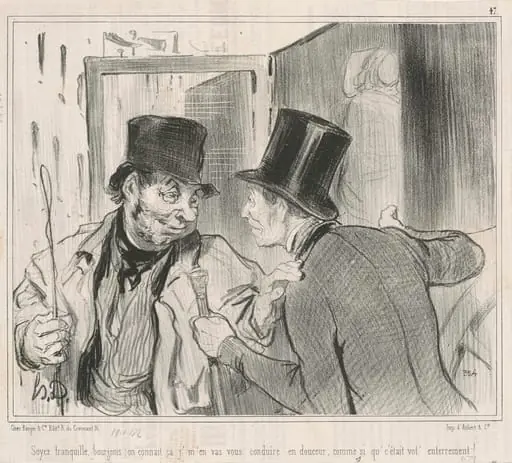 Soyez tranquille bourgeois, on connait
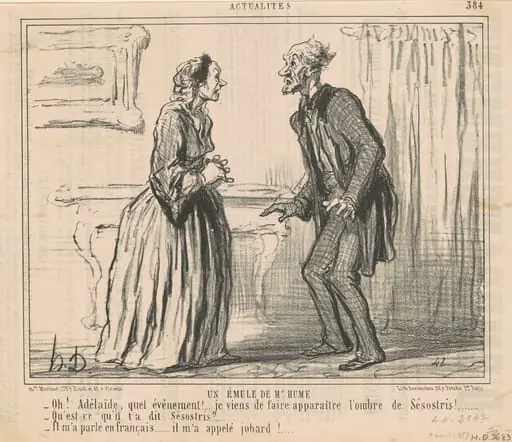 Un émule de Mr Hume
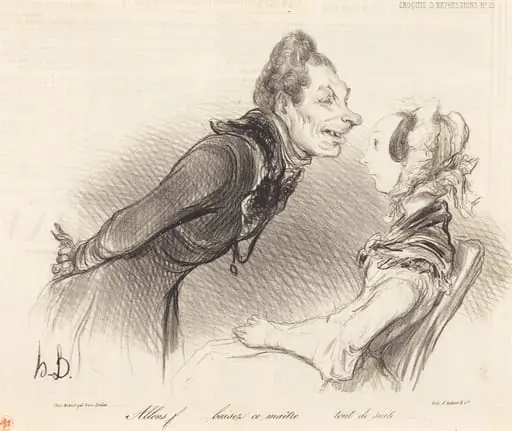 Allons... baisez ce maitre... tout de suite...
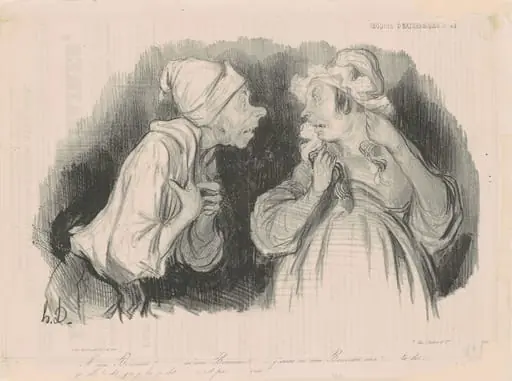 M'ame Bonneau... J'aime m'ame Bonneau moi!...
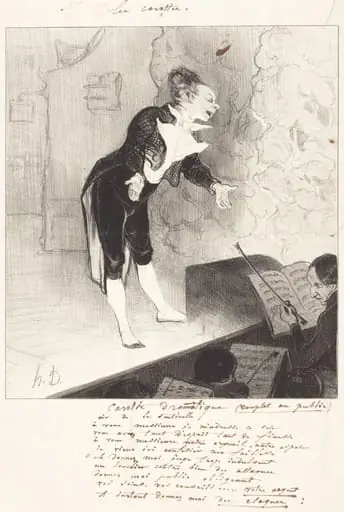 Carotte dramatique