Artwork
Comment ... c'est-t'y dieu possible! ...
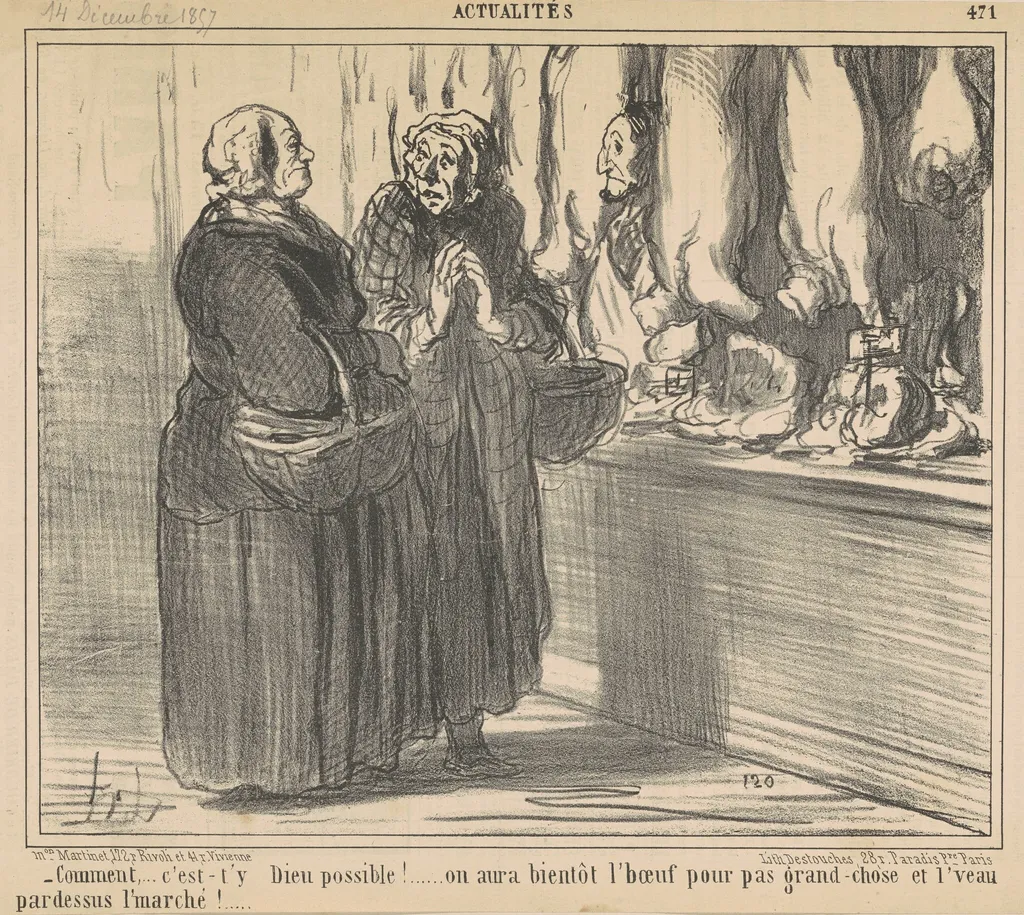
Comment ... c'est-t'y dieu possible! ... is an ink print by the Impressionist artist Honoré Daumier. It dates from 1857 and is held in the collection of the National Gallery of Art.
About this work
Overview
This lithograph by Honoré Daumier captures a moment inside a Parisian butcher’s shop, rendered with sharp tonal contrasts and economical linework. Two men in dark coats stand before a counter piled with cuts of meat, their postures suggesting quiet exchange. The scene avoids theatricality, instead presenting an unembellished slice of urban commerce in mid-19th century France.
Subject & Meaning
The image portrays ordinary patrons engaged in the routine of meat procurement, reflecting the daily rhythms of working-class life. The figures’ subdued expressions and the butcher’s implied presence behind the counter suggest transactional familiarity rather than drama. Daumier treats the scene with observational neutrality, emphasizing the dignity of mundane labor without sentimentality.
Technique & Style
Daumier employed lithography to achieve rapid, expressive lines and strong chiaroscuro effects. His use of dense shadow and sparse highlights defines form with minimal strokes, enhancing the texture of meat and fabric alike. The composition is tightly framed, focusing attention on the counter and the figures’ gestures, characteristic of his journalistic approach to visual storytelling.
History & Provenance
Its survival in museum collections reflects its status as a document of urban realism rather than fine art for elite collectors.
Created during Daumier’s prolific period producing social commentary for illustrated periodicals, this print likely appeared in a weekly journal around the 1860s. It was part of a broader series documenting Parisian street life, distributed widely among the middle class. Its survival in museum collections reflects its status as a document of urban realism rather than fine art for elite collectors.
Context
In mid-19th century Paris, butcher shops were vital social nodes, especially in working-class neighborhoods. Daumier’s focus on such spaces aligned with his interest in the lives of ordinary citizens amid rapid urbanization. His prints often subtly critiqued class structures, though this image avoids overt satire, favoring quiet observation over polemic.
Legacy
Daumier’s lithographs, including this one, influenced later realist and modernist artists by demonstrating how everyday scenes could carry psychological and social weight. His ability to convey narrative through gesture and light, without dialogue or embellishment, set a precedent for visual storytelling in print media and 20th-century graphic art.
Artist & collection
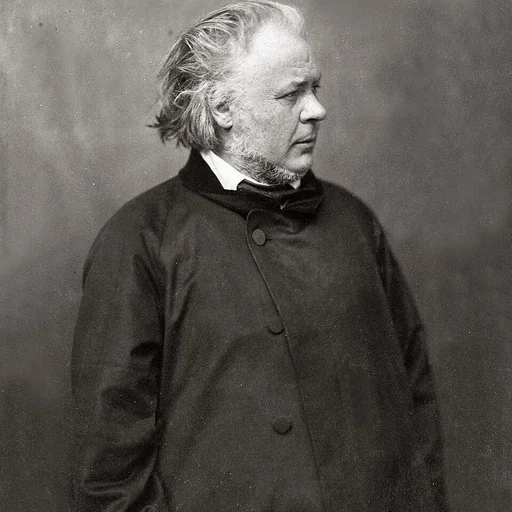
Artist
Honoré-Victorin Daumier was a French painter, sculptor, and printmaker, whose many works offer commentary on the social and political life in France, from the Revolution of 1830 to the fall of the Second French Empire in 1870.









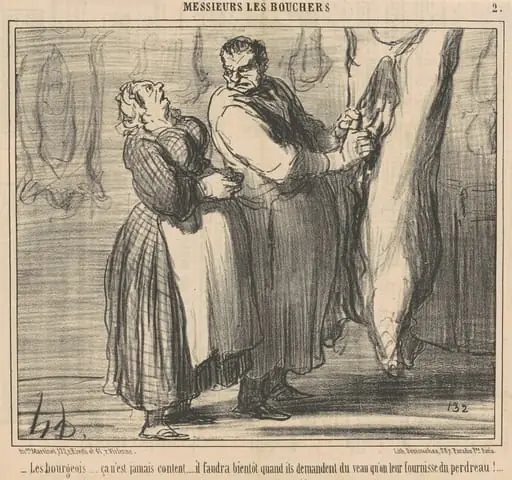 Les bourgeois ...
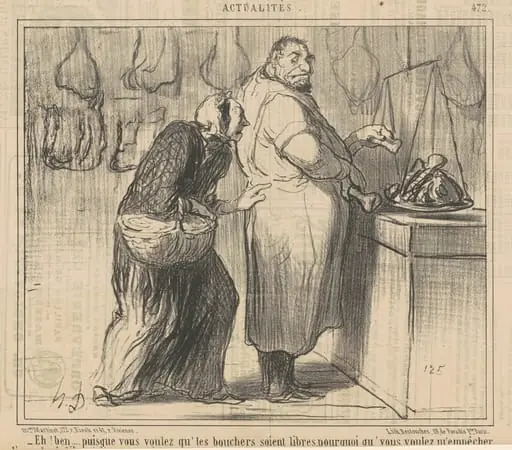 Eh! Ben ... puisque vous voulez qu' les bouchers ...
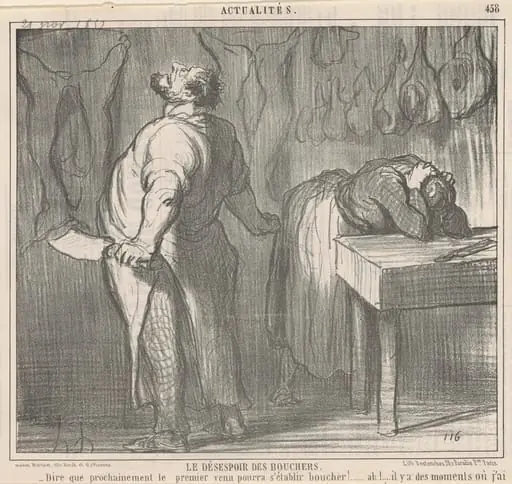 Le désespoir des bouchers
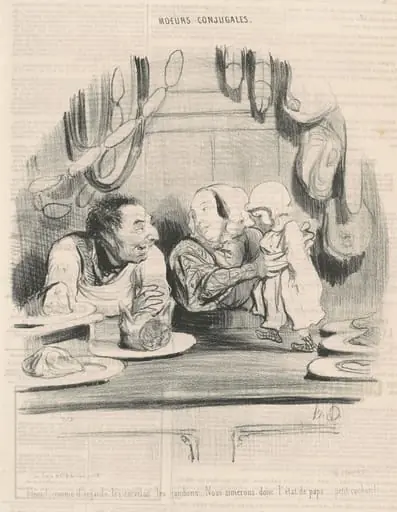 Hein! comme il regarde les cervelas...
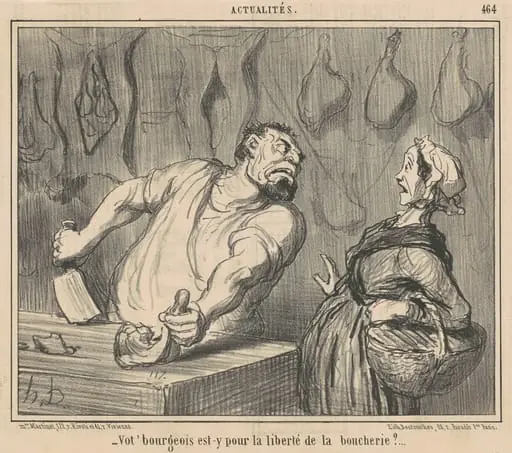 Vot' Bourgeois est-y pour liberté de la boucherie?
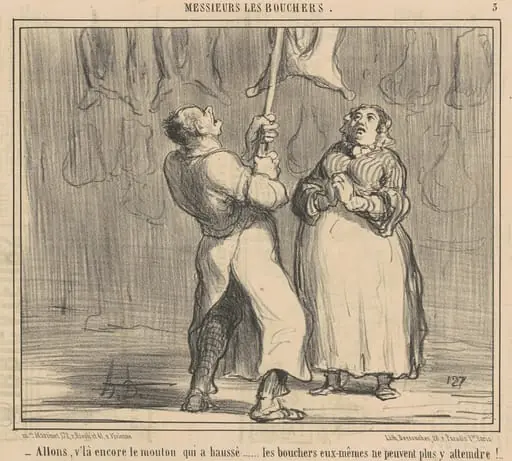 Allons, v'la encore le mouton qui a haussé
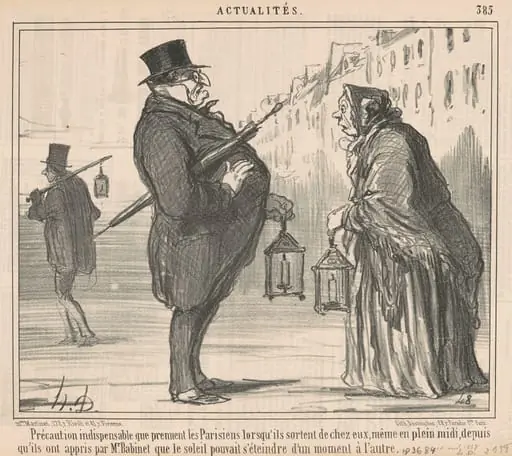 Précaution indispensable que prennent les Parisiens ...
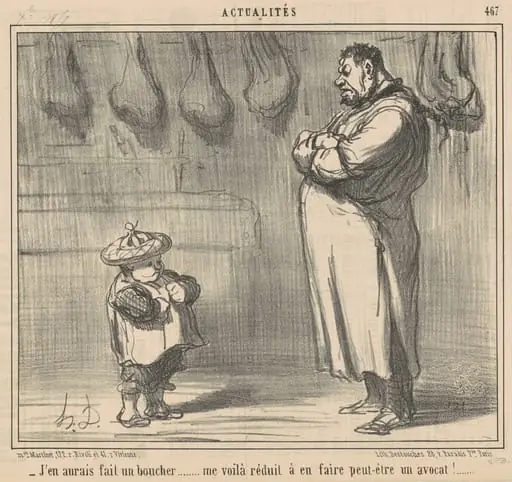 J'en aurais fait un boucher ...