Artwork
Costumes russes
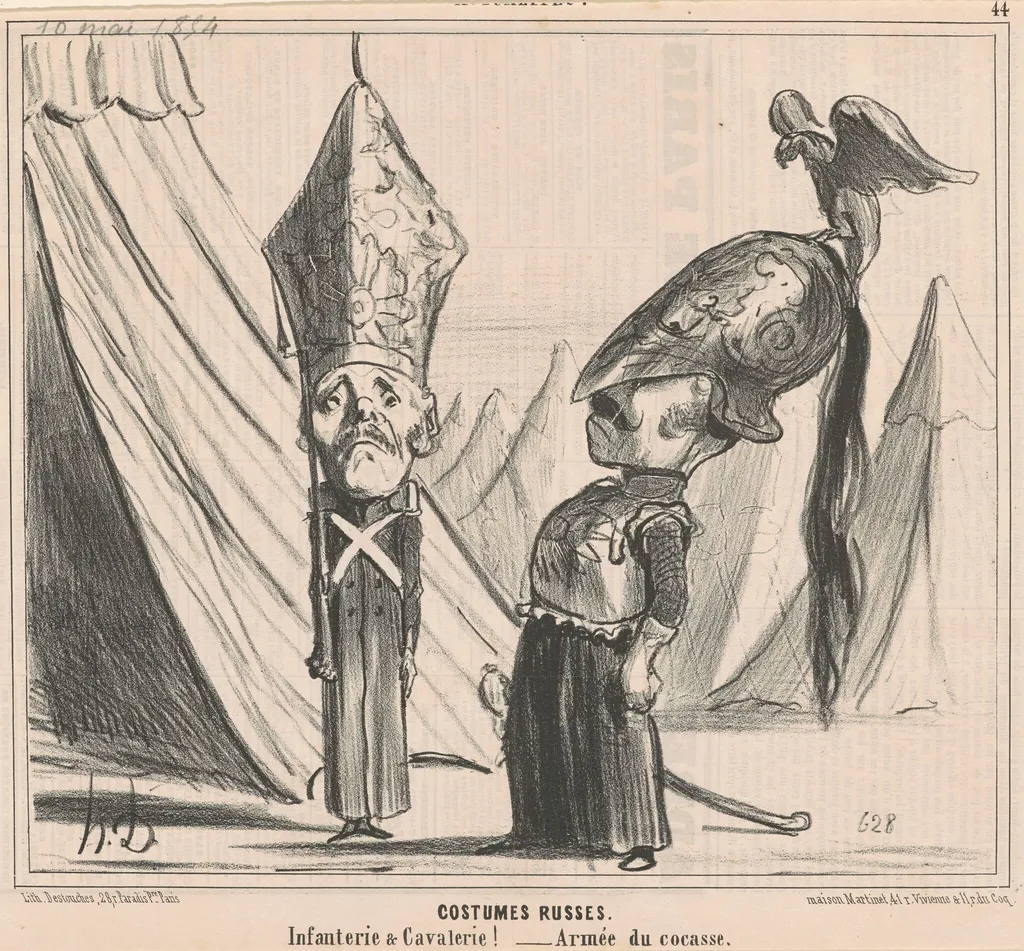
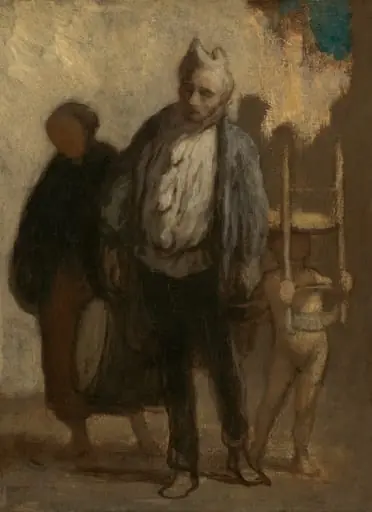
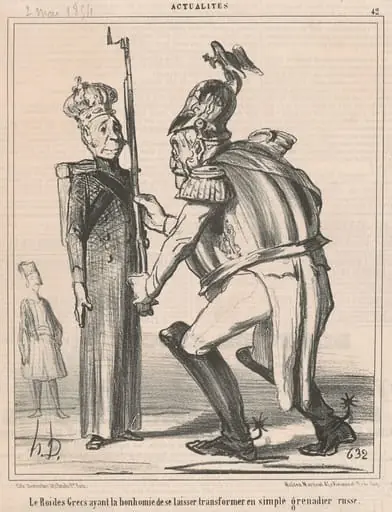
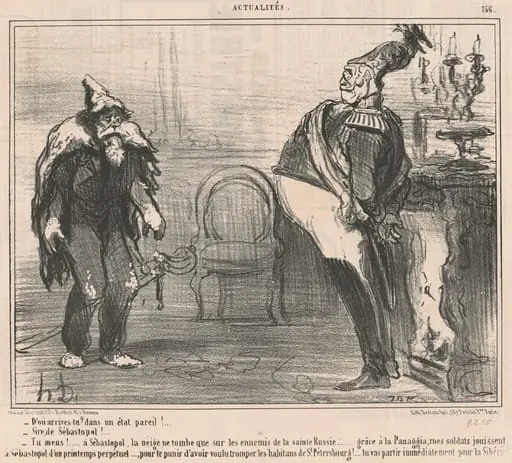
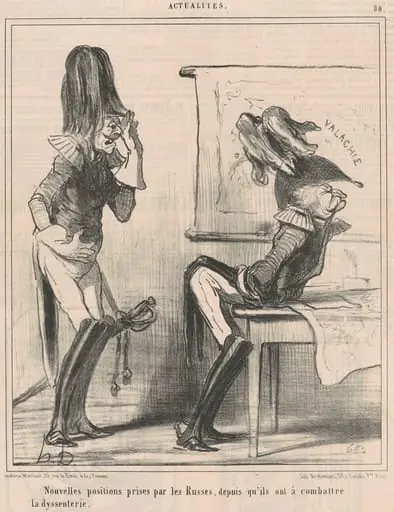
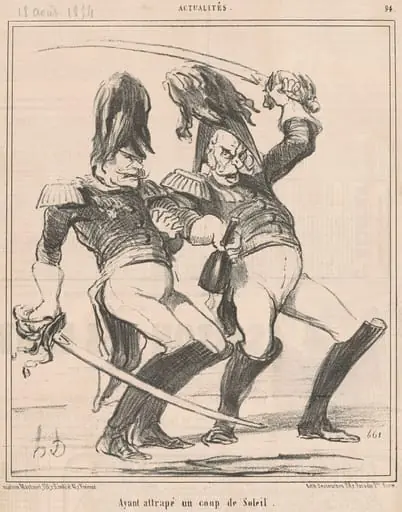
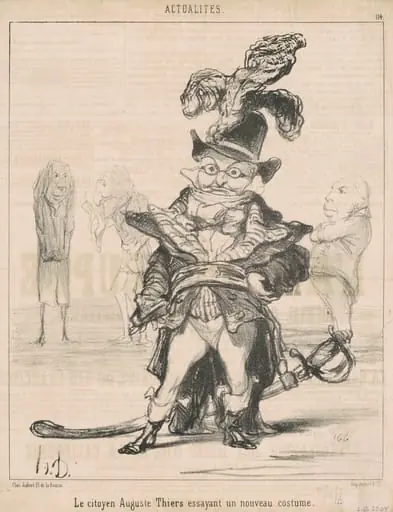
Costumes russes is an ink print by the Impressionist artist Honoré Daumier. It dates from 1854 and is held in the collection of the National Gallery of Art.
About this work
Overview
The composition draws attention to the excessive decoration of the uniforms, creating a visual commentary on their ostentatious nature.
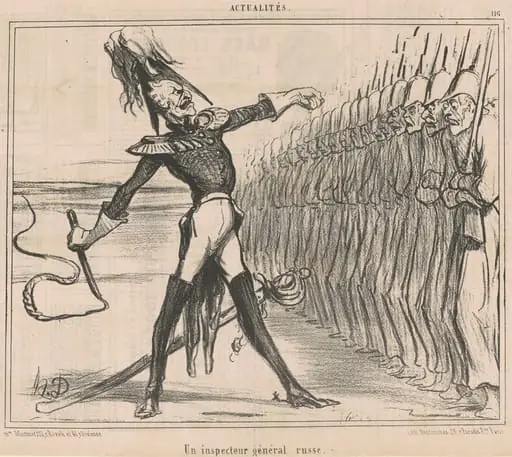
Honoré Daumier’s lithograph Costumes Russes presents a pair of figures dressed in over‑elaborate military attire. Rendered in black‑and‑white line work, the image juxtaposes a rigidly upright figure in a tall, highly ornamented hat with a second figure whose massive helmet dominates his silhouette. The composition draws attention to the excessive decoration of the uniforms, creating a visual commentary on their ostentatious nature.
Subject & Meaning
The two characters are rendered in a satirical manner, their exaggerated uniforms serving as a critique of the pomp associated with military dress. By inflating the scale of hats and helmets, Daumier underscores the absurdity he perceived in the fashion of the era, suggesting that such regalia may mask rather than convey genuine authority.
Technique & Style
Executed as a lithograph, the work relies on the artist’s ability to manipulate stone or metal plates to produce fine, repeatable lines. Daumier’s handling of contrast and detail—particularly in the intricate patterns of the headgear—demonstrates his skill in using the medium to emphasize texture and exaggeration without the use of colour.
History & Provenance
Created during Daumier’s prolific period of social and political caricature, the print reflects his ongoing interest in contemporary French life. While specific ownership records are limited, the work has appeared in several 19th‑century print collections and remains documented in catalogues of Daumier’s graphic oeuvre.
Context
The lithograph emerges from a mid‑19th‑century French milieu in which military uniforms were both a symbol of national pride and a subject of public scrutiny. Daumier, known for his satirical depictions of authority figures, employed this image to engage with broader debates about militarism and the visual language of power.
Artist & collection
Artist
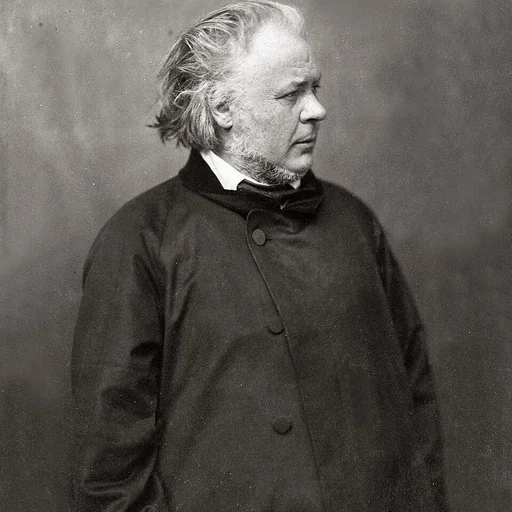
Honoré-Victorin Daumier was a French painter, sculptor, and printmaker, whose many works offer commentary on the social and political life in France, from the Revolution of 1830 to the fall of the Second French Empire in 1870.