Artwork
Deux Avocats
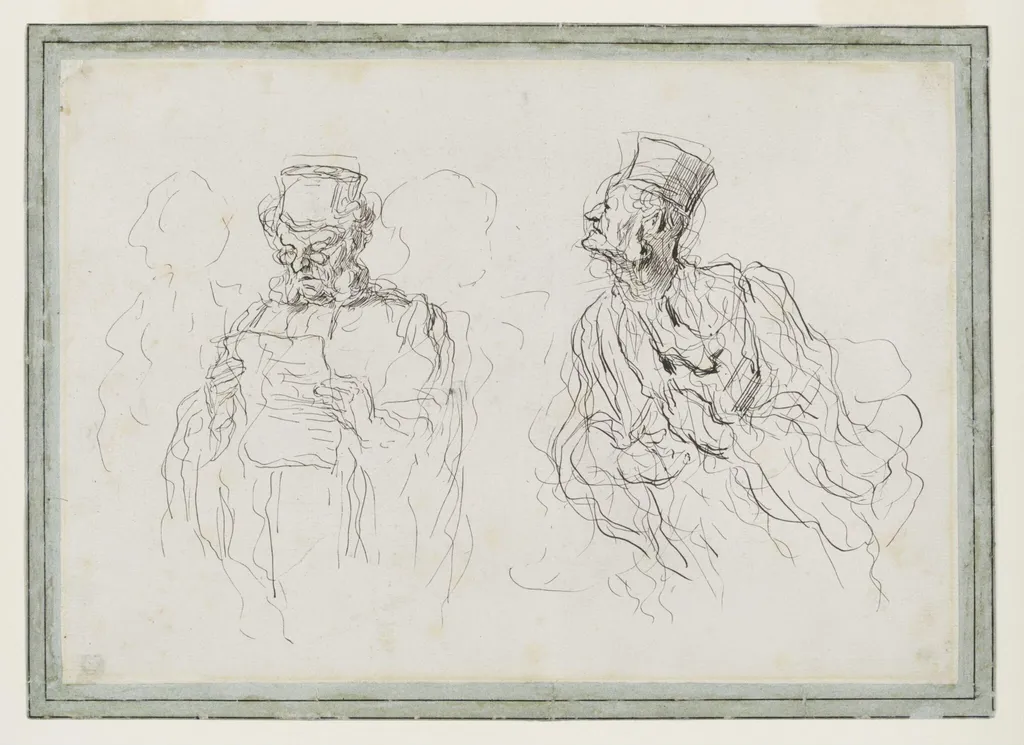
Deux Avocats is a drawing by the Impressionist artist Honoré Daumier. It dates from 1865 and is held in the collection of the Victoria and Albert Museum.
About this work
Overview
Executed with swift, confident strokes, it reflects the artist’s deep familiarity with courtroom dynamics, gained through years of observation.
This ink drawing by Honoré Daumier captures two lawyers in a moment of quiet collusion. Executed with swift, confident strokes, it reflects the artist’s deep familiarity with courtroom dynamics, gained through years of observation. Daumier did not aim for portraiture but instead distilled the essence of legal figures into archetypal forms, revealing his critical view of their conduct and demeanor.
Subject & Meaning
The two figures, dressed in formal legal attire, are engaged in what appears to be a secretive exchange. Their postures suggest mutual complicity rather than professional debate. Daumier used this scene to critique the perceived self-importance and moral ambiguity within the legal system, portraying lawyers not as arbiters of justice but as actors in a theater of power and privilege.
Technique & Style
Daumier employed rapid pen and ink lines with dense cross-hatching to model form and suggest shadow, creating volume without detail. The sketch’s energy comes from its spontaneity—strokes are economical yet expressive, conveying movement and tension. The absence of background focuses attention on the figures’ gestures and facial expressions, amplifying the satirical tone.
History & Provenance
Following his 1831 imprisonment for political caricature, Daumier turned to the law courts as a recurring subject. He made on-site sketches of proceedings, later refining them into generalized types. This drawing belongs to a series produced in the 1840s and 1850s, when his legal satires became a staple of his graphic output, circulated in journals and private collections.
Context
In mid-19th-century France, the judiciary was widely seen as an institution resistant to reform, entangled in bureaucracy and elitism. Daumier’s drawings responded to public skepticism, using humor and exaggeration to expose institutional flaws. His work resonated with a growing middle class that distrusted established authorities, including the legal profession.
Legacy
Daumier’s courtroom sketches influenced later generations of social satirists and illustrators, establishing a visual language for critiquing institutional power. His ability to reduce complex social roles to essential gestures and expressions set a precedent for modern editorial cartooning, grounding satire in acute observation rather than overt caricature.
Artist & collection

Artist
Honoré-Victorin Daumier was a French painter, sculptor, and printmaker, whose many works offer commentary on the social and political life in France, from the Revolution of 1830 to the fall of the Second French Empire in 1870.









 Untitled
 Study of Heads (recto)
 Clasped hands, and a sketch of Chinese figures
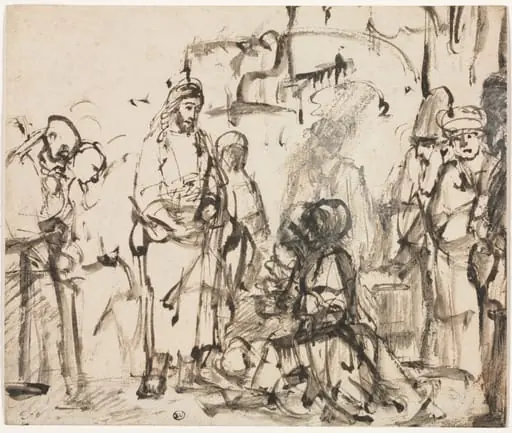 The Meeting of Christ with Martha and Mary after the Death of Lazarus
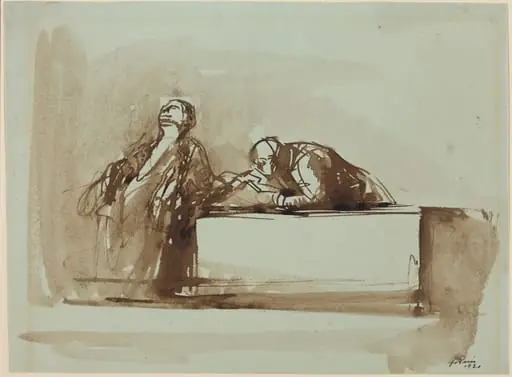 Men of Justice
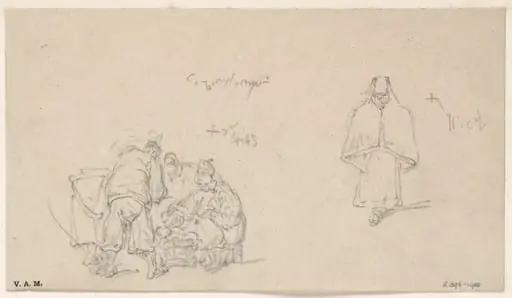 A group of Chinese men, and a Macanese woman
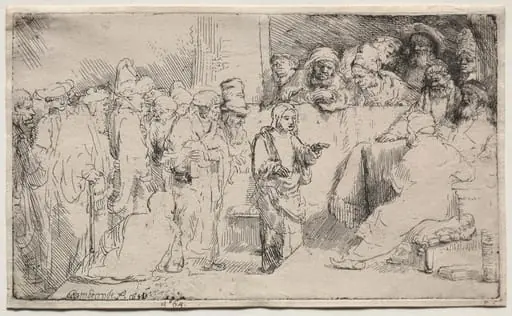 Christ Disputing with the Doctors: A Sketch
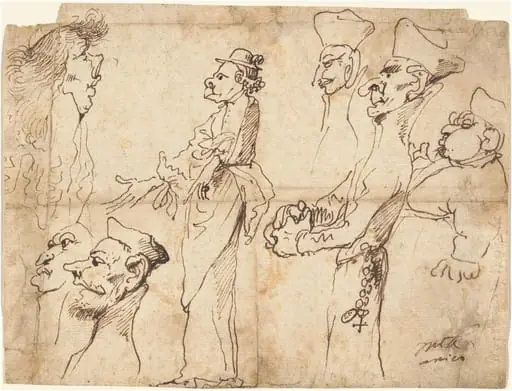 Caricatures of Clerics and Priests
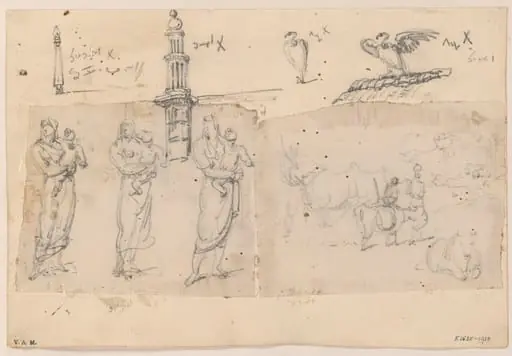 Indian figures, cattle, vultures and minarets