Artwork
Indian figures, cattle, vultures and minarets
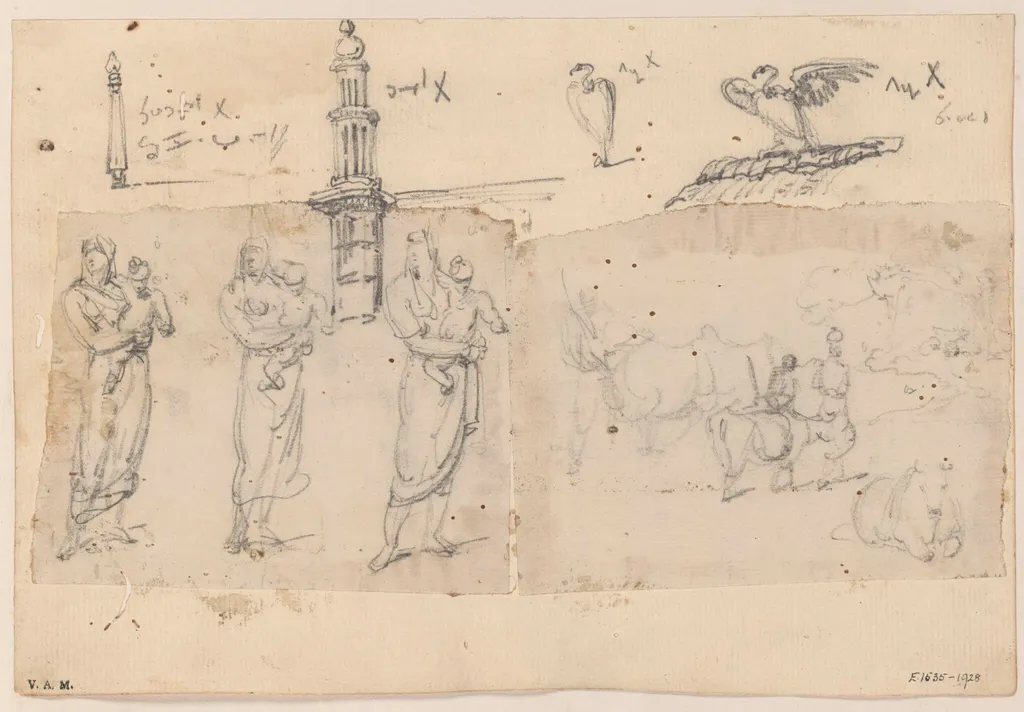
Indian figures, cattle, vultures and minarets is a drawing by the Romanticist artist George Chinnery. It dates from 16 and is held in the collection of the Victoria and Albert Museum. This composite drawing, executed on three joined sheets of paper, captures a layered landscape of daily life in early 19th-century India.
About this work
Overview
This composite drawing, executed on three joined sheets of paper, captures a layered landscape of daily life in early 19th-century India.
This composite drawing, executed on three joined sheets of paper, captures a layered landscape of daily life in early 19th-century India. George Chinnery recorded a scene where figures, animals, and architecture coexist in a single composition. The work reflects his practice of sketching on location, combining observational detail with a sense of atmospheric space. The medium is pencil and ink on paper, typical of his field studies during his time in South Asia.
Subject & Meaning
The scene portrays Indian women carrying a child, men tending cattle, and distant minarets rising above the horizon. Vultures perch or glide overhead, suggesting the presence of death and decay within the natural order. These elements are not arranged hierarchically but as interwoven parts of a lived environment. The drawing conveys no overt narrative, instead offering a quiet documentation of routine existence amid architectural and ecological markers of the region.
Technique & Style
Chinnery employed loose, fluid lines in pencil and ink to suggest form without heavy definition. Figures are rendered with minimal detail, emphasizing posture and movement rather than individual identity. The minarets are indicated with simple verticals, while the vultures are quick, angular strokes. The composition spans multiple sheets, joined to accommodate the expansive view, reflecting a pragmatic approach to capturing large-scale scenes during travel.
History & Provenance
Created during Chinnery’s residence in India between 1803 and 1852, the drawing stems from his extensive travels across the subcontinent. It was likely made in or near Calcutta, where he settled for much of his life. The work entered the Victoria and Albert Museum’s collection through established channels of British colonial art acquisition, preserved as part of a broader archive of his Indian sketches.
Context
Chinnery worked as a British artist in colonial India, producing sketches for personal use and occasional patrons. His drawings differ from official imperial imagery by avoiding romanticization or exoticism. This piece reflects the everyday reality observed by a foreign resident: the coexistence of human activity, domestic animals, religious architecture, and scavenging birds — a common, unidealized sight in 19th-century Indian towns.
Legacy
Chinnery’s Indian drawings, including this one, remain valuable as unfiltered visual records of a period with limited photographic documentation. They offer insight into how a European artist engaged with local life without imposing narrative control. Though not widely exhibited, these works contribute to scholarly understanding of colonial-era visual culture and the role of sketching in cross-cultural observation.
Artist & collection
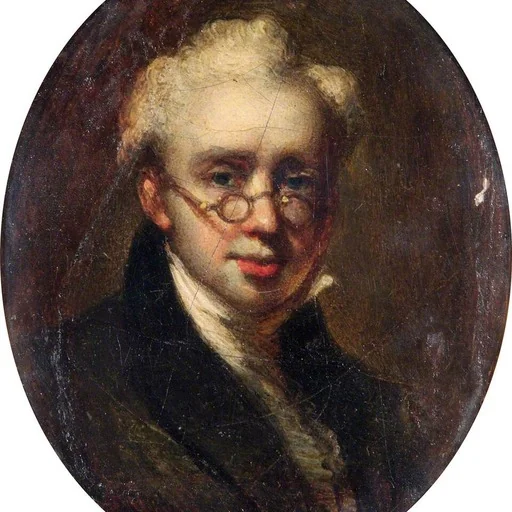
Artist
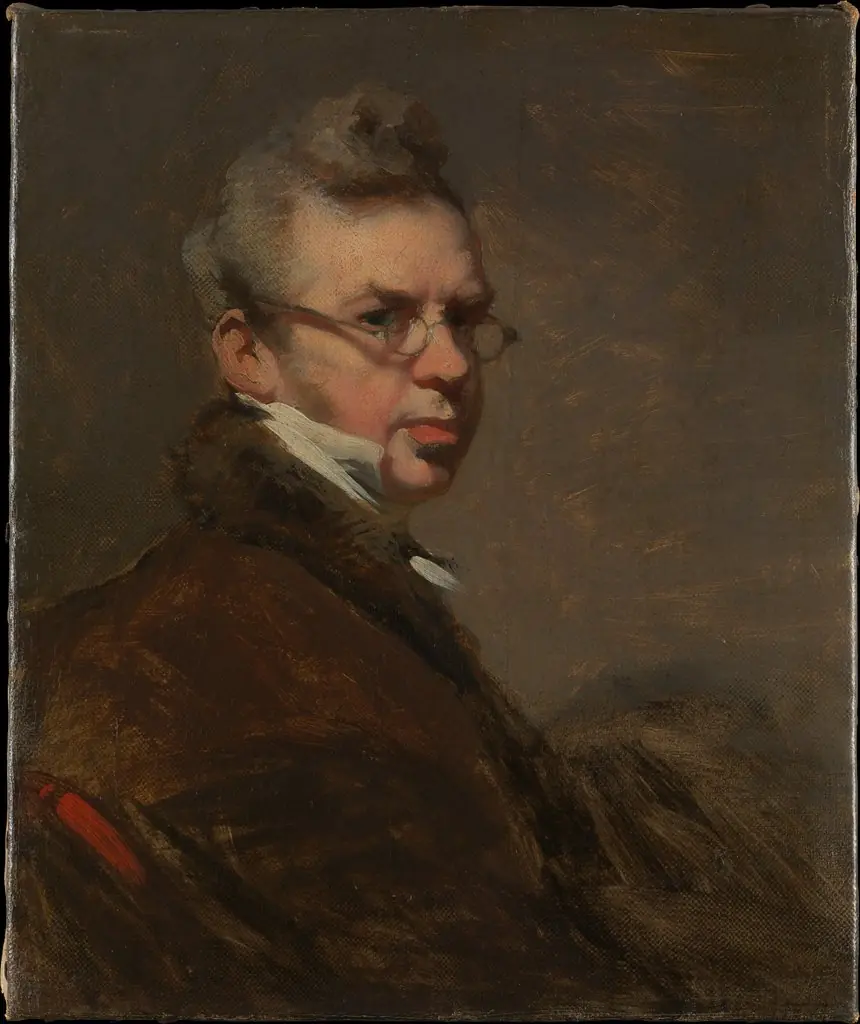
George Chinnery (Chinese: 錢納利; 5 January 1774 – 30 May 1852) was an English painter who spent most of his life in Asia, especially India and southern China.

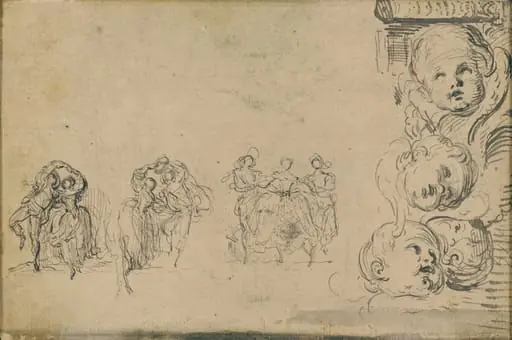 Sketches of Dancers and Heads of Putti
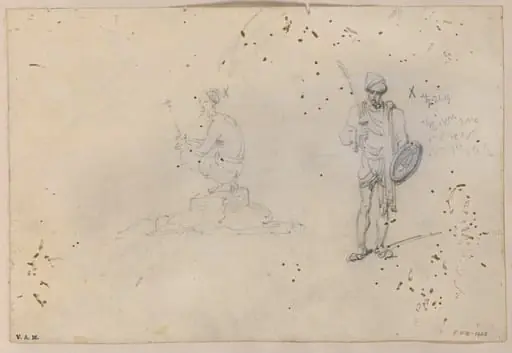 Two drawings of Indian figures
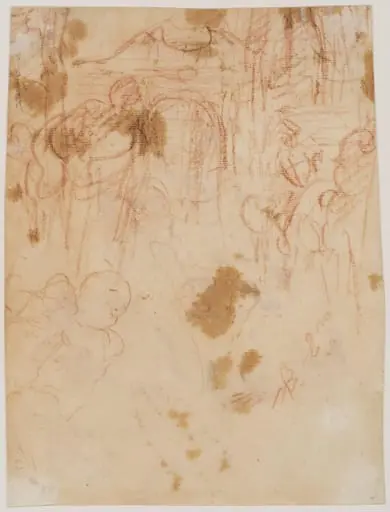 Recto: Rinaldo and Armida; verso: Study for a gateway
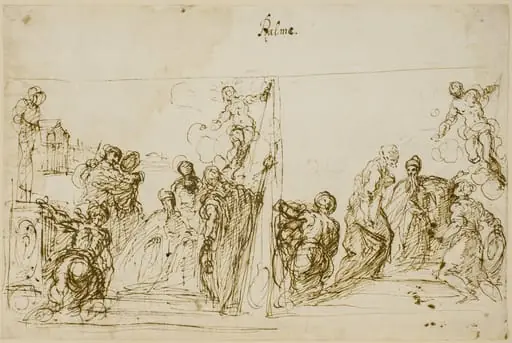 Two composition sketches for the votive painting of Doge Pasquale Cicogna, Sala del Pregadi, Palazzo Ducale, Venice
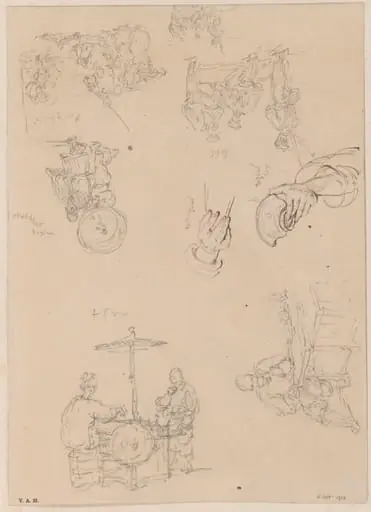 Chinese figures, soldiers, and details of hands
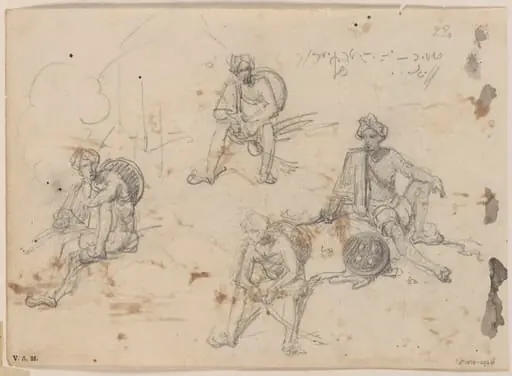 Four drawings of an Indian chowkidar
![Copy After a Historical Painting from the Circle of Paolo Veronese [recto], by Italian 16th Century](https://artifactworldgallery.com/img/italian-16th-century--copy-after-a-historical-painting-from-the-circle-of-paolo-ve--e4944dad2b07ded6-w320.webp) Copy After a Historical Painting from the Circle of Paolo Veronese [recto]
Copy After a Historical Painting from the Circle of Paolo Veronese [recto]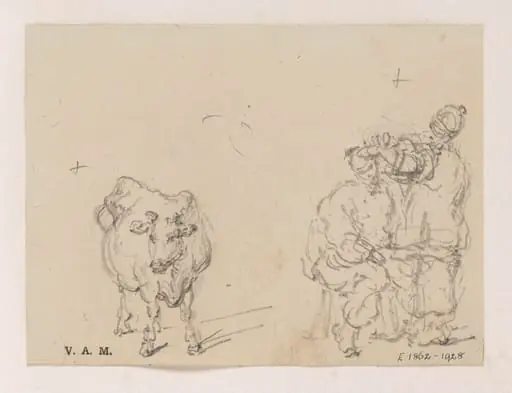 A Chinese barber and customer, and a cow
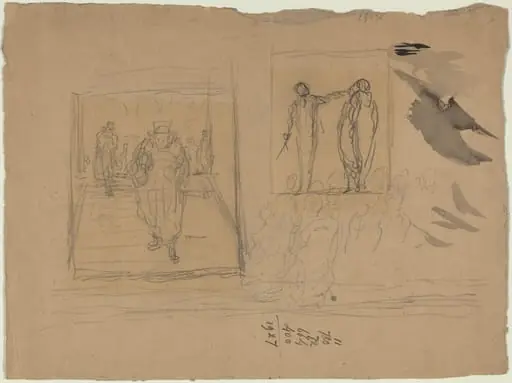 Scene in a Palace of Justice
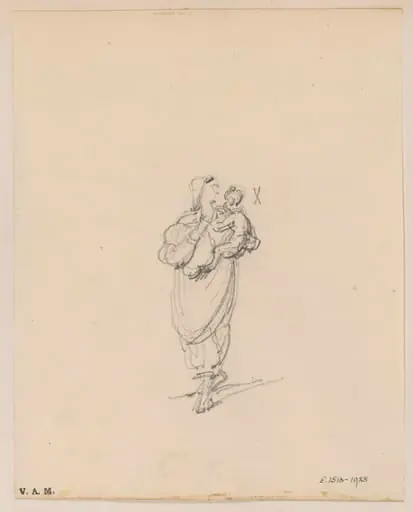 An Indian woman holding a child