Artwork
Emportez donc ça plus loin... impossible de travailler...
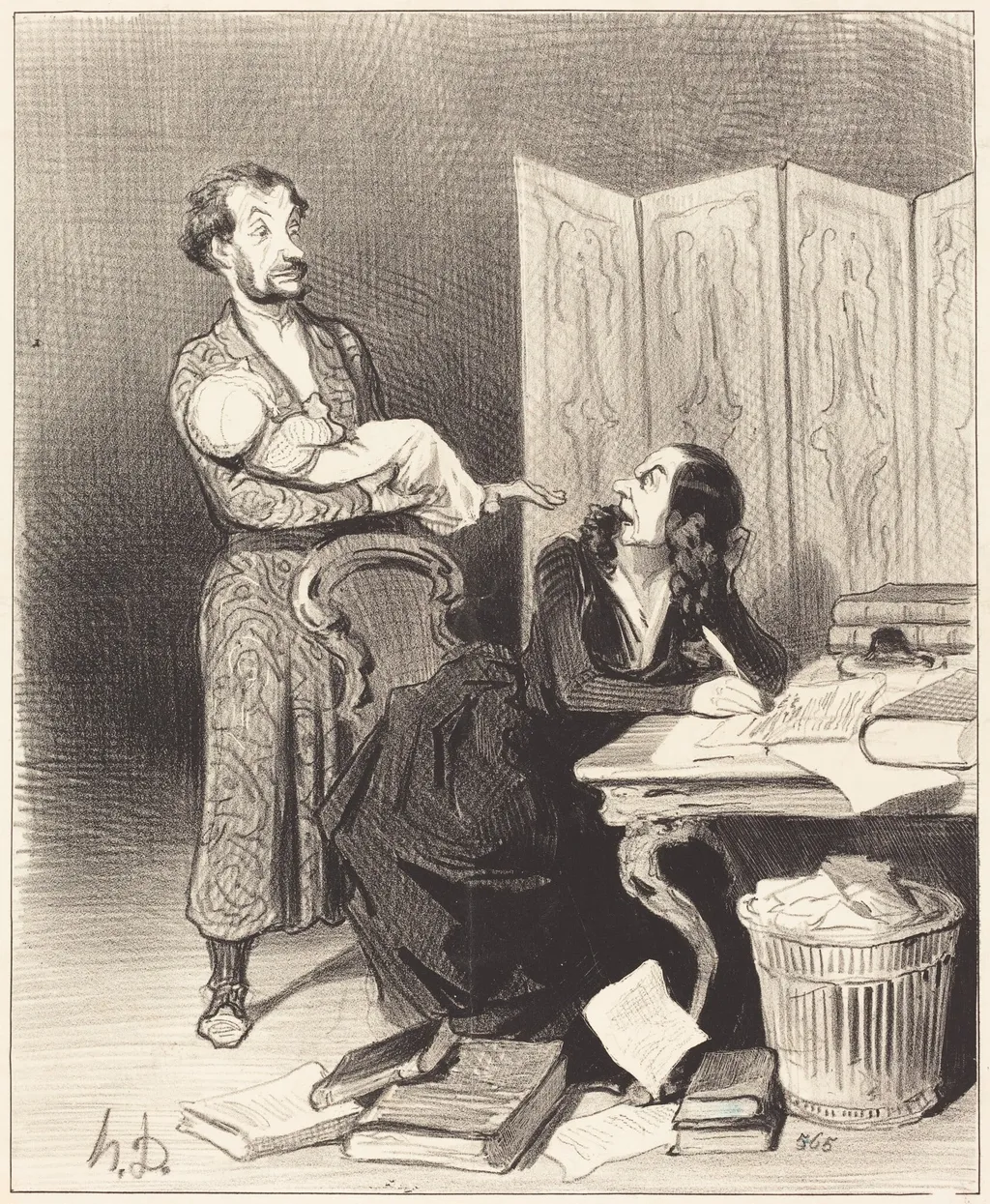
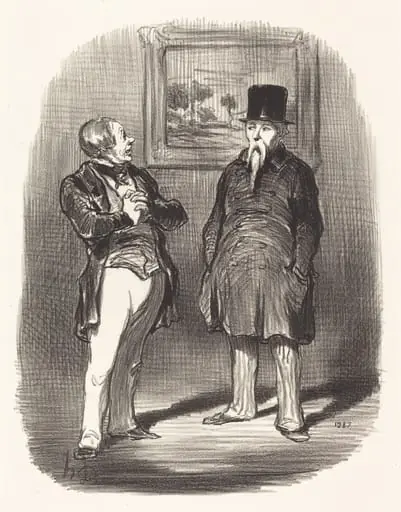
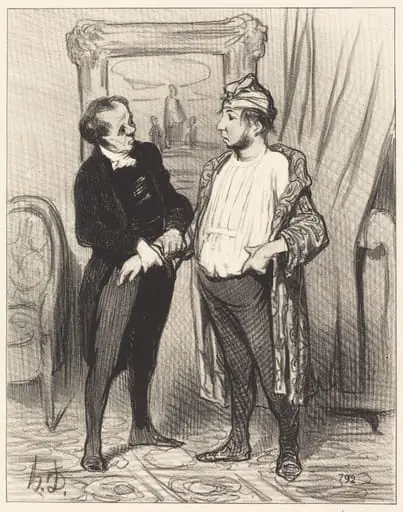
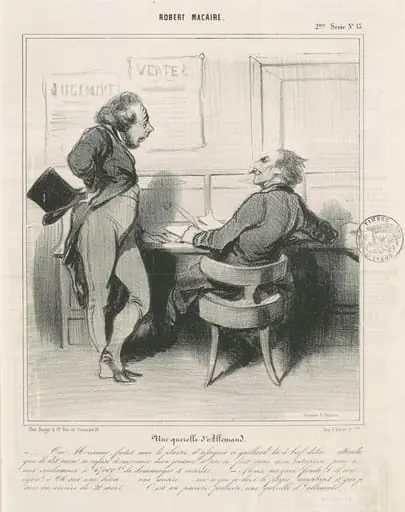
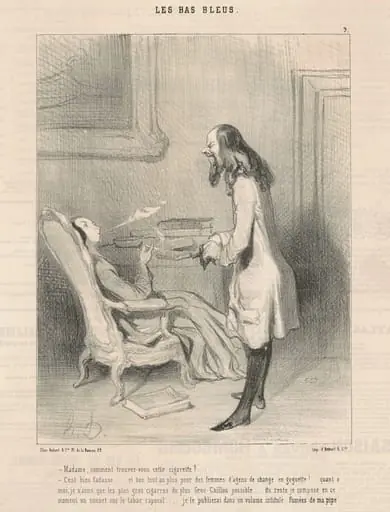
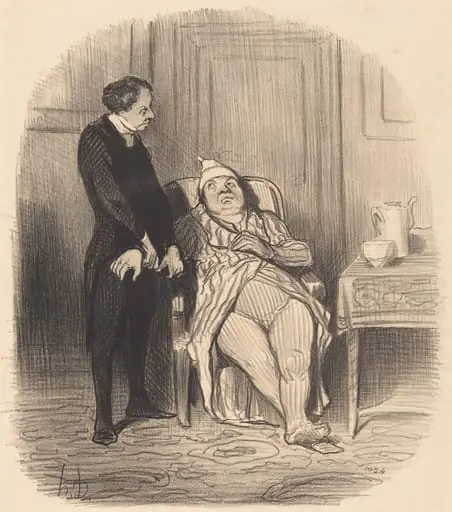
Emportez donc ça plus loin... impossible de travailler... is an ink print by the Romanticist artist Honoré Daumier. It dates from 1844 and is held in the collection of the National Gallery of Art.
About this work
Overview
Executed in the medium of lithography, a technique allowing for rapid, expressive linework, the print was likely produced for a satirical journal.
Created in 1844, this lithograph by Honoré Daumier captures a moment of domestic tension with quiet intensity. Executed in the medium of lithography, a technique allowing for rapid, expressive linework, the print was likely produced for a satirical journal. Daumier’s focus on ordinary life and interpersonal friction reflects his broader interest in the struggles of the middle class amid France’s shifting political landscape.
Subject & Meaning
The scene depicts a man in agitation, gesturing toward cluttered surroundings, while another remains seated, absorbed in paperwork. The title, translating to 'Take that farther away... I can't work...', suggests a complaint about distraction or disorder. Daumier uses this intimate exchange to critique the pressures of intellectual labor and the intrusion of chaos into private life, subtly questioning societal expectations of productivity.
Technique & Style
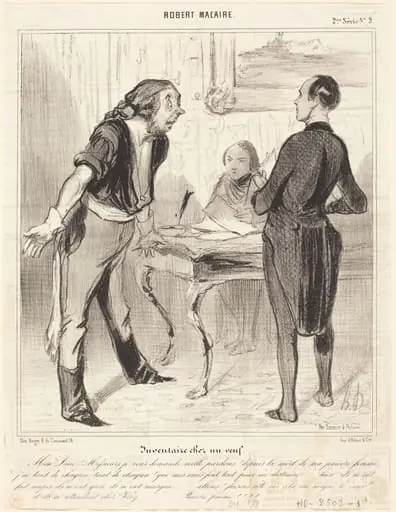
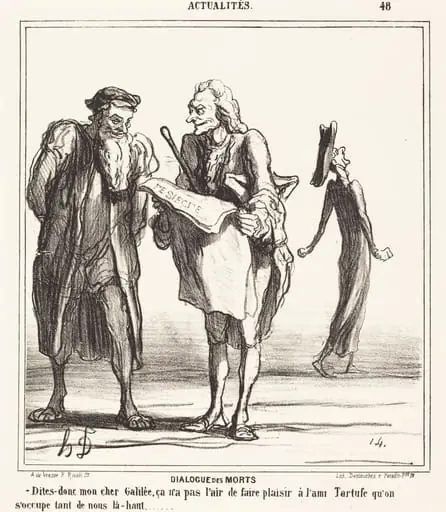
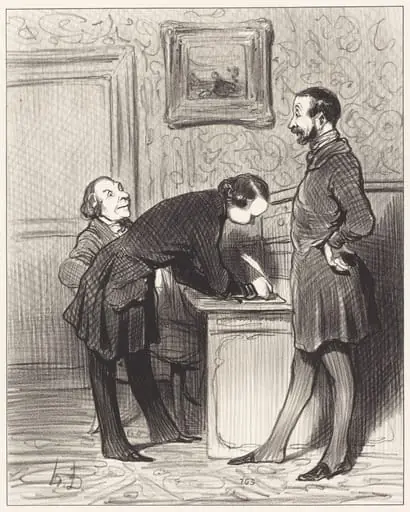
Daumier employed lithography to achieve swift, fluid lines and tonal contrasts, emphasizing gesture over detail. The figures are rendered with economical strokes, their expressions conveyed through posture and facial suggestion rather than fine rendering. The room’s clutter—books, a basket, a wall with faint sketches—is suggested with minimal marks, allowing the viewer’s eye to infer the scene’s tension through composition rather than ornamentation.
History & Provenance
The print emerged during Daumier’s most active period as a political caricaturist, when he regularly contributed to *Le Charivari*. Though not tied to a specific political event, it aligns with his broader body of work critiquing bourgeois life and institutional hypocrisy. Its survival in public collections reflects its recognition as a representative example of 19th-century French social satire, though its early ownership remains undocumented.
Context
In 1844, France was under the July Monarchy, a period marked by censorship and rising tensions between the state and the press. Daumier’s prints navigated these restrictions by focusing on everyday absurdities rather than direct political figures. This work fits within a tradition of domestic satire that used personal friction to mirror broader societal anxieties about order, labor, and intellectual freedom.
Legacy
Daumier’s lithographs, including this one, influenced later generations of illustrators and cartoonists who sought to blend social observation with visual economy. His ability to convey complex human dynamics through minimal means set a precedent for modern graphic storytelling. Though not widely exhibited in his lifetime, his prints gained retrospective recognition as foundational to the evolution of editorial illustration.
Own this work as a print
Artist & collection

Artist
Honoré-Victorin Daumier was a French painter, sculptor, and printmaker, whose many works offer commentary on the social and political life in France, from the Revolution of 1830 to the fall of the Second French Empire in 1870.