Artwork
Tiens... je ne te reconnaissais pas...
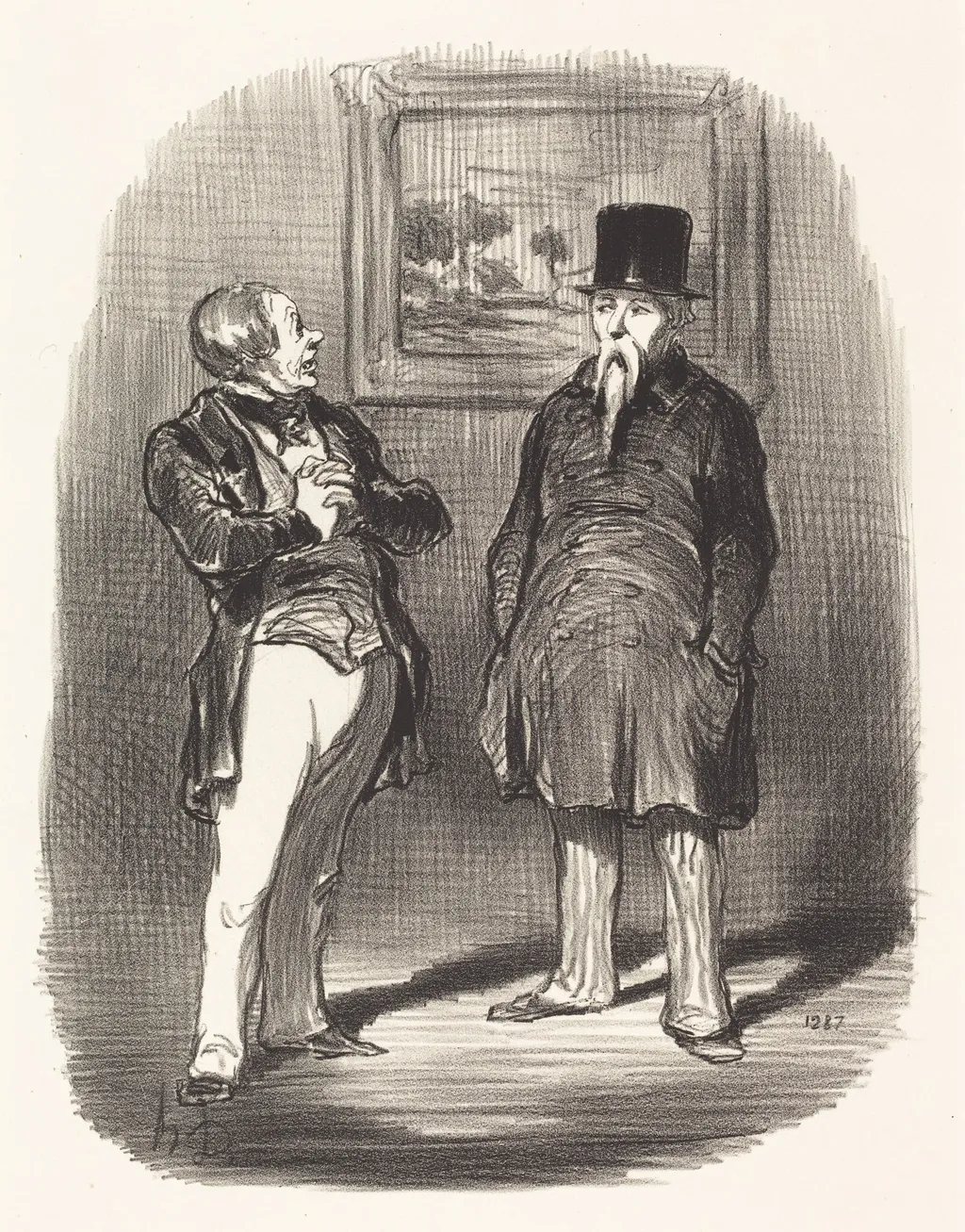
Tiens... je ne te reconnaissais pas... is an ink print by the Romanticist artist Honoré Daumier. It dates from 1848 and is held in the collection of the National Gallery of Art.
About this work
Overview
Created in 1848, this lithograph by Honoré Daumier captures a quiet, tense encounter between two men in a modest interior. Executed during a period of political ferment in France, the work reflects Daumier’s role as a visual critic of social and class dynamics. His use of lithography allowed rapid reproduction, making his observations accessible to a broad public through illustrated periodicals.
Subject & Meaning
The blurred painting behind them hints at fading traditions, reinforcing the theme of shifting identities in post-revolutionary France.
The scene depicts an awkward reunion between two figures: one formally dressed, the other animated and gesturing. The title, translating to 'Why, I didn’t recognize you,' suggests a moment of social dissonance—perhaps between old and new elites, or between appearances and reality. The blurred painting behind them hints at fading traditions, reinforcing the theme of shifting identities in post-revolutionary France.
Technique & Style
Daumier employed swift, expressive lines typical of lithographic sketching, emphasizing gesture over detail. The dim lighting and loose rendering of the background focus attention on the figures’ postures and expressions. The contrast between the sharply defined heads and the indistinct surroundings creates a sense of immediacy, as if capturing a fleeting, unguarded interaction.
History & Provenance
Produced during the early months of the Second Republic, the print likely appeared in a radical publication such as *Le Charivari*, where Daumier regularly published political caricatures. Though its original publication context is unrecorded, its survival in museum collections reflects its status as a representative example of 19th-century French social satire.
Context
In 1848, France was transitioning from monarchy to republic, and public discourse was saturated with debates over class, power, and legitimacy. Daumier’s work responded to these tensions by portraying the subtle performances of social status. His figures often embody the contradictions of a society still clinging to old hierarchies while pretending to embrace equality.
Legacy
Daumier’s lithographs, including this one, influenced later generations of illustrators and cartoonists by demonstrating how everyday scenes could carry political weight. His ability to convey complex social commentary through minimal means helped establish printmaking as a serious medium for public critique, beyond mere entertainment.
Artist & collection
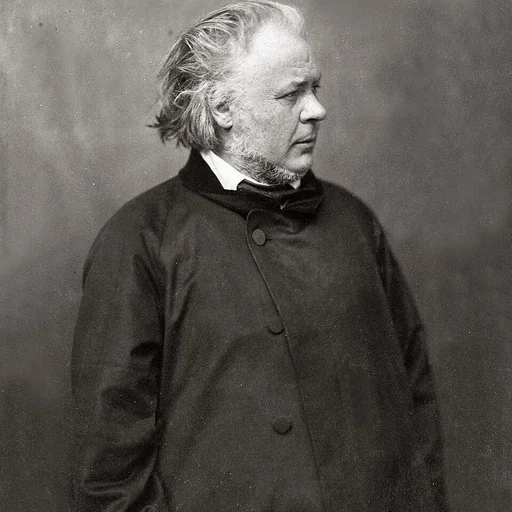
Artist
Honoré-Victorin Daumier was a French painter, sculptor, and printmaker, whose many works offer commentary on the social and political life in France, from the Revolution of 1830 to the fall of the Second French Empire in 1870.








 Pourriez-vous me dire...? J'ai la grippe!...
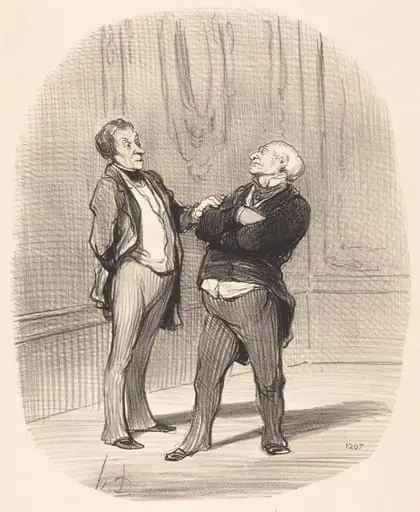 Il y a la guerre... les loyers vont... diminuer...
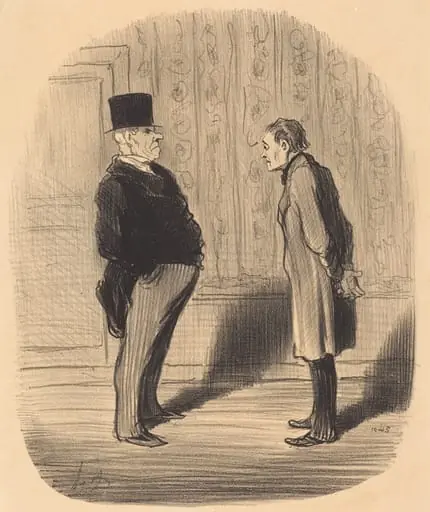 Eh! bien monsieur et mes trois termes...
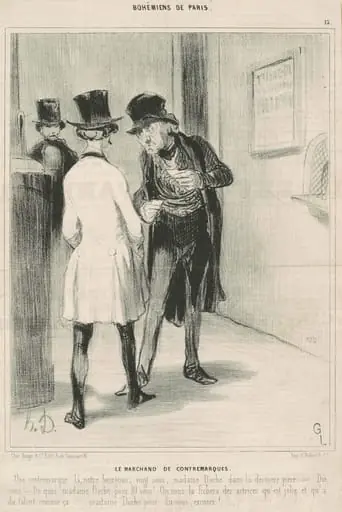 Le marchand de contremarques
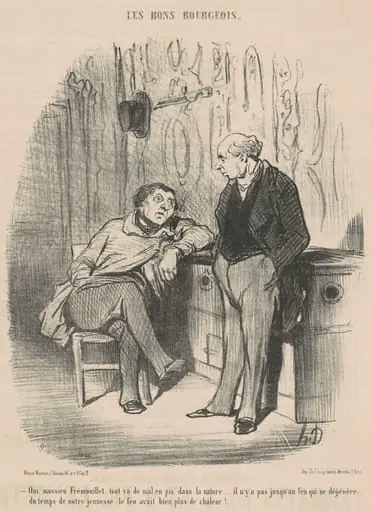 Oui, Mossieu Fremouillet, tout va de mal en pis ...
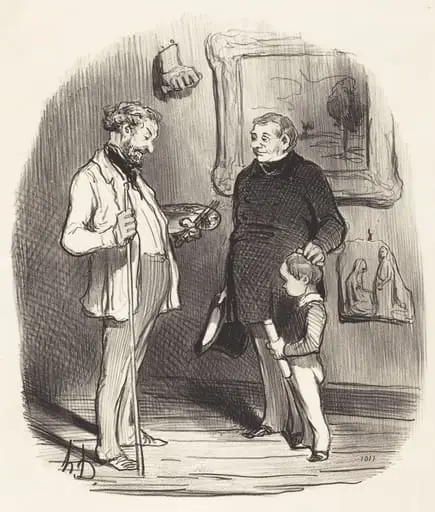 V'la mon petit... s'il n'a pas assez de moyens...
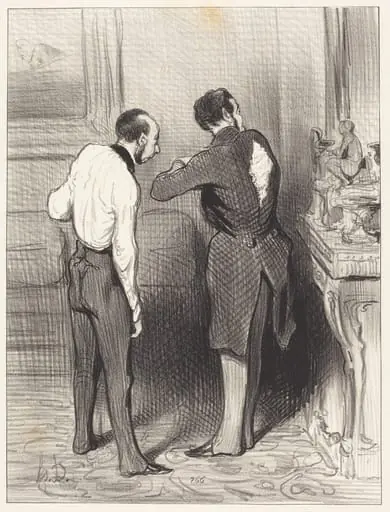 Ton habit me convient, je te l'emprunte...