Artwork
Une Femme comme moi... remettre un bouton?...
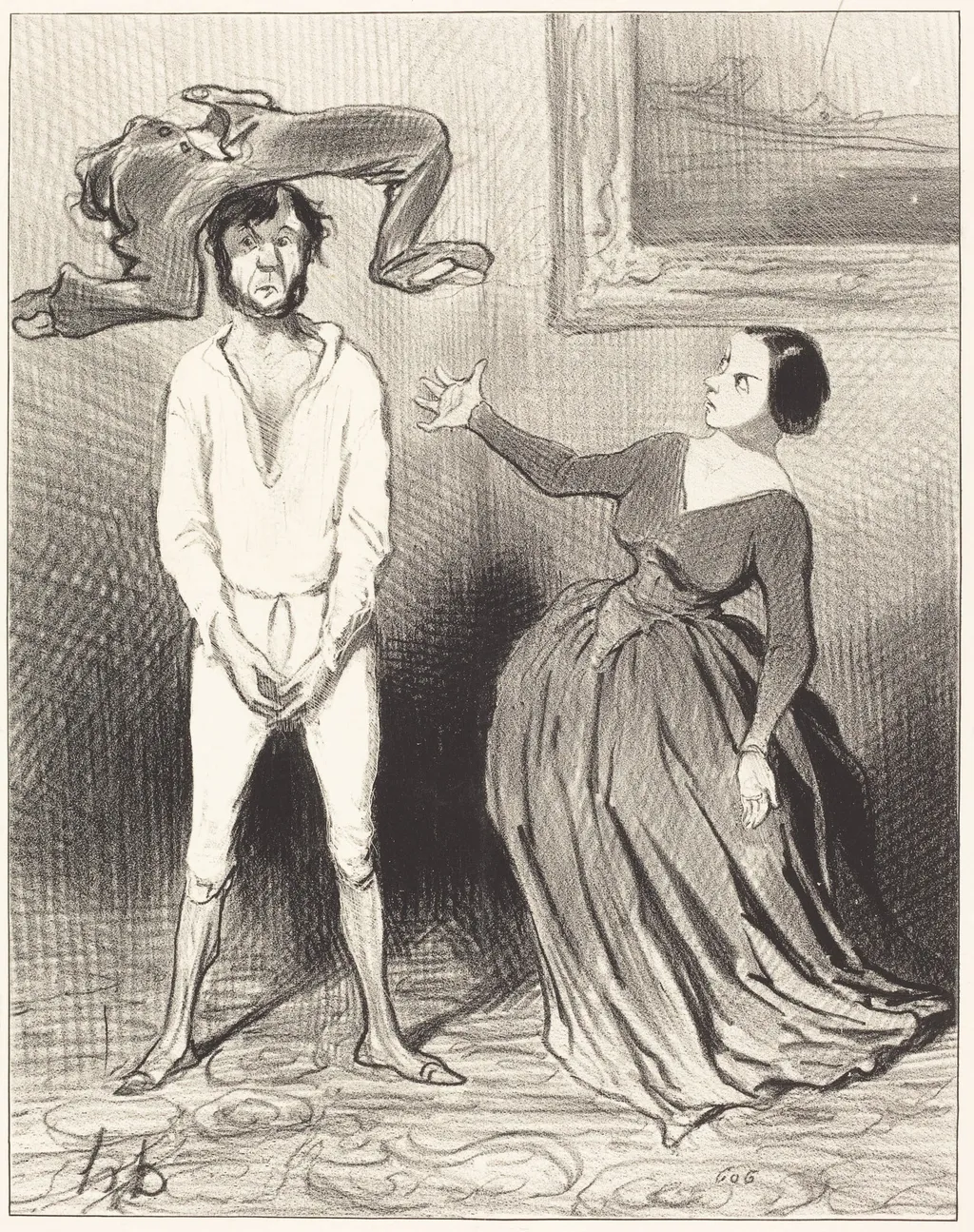
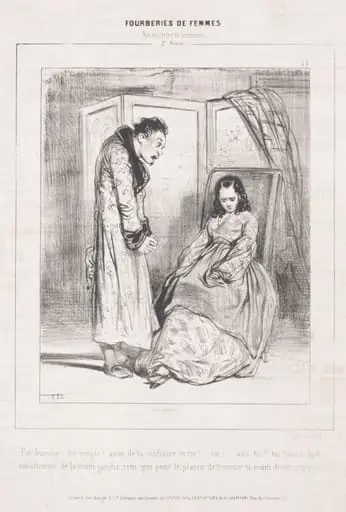
Une Femme comme moi... remettre un bouton?... is an ink print by the Romanticist artist Honoré Daumier. It dates from 1844 and is held in the collection of the National Gallery of Art.
About this work
This lithograph depicts a woman in a long dress, possibly from the 19th century, gesturing to a man with his head tilted back and legs up in the air.
This lithograph depicts a woman in a long dress, possibly from the 19th century, gesturing to a man with his head tilted back and legs up in the air. The woman's right arm is extended, while her left arm rests on her hip. The man's attire appears to be a long-sleeved shirt and pants, with his head and legs in an unusual position. The background of the image is not clearly defined, but it seems to be a room or interior space.
The woman's gesture and the man's pose suggest a sense of movement or action, although the exact context is unclear. The artist's use of shading and texture adds depth and interest to the image.
If you're interested in learning more about this style of art, you might want to explore the Romanticism movement.
Overview
Honoré Daumier’s 1844 lithograph *Une Femme comme moi… remettre un bouton…* belongs to the prolific series of satirical prints he supplied to French newspapers during the mid‑nineteenth century. Executed in the lithographic technique, the work captures a moment of comic interaction between a woman in a long dress and a man whose body is contorted in an exaggerated pose.
Subject & Meaning
The scene shows a woman extending her right arm while her left hand rests on her hip, apparently addressing a man whose head is tipped back and legs are lifted aloft. The absurdity of the posture, combined with the title’s reference to fastening a button, suggests a humorous commentary on domestic or social etiquette, a common target of Daumier’s caricature.
Technique & Style
Daumier employed the lithographic process, using fine lines and varied shading to model the figures and suggest depth within an indeterminate interior. The contrast between the crisp outlines of the clothing and the softer tonal washes creates a lively sense of movement, characteristic of his satirical prints.
History & Provenance
Created in 1844, the print was produced for circulation in periodicals that disseminated Daumier’s political and social critiques throughout the July Monarchy. Like many of his works, it would have been sold as an individual print and later collected by institutions documenting French graphic art of the era.
Context
Daumier’s output between 1830 and 1870 frequently lampooned the monarchy, aristocracy, and clergy, reflecting his republican sympathies. This lithograph fits within that broader agenda, using everyday domestic scenes to expose pretensions and absurdities in contemporary French society.
Artist & collection

Artist
Honoré-Victorin Daumier was a French painter, sculptor, and printmaker, whose many works offer commentary on the social and political life in France, from the Revolution of 1830 to the fall of the Second French Empire in 1870.









 Le Chevalier des Adrets est l'amant...
 Ma femme, t'as tort de me blamer ...
 Allons... baisez ce maitre... tout de suite...
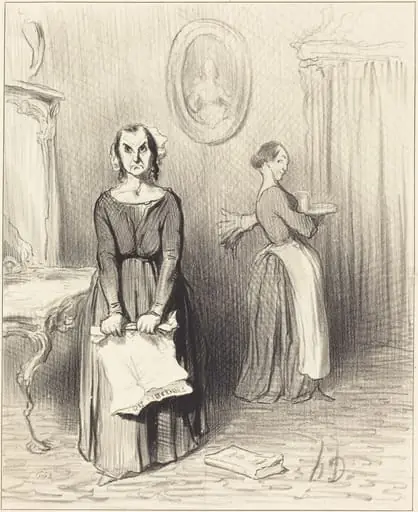 Ce Journal trouve mon ouvrage pitoyable...
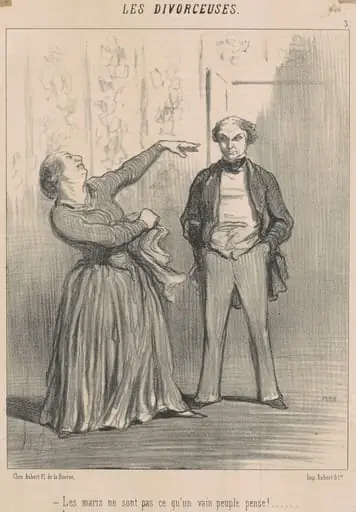 Les maris ne sont pas ce qu'un vain peuple pense!
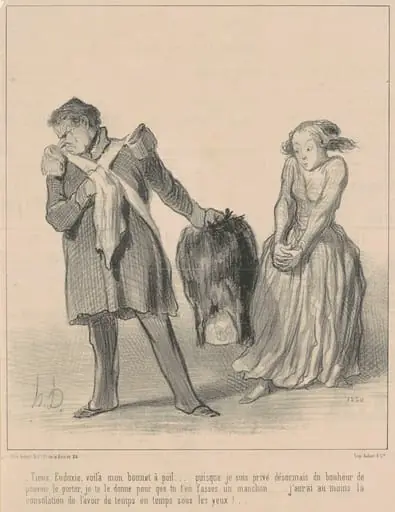 Tiens, Eudoxie, voila mon bonnet a poil ...
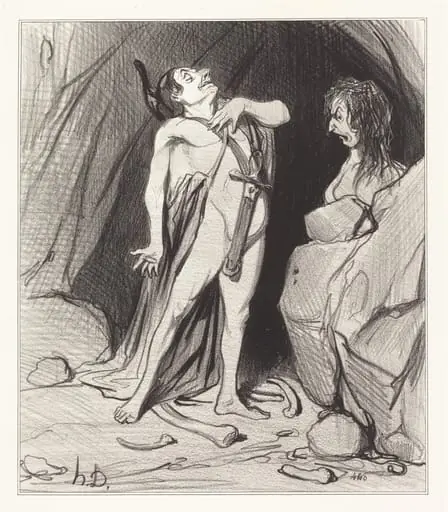 Oedipe chez le Sphinx
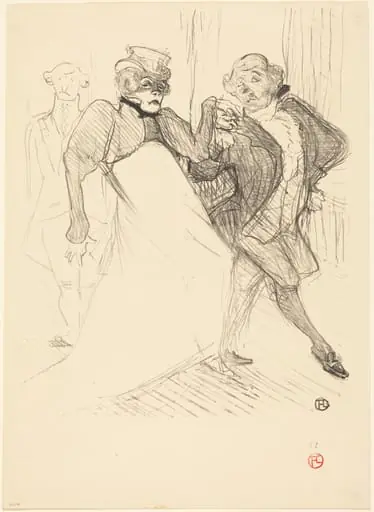 Rejane and Galipaux in "Madame Sans-Gêne" (Réjane et Galipaux dans "Madame Sans-Gêne")
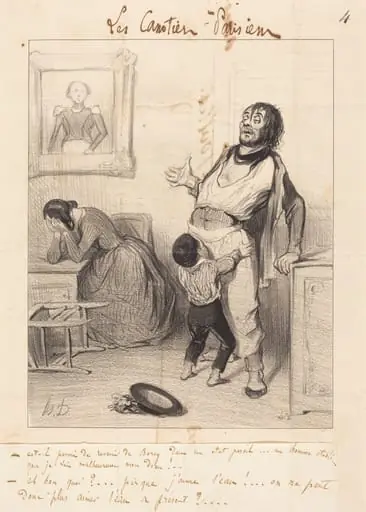 Est-il permis de revenir... dans un état pareil...
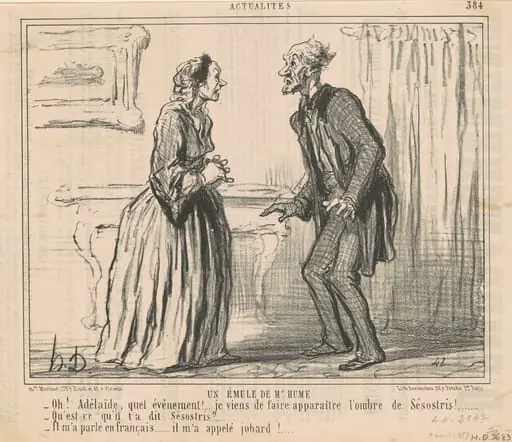 Un émule de Mr Hume
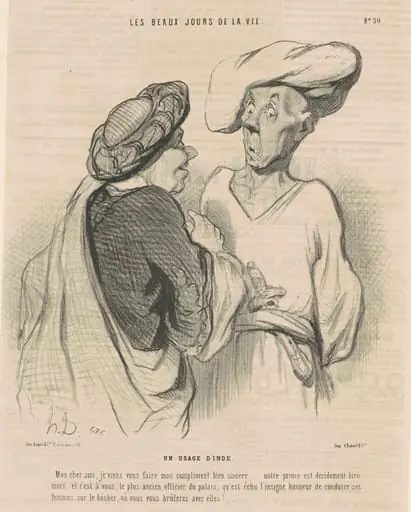 Un usage d'Inde
 Fourberies de Femmes: En matière de sentiment