Artwork
Il défend l'orphelin et la veuve, a moins...
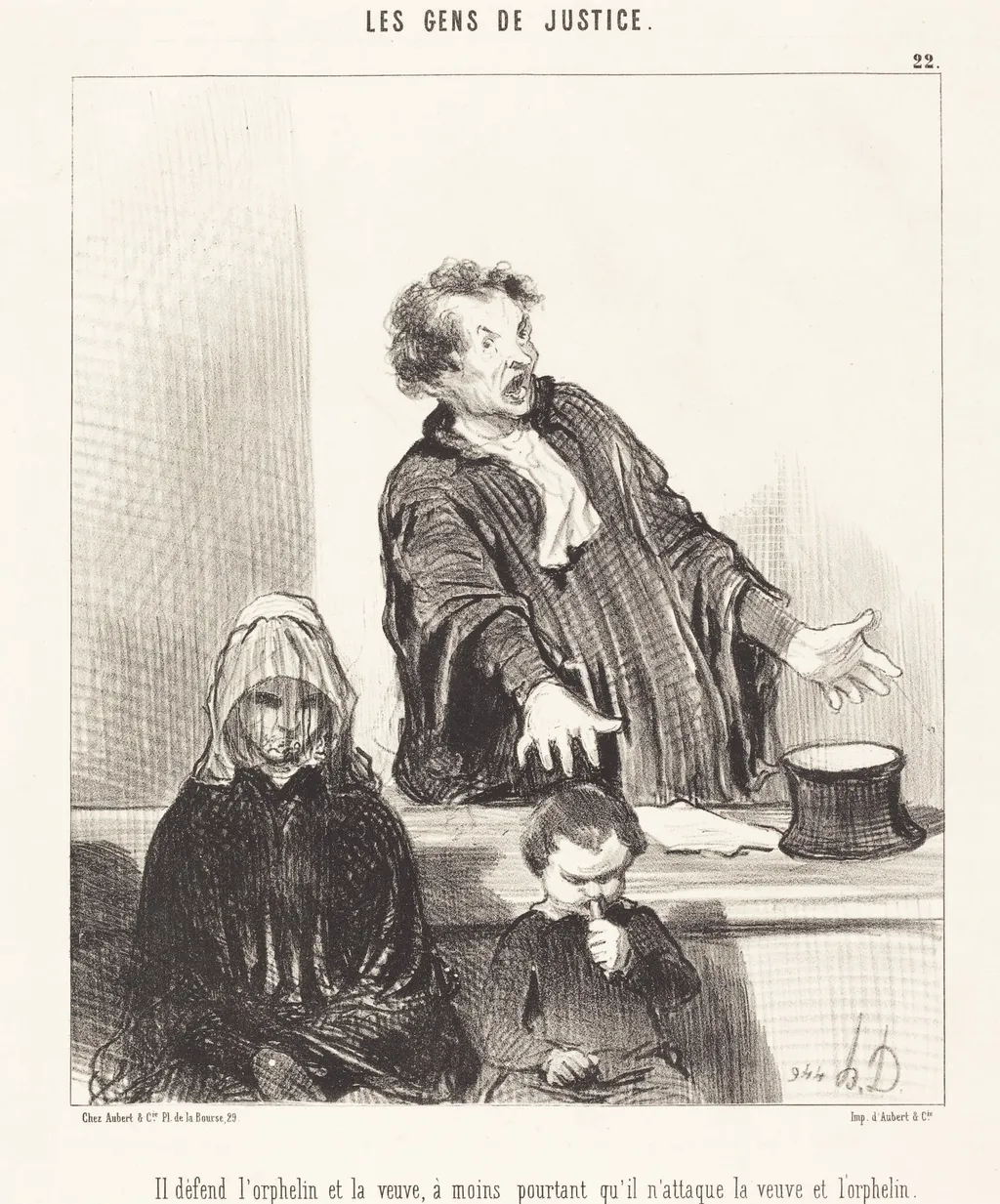
Il défend l'orphelin et la veuve, a moins... is an ink print by the Romanticist artist Honoré Daumier. It dates from 1846 and is held in the collection of the National Gallery of Art.
About this work
Overview
The title, incomplete and ironic, suggests a conditional defense of the vulnerable—implying that protection is withdrawn under certain circumstances.
This 1846 lithograph by Honoré Daumier captures a quiet yet pointed moment of social performance. The title, incomplete and ironic, suggests a conditional defense of the vulnerable—implying that protection is withdrawn under certain circumstances. Rendered in the accessible medium of print, the image functions as a visual critique aimed at the public sphere, reflecting Daumier’s commitment to exposing institutional hypocrisy through everyday scenes.
Subject & Meaning
The figure in the dark robe, likely a legal or clerical official, gestures as if speaking on behalf of a widow and child seated before him. Yet the title’s trailing clause undermines his claimed benevolence, hinting at self-interest or selective justice. The hat and document on the table suggest formal proceedings, but their presence feels performative. The composition isolates the trio, emphasizing the imbalance of power and the fragility of institutional compassion.
Technique & Style
Daumier employs bold, fluid lines and tonal contrasts typical of lithography, using ink washes to model form and mood. The figures are simplified yet expressive, their postures conveying emotional weight without melodrama. The background is left largely empty, focusing attention on the interaction. The style aligns with Romantic realism—emotional intensity rendered through economical, almost sketch-like marks, prioritizing narrative clarity over detail.
History & Provenance
Created during the July Monarchy, the print was likely published in a satirical journal such as *Le Charivari*, where Daumier regularly contributed. It circulated among urban readers familiar with the era’s political tensions and legal corruption. Though no early ownership records are widely documented, its survival in museum collections attests to its enduring relevance as a document of social commentary from a period of rising democratic dissent.
Context
In 1840s France, legal institutions were often perceived as tools of the elite, offering protection only to those with influence. Daumier’s work responded to widespread public skepticism toward officials who claimed moral authority while serving narrow interests. The image resonated with a growing middle class disillusioned by broken promises of justice, making it part of a broader visual discourse on civic responsibility and inequality.
Legacy
The lithograph remains a clear example of Daumier’s ability to distill complex social critiques into single, resonant images. Its understated irony influenced later generations of political illustrators and cartoonists who sought to expose institutional failure through subtle visual cues. Unlike overt propaganda, this work endures because its ambiguity invites ongoing interpretation, preserving its relevance across changing political landscapes.
Artist & collection
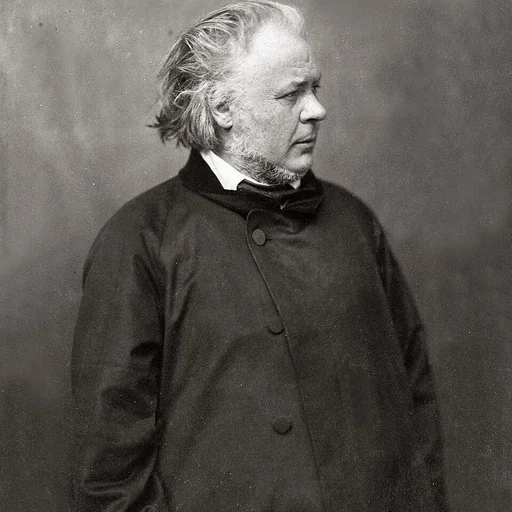
Artist
Honoré-Victorin Daumier was a French painter, sculptor, and printmaker, whose many works offer commentary on the social and political life in France, from the Revolution of 1830 to the fall of the Second French Empire in 1870.









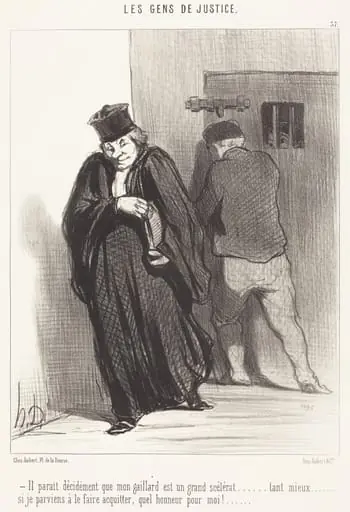 Il parait... que mon gaillard est un grand scélérat...
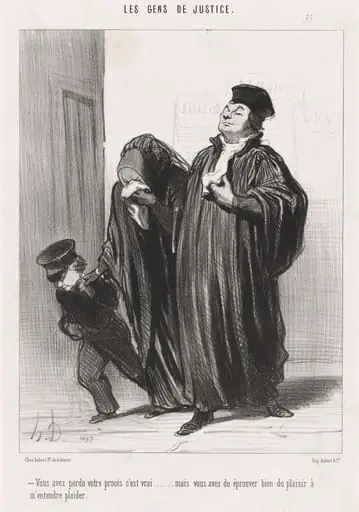 Vous avez perdu votre procès c'est vrai...
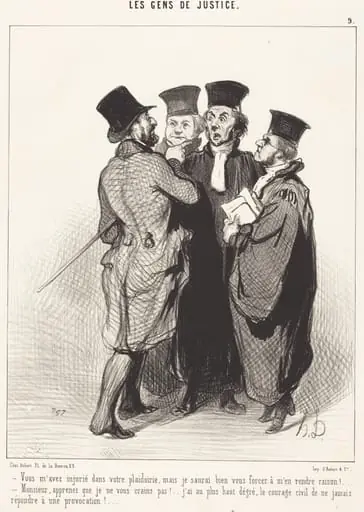 Vous m'avez injurié dans votre plaidoirie...
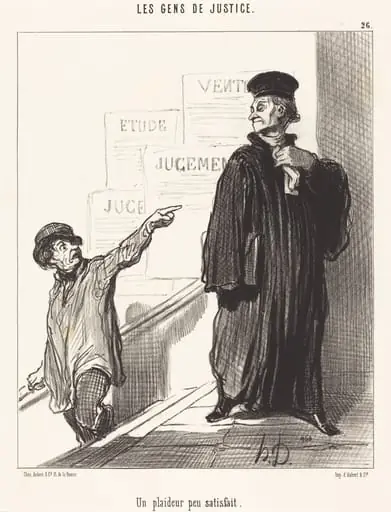 Un Plaideur peu satisfait
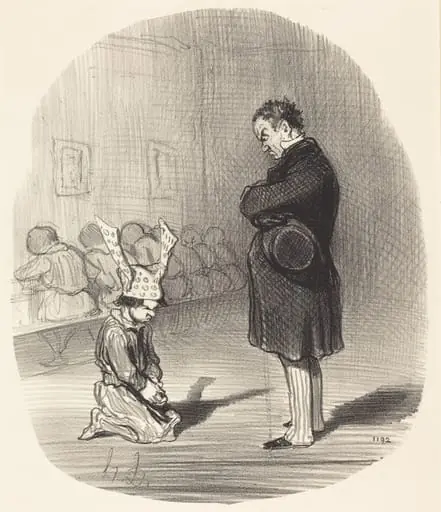 Les Suites d'une insurrection
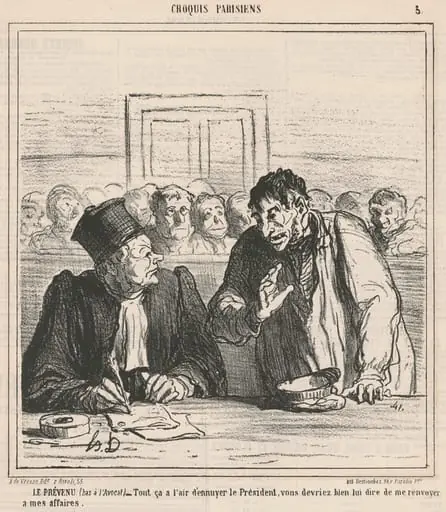 Le prèvenu
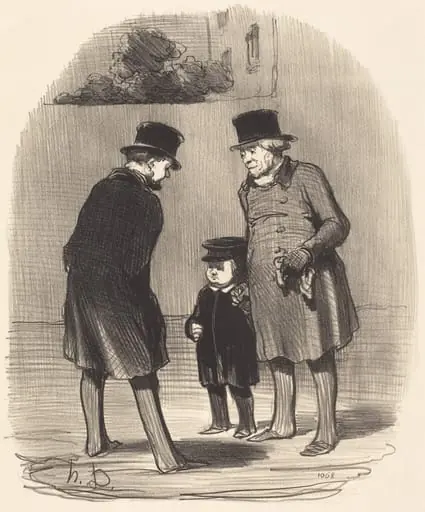 Oui, monsieur Chapuzot...
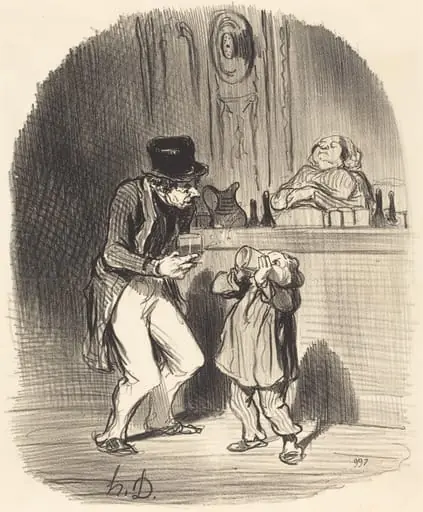 Un Père qui fait sucer à son fils...
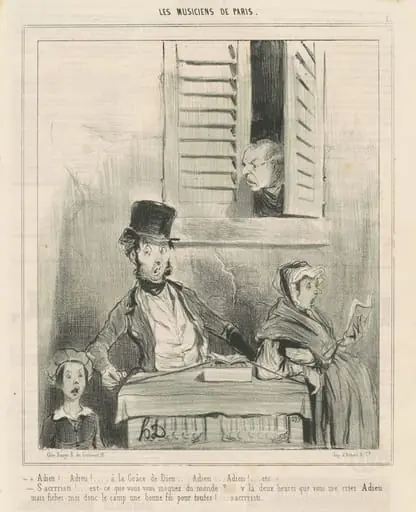 Adieu! ... A la grâce de dieu ...
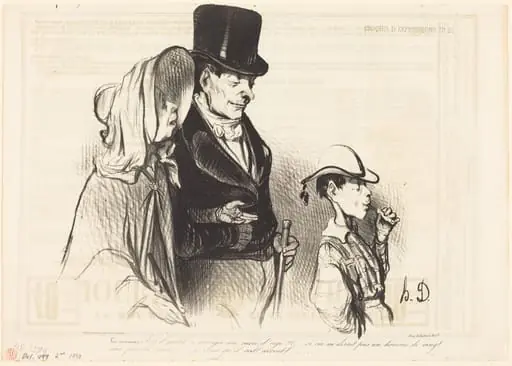 La Maman - Est-il gentil a manger son sucre d'orge!...